White colonial houses with lit windows photographed at dusk along a tree-lined residential street.

Furnace Repair in Plattsburgh, NY

Tell us about the job

Takes about a minute. No obligation.

RepairFurnace or heatingClinton County, NY
Step 1 of 2

What ZIP code is the job in?

Nine months of work a year

A furnace in Clinton County runs from September through May. That's most of the year asking parts to light, run and shut off over and over. The igniter, the blower motor, the gas valve, all of it sees more cycles here than it would somewhere with a short winter.

What that means for a repair

A furnace that's been firing nine months a year is further along than its age alone suggests. The part that failed probably didn't fail out of nowhere. Worth finding out why it quit, not just swapping it and moving on.

9 months
September through May, your furnace is on duty
11°F
the average winter night it heats against
47 winter storms
in ten years, the nights a failure hurts most
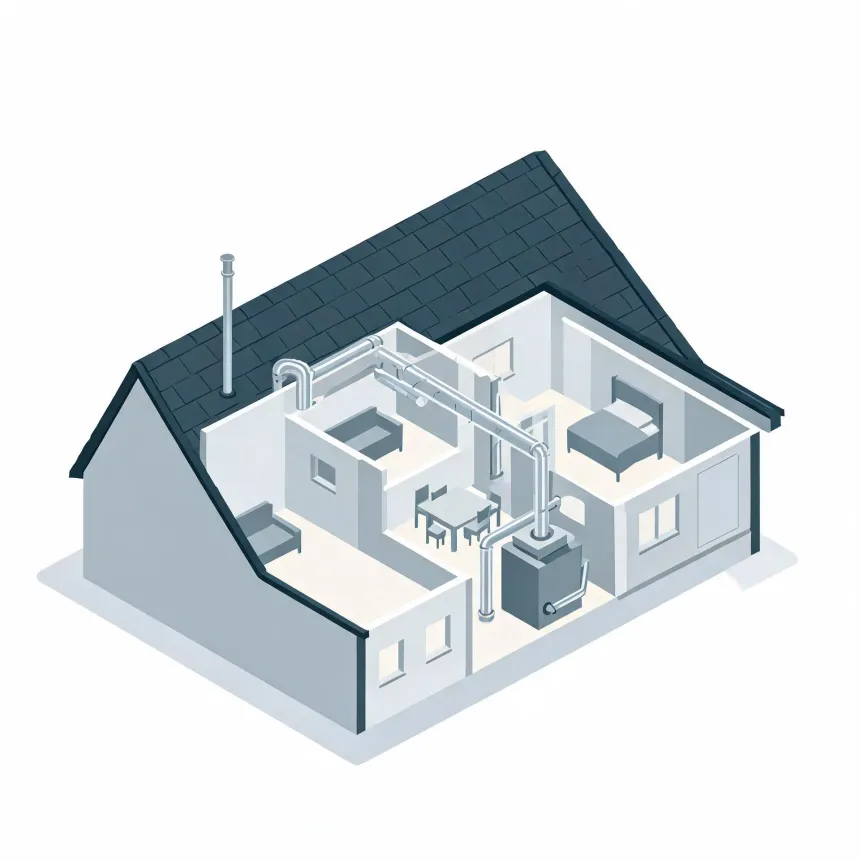
Isometric cutaway illustration of a single-story house with a dark shingled roof, showing interior rooms with furniture and a ducted furnace unit connected to metal ductwork and a roof flue.
Your furnace works hardest from November through March.

NOAA nClimDiv, 1991–2020 normals

September is when a furnace here fires up for the season after sitting unused since spring.

Whatever went wrong while it sat tends to show up in that first cold stretch, not before.

Most homes here heat with oil, and oil is not cheap to run

Climate zone 6A
Heat runs September through May
Winter nights average 11°F

A furnace that's not running right costs you twice here. It's burning oil at $23.11 per million Btu, and it's doing it while short-cycling or running longer than it should to make up for whatever's wrong. A cracked heat exchanger, a dirty flame sensor, a stuck damper, any of these make the furnace work to produce the same heat. That shows up on the oil bill before it shows up as a breakdown. Getting a technician out when you first notice the problem, rather than waiting to see if it gets worse, is the cheaper call most of the time.

Nine months a year of work catches up with a furnace

Whatever failed had already been cycling on and off since September. Have a technician find the reason it quit, not just the part that quit, so the fix holds for the rest of the winter.

Find a contractor
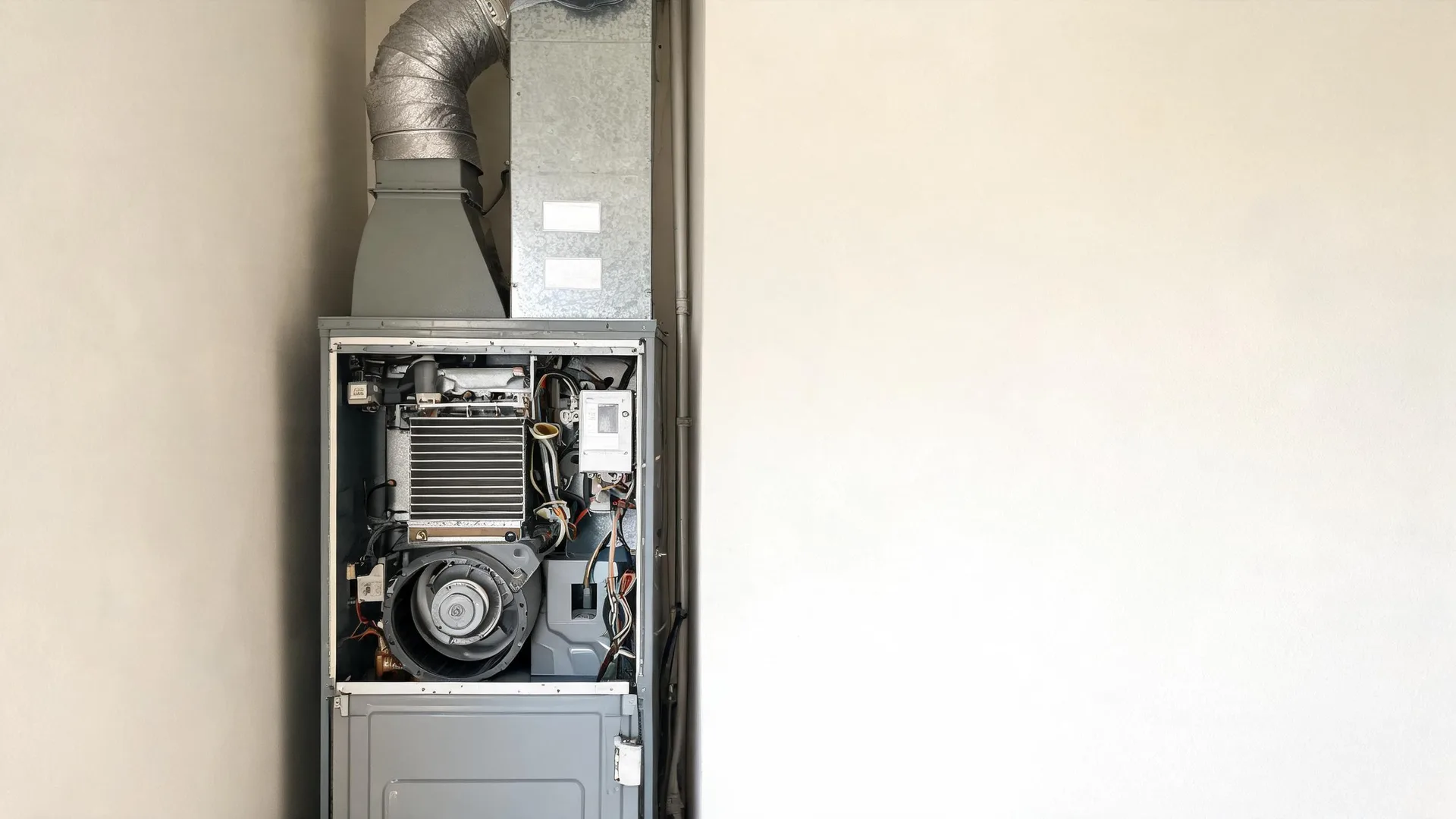
A gray gas furnace with attached ductwork and piping installed in an unfinished concrete basement.

What the furnace is already telling you

A furnace rarely quits without warning you first. Short cycling is usually the earliest one: it fires, runs for a minute or two, shuts off, then starts again before the house has warmed up. That pattern points to a flame sensor that's coated and can't confirm the flame, or a limit switch tripping because airflow is restricted somewhere. A furnace that runs long instead, never quite reaching the thermostat setting, is often struggling with a clogged filter or a blower wheel that's lost its pull. Listen for the sounds too. A bang at startup usually means gas is pooling before it lights, which points to a dirty igniter or a burner that needs cleaning. A screech points to a motor bearing going dry. Watch the flame itself if the burner compartment is visible. It should burn steady and blue. Yellow or flickering means it isn't getting the right air mixture, and that's not something to leave alone since it relates to how safely the furnace is venting. A thermostat that seems to be ignored, where the furnace won't respond to a change in setting at all, often means the problem isn't the furnace but the control board or the wiring to it. None of these wait well. A furnace that's struggling to light or stay lit tends to find the day it won't light at all, usually on the coldest morning of the stretch.

Most failures start as dirt or wear, not defects

A flame sensor coated in a thin film of oxidation stops sensing the flame. A blower wheel caked with dust can't move the air it used to. An igniter that's cracked from thousands of heat cycles finally breaks instead of glowing. None of these are sudden defects. They build up over time until the furnace can't work around them anymore.

The parts that move or spark go first

Anything with a motor, a switch or an electrical connection wears faster than the metal around it. Bearings dry out, contacts pit, capacitors weaken. A heat exchanger can crack from years of expanding and contracting as it heats and cools. The gas valve, igniter and control board rarely fail from one bad day. They fail from doing their job over and over until something gives.

A furnace with a bad part doesn't fail and stop. It fails and keeps trying. If the flame sensor is coated, the furnace still fires, still fails to confirm the flame, still shuts down, and still tries again a few minutes later. Every one of those attempts puts the same strain on the igniter and the gas valve that caused the problem in the first place. A crack in the heat exchanger doesn't stay the size it started at. Metal that's already stressed keeps flexing every time the burner cycles, and the crack grows a little more each time. A blower motor running hot because the wheel is caked with dust keeps running hot, cycle after cycle, until the bearings that were just worn are burned out. The part rarely gets a break to recover. It gets thousands more chances to finish failing.

A repair decision usually comes down to what failed and what it sits next to. A flame sensor, an igniter, a blower motor: these are parts that fail on their own, and swapping one brings the furnace back to normal. A cracked heat exchanger is different. That's not a part failing next to a good furnace, that's the furnace itself giving out, and once it's cracked it doesn't get welded back together. Age matters less than what's actually broken. A furnace with one bad component and a sound heat exchanger is usually worth fixing, even if it's been running for years. A furnace where the control board, the gas valve and the heat exchanger are all showing their age at once is telling you something different. The question isn't how old the furnace is. It's whether the thing that failed is a part the furnace needs, or the furnace itself.