 Skip calling around
Repair or replace a gas furnace in Hempstead, NY
Answer a few questions instead of calling shop after shop.
A furnace that won't stay lit, or won't light at all, is a different problem in January than it is in May. In Hempstead, gas heat runs hard from late fall into early spring, and a furnace that's struggling usually makes that clear fast. The question is whether it's worth fixing or whether it's done.
That depends on things like how old the unit is, what's actually failed, and whether this is the first repair or the third one this year. A furnace that's ten or twelve years old with a cracked heat exchanger is a different call than one that's three years old with a bad igniter. There's no single answer that fits every house here, but there is a right answer for yours, and it takes someone looking at the actual unit to know it.
Most people start by calling around. You explain the problem to one company, get put on hold, call the next one, explain it again, wait for someone to come look, then wait again for a quote. Do that three or four times and you've spent half a day before anyone's touched the furnace, and you're left comparing quotes you have no way to judge against each other.
This page connects you with one licensed contractor who works on furnaces in Nassau County and knows what tends to go wrong in this area, from corroded flue connections to failed pressure switches, and what a straight answer looks like on repair versus replacement. No explaining the problem five times, no sorting through competing bids from strangers.
Fill out the form below and that contractor will reach out to look at your furnace and tell you straight what it needs.
Whether to repair or replace your furnace usually comes down to its age and what's actually wrong with it. A furnace that's 15 to 20 years old and needs a major part, like a cracked heat exchanger or a failed blower motor, is usually worth replacing rather than repairing. One that's younger with a bad igniter or a blown capacitor is almost always worth fixing. In Hempstead, where gas furnaces run hard for months at a stretch through winter, an older unit has already put in a lot of work, and that wear shows up as higher bills and more frequent breakdowns even before something fails outright. A furnace that's short-cycling, blowing cool air, or tripping its limit switch repeatedly is telling you something about its age as much as the specific fault. The right call depends on what a technician finds when they open it up and look, not on a guess from the symptoms alone.


A furnace fires in a set order, and when something's wrong, it usually breaks that order in a specific place. The inducer motor has to pull enough draft to satisfy the pressure switch before anything else happens. Once that switch closes, the igniter heats up and the gas valve opens, and the flame sensor has to detect a flame within a few seconds or the board shuts it down and tries again. Any one of those steps can fail on its own. A weak igniter usually holds on through mild weather and gives out the first really cold morning. A capacitor failing looks like a blower that hums without turning, while worn motor bearings show up as a blower that spins but strains. None of this is cosmetic. A cracked heat exchanger means combustion gas can reach the air moving through your house, which is why it gets replaced rather than patched. Knowing which part failed, and why, is what separates a quick repair from one that's about to need another.
What's Actually Happening Inside
- A cracked heat exchanger lets combustion gas mix with the air your furnace blows through the house, which is why a tech can't just patch it.
- The igniter has to glow hot enough to catch the gas within a few seconds, and once it's weak, it tends to fail on the next cold morning, not gradually.
- A blower motor that hums but won't spin is usually the capacitor, but one that spins slow and strains is often the motor bearings going.
- Furnaces short cycle when the flame sensor can't confirm a flame fast enough, so the control board shuts the burner off as a safety measure.
- A pressure switch stuck open will stop the burners from lighting at all, since the furnace won't fire until it reads the right draft through the inducer.
- Gas furnaces here run almost nonstop on the coldest nights, so a part that's marginal in November usually fails outright by January.




What age does to a furnace's parts
A furnace in its first ten years usually fails one part at a time: an igniter, a flame sensor, a pressure switch. Past 15 years, parts start failing together because the heat exchanger and blower have put in the same hours. That's why a repair on an older furnace often gets followed by another repair within the same winter. A tech pricing a fix on a 17 year old unit is weighing the part against a cabinet and a blower that are the same age and under the same strain. That math doesn't apply to a furnace that's 8 years old with one bad igniter.
Why the furnace runs harder here
Nassau County winters push a furnace to run long stretches, not short bursts, from late fall through early spring. A furnace sized and installed correctly handles that load for its full lifespan. One that's undersized, or that's losing efficiency as parts wear, ends up running close to constantly to hold a temperature, which adds hours to a system that's already aging. Replacement resets that: a new furnace installed to the house's actual heating load runs the way the old one did when it was new, not the way it's been running the last few winters.


No quotes to chase
A licensed pro who works in Nassau County gets your request.
Describe your furnace job once, to one pro.
No charge to send it. You decide if you hire them.
Fix the Failure or Replace the Furnace
Repair
- A failed igniter, flame sensor or pressure switch is usually a single part swap, not a sign the whole furnace is done.
- If the heat exchanger and blower motor are both still sound, fixing the part that broke is the cheaper path for now.
- A furnace under 10 years old that's otherwise kept up with yearly service is a reasonable candidate for a repair instead of a new install.
- Repair keeps the furnace you already know, with a cabinet and venting already sized and sealed for your house.
- If this is the first service call in years, that history is in the repair's favor.
Replace
- A cracked heat exchanger means combustion gas can reach the air moving through the house, and a tech can't weld around that.
- Once a furnace is past 15 years, a failed blower motor or control board often costs close to what a new unit would.
- A furnace calling for service two or three times in one winter is telling you it's done compensating for worn parts.
- New installs carry efficiency ratings that matter more in Nassau County, where power is expensive and gas heat runs hard from late fall into early spring.
- Replacing before a midwinter breakdown means you're not choosing a furnace in a cold house with no heat.
What a cold snap finds out
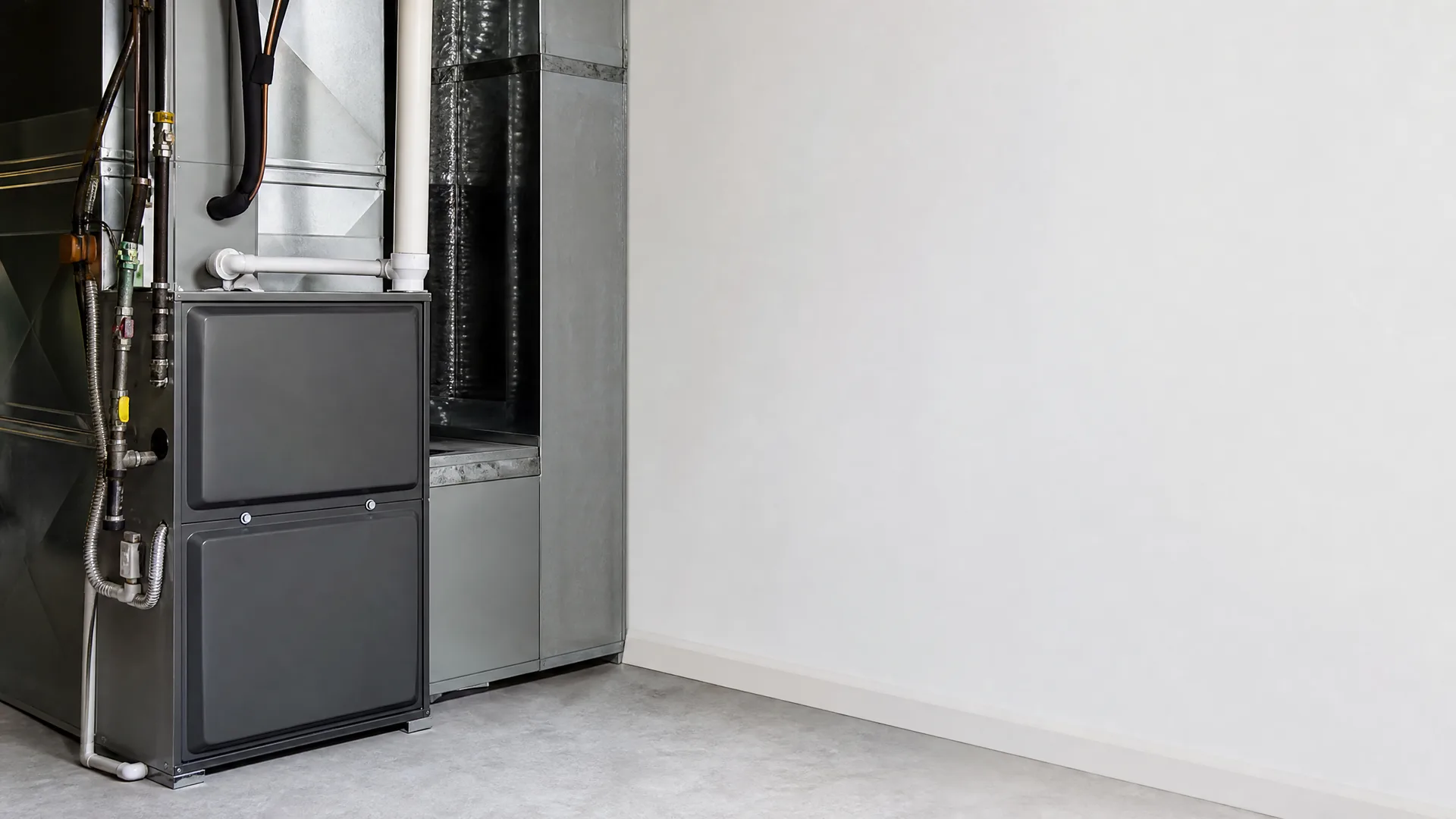
A furnace that's marginal usually shows it when the temperature drops hard, not on a mild day. If it's short cycling or struggling to keep up now, a stretch of nights in the 20s will push it further. Rooms farthest from the furnace go cold first, and a system that's losing the fight will run longer to do less, which shows up on the gas bill before anyone decides to call someone.
What a cracked exchanger puts at risk
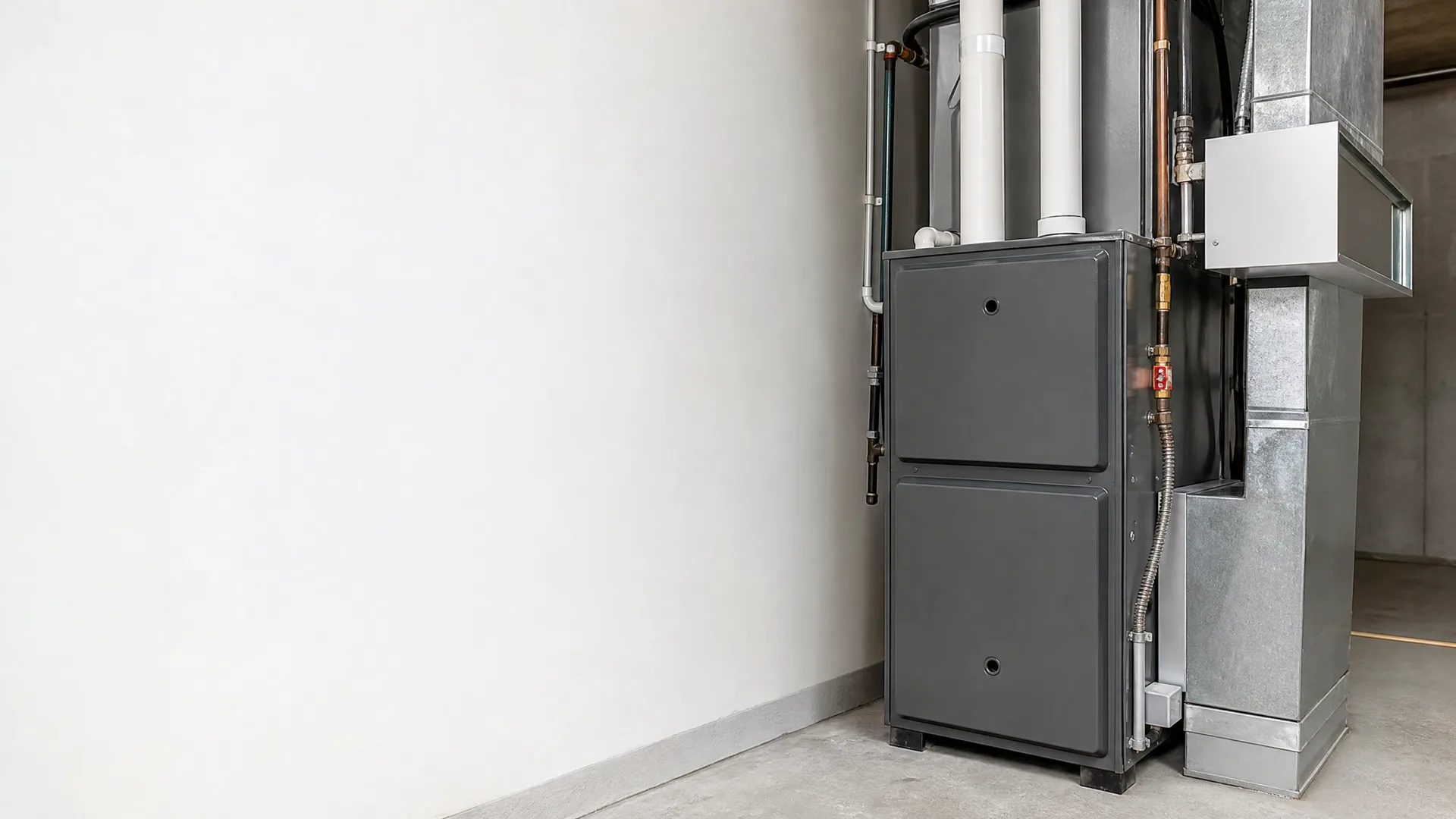
Combustion gas is supposed to stay inside the heat exchanger and vent outside. A crack lets it mix with the air moving through your ducts and into the rooms you live in. This is why a technician who finds one won't offer to patch it. If your furnace trips a carbon monoxide detector, or one keeps going off near the furnace, that's not something to wait out. It needs a licensed tech to look at it the same day.
How cold does it actually get, and how long does the furnace run for it?
Winter nights average 28°F
Winter nights here average 28°F from December through February, cold enough that a furnace struggling to keep up won't quietly get by until spring.
Heat runs October through May
Heat runs October through May in Nassau County, eight months of the year, so a furnace with a failing part is carrying weight most of the year, not just a few cold weeks.
62.4% of homes heat with gas
62.4% of homes in Nassau County heat with gas, which is why parts like the igniter and heat exchanger matter so much to how your winter goes.
NOAA nClimDiv 1991-2020 · ACS 2020-2024
Technician checks furnace age, size and the specific part that failed.
Gas pressure, airflow and the heat exchanger get tested, not guessed at.
Technician explains whether the part or the whole furnace needs replacing.
Repair or install happens, then the system gets tested under a full cycle.
Winter nights average 28°F
At 28°F, your furnace is cycling on most of the night, not just kicking on now and then. If it's already short on heat or running longer than it used to, those overnight hours are when you'll feel it, in the bedrooms especially.
NOAA nClimDiv 1991-2020

Where that leaves you
A furnace under 15 years old, with one broken part and a heat exchanger that's still sound, is a repair. One past 15 years, especially one already showing more than one problem, is a furnace worth pricing against a new one before the next cold snap finds out for you.
Either way, the next step is a technician in your house looking at the actual unit, not a guess over the phone. That's the part that usually eats the time: finding someone licensed to call, waiting on a callback, explaining the same symptoms twice, then weighing quotes that don't quite match because no two techs looked at the same thing. Here, that gets handed to one local contractor who works on furnaces like yours all winter and knows what tends to go first at 10 years, at 15, at 20.


Furnace Installation
Skip calling around

- Your new furnace project goes to an installer who works in Nassau County.
- Get in touch with a local installer about a new furnace.

- Send the request and finding a pro stops being your problem.
- After this form, you can stop searching for a furnace pro.

- Fill out one short form instead of calling around.
- Explain the job once and skip repeating it on every call.

- A licensed installer who works in Nassau County gets your project.
- Your request goes to one pro, not a list of companies.