





An unfinished basement containing a gray HVAC furnace with ductwork, exposed wooden joists, a concrete floor, and miscellaneous clutter in one corner.

Furnace Repair in Manhattan, NY

Tell us about the job

Takes about a minute. No obligation.

RepairFurnace or heatingNew York County, NY
Step 1 of 2

What ZIP code is the job in?

Most furnace failures trace back to the igniter or the flame sensor. The igniter wears out from repeated heating and cooling cycles and eventually stops glowing hot enough to light the gas. The flame sensor gets a coating of residue over time, and once it can't detect the flame it shuts the burners down as a safety measure, even though the furnace is otherwise fine. A clogged filter causes its own chain of problems, since it starves the system of airflow and makes the heat exchanger run hotter than it should, which can trip the limit switch or shorten the exchanger's life. Blower motors fail too, usually from a worn bearing or a capacitor that's given out. Less often, the draft inducer motor or its pressure switch fails, and the furnace won't start at all because it can't prove it's venting correctly.

7 months
October through April, your furnace is on duty
28°F
the average winter night it heats against
14 winter storms
in ten years, the nights a failure hurts most
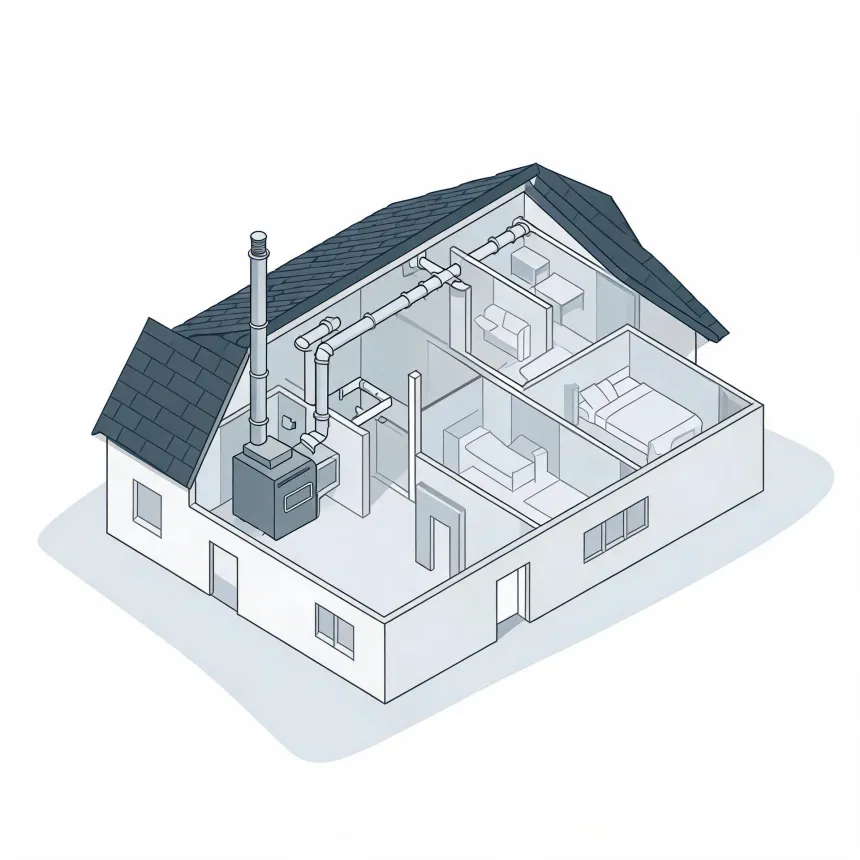
Isometric line illustration of a cutaway house showing interior rooms with furniture and a furnace with ducting and a flue pipe extending through the roof.
Your furnace works hardest from November through March.

NOAA nClimDiv, 1991–2020 normals

A furnace that short cycles, turning on and off every few minutes, is usually struggling to breathe or overheating.

Short cycling wears on the heat exchanger fast, so it's worth having someone look at the furnace before it turns into a bigger repair.

Half the homes in Manhattan were built in 1951 or earlier, long before most furnaces running today

Half the homes here were built by 1951
Heat runs October through April
Winter nights average 28°F
The first cold weeks find the weak partFurnaces here start up in October after sitting idle since spring.

A technician starts by asking what the furnace is doing, or not doing, before touching anything. Then they pull the panel and watch it try to run through a cycle. If it won't light, they check for power at the control board, then test the igniter for continuity and look at the flame sensor for a layer of buildup. If it lights and then shuts off, that points toward the flame sensor failing to see the flame, or a limit switch tripping from poor airflow. They'll pull the filter and check the blower while they're in there, since a weak blower or a clogged filter can cause the same symptoms as a bad sensor. If the furnace won't start at all, they check the draft inducer and the pressure switch, because the furnace won't fire if it can't confirm it's venting properly. By the time they close the panel, they should know which part is the problem and why.

Ask how much life it has left

If your system came with an older house, it may be near the end of its life. Ask how much life it has left before paying for a big repair.

Find a contractor
A gray residential gas furnace installed in an unfinished basement, surrounded by ductwork, a metal flue pipe, and a gas supply line.

Letting it run doesn't let it heal

A flame sensor coated with residue doesn't clean itself off. Every cycle adds a little more buildup, so the furnace that hesitated last week may not light at all next week. A cracked heat exchanger works the same way. The metal expands when it heats and contracts when it cools, and each cycle opens the crack a little further. A blower motor running on a worn bearing is under more strain with every hour it turns, and that strain only moves it closer to seizing up. Airflow trouble feeds on itself too. A clogged filter makes the heat exchanger run hotter, the hotter exchanger trips the limit switch more often, and a furnace cycling on and off from overheating is working harder than one running a normal call for heat. None of this gets better by leaving the furnace alone and hoping. The part causing the trouble is worth finding before it strains the parts around it.

What you can check yourself

Look at the thermostat first. Make sure it's set to heat and the set point is above room temperature, and check the batteries if it uses them. Then find the furnace switch, the one that looks like a light switch on or near the unit, and confirm it hasn't been bumped off. Check the filter by holding it up to a light. If you can't see light through it, that's airflow the furnace isn't getting. Last, check the breaker, since a tripped breaker will stop the whole thing cold.

What to leave alone

Don't pull the burner compartment open or touch the igniter, it's fragile and can break from a fingerprint's worth of oil. Don't reset the furnace repeatedly if it's shutting itself off, since it's doing that on purpose to protect the heat exchanger or confirm it's venting correctly. If you smell gas, don't flip any switches at all. Leave the house and call the gas company from outside.

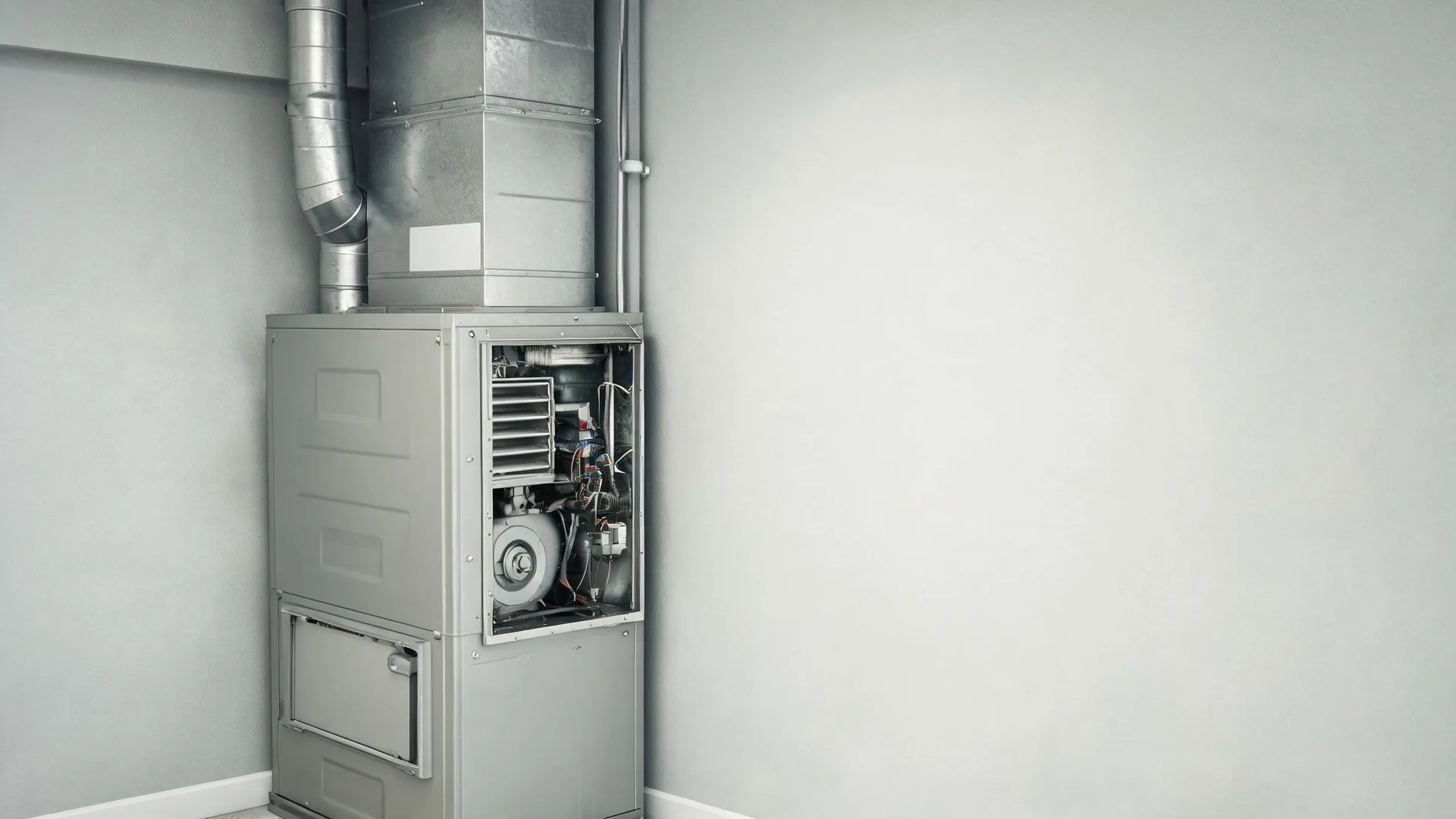
A gray forced-air furnace with sheet-metal ductwork stands in an unfinished basement with exposed wooden joists, concrete walls, and a hanging incandescent bulb.

A new furnace would cut about $120 a year off heating for a typical New York County home.

  • A new high-efficiency furnace$500 a year
  • An older furnace$620 a year

Estimates for a typical New York County home, compared with an older unit built to the previous federal minimum, from EIA household energy data, New York fuel prices and NOAA climate normals. Your home will differ.

Repair makes sense when one part has failed and the heat exchanger is sound.

Replacement makes sense when the heat exchanger is cracked or the furnace keeps needing parts.

A repair makes sense when the part that failed is a part that usually fails on its own, like an igniter, a flame sensor, or a capacitor. Those wear out one at a time, and swapping one out brings the furnace back to normal. A heat exchanger is a different question. Once it's cracked, it doesn't get patched, and a furnace old enough to crack one is usually old enough that other parts are close behind it. The other thing worth weighing is how the furnace has been acting before this. One failure is just a failure. A string of different repairs over a couple of years means the furnace is wearing out broadly, not failing in one spot, and the next part to go is only a matter of time.