


Heat pump vs furnace in New York County, New York

Find a Local Installer

Heat pump or furnace, one form

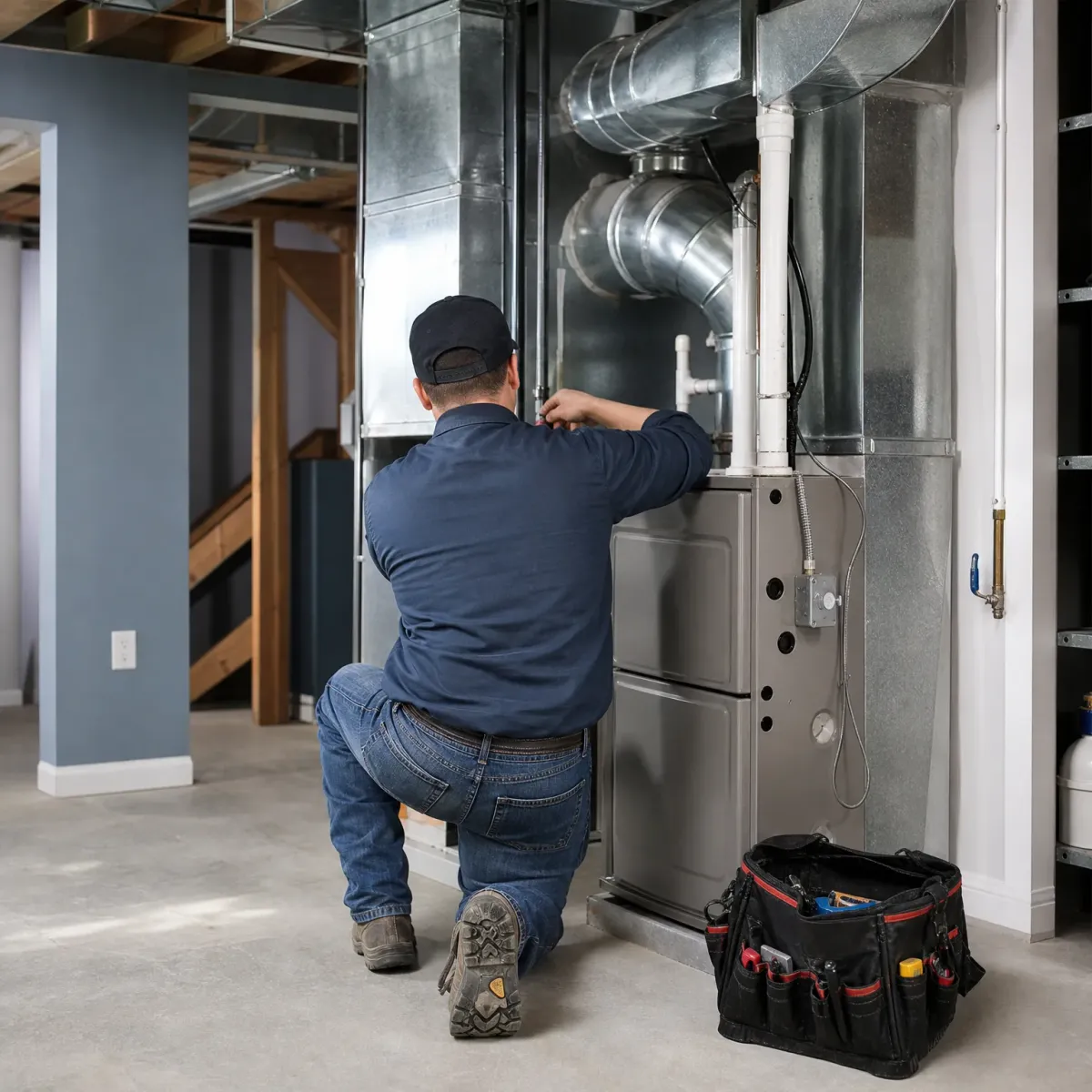
A man in a dark cap, navy long-sleeved shirt and jeans kneels beside a gray furnace with metal ductwork and piping in a basement, with an open black tool bag on the concrete floor.

Tell us about the job

Takes about a minute. No obligation.

New system or replacementNew York County, NY
Step 1 of 3

What kind of equipment?

Which costs less to run in New York County?

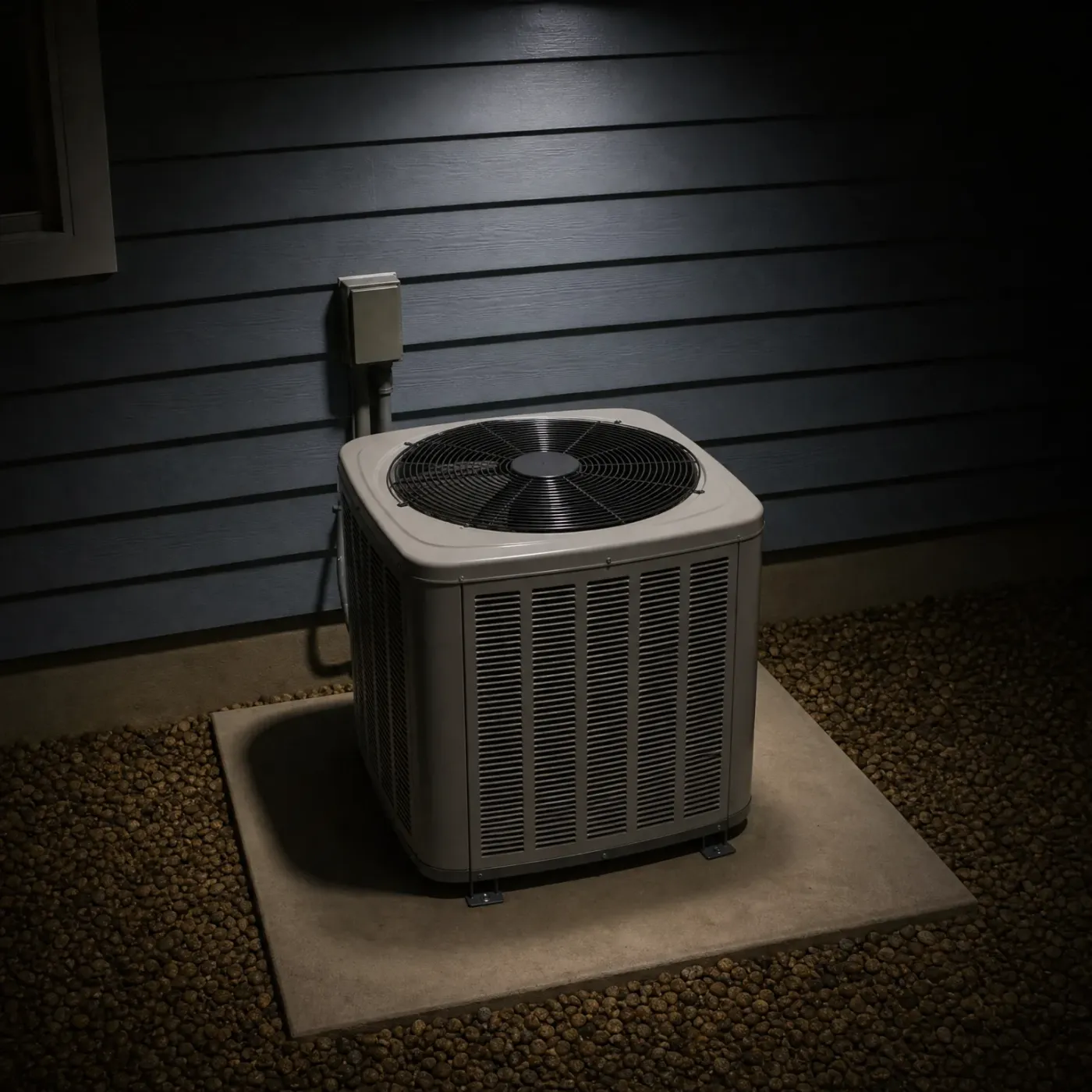
An outdoor air conditioner condenser unit on a concrete pad surrounded by gravel, next to a dark horizontal-lap sided house wall with an electrical disconnect box above it, lit at night.

Heat pump

To heat your home here$3.26per 100,000 Btu

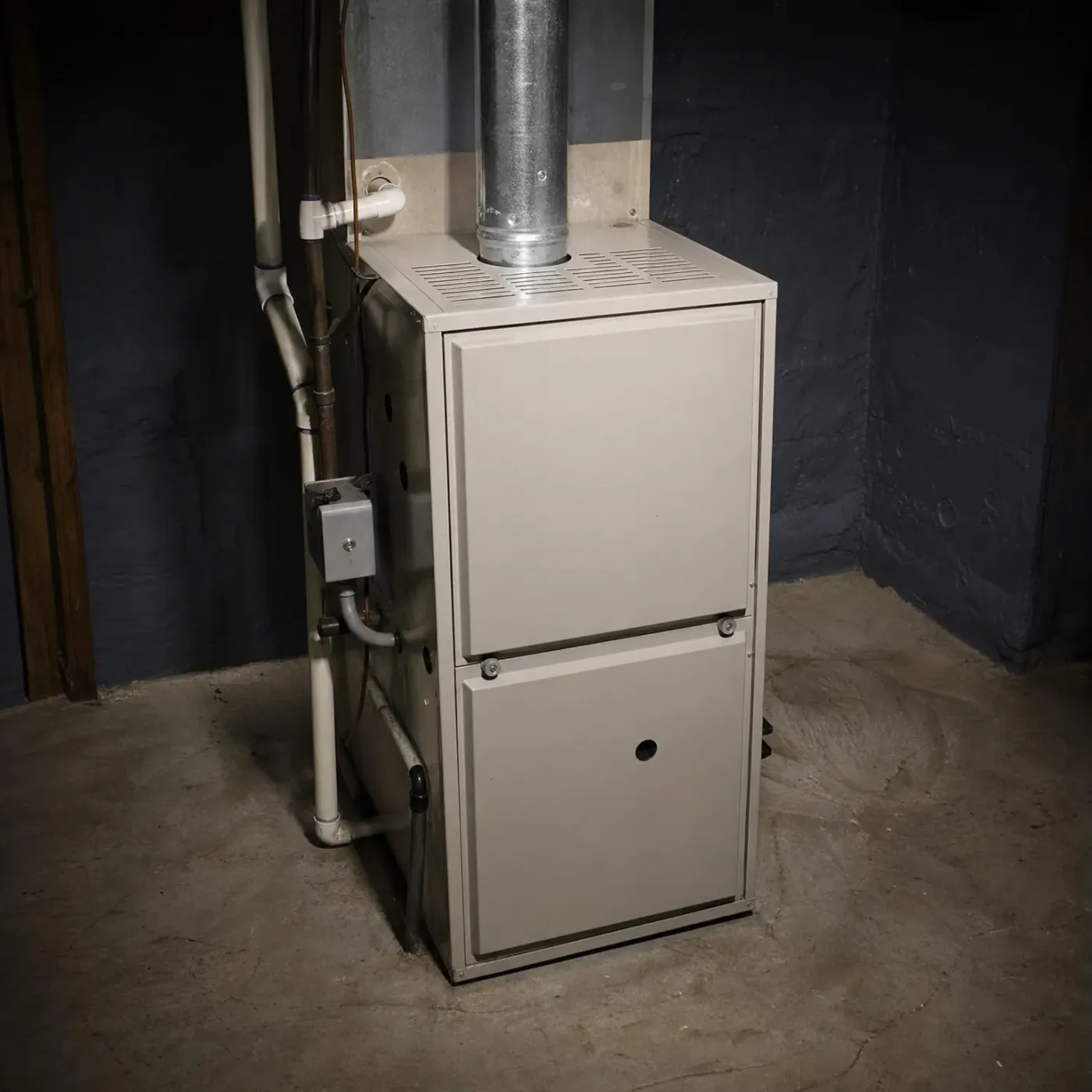
A beige gas furnace with two access panels stands on a concrete basement floor beside a dark painted wall, with a metal flue pipe rising from its top and pipes and an electrical box along its left side.

Furnace

To heat your home here$2.00per 100,000 Btu

At New York's gas and electricity prices, a gas furnace makes the same heat as a heat pump for at least 38% less.

Btu stands for British thermal unit, the standard measure of heat energy.

Where does a heat pump shine?

  • Steady, even comfort

    Instead of short bursts of heat, it keeps a gentle, steady output going. The house stays at one comfortable temperature.

    A dimly lit living room with a beige upholstered armchair and ottoman beside a window, a lit table lamp, dark blue built-in cabinets and shelves, a stone fireplace with a screen, a wooden coffee table holding a mug and woven tray, and a shaggy tan dog lying on a patterned rug.
  • Heats and cools in one system

    A heat pump runs the same way all year. It pulls heat into the house in winter and pushes it out in summer.

    A cream sofa with navy and light blue cushions and a blue fringed throw sits beneath a white sash window overlooking a green garden, with a dark built-in bookshelf at left, a potted plant in a woven basket at right, and a wooden coffee table holding a vase of white flowers, books, and a mug.
  • No gas line, nothing burning in the house

    There's no gas line to the unit and no flame anywhere in it. Carbon monoxide isn't part of the picture.

    A kitchen with navy cabinets, white countertops, gray herringbone tile backsplash, stainless range hood over a cooktop with a kettle, open wood shelves with dishes, two glass pendant lights, a window, and a bowl of green apples on the foreground island.

Where does a furnace shine?

  • Proven, simple, easy to get serviced

    The design is simple and well understood. That keeps service calls short.

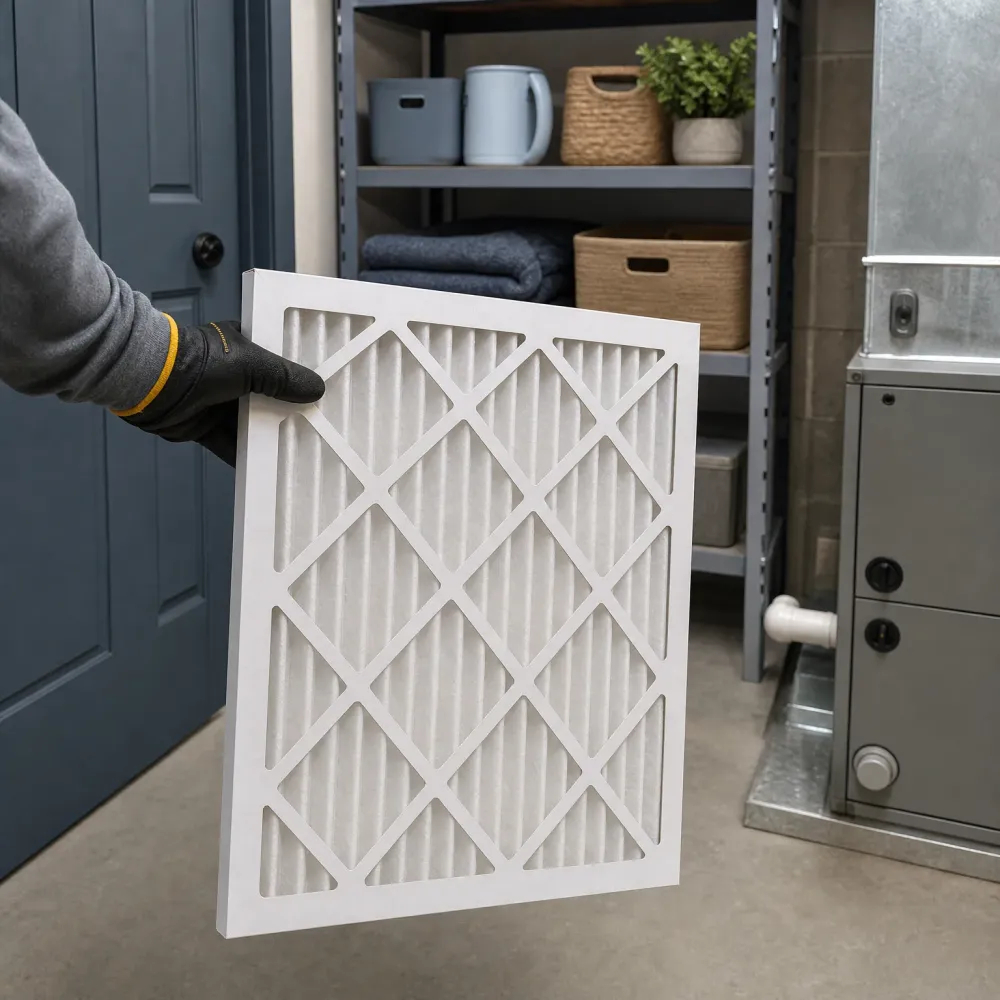
    A gloved hand holds a white pleated air filter in front of a utility room with metal shelving, baskets, a blue door, and a furnace unit.
  • Pairs with any central AC

    Most central air systems are built around a furnace. The two share the blower, the ducts and the thermostat.

    A dark metal floor register vent set into a hardwood floor near a white baseboard, with sheer curtains, a gray door, a patterned rug, and a wooden bed post with draped blanket.
  • Fast, strong heat on demand

    The air coming from the vents feels genuinely hot. That's welcome on a freezing morning.

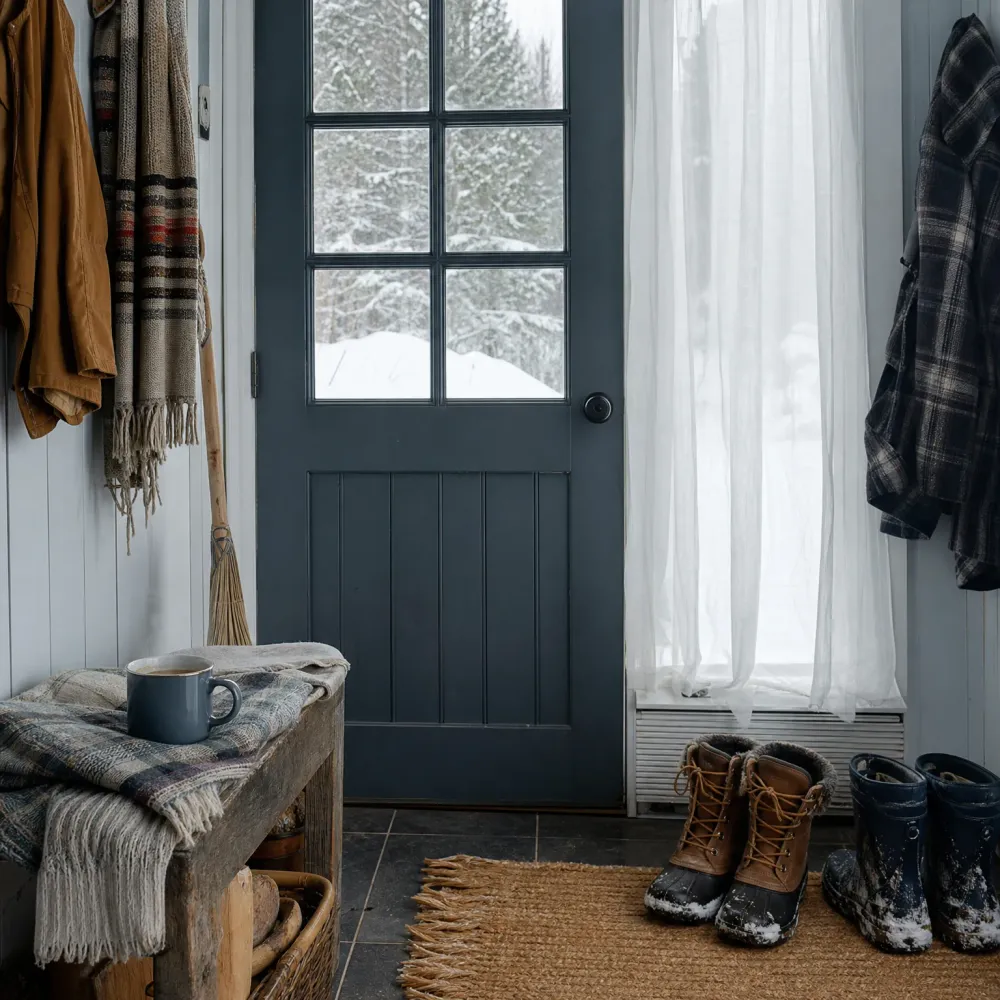
    An entryway with a dark gray glass-paned door showing snowy conifers outside, a wooden bench with plaid blanket and a mug, duck boots and rubber boots on a jute rug, and coats hanging on wall hooks.

Can a heat pump keep up here

Winter here is not extreme. The average overnight low from December through February is 28°F, and the thermometer only reaches 0°F on about one night a year or less. A heat pump's weak spot is deep cold, and New York County barely has any.

That said, a standard heat pump does lose ground before it gets anywhere near 0°F. Below 40°F its heat output starts falling short of its rating, and below about 35°F it often needs backup heat to make up the difference. The average winter night here, 28°F, sits below both marks, and so does every one of the roughly 70 nights a year that drop to freezing or colder. That's under a third of the nights across the seven months the heat runs, so a standard heat pump would be leaning on backup heat fairly often, not just on the rare brutal night.

The fix is buying the right heat pump, not avoiding the technology. A model with the ENERGY STAR Cold Climate mark has to prove, under independent testing, that it still makes at least 1.75 units of heat per unit of electricity at 5°F and holds onto 70 percent of its 47°F capacity at that temperature. A two-winter field test of prototype cold-climate heat pumps in occupied homes backs that up: backup heat covered only a small share of the heating load between 0°F and 35°F, and the home running on backup alone was rare even above 0°F. For a county that sees 0°F less than once a year, that's the heat pump this choice calls for.
Front entry of a white clapboard house with a dark blue six-panel door, black shutters, a lantern light, two potted orange mums flanking stone steps with metal railings, and fallen leaves on the ground.

What it costs to run

A gas furnace is the cheapest of the three to run here. At New York's fuel prices, a gas furnace built to the federal minimum makes 100,000 Btu of heat for $2.00, an oil furnace for $2.78, and a heat pump built to the federal minimum for $3.26. Gas beats oil, and both beat the heat pump, on this measure.

That heat pump number is the floor, not a typical result. It comes from a heat pump built to the federal minimum efficiency, with nothing added for backup heat on the colder nights, so a cold climate model, or a season with fewer cold nights, closes some of that $1.26 gap.

Fuel choice here tracks the cost order. Utility gas heats 48.5% of homes in the county, about half, electricity heats 28.4%, a little over one in four, and fuel oil heats 14.5%, a little over one in ten. If a gas line already runs to the house, a furnace is the cheaper machine to own and the more common choice by a wide margin.

Cooling tips the math the other way for some houses. A furnace only heats, so for the five months a year outside the October through April heating season it has nothing to do, and a central AC has to be bought and run alongside it. A heat pump heats and cools with one system, which is worth weighing against its higher running cost per Btu of heat, especially in a house that would be buying a new air conditioner either way.

Sources: NOAA nClimDiv · NOAA 1991–2020 seasonal normals · EIA SEDS 2024 · 10 CFR 430.32 · PNNL Building America guide · PNNL-37127 field study · ENERGY STAR product criteria · Census ACS 2020–2024

A two-story blue clapboard house with a brick chimney, gabled roof and covered front entry, behind a white picket fence with blooming lilacs and a flowering pink tree beside an empty street.

Common questions about heat pumps and furnaces

  • Can a heat pump heat a house through a New York winter?

    It can, but what kind matters here. A standard heat pump loses efficiency below about 35°F and falls short of its rated output below 40°F, and both marks sit above this area's 28°F average winter low. A unit built to the ENERGY STAR Cold Climate spec is tested to hold most of its capacity down to 5°F, which covers all but the rare night here that drops to 0°F.

  • Do I need backup heat with a heat pump here?

    Most likely, yes. A standard heat pump's heating efficiency drops below about 35°F and its output falls short of its rated capacity below 40°F, and the average overnight low here is 28°F with about 70 nights a year at or below freezing. A cold-climate model holds up better in that range, but check what you're being offered before you decide you don't need one.

  • Can I keep my furnace and add a heat pump?

    Yes, and here that pairing covers both ends of the year. The furnace handles the cold nights, down to 28°F on average and below freezing about 70 nights a year, while the heat pump covers the milder stretches of the seven-month heating season and the four months of cooling in one system.

  • Is a heat pump cheaper to run than a furnace in New York County?

    No, a gas furnace runs cheaper here. A furnace makes 100,000 Btu of heat for $2.00 at New York's gas prices, against $3.26 for a heat pump at New York's electricity prices, because electricity costs more per Btu here than gas does.