



An unfinished basement featuring a forced-air furnace, exposed wooden ceiling joists, bare concrete walls, and miscellaneous items including cardboard boxes and coiled cables on the floor.

Furnace Repair in Watertown, NY

Tell us about the job

Takes about a minute. No obligation.

RepairFurnace or heatingJefferson County, NY
Step 1 of 2

What ZIP code is the job in?

Furnaces in Jefferson County run heat from September through May, close to nine months of the year. That overnight low averages 13°F across December, January and February, so the burner is firing through long stretches of real cold, not just a few cold snaps. A furnace built for occasional use doesn't see that kind of schedule. Yours does. That's why the igniter wears out early, why a blower motor starts to groan, why a pressure switch starts failing when it never used to. The problem you're seeing now is probably just the first one to show.

9 months
September through May, your furnace is on duty
13°F
the average winter night it heats against
32 winter storms
in ten years, the nights a failure hurts most
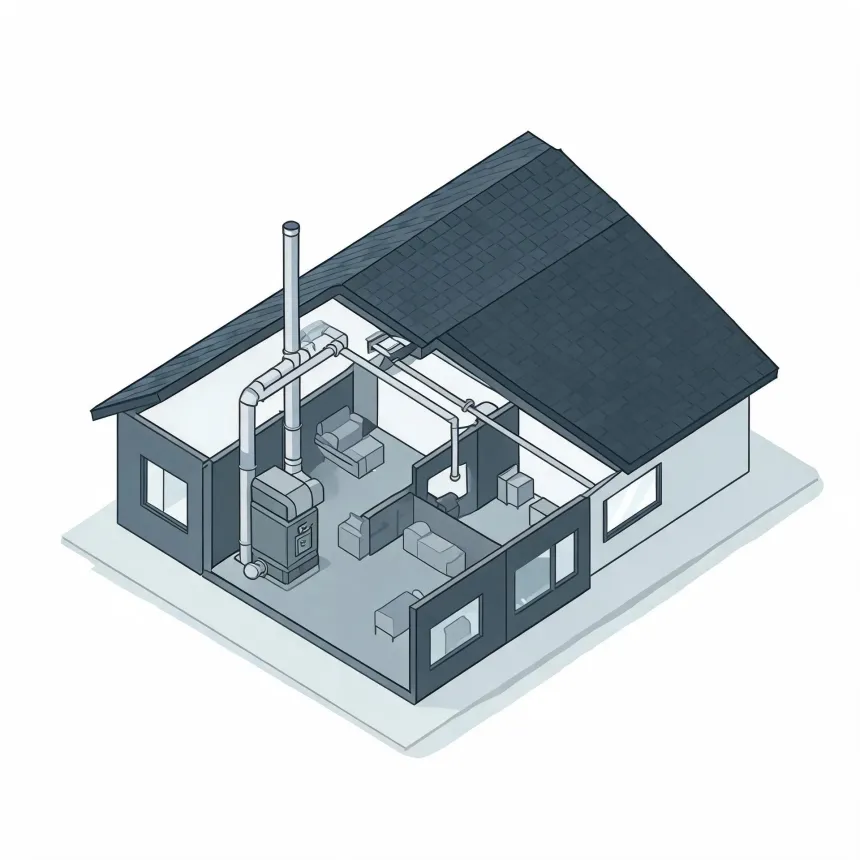
Isometric cutaway illustration of a single-story house showing interior rooms with furniture, a furnace unit connected to ducting and vertical flue pipes running through the roof.
Your furnace works hardest from November through March.

NOAA nClimDiv, 1991–2020 normals

Half the homes in Jefferson County were built in 1972 or earlier.

A furnace that came with a house that old is old enough to be near the end of its life.

Nine months of heat means September is when a weak part finally gives out

Heat runs September through May
Climate zone 6A
Winter nights average 13°F

Gas here runs $16.03 per million Btu, among the higher prices in the country. A furnace that's short-cycling or running long sets to make up for a weak part burns more of that gas every day you leave it alone. A furnace that already runs most of the year has more days for that waste to add up. A cracked heat exchanger, a failing pressure switch, a dirty flame sensor all make the burner work harder for less heat. That's money going out through the flue. Getting it looked at now costs less than paying inflated gas bills until it fails outright.

Get the furnace checked before it picks the night to quit

Yours is running close to nine months straight, through stretches at 13°F overnight. That kind of schedule is what's wearing on the part acting up now. A proper diagnosis finds which one it is before it takes the furnace down on a cold night.

Find a contractor
A gray high-efficiency gas furnace installed in an unfinished basement, surrounded by gas lines, a condensate drain, and sheet-metal ductwork.

Ask what's left in it before you fix what's broken

If your furnace came with the house, ask whoever comes out how old it actually is before you approve a repair. One built around the time half these houses went up is old enough that a repair might just be a stop on the way to replacing it. Ask what's left in it before you decide to fix the part that's failing now.

What you'll notice first

The furnace runs longer to reach the same temperature, or it shuts off before the house feels warm. You hear the blower kick on and off more than it used to. A room that was always fine now feels a few degrees off. Sometimes it's a smell, a burning dust smell on startup that doesn't clear, or a sharper smell that means a technician needs to look now, not later.

What the sound is telling you

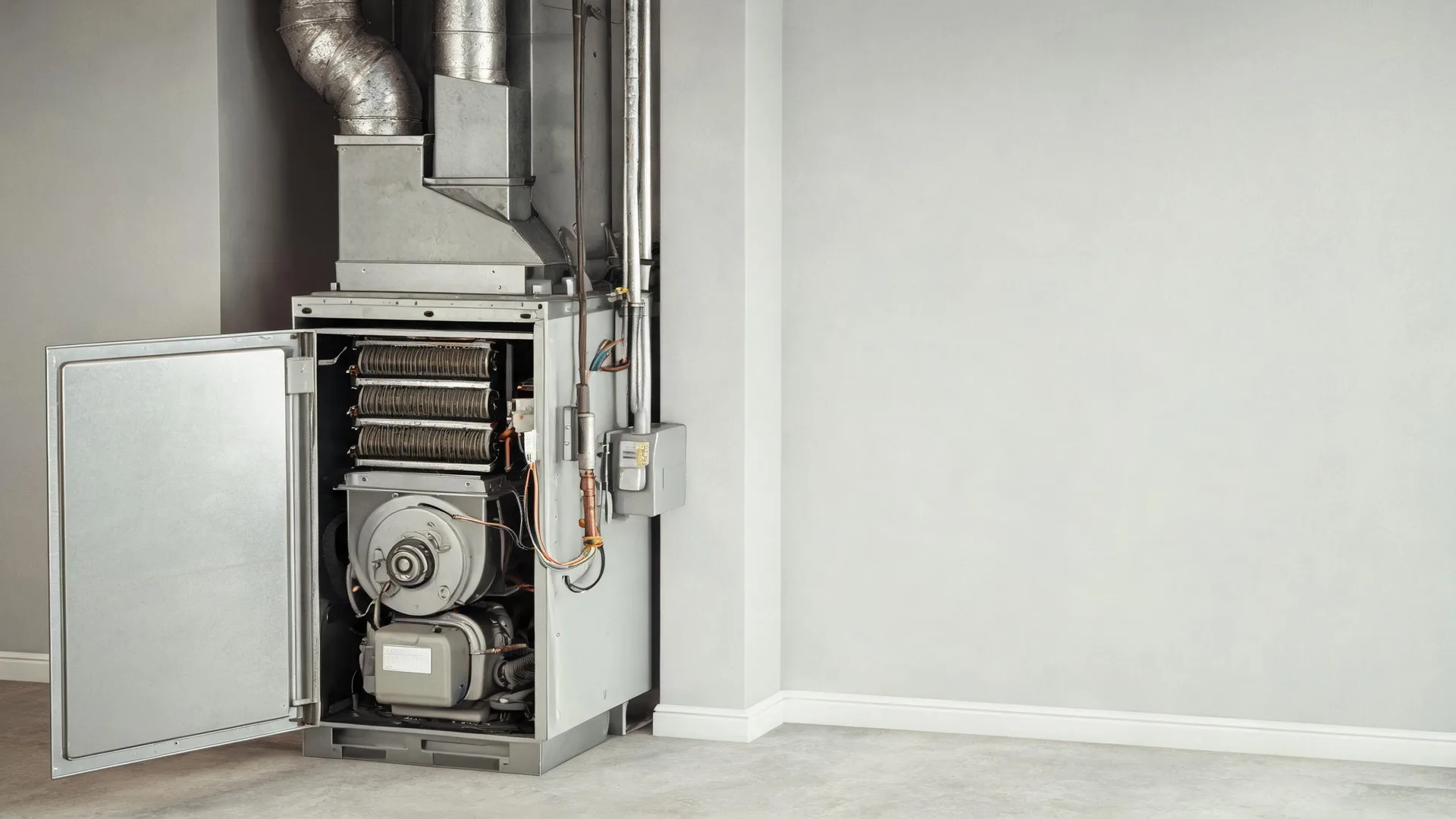
A delay between the click of the thermostat and the whoosh of the burner lighting means the igniter is on its way out. A rattle or squeal from the blower means the motor bearings are wearing down. Banging when the burner first fires usually means gas is building up before it catches, which is a bigger problem than a slow igniter. None of these fix themselves, and all of them get worse the longer the furnace keeps running on the bad part.

An unfinished basement featuring concrete block walls, exposed floor joists, a bare concrete floor, and a forced-air furnace with a large metal exhaust duct in the corner.

A new furnace would cut about $190 a year off heating for a typical Jefferson County home.

  • A new high-efficiency furnace$800 a year
  • An older furnace$990 a year

Estimates for a typical Jefferson County home, compared with an older unit built to the previous federal minimum, from EIA household energy data, New York fuel prices and NOAA climate normals. Your home will differ.

Repair makes sense when one part has failed and the heat exchanger is sound.

Replacement makes sense when the heat exchanger is cracked or the furnace keeps needing parts.

A repair makes sense when the part failing is simple and cheap, like an igniter or a flame sensor or a capacitor. Swap the part and the furnace runs like it did before. Replacement makes more sense once the heat exchanger cracks. That part can't be swapped on its own without rebuilding the furnace around it. It also makes sense when you're looking at a second or third repair in a short stretch. A furnace that keeps finding new ways to fail is telling you the whole unit is tired, not just the one part. Age matters too. A furnace near the end of its working life that needs an expensive repair is a worse bet than the same repair on a younger unit, since you'd be paying to extend something that's already most of the way done.