Half the homes here were built in 1965 or earlier
Monroe County's housing stock is older than most counties. If your house dates to that first half, the furnace in it now is not likely the original.
Takes about a minute. No obligation.
Monroe County's housing stock is older than most counties. If your house dates to that first half, the furnace in it now is not likely the original.
A furnace near the end of its life can run fine right up until a cracked heat exchanger or a failing control board ends it for good. Ask the contractor how much life is left in yours before you pay for the repair in front of you.
NOAA nClimDiv, 1991–2020 normals
Furnaces in Monroe County run from October through May.
Eight months of work a year wears down ignitors and blower motors faster than you'd expect.




A furnace that short cycles or runs longer than it should to hit the thermostat setting is burning gas it doesn't need to. At $16.03 per unit, that difference shows up on the bill fast. Have the contractor check it out rather than letting it run that way through the winter. If the furnace is near the end of its life anyway, better to find that out now than keep paying to patch it.
A repair makes sense on a furnace with years ahead of it. It makes less sense on one near the end. Ask the contractor for a straight answer on both before you decide.
Find a contractorOvernight lows average 20°F here across December, January and February. That's the stretch when a worn igniter or a tired blower motor tends to give out, not in the easier weeks on either side. If yours is acting up now, get it looked at before that cold settles in rather than after it quits on a night like that.
A hot surface igniter takes a hard electrical hit every time it fires the burners, and the ceramic wears thin a little more each cycle. It can still glow and still fail to light the gas. A furnace that clicks through its startup and then shuts down without heat is often telling you the igniter is done.
Everything else on a furnace can be replaced piece by piece. A cracked heat exchanger cannot be patched, because it lets combustion gas mix with the air going into the house. Once a contractor finds a crack there, the furnace gets condemned on the spot, not repaired.
Estimates for a typical Monroe County home, compared with an older unit built to the previous federal minimum, from EIA household energy data, New York fuel prices and NOAA climate normals. Your home will differ.
Repair makes sense when one part has failed and the heat exchanger is sound.
Replacement makes sense when the heat exchanger is cracked or the furnace keeps needing parts.
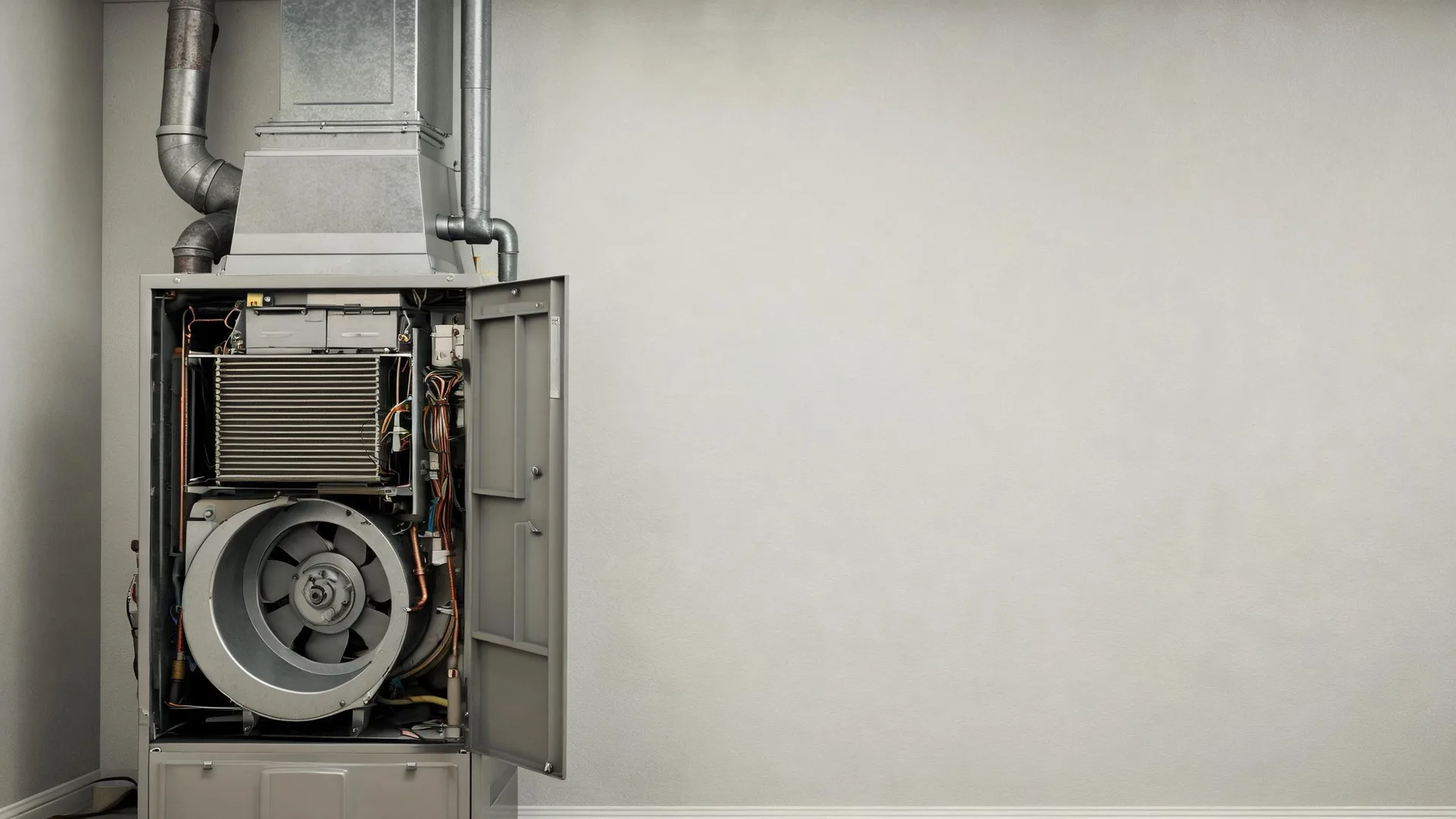
A diagnostic starts before any panel comes off. The contractor asks what the furnace is doing. Short cycling, no heat, a smell when it kicks on, a sound it didn't used to make. Then the cover comes off and they watch it run through a full cycle, start to finish, because some faults only show up partway through. They'll check the flame. It should burn blue, maybe a little yellow at the tip, since a flame that's mostly yellow means something isn't burning clean. A meter comes out to test the igniter's resistance and to check that the control board is sending power where it should. If the furnace trips a limit switch or locks out partway through, that's where the real cause usually turns up, not in the part that happened to fail last.