


Heat pump vs furnace in Monroe County, New York

Price a Replacement

Quotes from pros near you

A person's hand adjusts a round thermostat on a blue-gray interior wall, with a tool bag on the floor below and a living room visible through a doorway.

Tell us about the job

Takes about a minute. No obligation.

New system or replacementMonroe County, NY
Step 1 of 3

What kind of equipment?

Which costs less to run in Monroe County?

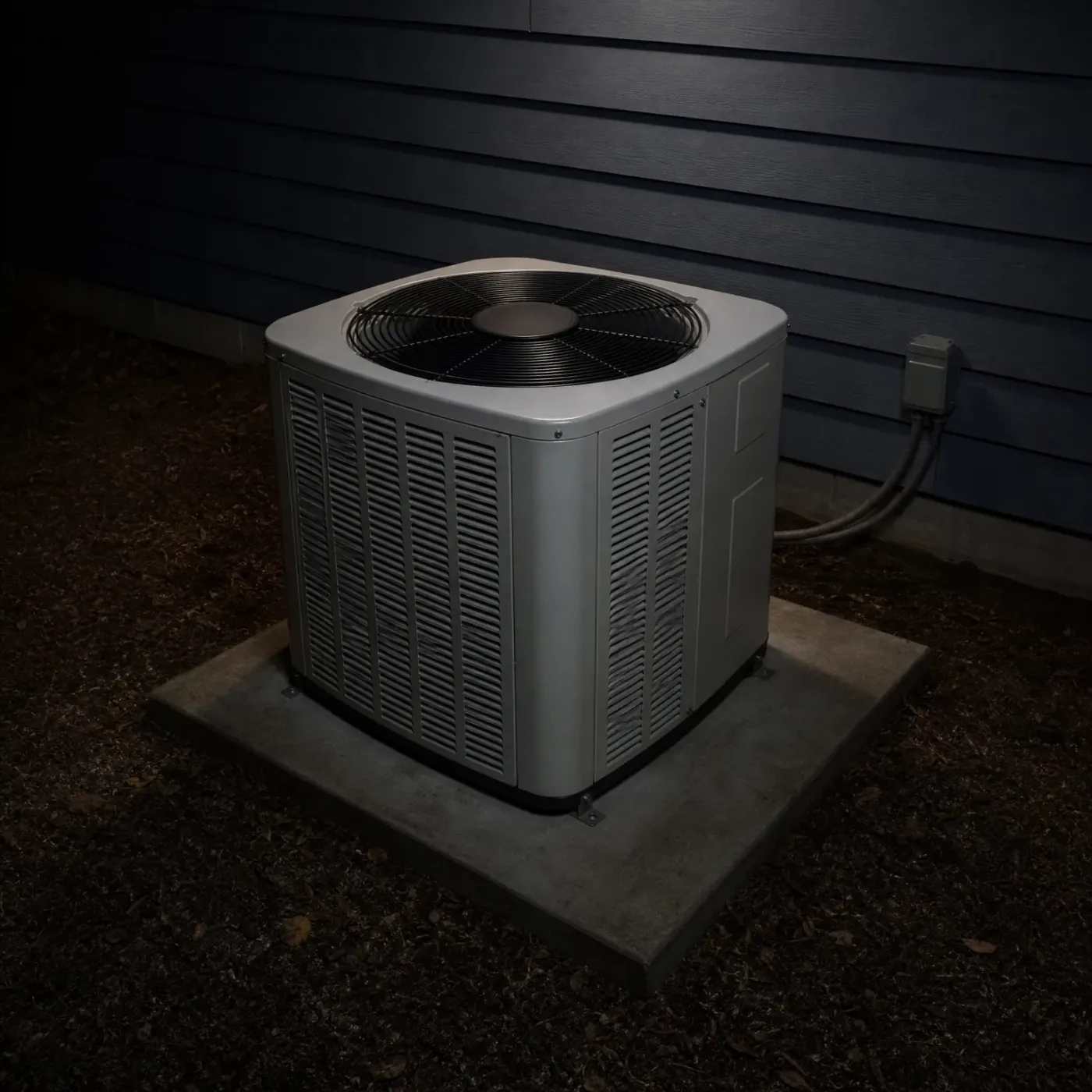
A gray outdoor condenser unit with a top fan grille sits on a concrete pad beside a dark horizontal-lap sided wall, with refrigerant lines running to a small wall-mounted box.

Heat pump

To heat your home here$3.26per 100,000 Btu

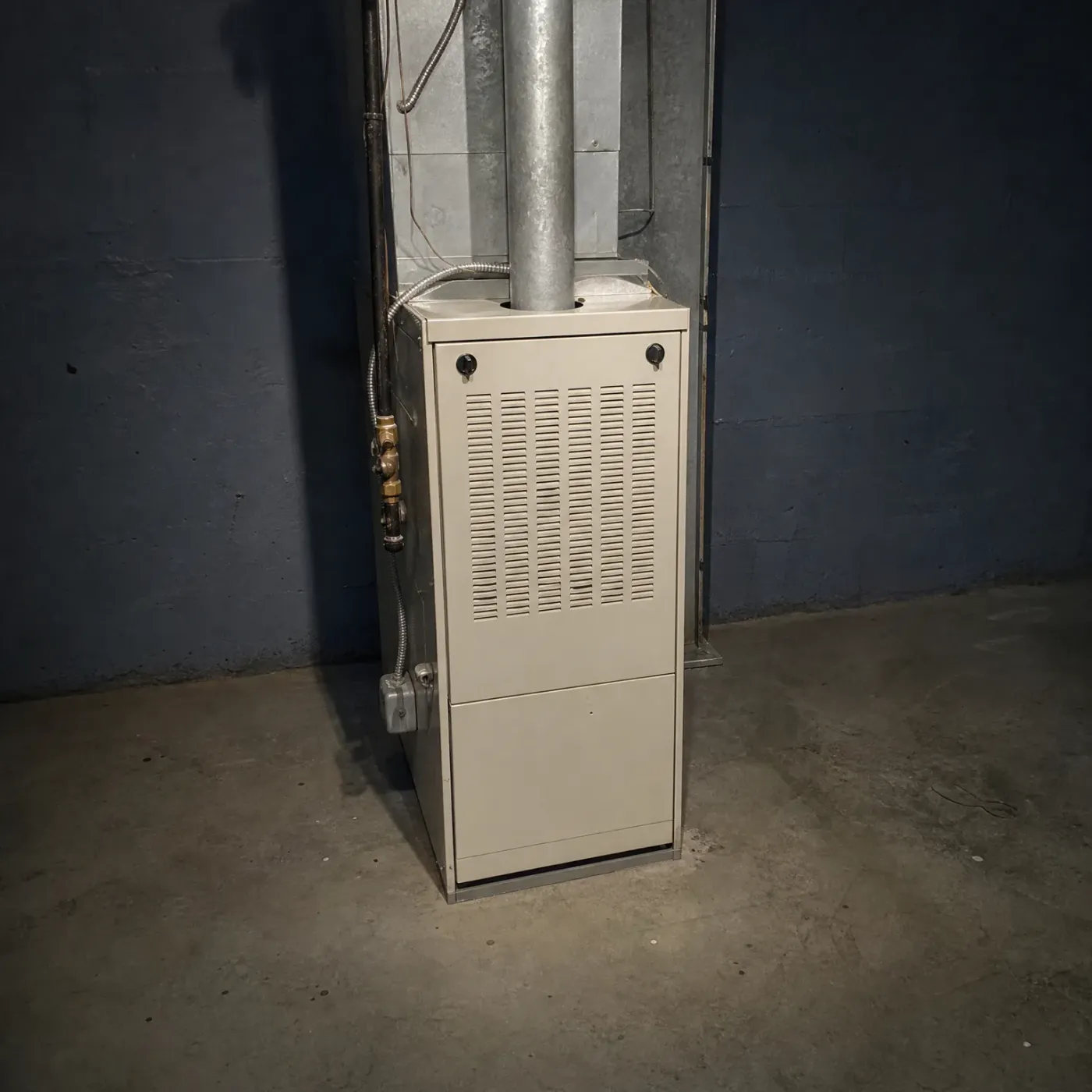
A beige furnace with a louvered front panel stands on a concrete floor against a gray wall, with a metal flue pipe and ductwork above it and gas piping and an electrical box at its left side.

Furnace

To heat your home here$2.00per 100,000 Btu

At New York's gas and electricity prices, a gas furnace makes the same heat as a heat pump for at least 38% less.

Btu stands for British thermal unit, the standard measure of heat energy.

Where does a heat pump shine?

  • Heats and cools in one system

    A heat pump runs the same way all year. It pulls heat into the house in winter and pushes it out in summer.

    A living room with blue-grey walls, a cream sofa with blue and patterned cushions and a grey fringed throw, a large window showing a green garden, a table lamp on a round wooden side table, built-in shelving, and a wooden coffee table with a bowl, books and a vase of white flowers.
  • No gas line, nothing burning in the house

    A heat pump runs on electricity alone. Nothing burns inside the house.

    A kitchen with a dark navy island holding a white countertop, black induction hob and stainless steel kettle, grey perimeter cabinets, two glass pendant lights, an open wooden shelf with plants and boards, and a navy panelled door.
  • Steady, even comfort

    A heat pump runs long and low instead of blasting on and off. Rooms hold an even temperature all day.

    A dimly lit living room with a dark blue armchair holding an open book and a knit throw, a lit table lamp by a window showing snow outside, built-in bookshelves, a stone fireplace with a fire burning, and a golden-colored dog sleeping on a fleece mat.

Where does a furnace shine?

  • Runs on the gas most homes here already use

    Gas heats 74.6% of homes in Monroe County, so most houses already have the line a furnace needs. If yours is one of them, a furnace uses service that's already run to the house instead of adding new load to your electrical panel.

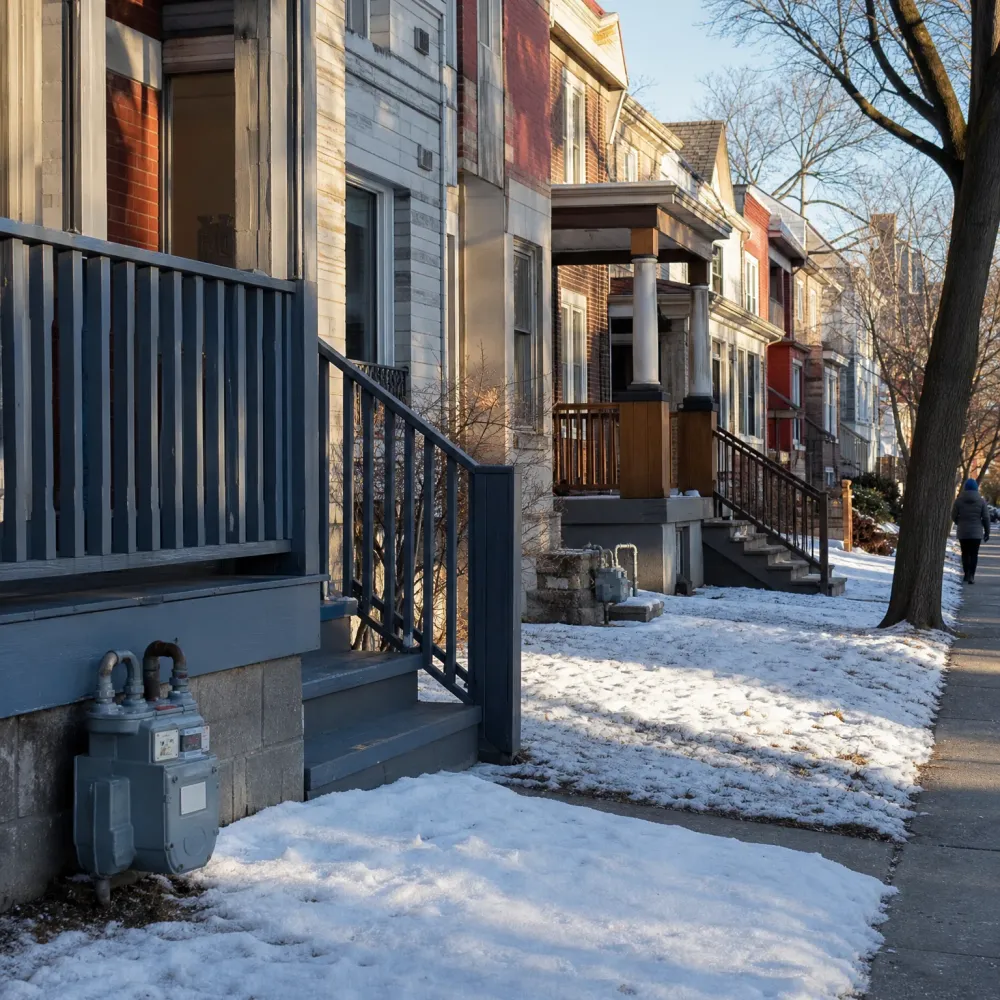
    A row of attached two-story houses with porches, railings and front steps along a snow-patched sidewalk, with a bare tree and a distant person walking in a dark coat.
  • Pairs with any central AC

    Most central air systems are built around a furnace. The two share the blower, the ducts and the thermostat.

    Sunlit living room corner with wood flooring, a floor air vent near a glass door with white sheer curtains, a wooden dresser, a potted plant in a woven basket, a gray armchair, a patterned fringed rug, and a dark mug and book on a wooden table.
  • Fast, strong heat on demand

    A furnace pushes out hot air within minutes of switching on. A cold house warms up fast.

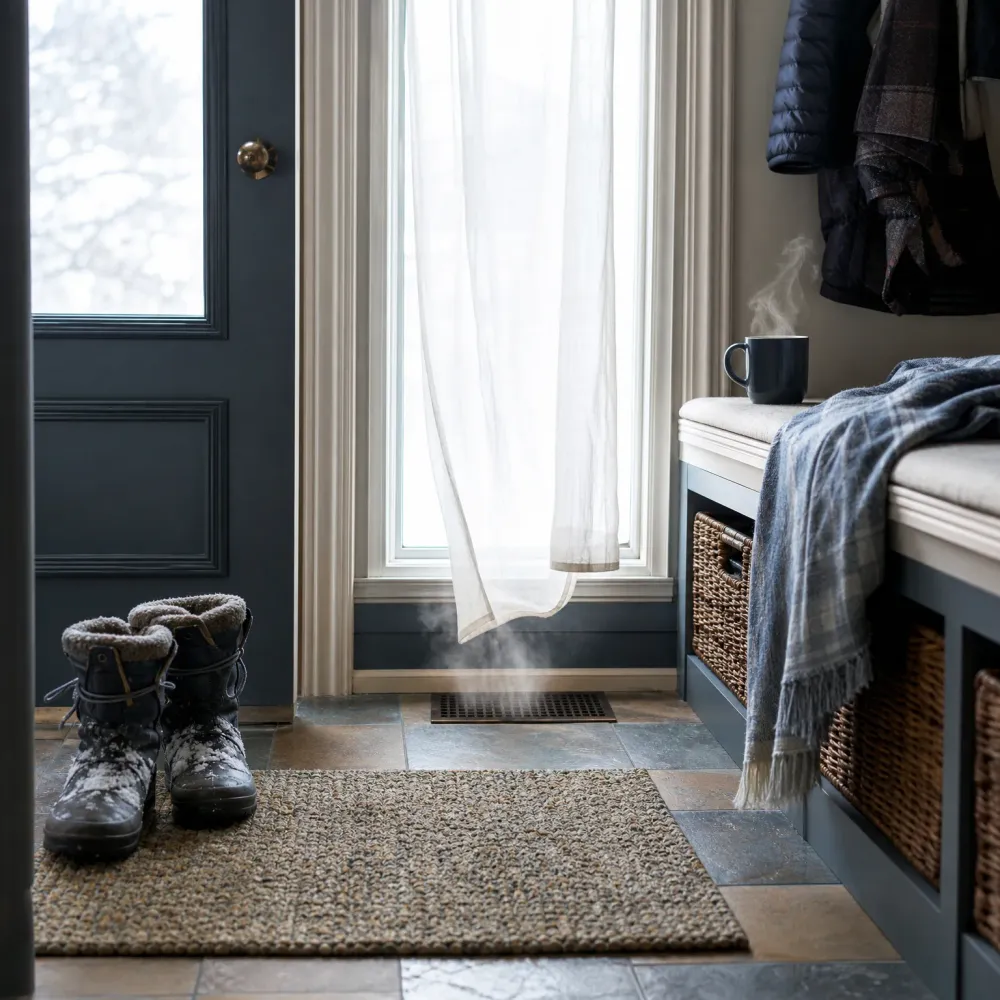
    A mudroom entry with snow-dusted winter boots on a woven jute mat, a dark blue door with glass panel, a sheer-curtained window, a floor vent emitting visible steam, and a bench with wicker baskets, a gray plaid throw, and a steaming mug.

Can a heat pump keep up here

Your winter low here averages 20°F, and the house needs heat eight months of the year, October through May. That matters because a standard heat pump starts losing ground before it gets anywhere near 20°F. Below 40°F it already puts out less than its rated capacity, and below about 35°F it usually needs backup heat to make up the difference. Here, the overnight low sits at or below freezing on about 135 nights a year, over half the nights the heat runs. Every one of those nights falls below both marks.

That does not mean a heat pump leaves you cold. A model built to the ENERGY STAR Cold Climate standard has to deliver 1.75 units of heat per unit of electricity at 5°F, and hold onto 70 percent of its 47°F capacity at that same temperature, checked by outside testing. In a two-winter field test of these cold-climate models in real homes, backup heat covered only a small share of the heat needed between 0°F and 35°F, and the homes almost never ran on backup alone unless it was below 0°F. That happens here about 6 nights a year. So the real question for this county is not whether a heat pump can heat the house. It is whether the one you are looking at is built for 20°F nights or just rated for them.
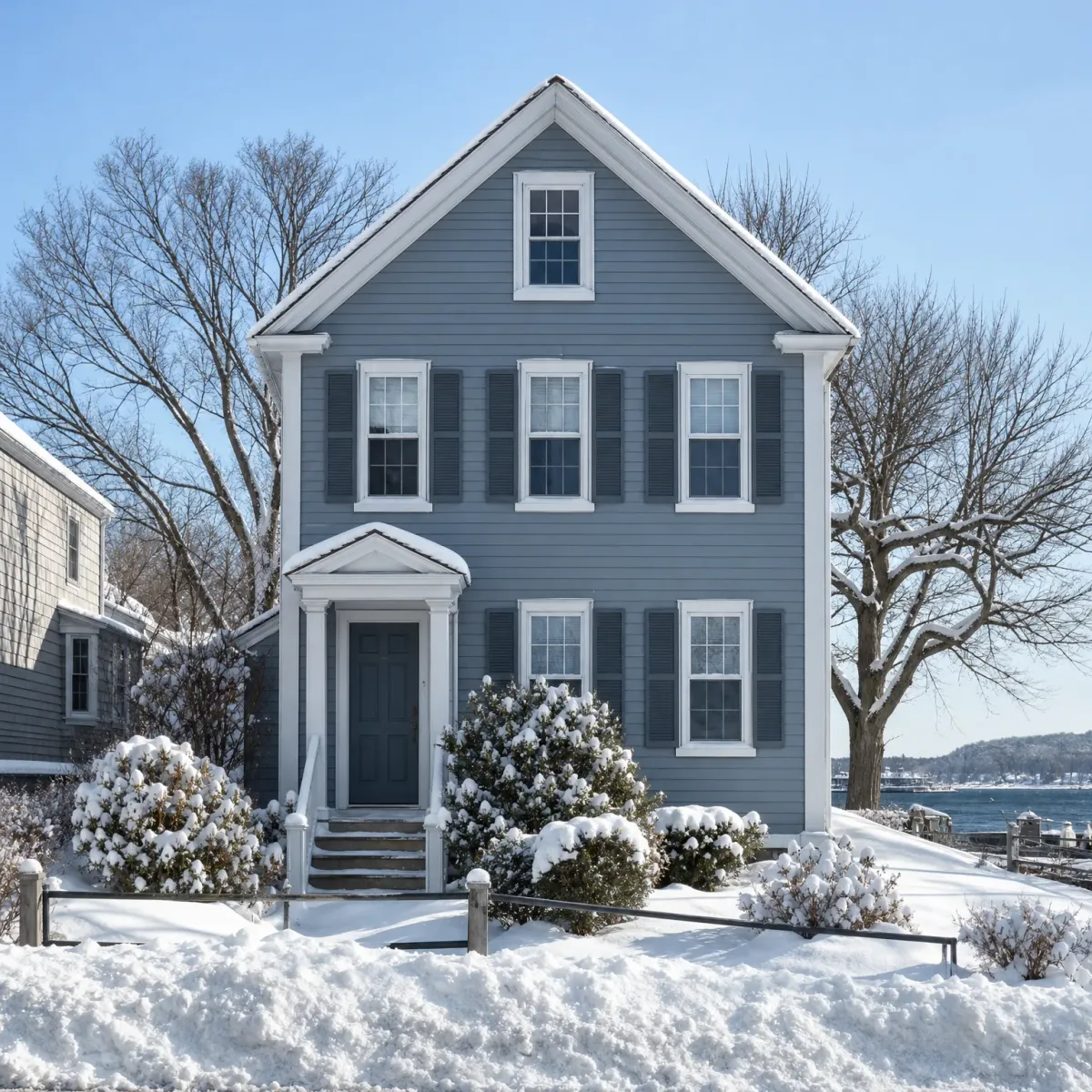
A two-story gray clapboard house with white trim, dark shutters and a small covered entry porch, surrounded by snow-covered shrubs and bare trees, with water visible in the background.

What it costs to run and what's already in the house

On price alone, the furnace wins here. A gas furnace makes the same heat for $2.00 per 100,000 Btu against $3.26 for a heat pump at the federal minimum, at New York's own fuel prices. That is gas running at least 38 percent cheaper to operate, and it is also the fuel already piped into three out of four houses in this county. A heat pump runs on electricity, which heats about one in five homes here.

The furnace only does one job. It has nothing to do in July and August, when the house needs cooling instead, so it is paired with a separate central air system the other four months. A heat pump heats and cools from the same unit, no gas line and nothing burning inside the house. If your home is already set up with gas heat and central air, replacing the furnace alone is the cheaper path. If you are weighing a new AC system anyway, a cold-climate heat pump replaces both and is worth pricing against adding straight gas heat plus a separate AC, with the running-cost gap above as part of that math.

Sources: NOAA nClimDiv · NOAA 1991–2020 seasonal normals · PNNL Building America guide · PNNL-37127 field study · ENERGY STAR product criteria · EIA SEDS 2024 · 10 CFR 430.32 · Census ACS 2020–2024

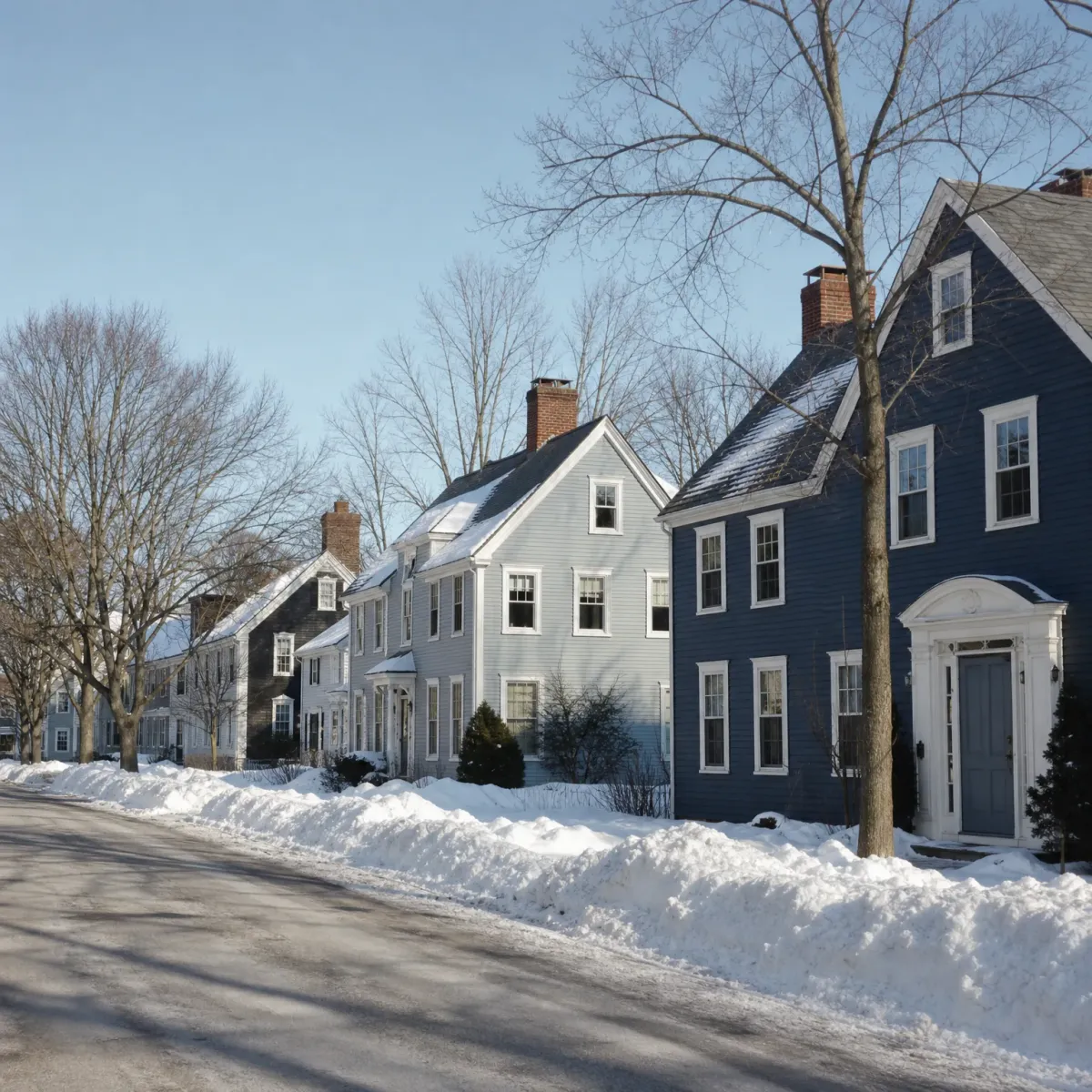
A row of clapboard houses with brick chimneys along a plowed street, with snowbanks lining the roadside and bare trees under a clear sky.

Common questions about heat pumps and furnaces

  • Can a heat pump heat a house through a New York winter?

    A standard heat pump struggles once it gets below about 35°F outside, and the overnight low here averages 20°F across December, January and February. Below 40°F its heat output falls short of what it's rated for, and that's most nights all winter here, not just the coldest ones. A cold climate model holds up better in the cold, but a standard one will lean hard on backup heat.

  • Do I need backup heat with a heat pump here?

    With a standard heat pump, yes. Its output drops below 40°F and it often needs backup once it's below about 35°F, and the average winter night here is 20°F. A cold climate heat pump is built to handle more of that on its own, down to 5°F, but check which one is being quoted before deciding you don't need backup.

  • Can I keep my furnace and add a heat pump?

    Yes, that's a dual fuel setup, and it suits a place like this. The heat pump handles the milder nights, then the furnace takes over once it gets cold enough that the heat pump can't keep up or can't keep up cheaply. With about 135 nights a year here at or below freezing, the furnace would still get real work.

  • Is a heat pump cheaper to run than a furnace in Monroe County?

    No, a gas furnace runs cheaper here. The furnace costs $2.00 per 100,000 Btu of heat against $3.26 for a heat pump, at New York's average fuel prices. That's with both machines built to the federal minimum, and the heat pump's number doesn't include any backup heat it would need on the colder nights.