



Two white colonial houses with lit windows and black shutters photographed at dusk along a tree-lined residential street.

Furnace Repair in Oswego, NY

Tell us about the job

Takes about a minute. No obligation.

RepairFurnace or heatingOswego County, NY
Step 1 of 2

What ZIP code is the job in?

Half the houses in Oswego County were built in 1971 or earlier. A furnace in one of those homes isn't necessarily the original unit, but it's worth finding out how old yours actually is before you pay for a repair. An older house has had more chances for ductwork, venting, or the furnace itself to be patched or replaced piecemeal over the years, and that history matters when a repair tech is trying to figure out why something failed. If your furnace came with the house, or came with whatever system replaced the original, it may already be well into its expected lifespan. A repair now might fix the immediate problem and still leave you with a unit that's close to done.

8 months
October through May, your furnace is on duty
17°F
the average winter night it heats against
33 winter storms
in ten years, the nights a failure hurts most
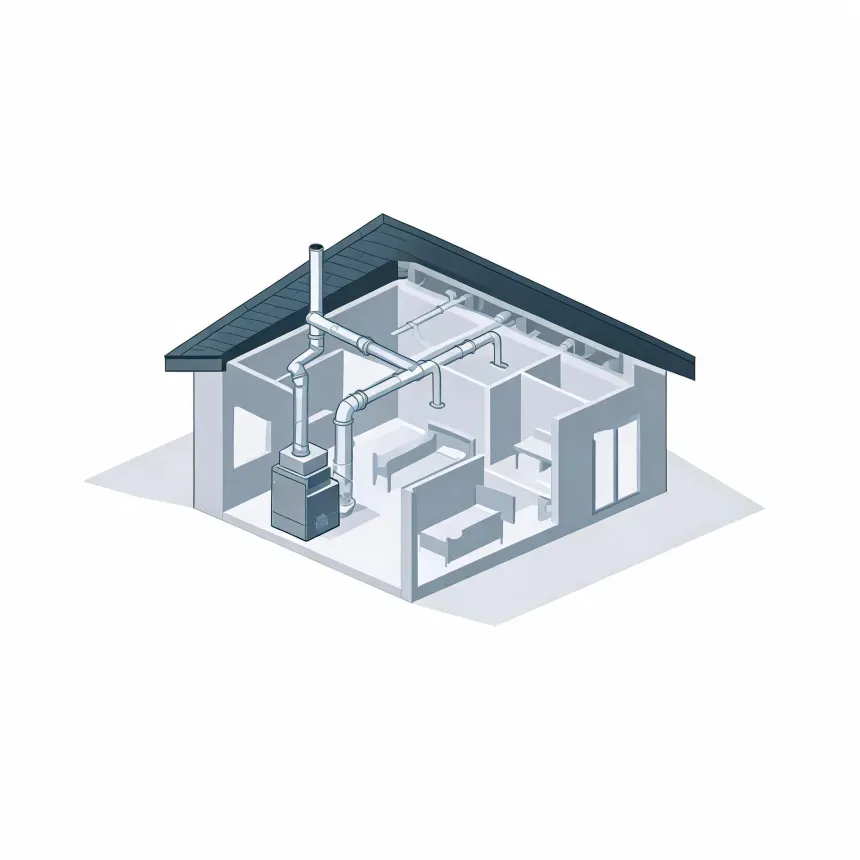
Isometric cutaway illustration of a small single-story house showing interior rooms, a furnace unit with a flue, and connected ductwork running below the dark gabled roof.
Your furnace works hardest from November through March.

NOAA nClimDiv, 1991–2020 normals

Furnaces in Oswego County run eight months a year, October through May.

A furnace carrying that much of the year's work shows its age sooner than the calendar says.

Running that much, it runs up a real bill

Heat runs October through May
Winter nights average 17°F
33 winter storms from 2015 to 2024

October is when the first real cold hits Oswego County, and that's when a furnace that limped along last spring tends to quit for good. A cracked heat exchanger or a weak igniter can sit fine all summer with the system off, then fail the first night it has to run for hours straight. Heat here doesn't ease in. Once homes start running furnaces in October, they don't stop until May, so there's no gentle stretch to catch a problem early. Getting a furnace looked at in September, before it's asked to carry that load, is the one window where a technician can catch a failing part before it fails.

Find out what you're repairing before you pay for it

A repair tech can tell you how old your furnace actually is and how much life it has left, before any work starts. That number is what decides whether a repair makes sense or whether you're better off putting the money toward a new unit.

Find a contractor
A man in a gray shirt and tan pants carries a worn canvas tool bag up porch steps toward a dark blue paneled front door, with a potted shrub beside the entry.
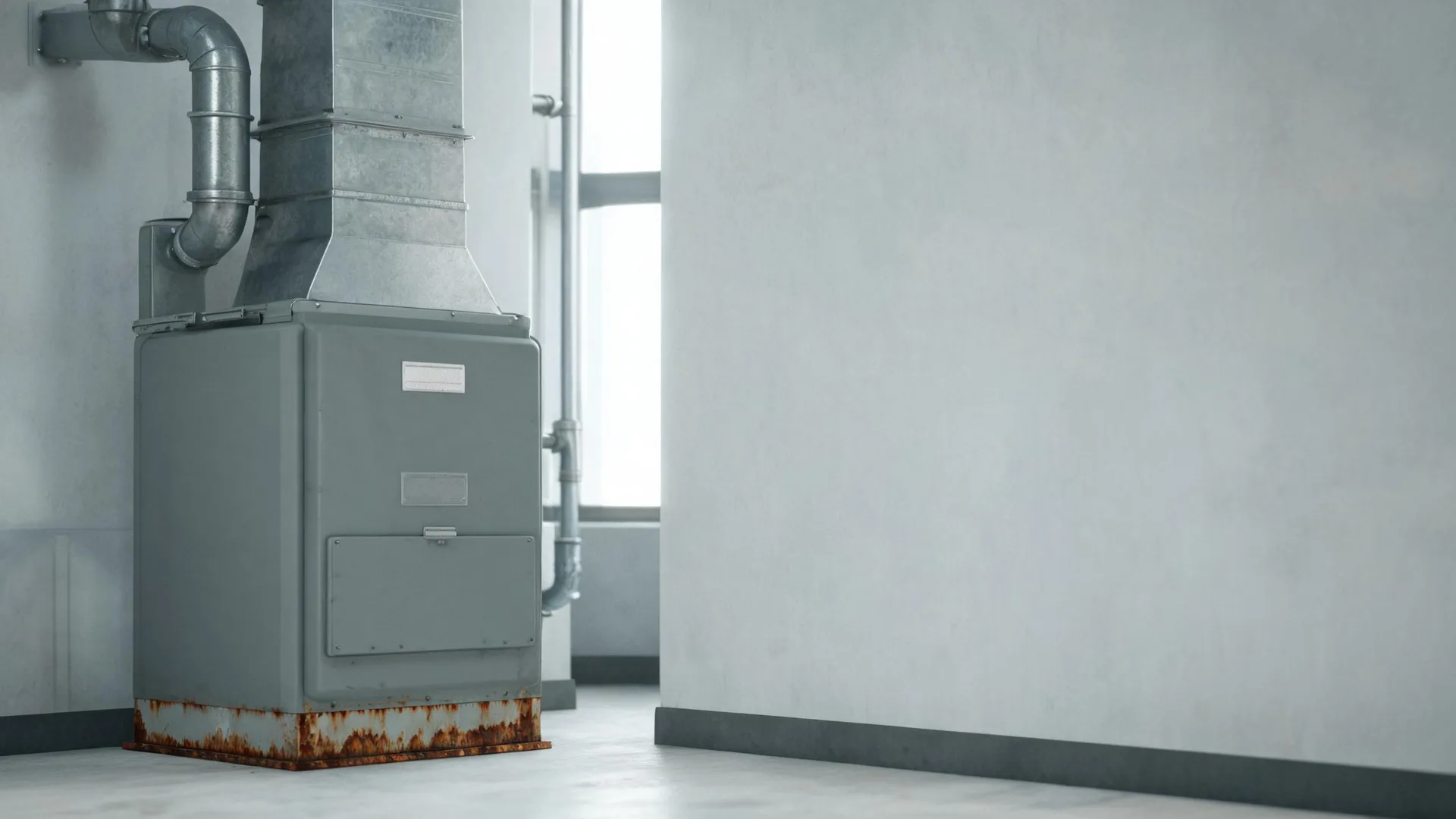
A gray gas furnace with attached ductwork and piping installed in an unfinished concrete basement.

Eight months a year, with no easy stretch

Winter storms hit Oswego County 33 times between 2015 and 2024. Every one of those means hours of nonstop run time, often overnight, with a system that doesn't get a break until the weather lets up. That's when a part that's been struggling for years finally gives out, usually in the middle of the stretch when you need it most. If your furnace has been short-cycling, making noise, or blowing cooler air than it used to, get it looked at before the next storm decides the timing for you.

What a failing furnace sounds and feels like

A furnace that's struggling usually tells you before it quits outright. Air coming out the vents feels lukewarm instead of hot. The burners cycle on and off every few minutes instead of running a full stretch. You might hear a bang when it fires up, which usually means gas is pooling before it lights instead of catching right away. A squeal points to a motor bearing wearing out. Rooms that used to heat evenly now have cold spots, especially ones farthest from the furnace.

Which of those are worth a repair call

Some of these signs are a quick fix. A dirty flame sensor causing short cycles, a clogged filter choking airflow, a blower wheel that needs cleaning: a tech sorts those out in one visit. Others are warning signs of something bigger. A furnace that trips its limit switch repeatedly, or one that's started producing a sharp odor when it runs, needs a look before you run it again. Banging, squealing, or cycling that's gotten worse over weeks rather than appearing overnight usually means a part is failing, not failed yet, which is the better time to catch it.

An unfinished basement containing a gas furnace with ductwork in the foreground and miscellaneous stored items along the far concrete wall.

A new furnace would cut about $180 a year off heating for a typical Oswego County home.

  • A new high-efficiency furnace$760 a year
  • An older furnace$940 a year

Estimates for a typical Oswego County home, compared with an older unit built to the previous federal minimum, from EIA household energy data, New York fuel prices and NOAA climate normals. Your home will differ.

Repair makes sense when one part has failed and the heat exchanger is sound.

Replacement makes sense when the heat exchanger is cracked or the furnace keeps needing parts.

A diagnostic visit starts before the panel comes off. A tech asks what you've noticed, when it happens, whether it's gotten worse recently or started all at once. That history narrows things down fast. Then the cover comes off and they watch it run through a full cycle, start to finish, because some problems only show up at ignition and others only show up after the blower's been moving air for a few minutes. They'll check the flame itself, a steady blue flame means clean combustion, while a flickering or yellow one points to a burner that needs cleaning or worse. They'll test the safety switches, the igniter or pilot, and pull the filter to see what it's doing to airflow. By the end you should know exactly what failed, why, and whether it's a part worth replacing or a sign the whole unit is wearing out.