




An unfinished basement featuring concrete block walls, exposed floor joists, a bare concrete floor, and a forced-air furnace with a large metal exhaust duct in the corner.

Furnace Repair in Newark, NY

Tell us about the job

Takes about a minute. No obligation.

RepairFurnace or heatingWayne County, NY
Step 1 of 2

What ZIP code is the job in?

Half the homes in Wayne County were built in 1968 or earlier. That matters when a furnace starts acting up, because the furnace rarely outlasts the house by much. If yours came with the place and nobody's swapped it since, it may already be on borrowed time. A repair can still make sense, but it's worth asking the technician how many years they think are left before you pay for the fix. Spending on a furnace that's near the end just means spending again soon after.

8 months
October through May, your furnace is on duty
20°F
the average winter night it heats against
54%
of homes here heat with gas, so most furnaces here burn gas
18 winter storms
in ten years, the nights a failure hurts most
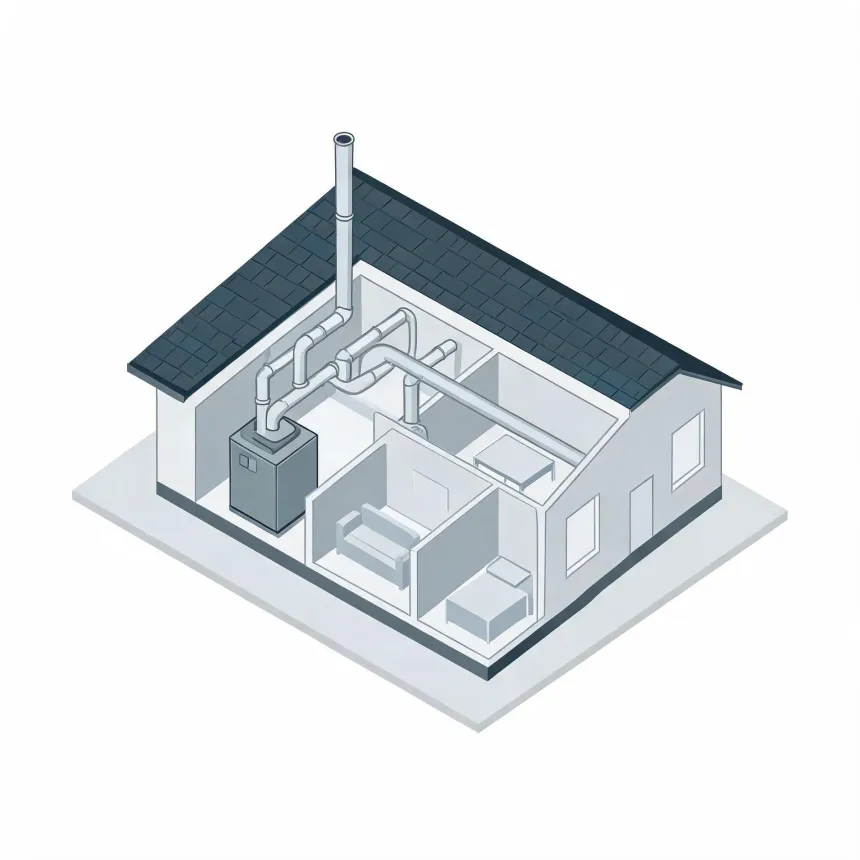
Isometric cutaway illustration of a single-story house showing a gray furnace connected to white ductwork and a flue pipe extending through the shingled roof, with simplified furniture in the interior rooms.
Your furnace works hardest from November through March.

NOAA nClimDiv, 1991–2020 normals

A furnace that short cycles, turning on and off before the house warms up, usually has a dirty flame sensor or a clogged filter behind it.

Either one makes the burner shut down early, and the fix is quick once a tech gets the panel open.

Gas here runs $16.03 per million Btu, and this furnace will burn it from October to May

Heat runs October through May
Winter nights average 20°F
Climate zone 5A

Furnace here comes on in October and keeps running into May. The first cold snap is when a weak part usually gives out, because that's the first time all year the system has to run for hours at a stretch. A furnace that's been sitting all summer won't show a bad igniter or a tired blower motor until it's asked to carry the house like that again. September is a good time to have it checked, before it has to run eight months straight.

This furnace runs eight months a year here. Find out what's actually wrong with it.

Eight months of heat a year, with overnight lows averaging 20 in December, January and February, is a lot to ask of one furnace. That kind of stretch is usually what's wearing on the part that's acting up now. Get it diagnosed properly so whatever you fix actually holds.

Find a contractor
A man in a cap, dark jacket and tan work pants carries a canvas tote bag as he steps up concrete stairs toward a blue front door, with a potted shrub beside him.
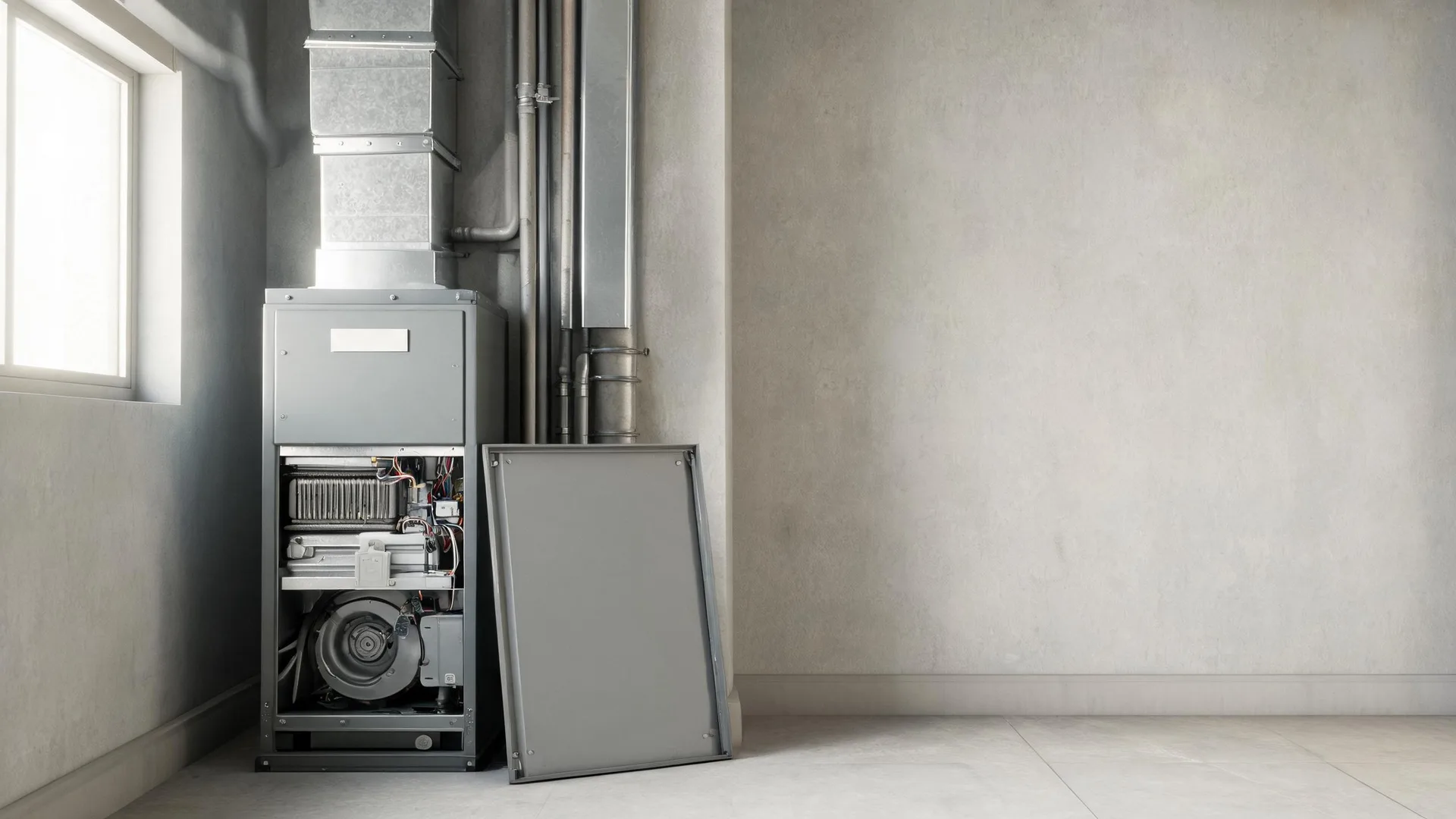
A gas furnace with attached ductwork, gas piping, and condensate lines installed in a concrete-block basement.

Ask what's left before you decide

When a repair tech is at the furnace, ask them straight out how many years they'd give it. A straight answer, not a guess, with a reason behind it. Most will tell you if the heat exchanger is cracked or close to it, since that's the part that ends a furnace's life. Weigh that answer before you decide what to do about today's problem.

The igniter wears out from use, not age

A hot surface igniter cycles on every time the furnace calls for heat, and each cycle stresses it a little more until it cracks. By the time it fails, it usually just stops glowing, and the furnace won't light at all.

A cracked heat exchanger ends the discussion

Everything else on a furnace gets repaired. A cracked heat exchanger gets the furnace replaced, because it lets combustion gas mix with the air going into the house. A technician checks it early for exactly that reason.

An unfinished concrete basement containing a gas furnace with sheet-metal ductwork, utility shelving, and exposed overhead joists.

A new furnace would cut about $180 a year off heating for a typical Wayne County home.

  • A new high-efficiency furnace$700 a year
  • An older furnace$880 a year

Estimates for a typical Wayne County home, compared with an older unit built to the previous federal minimum, from EIA household energy data, New York fuel prices and NOAA climate normals. Your home will differ.

Repair makes sense when one part has failed and the heat exchanger is sound.

Replacement makes sense when the heat exchanger is cracked or the furnace keeps needing parts.

Most furnace calls aren't a replace-or-repair decision. A dirty sensor, a bad capacitor, a worn blower belt, these get fixed and the furnace runs on like nothing happened. The question only gets hard when the part that failed is expensive on its own, a draft inducer motor or a control board, and the furnace is already old enough that something else is likely next. At that point it helps to think about what else has already needed work, not just what's broken today. One repair on an otherwise sound furnace is easy math. A string of repairs in a short stretch of time is telling you something a single repair didn't.