



What the cold does to a heat pump here
Winter is the long season in Wayne County, eight months of heat against two of cooling, so this choice is really about how each machine handles December, January and February here. The overnight low averages 20°F across those three months. That is below both marks that matter for a standard heat pump: below 40°F it starts putting out less heat than its rating, and below about 35°F it often needs backup heat to make up the difference. At 20°F average, a standard heat pump is below both marks on a typical night, not just on the cold ones.
It is not just the average night. About 135 nights a year here fall to freezing or below, over half of the nights across the whole heating season. Every one of those nights is also below the 35°F and 40°F marks. So this is not a question of a few hard cold snaps a standard heat pump has to get through. It is most of the season.
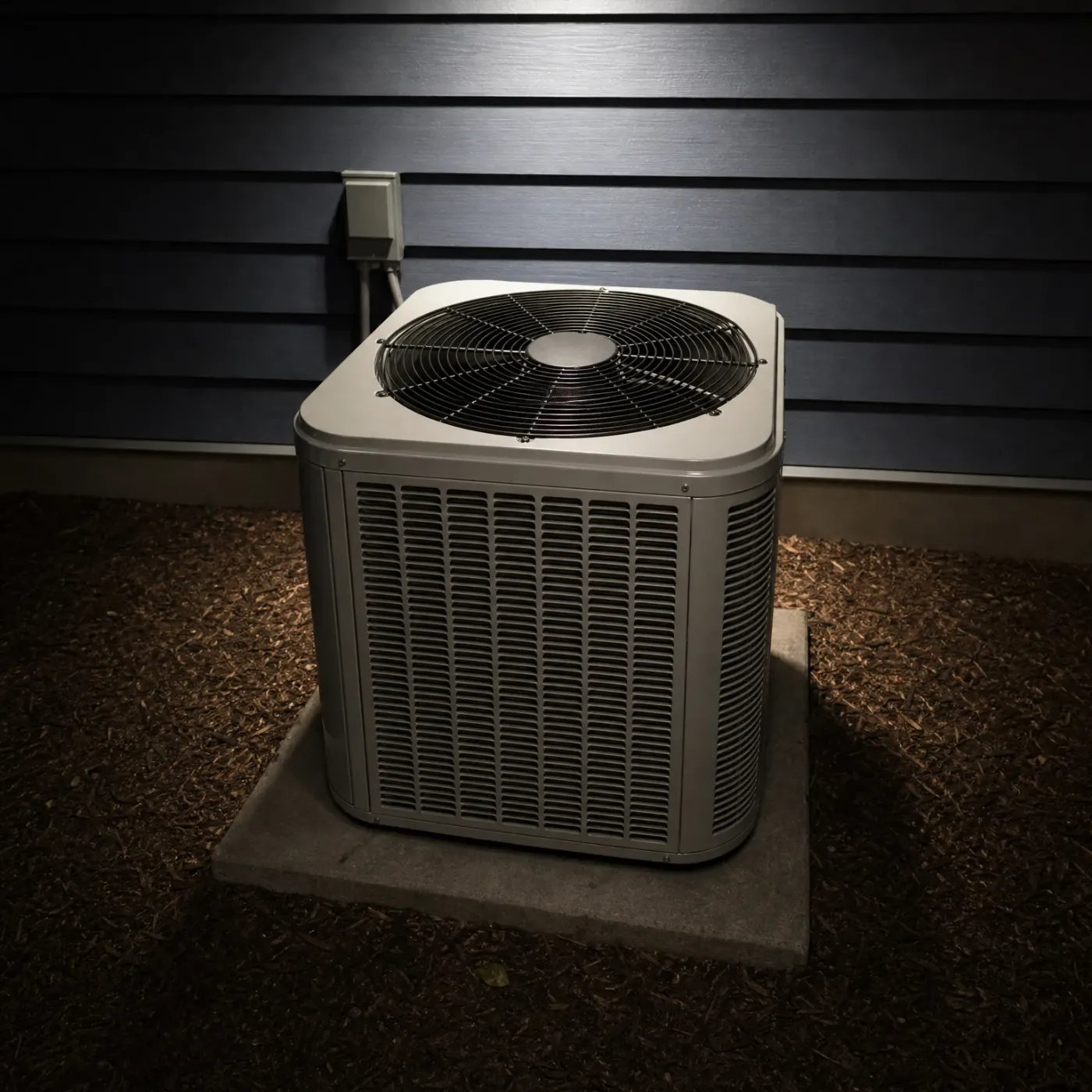
The nights that reach 0°F or below are rare, about 5 a year. That matters because it is the kind of heat pump, not just the cold, that decides what happens on a night like that. A heat pump with the ENERGY STAR Cold Climate rating has been tested to make real heat down to 5°F, at least 1.75 units of heat for every unit of electricity it uses, and to hold on to most of its 47°F capacity at that temperature. A standard heat pump was never tested or built to do that, which is why it leans on backup heat so much sooner. Field testing of cold-climate models in occupied homes backs this up: backup heat covered only a small share of the heat needed between 0°F and 35°F, and running on backup alone was rare even above 0°F. The difference between a standard heat pump and a cold-climate one is the difference between a machine that struggles through this county's winter and one built for it.