A row of illuminated white colonial houses along a road photographed at dusk.

Furnace Repair in Kiryas Joel, NY

Tell us about the job

Takes about a minute. No obligation.

RepairFurnace or heatingOrange County, NY
Step 1 of 2

What ZIP code is the job in?

The igniter wears out first

The igniter cycles on every time the furnace calls for heat, and that hot surface degrades a little each time it fires. Eventually it cracks or stops glowing hot enough to catch the gas, and the furnace won't light at all. It's one of the most common reasons a furnace goes cold.

A no-heat call is rarely one part

A failed igniter, a dirty flame sensor, or a clogged filter choking airflow can all end with the same thing: a furnace that won't run. The fix is cheap when it's caught early. Wait too long and a part working overtime to compensate, like the blower motor, can fail right along with it.

8 months
October through May, your furnace is on duty
21°F
the average winter night it heats against
20 winter storms
in ten years, the nights a failure hurts most
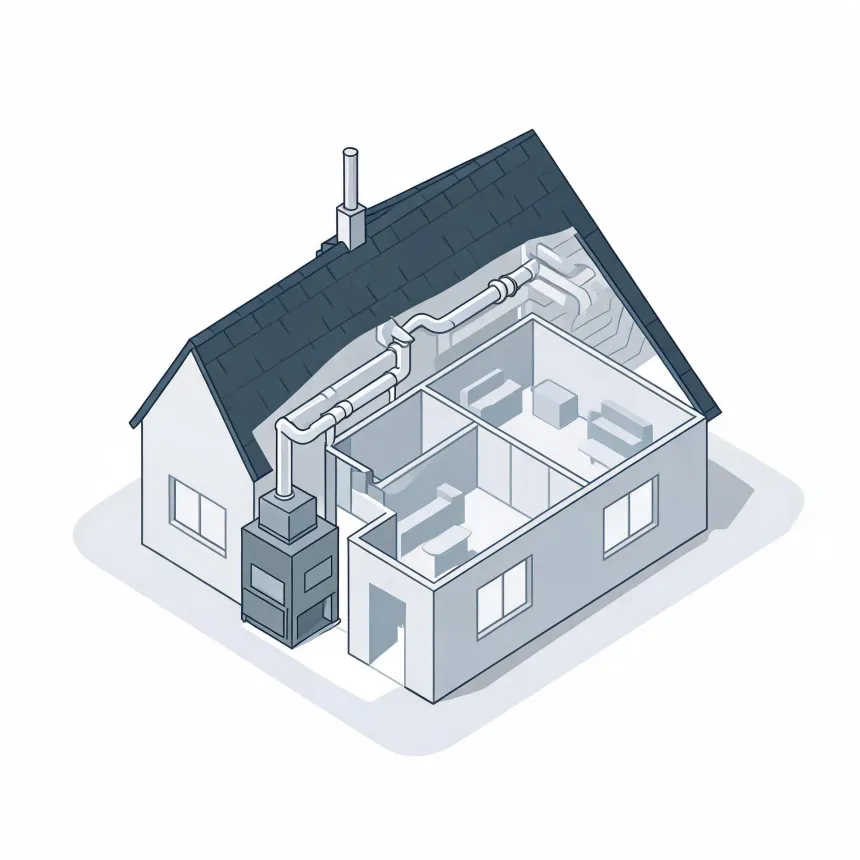
Isometric line illustration of a cutaway single-story house with a dark shingled roof, showing interior rooms and ductwork connected to a gray furnace unit with a flue pipe.
Your furnace works hardest from November through March.

NOAA nClimDiv, 1991–2020 normals

A tech starts by asking what the furnace was doing right before it quit.

That one answer narrows a no-heat call before a panel ever comes off.

Eight months of heat a year wears a furnace down faster

Heat runs October through May
Winter nights average 21°F
20 winter storms from 2015 to 2024
The First Cold Snap Finds the Weak PartFurnaces here start running in October, and that first real workload is when a part that was already weak tends to give out.

A furnace that's struggling will often still run, and that's when it does the most damage. A cracked heat exchanger left alone can leak flue gas into the air the blower pushes through the house. A blower motor straining against a clogged filter draws more current than it's built for, and the windings heat up until one day they don't start. Even a dirty flame sensor, which just makes the furnace shut off a few seconds after lighting, will cycle the igniter more times in a day than it was ever meant to handle. None of these fix themselves by running longer. They just move the cost from one part to several.

Eight Months of Heat a Year Means It's Worked Hard to Get Here

A furnace running this many months a year doesn't give you much warning before it gives out. A proper diagnosis finds the part that's actually failing, not just the symptom you're hearing, so the repair holds instead of turning into a second call next month.

Find a contractor
A man in a cap, long-sleeved shirt and work pants walks up porch steps toward a dark gray paneled front door, carrying a canvas tool bag, with a potted shrub to the right.
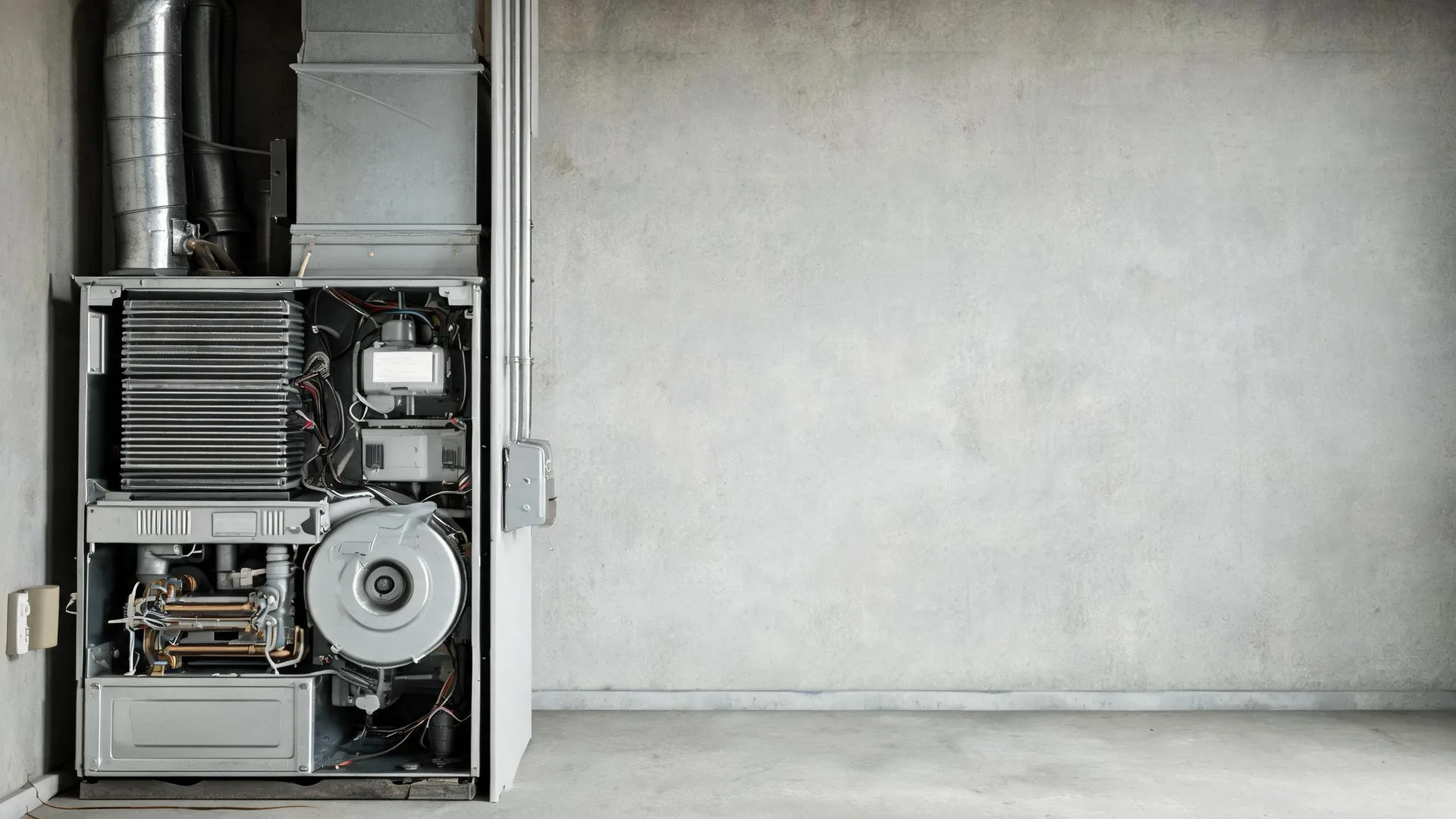
A gray high-efficiency gas furnace installed in an unfinished basement, surrounded by gas lines, a condensate drain, and sheet-metal ductwork.

What to Check Before You Call

Before a tech ever shows up, there are a few things worth checking. Start at the thermostat. Make sure it's set to heat, not just fan, and that the set temperature is actually above room temperature. A battery running low can blank the display or make it stop responding, so swap it if you're not sure. Next, check the filter. Pull it out and hold it up to a light. If you can't see through it, air isn't getting through it either, and a furnace starved for airflow will often shut itself off as a safety measure. Then find the switch that looks like a light switch on or near the furnace itself, sometimes mounted right on the side of it. It controls power to the unit and it's easy to bump when storing things nearby. Last, check the breaker panel. A furnace that was running fine and then went completely dead, no fan, no lights, no sound, points to power more often than it points to a failed part. None of these checks involve taking a panel off or touching gas lines or wiring. If the furnace still won't run after all that, the problem is inside it, and that's the point to stop and call someone.

A smell means something specific

A furnace that's been off for a while can put off a faint burnt-dust smell for the first few minutes of its first run. That clears on its own. A smell that doesn't clear, especially one like a struck match, means gas is getting where it shouldn't. That's not a wait-and-see problem.

Short cycling wears out the part doing the restarting

A furnace that fires, runs for a short stretch, then shuts off and tries again isn't warming the house, it's restarting over and over. Each restart puts a load on the igniter and the ignition control board. A furnace that short cycles for weeks is usually a furnace that fails at the igniter or the board next.

An empty unfinished basement containing a forced-air furnace with overhead ductwork, exposed ceiling joists, and a single hanging light bulb.

A new furnace would cut about $160 a year off heating for a typical Orange County home.

  • A new high-efficiency furnace$640 a year
  • An older furnace$800 a year

Estimates for a typical Orange County home, compared with an older unit built to the previous federal minimum, from EIA household energy data, New York fuel prices and NOAA climate normals. Your home will differ.

Repair makes sense when one part has failed and the heat exchanger is sound.

Replacement makes sense when the heat exchanger is cracked or the furnace keeps needing parts.

Replacing a furnace outright makes sense in a few clear situations, and it helps to know what they are before a tech is standing in front of it. A cracked heat exchanger is one. That part isn't sold on its own in most cases, and the labor to reach it can run close to a new unit anyway. Age matters too, not as a hard cutoff but as context: a furnace that's needed two or three service calls in as many years is telling you something about every other part inside it that hasn't failed yet. A single broken part on an otherwise sound furnace is a repair. A furnace where one part failing is just the first of several is a different conversation, and a tech who's honest with you will say so instead of quoting the one repair in front of them.