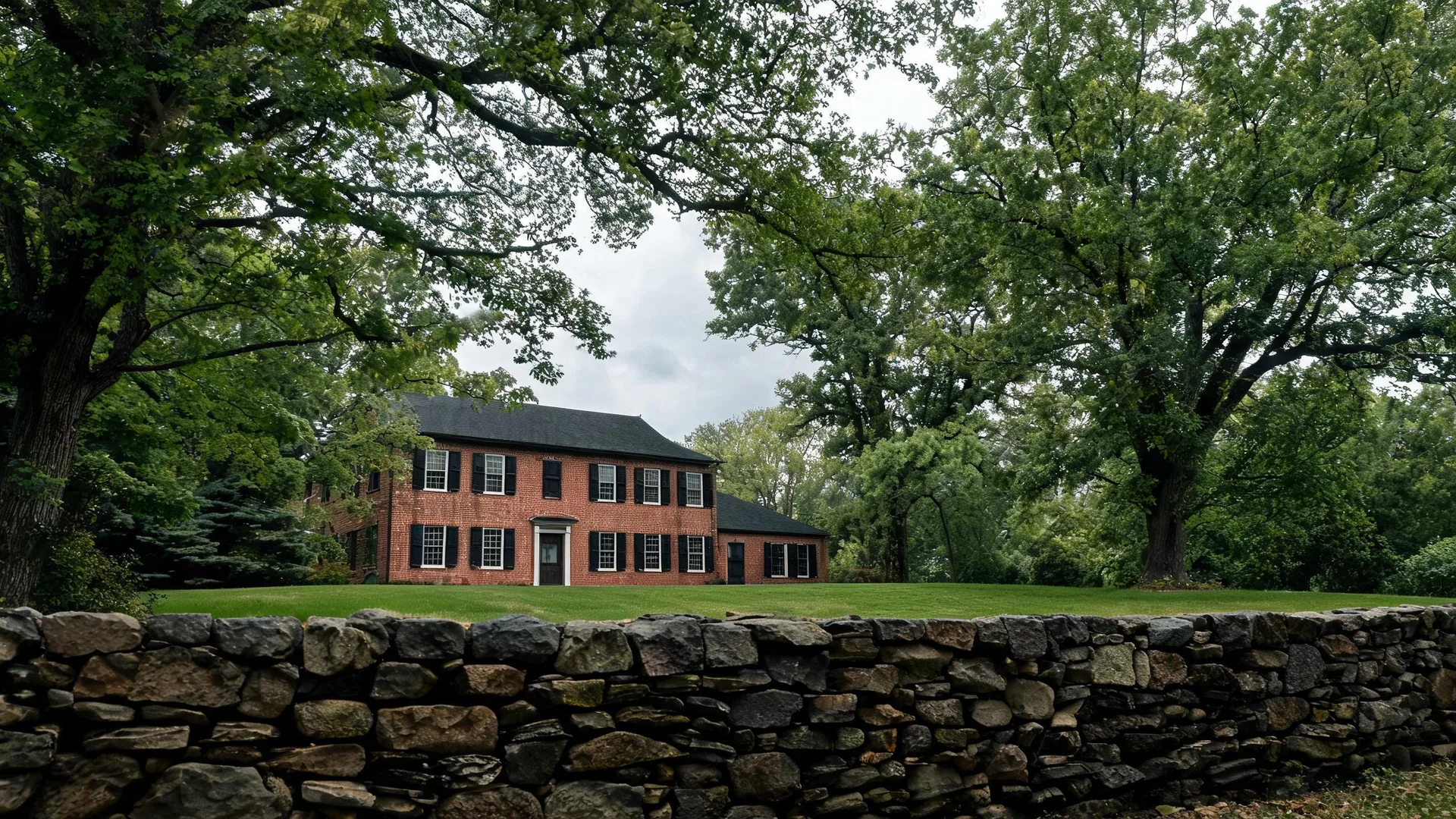




A two-story red brick house with black shutters and a dark roof stands on a green lawn behind a dry stone wall, framed by large deciduous trees under an overcast sky.

Furnace Repair in Kingston, NY

Tell us about the job

Takes about a minute. No obligation.

RepairFurnace or heatingUlster County, NY
Step 1 of 2

What ZIP code is the job in?

Ulster County saw 440 severe weather events between 2015 and 2024. Most of that was damaging wind, logged 372 times in those years, along with 33 winter storms bringing heavy snow and ice. Wind and ice both put stress on a furnace's venting and electrical connections, and a storm doesn't have to be dramatic to shake something loose. Three tornadoes touched down in the county in that same stretch, and 28 hail events, so an outdoor component can take a hit even here. If your furnace went through a bad storm, it's worth having someone look even if it's still running.

8 months
October through May, your furnace is on duty
18°F
the average winter night it heats against
33 winter storms
in ten years, the nights a failure hurts most
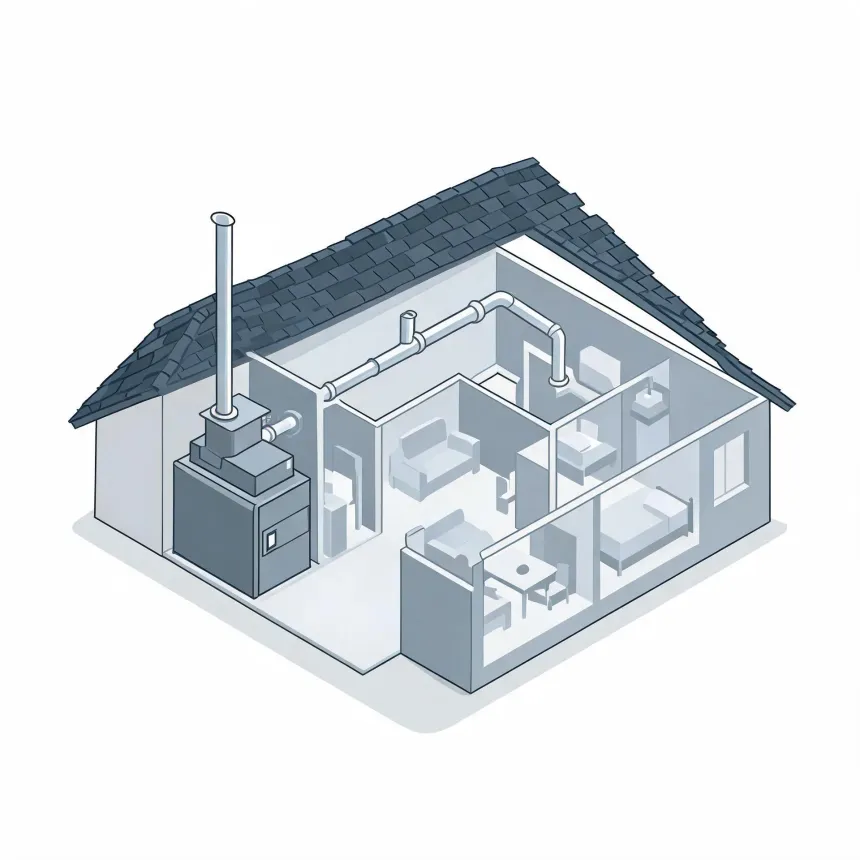
Isometric cutaway illustration of a single-story house showing interior rooms with furniture, ceiling ductwork, and a large furnace unit with a tall flue pipe in a corner room.
Your furnace works hardest from November through March.

NOAA nClimDiv, 1991–2020 normals

Oil runs $23.11 per million Btu in New York.

A furnace burning more oil than it should is a bill you'll notice here.

Eight months of heat starting in October means a weak part fails right when you need it most

Heat runs October through May
Winter nights average 18°F
33 winter storms from 2015 to 2024

Half the homes in Ulster County were built in 1966 or earlier. A furnace that age has likely been replaced at least once, and whatever is in there now has its own clock running. If your system came with the house, nobody can tell you how old it is without checking the unit itself, usually a sticker inside the door panel. An old furnace tends not to fail gently. It struggles for a stretch, costs more to keep alive, then quits on a cold night. A repair can still be the right call. It's just worth knowing whether you're paying for a few more winters or just a few more weeks.

Had a bad storm this year? Get the furnace looked at before it tells you itself

If your furnace came through a storm this past winter, have it checked before the cold sets back in, even if it's still running fine. A loose connection or a cracked vent seal doesn't always show up right away.

Find a contractor
A man seen from behind in a dark sweatshirt and tan work pants climbs porch steps toward a gray paneled front door, carrying a canvas tool bag in his right hand, with a potted shrub to the left.
A gas furnace with attached ductwork, gas piping, and condensate lines installed in a concrete-block basement.

Eight months is most of the year

October through May is eight months of heat, most years longer than the AC runs on the other end. A furnace that starts up in October doesn't get a real break until spring. It carries the load straight through the hard part of winter, and anything weak in it gets found somewhere in that stretch. That's what's usually behind a repair call here. Not one bad night. A long season that doesn't let up.

Most calls trace back to the igniter or the flame sensor

A hot surface igniter wears out from switching on and off, cycle after cycle, until it cracks or stops glowing hot enough to light the gas. The flame sensor sits right in the burner flame and does its job through a thin coat of oxidation building up on the rod. Once that coating gets thick enough, the sensor can't tell the control board a flame is lit, and the furnace shuts itself down as a safety measure. Both parts are small, both fail from ordinary use, and both stop a furnace cold rather than letting it limp along.
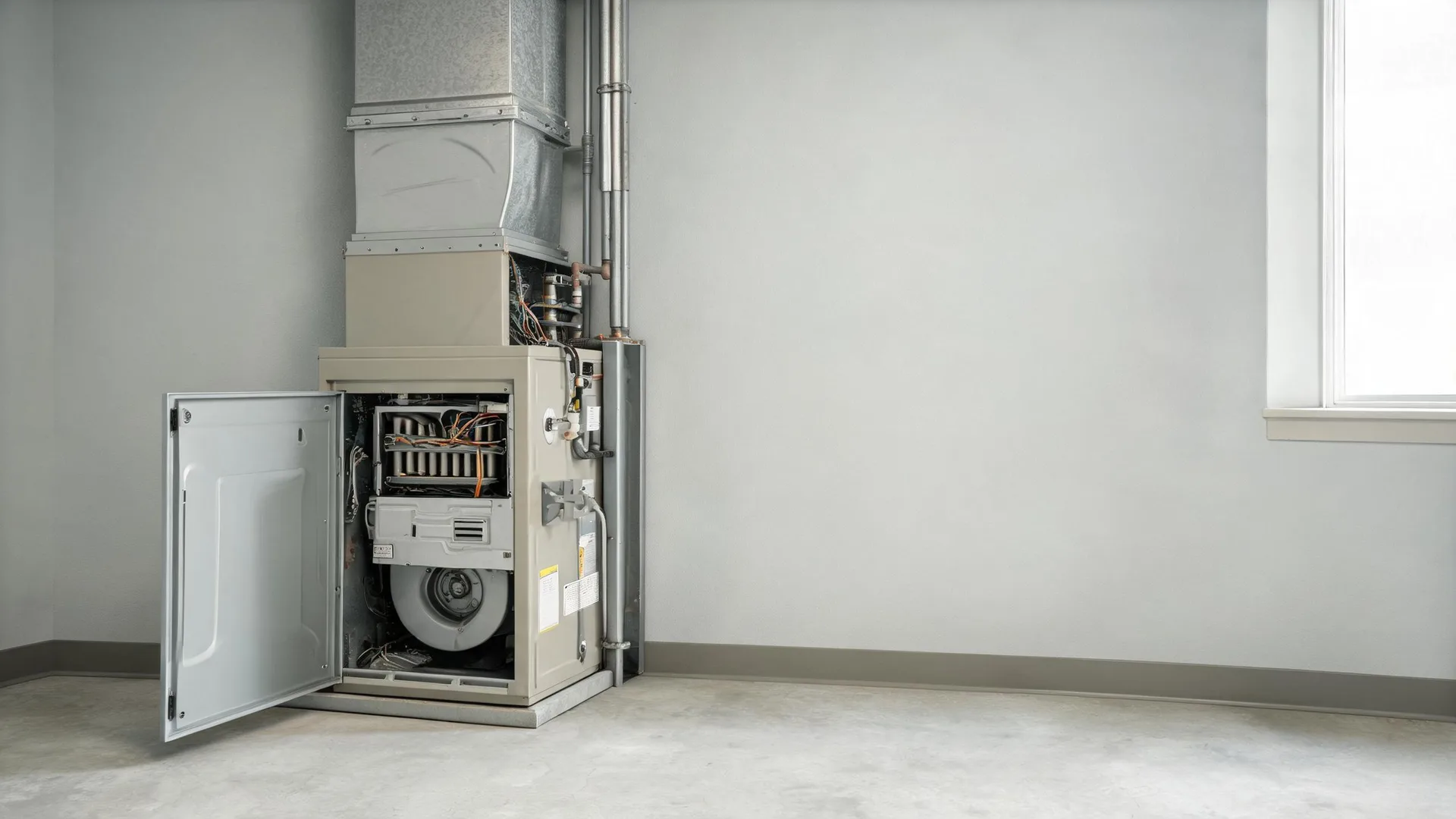
A furnace that short-cycles is already telling you what's wrong

When a furnace fires, runs for a minute or two, then shuts off and starts again, something is cutting the cycle short before the thermostat is satisfied. A clogged filter restricts airflow until the heat exchanger overheats and trips a safety switch. A flame sensor on its way out does the same thing. So does a blower motor that can't move enough air. Short-cycling wastes fuel and puts extra wear on the ignition system every single time it restarts, so it's worth having someone trace the cause rather than waiting for the furnace to quit for good.

Before you call anyone, check the thermostat first. Make sure it's set to heat, not fan, and that the set temperature is actually above room temperature. Then look at the filter. Pull it out and hold it up to a light. If you can't see light through it, it's choking the airflow and that alone can shut a furnace down. Check that the furnace switch, the one that looks like a light switch on or near the unit, is flipped on, and that the breaker for it hasn't tripped. If you have a standing pilot, see whether the pilot light is actually lit. None of this fixes a cracked igniter or a failed control board, but it rules out the simple stuff before someone comes out to look at the rest.

If your furnace came with the house, the age question is worth settling before you spend money fixing it again. The sticker inside the door panel will give you the actual install date, not a guess. That one number tells you whether you're looking at a unit with a few years left in it or one that's been running since before you owned the place. A repair on a newer furnace is just a repair. The same repair on a furnace that's outlived a few winters already is a different decision, and it's easier to make once you know what you're actually working with.