



What winter here actually asks of a heat pump
Winter is the long season here. Heat runs about eight months, October through May, against two months of cooling. Whatever you install spends most of its life heating this house, not cooling it, so pick it for that job first.
The overnight low averages 18°F across December, January and February. That number matters because a standard heat pump has two different fall-off points, and 18°F is past both of them. Below 40°F its output drops under its rating. Below about 35°F it often leans on backup heat. A night at 18°F is well past either line.
This is not a rare cold snap. About 140 nights a year here drop to freezing or below, more than half the nights the heat is running at all. A heat pump sized for this house needs to carry that kind of night as the normal case, not the exception.
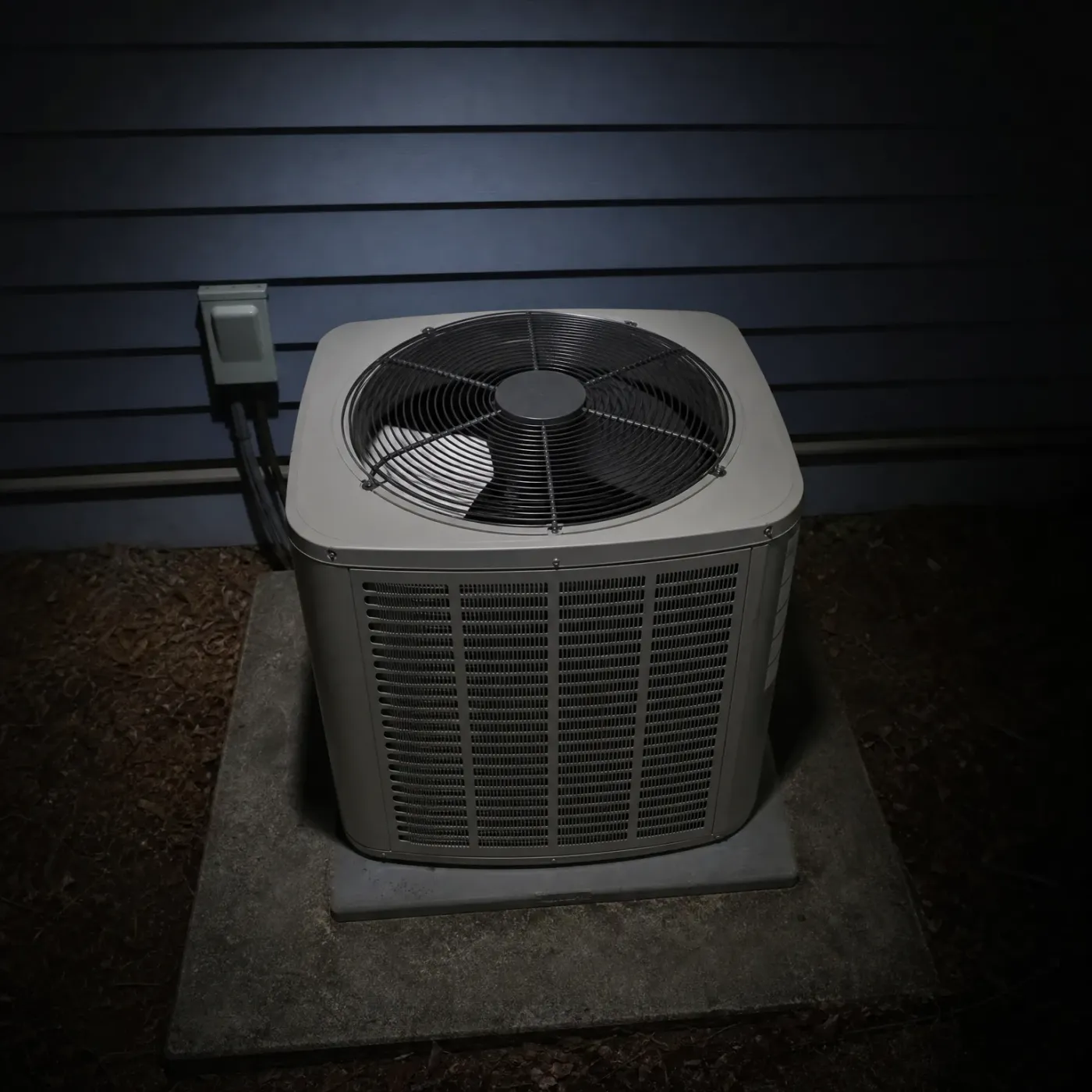
Only about 6 nights a year reach 0°F or below, so the deep cold is the small part of the picture. A cold climate heat pump, the kind rated to hold at least 1.75 units of heat per unit of electricity at 5°F and keep most of its 47°F capacity that low, is built for exactly the nights this county actually has. Field testing on prototypes of this kind found backup heat carried only a small share of the load between 0°F and 35°F, and running on backup alone was rare even above 0°F. A standard heat pump, without that cold climate rating, is the wrong tool for an 18°F average low. A cold climate one is sized for it.