 Match me with a pro
Repair or replace an oil furnace in Kingston, NY
Get matched with someone who does this kind of work in Ulster County.
An oil furnace in Kingston earns its keep from October through March, and when it starts short cycling or won't hold a flame, you need to know fast whether it's worth fixing or whether the next cold snap will put you right back where you started.
Age matters here more than almost anything else. A furnace that's ten or twelve years old and needs a new igniter or a cleaned nozzle is usually worth repairing. One past fifteen years that's burning through oil and needs a new heat exchanger is a different conversation, especially with Ulster County winters asking so much of it.
Oil furnaces fail in a few predictable ways. A clogged nozzle or a dirty filter cuts off the fuel it needs and leaves you with weak heat or none. A cracked heat exchanger is a safety issue, not a convenience one, and it's not something to patch and hope. A failing igniter or a bad limit switch can often be swapped out without touching anything else.
None of that is a decision to make from a search result. It depends on what's actually wrong with your unit, how old it is, and what a contractor finds when they look at it in person. That's the piece you can't get from an article, and it's the piece that actually decides whether you're spending money on a repair or on a new furnace.
A local contractor can tell you which one you're facing, usually within a single visit. Once you send the request, that part stops being on you. Someone who knows oil systems and knows what Kingston winters do to them gets in touch, looks at your furnace, and tells you straight what it needs. You're not left comparing parts and guessing at what a tech would say. You get the answer the search was looking for, just aimed at your actual furnace instead of furnaces in general.
The general rule: if your oil furnace is under 15 years old and the repair is a single part, like an igniter or a nozzle, fixing it makes sense. Past 15 years, or if you're looking at a cracked heat exchanger or a failed burner assembly, replacement is usually the better bet. Oil furnaces take a beating here, running steadily from October through March and often into early April, and that kind of use wears out the burner and heat exchanger faster than a furnace that only kicks on a few months a year. A unit that's needed two or three service calls in the past couple of winters is telling you something. Repeated repairs on an aging furnace add up to more than the cost of a new one, and a furnace that's struggling now is more likely to fail outright during the coldest stretch of the year, not the mild one. If yours is still within its expected working life and the problem is contained to one part, repair it and move on.


Oil doesn't burn on its own. The nozzle breaks it into a fine mist, and the igniter sets that mist alight the instant it leaves the nozzle. A cad cell sensor sits nearby watching for that flame, and if it doesn't see combustion within seconds, it cuts the burner off rather than let raw oil keep spraying. Once the flame is burning steady, the heat exchanger takes that heat and passes it into the air your blower moves through the ducts, keeping the exhaust itself separate from the air you breathe. Over time, soot builds up on the inside of that exchanger, and it doesn't transfer heat as well once that happens, so the burner has to run longer to get the house to the same temperature. If you hear the burner fire late with a bang instead of a clean start, that's usually a dirty nozzle or an electrode that's drifted out of position. And none of this works if the flue isn't drafting right. A furnace can have every part in good shape and still shut itself down on safety limits because the exhaust isn't pulling the way it should.
How an Oil Furnace Actually Runs
- An oil furnace burns fuel through a nozzle that atomizes it into a fine spray before the igniter sets it alight.
- A cad cell sensor watches the flame and shuts the burner down within seconds if it doesn't detect combustion.
- The heat exchanger passes combustion heat into the air your blower pushes through the ducts without mixing exhaust into that air.
- Soot buildup inside the heat exchanger cuts how well it transfers heat, which makes the burner run longer to reach the same temperature.
- A delayed ignition, where the burner fires late with a bang, usually points to a dirty nozzle or electrode misalignment.
- The flue pipe has to draft properly or the furnace will shut itself down on safety limits even when every part is working.




Get the right pro for your furnace
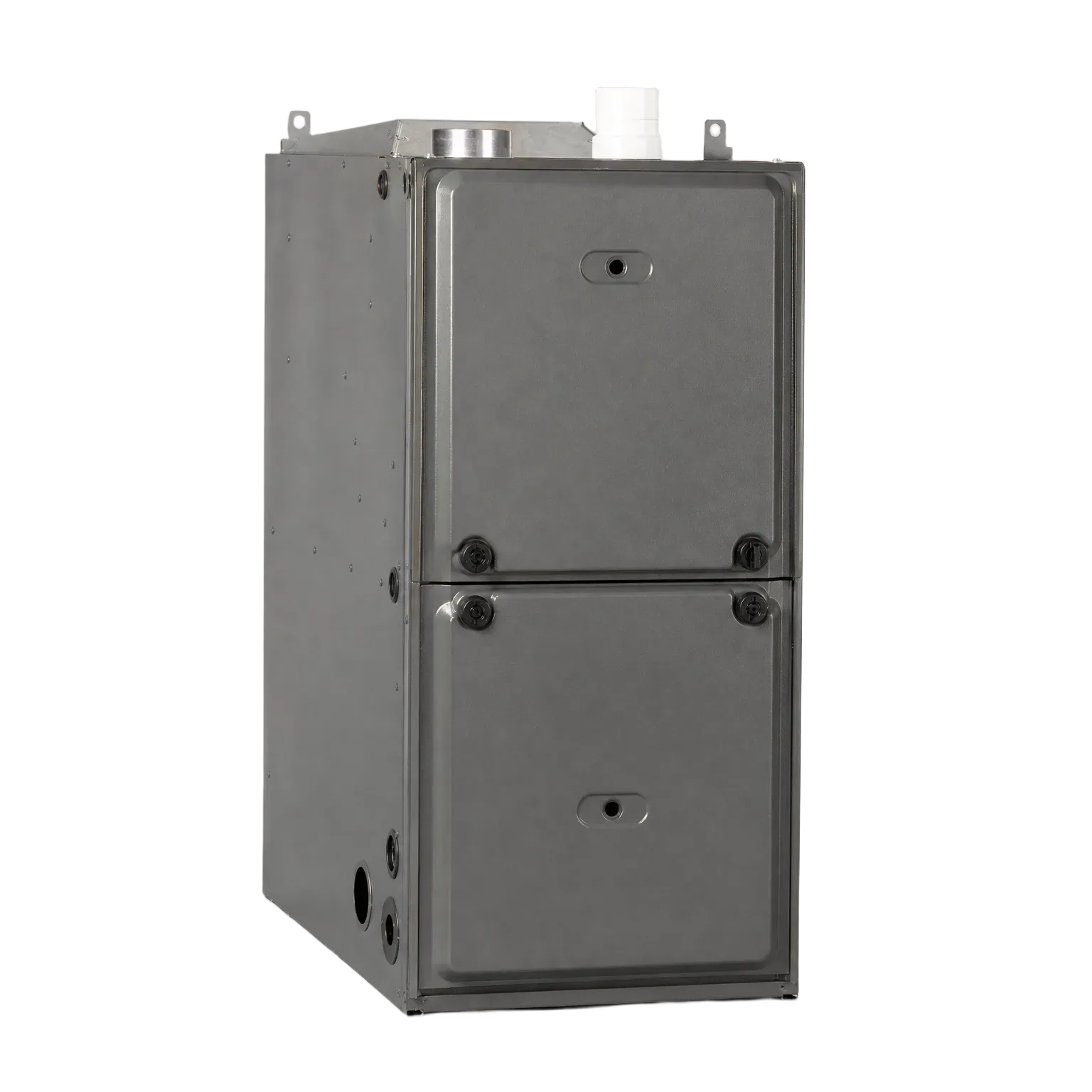
Send the form and stop researching installers for the new furnace.
No fee to send it, and nothing to sign.
What a cracked heat exchanger means
A heat exchanger separates the flame from the air moving through your ductwork. Oil burns hotter than gas, and that heat stresses the metal more over the years. Once it cracks, combustion gas can mix into the air your furnace is pushing through the house, and no patch fixes that part. A contractor who finds a crack there will tell you to replace the furnace, not repair it, because the part itself can't be welded or swapped on its own. It's sealed into the cabinet. That single finding usually ends the repair conversation regardless of what else on the furnace looks fine.
Why oil furnaces need yearly attention
Oil leaves soot behind as it burns, more than gas does, and that soot builds up on the heat exchanger and narrows the flue over a season of running from October to March. A furnace that gets cleaned and tuned every year holds its efficiency and gives a contractor a yearly look at the nozzle, the cad cell, and the flue connection before small wear turns into a failed part. One that doesn't get that visit is more likely to show up on an emergency call with a cracked exchanger or a clogged nozzle nobody caught early, and by then replacement is often the only option left on the table.


A furnace that keeps breaking down in January doesn't just cost you repair visits. It costs you the days you spend cold while you wait for a part, and oil furnace parts aren't always on the truck.
Replace it before that string of bad weeks hits, and you pick the timing. Wait for it to fail outright, and the timing picks you.
Why does Kingston lean so hard on fuel oil to begin with?
Winter nights average 18°F
Overnight lows average 18°F through December, January and February, cold enough that a furnace running weak won't keep up.
Heat runs October through May
Heat runs from October through May here, about eight months of the year your furnace has to work without a long break to recover.
42.9% of homes heat with fuel oil
Fuel oil or kerosene heats 42.9% of occupied homes in Ulster County, more than any other fuel, so yours is likely one of them.
NOAA nClimDiv 1991-2020 · ACS 2020-2024
Oil drawn from the tank reaches the pump before anything else fires.
The pump forces oil through the nozzle, atomizing it into a fine mist.
The igniter sparks and sets that mist burning inside the combustion chamber.
The cad cell checks for flame and cuts the burner if it's missing.

Repair it or replace it, you now know which
Check the age against the repair. A furnace under 15 years old with a single bad part is worth fixing. One past that age, or showing a cracked heat exchanger, rust on the jacket, or soot around the flue, is telling you where this is headed. You've got what you need to make the call for your own furnace.
If it lands on replacement, the next step isn't climbing through oil furnace brands and sizing calculations on your own. It's getting matched with a contractor who handles installations in Ulster County and hearing from them directly about your house. The search is done. What's left is a conversation with someone who already knows the work.



Furnace Installation
A pro who works on furnaces
One request ends the search for a furnace installer.
