





A row of illuminated white colonial houses with black shutters and a stone wall along a road at dusk.

Furnace Repair in Ithaca, NY

Tell us about the job

Takes about a minute. No obligation.

RepairFurnace or heatingTompkins County, NY
Step 1 of 2

What ZIP code is the job in?

Furnaces in Ithaca run nine months out of the year, September through May. That overnight low averages 18°F in December, January and February, so on the coldest nights the furnace is running most of the time just to hold the house steady. A system working that many hours a season wears out its parts sooner than one that only kicks on a few months a year. The igniter, the blower motor, the pressure switch, all of them are cycling more than they would almost anywhere else. When something starts acting up here, it's rarely out of nowhere. It's usually a part that's been working hard for a long time finally giving out.

9 months
September through May, your furnace is on duty
18°F
the average winter night it heats against
16 winter storms
in ten years, the nights a failure hurts most
Isometric line illustration of a cutaway single-story house showing interior rooms with furniture, ceiling ductwork, a chimney flue, and a furnace unit outside the exterior wall.
Your furnace works hardest from November through March.

NOAA nClimDiv, 1991–2020 normals

September is when furnaces in Ithaca start back up after sitting idle since spring.

A part that was already weak won't wait for a mild day to fail, it fails on the first cold morning that asks something of it.

Gas here runs $16.03 per million Btu, and a furnace that's struggling burns more of it every month it goes unfixed

Climate zone 5A
Heat runs September through May
Winter nights average 18°F

Running a furnace with a failing part doesn't just risk a full stop, it speeds up everything else. A cracked igniter still lights the burners most of the time, so people let it ride. But the burners firing unevenly put more heat stress on the heat exchanger than a clean light would. A dirty flame sensor makes the furnace shut down and restart over and over, and each restart is another cycle on the igniter and another jolt to the blower motor. A failing pressure switch can make the draft inducer run longer than it should trying to get the reading it needs, which wears the motor bearings faster than normal use would. The parts in a furnace don't fail in isolation. Strain on one shows up as wear on the next, so the part that finally quits is often not the one that started the problem.

Find out what's actually failing

A furnace that's run this hard for this many winters doesn't fail without a reason. Have the actual part checked before deciding whether it's a repair or a replacement.

Find a contractor
A gas furnace with attached ductwork, gas piping, and condensate lines installed in a concrete-block basement.

The parts that wear out, and why

Most furnace failures trace back to one of a handful of parts, and they fail in the same order most places. The igniter is usually first. It heats up and cools down every time the furnace cycles, and that stress eventually cracks it or burns it out. A flame sensor goes next, coated over time with a thin layer that stops it from reading the flame, so the furnace shuts itself down as a safety measure. The blower motor wears on its bearings from running hour after hour, and when it starts to go you hear it before anything else, a grinding or squealing that gets worse. The pressure switch and the draft inducer motor work together to clear exhaust, and if either one sticks or fails the furnace won't fire at all. None of these parts fail because a furnace is old. They fail because they've cycled on and off thousands of times, and every cycle is a little bit of wear that adds up.

What you hear before it quits

A furnace rarely fails silent. A squeal or grinding on startup is the blower bearings going. A soft boom when it lights is gas building up a moment before the igniter catches, usually a sign the igniter or flame sensor is weak. Clicking that repeats without the burners ever lighting is the control board trying and failing to get past the pressure switch. If you hear something new, that's the part telling you it's close to done.

What it means for your house

Short cycling, where the furnace fires then shuts off before the room warms up, points to a flame sensor losing its read on the flame or a pressure switch barely holding on. Rooms that won't hold heat, air that feels weaker than it used to, or a furnace that runs on and on without catching up, those usually mean the blower or the heat exchanger is struggling to move the air it used to. Either way, the furnace is working harder to do the same job it always did.

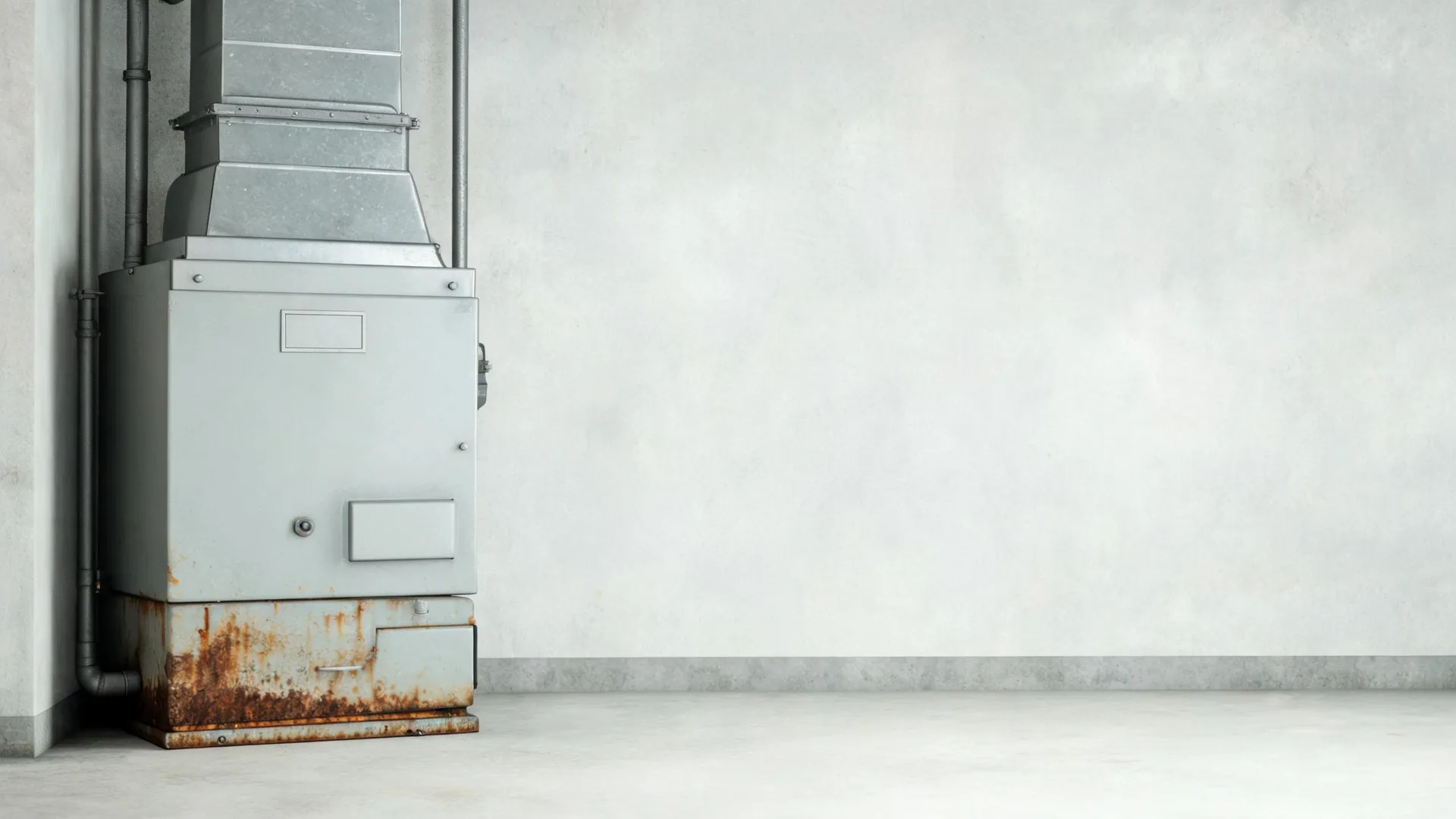
A bare concrete basement containing a gray gas furnace with metal ductwork and a vertical flue pipe, lit by a single hanging bulb.

A new furnace would cut about $180 a year off heating for a typical Tompkins County home.

  • A new high-efficiency furnace$750 a year
  • An older furnace$930 a year

Estimates for a typical Tompkins County home, compared with an older unit built to the previous federal minimum, from EIA household energy data, New York fuel prices and NOAA climate normals. Your home will differ.

Repair makes sense when one part has failed and the heat exchanger is sound.

Replacement makes sense when the heat exchanger is cracked or the furnace keeps needing parts.

A repair makes sense when the failure is one part and the rest of the furnace is sound. An igniter, a flame sensor, a pressure switch, these can be replaced on their own without touching anything else, and the furnace runs like it did before. Replacement starts to make more sense when the heat exchanger is cracked, since that part isn't sold on its own and isn't worth swapping piece by piece even if it could be. It also makes sense when a furnace keeps coming back with a different part failed each time. That pattern means the rest of the parts are at the same age and the same wear, and the next failure is already working its way in. A tech checking a furnace that won't fire should be able to tell you which kind of problem you've got, a single part or a system reaching the end of its wear, before you decide anything.