



What the cold does to a heat pump here
Your winter nights average 18°F, and about 150 of them drop to freezing or below. That matters because a standard heat pump starts losing capacity below 40°F and often needs backup heat below about 35°F. Here, every single one of those 150 cold nights falls under both marks. This is not an occasional dip into hard weather. It is most of the heating season.
That does not mean a heat pump leaves you cold. A model built to the federal minimum will lean on backup heat strips on the coldest nights, and that backup heat runs on electricity at $3.26 per 100,000 Btu, the most expensive fuel on this list. A cold climate model, built to keep most of its capacity down to 5°F, handles those nights on its own and needs backup far less. In a two-winter test of prototype cold climate heat pumps in occupied homes, backup heat covered only a small share of the output between 0°F and 35°F, and running on backup alone was rare even above 0°F. The gap between a standard heat pump and a cold climate one is the gap between struggling on your coldest nights and shrugging them off.
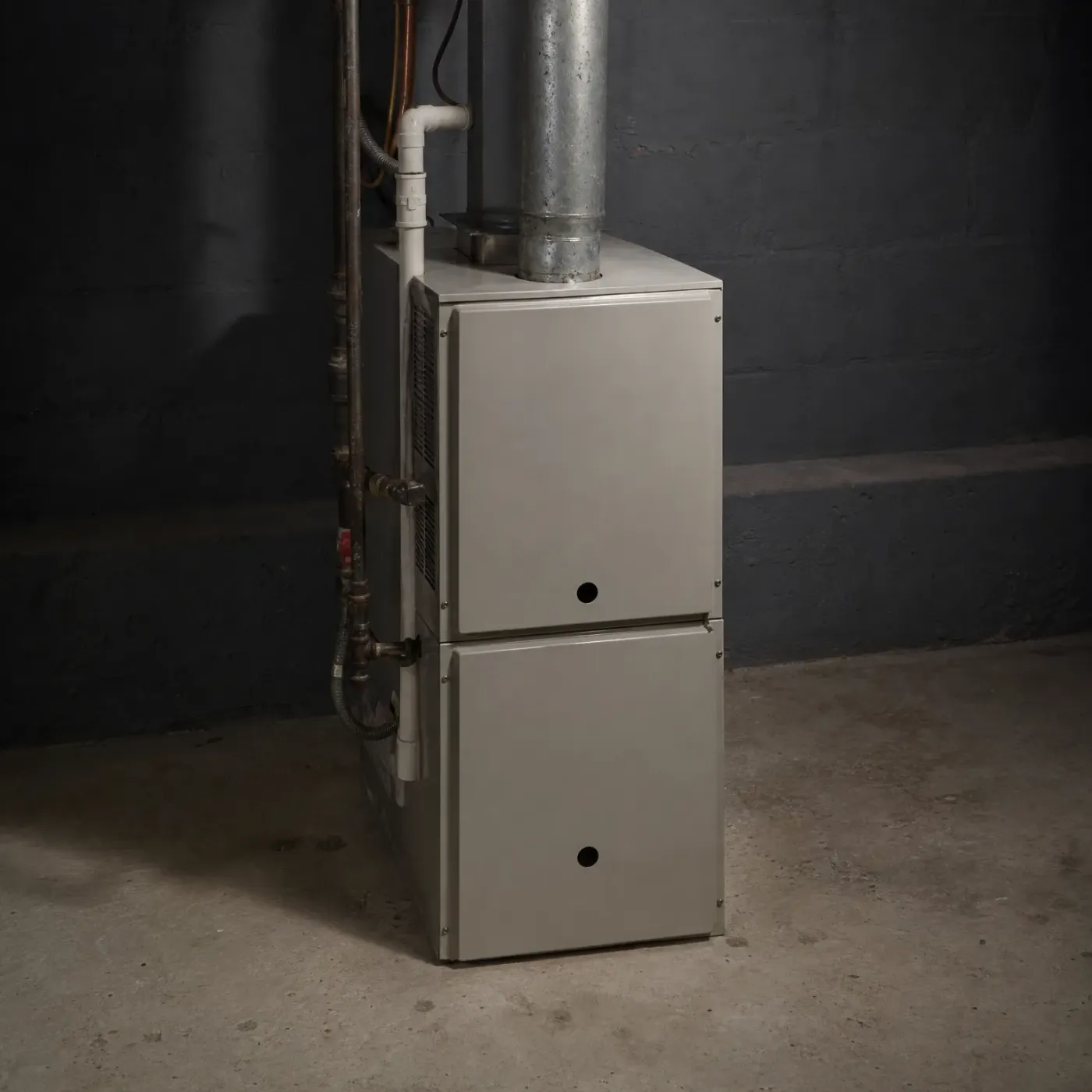
A gas furnace does not have this problem. Its output does not depend on the temperature outside. It burns the same and heats the same at 18°F as it does at 40°F, which is why it still costs less to run here, $2.00 against $3.26 per 100,000 Btu, even before backup heat is counted.