




Two white colonial houses with lit windows and black shutters photographed at dusk along a tree-lined residential street.

Furnace Repair in Ilion, NY

Tell us about the job

Takes about a minute. No obligation.

RepairFurnace or heatingHerkimer County, NY
Step 1 of 2

What ZIP code is the job in?

Furnaces in Herkimer County run from September through May. That's nine months of the year the burner and blower are working, not just a few cold weeks. Add in the winter storms this area sees, 62 of them between 2015 and 2024, and the system isn't just running long, it's running hard, pushing through the coldest stretches without a break. That kind of use wears on an igniter or a blower motor faster than a mild climate ever would. If something's acting up now, there's a reason, and it's worth finding out exactly what before deciding what to do about it.

9 months
September through May, your furnace is on duty
11°F
the average winter night it heats against
62 winter storms
in ten years, the nights a failure hurts most
Isometric cutaway illustration of a small house showing a furnace unit connected to ductwork running through the interior and attic, with a chimney on the shingled roof and simple furniture in the rooms.
Your furnace works hardest from November through March.

NOAA nClimDiv, 1991–2020 normals

Half the homes in Herkimer County were built in 1954 or earlier.

A furnace that came with a house that old is a furnace that's run out of easy years.

This county gets hit hard, and when the power drops a gas furnace can't light without it

391 severe weather events from 2015 to 2024
11% of homes statewide lost power a day or more in 2024
304 damaging wind events from 2015 to 2024
September is when it finds outFurnaces here start running in September, and a weak part usually shows itself in the first cold snap.

Natural gas in New York ran $16.03 per million Btu in 2024, among the highest rates in the country. A furnace that's short cycling or running longer than it should to hit the thermostat setting is burning gas it isn't turning into heat, and that costs more here than it would somewhere cheaper for gas. A cracked heat exchanger or a dirty flame sensor doesn't fix itself, and the longer it runs that way, the more it adds to the bill. Getting a technician to look at it now costs less than letting it run inefficiently through another winter.

An old furnace is a bet you don't have to keep making

If your furnace came with the house, and the house is one of the older ones here, a repair now is a reasonable thing to check against its age. A technician can tell you what's actually wrong and what that kind of fix is worth putting money into.

Find a contractor
A gray high-efficiency gas furnace installed in an unfinished basement, surrounded by gas lines, a condensate drain, and sheet-metal ductwork.

It doesn't get much downtime

Nine months a year and 62 storms in the last ten add up to a lot of hours on a burner and a blower. When one part is already stressed, a repair that looks small can be the first sign of more behind it. Have a technician check the whole system while they're in there, not just the part that's acting up.

What actually wears out first

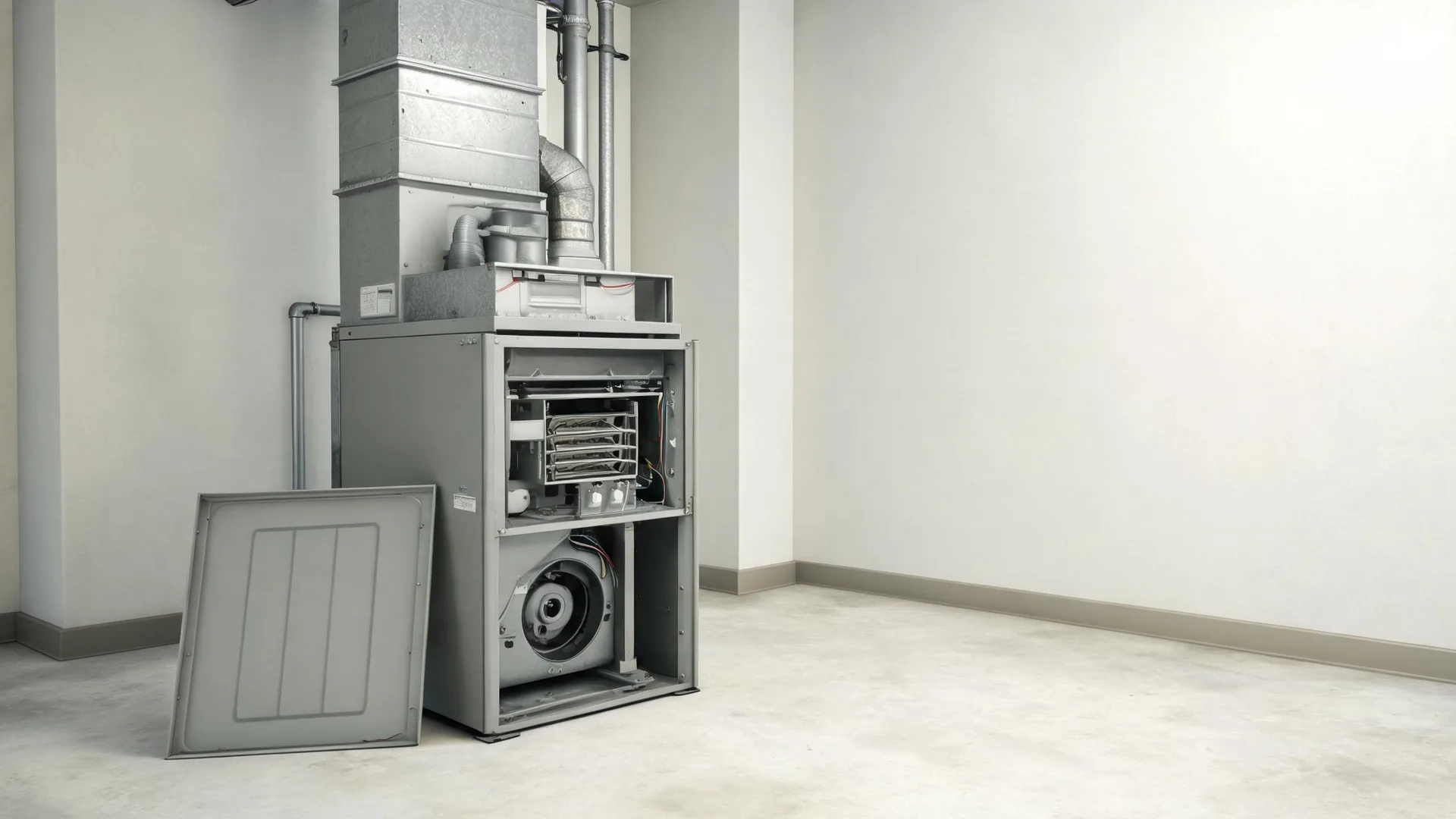
The igniter is usually the first thing to go. It heats up and cools down every cycle, and that stress eventually cracks it. A flame sensor gets a coating of oxidation over time and stops telling the control board a flame is lit, so the furnace shuts itself down as a safety measure. Blower motor bearings wear out from spinning for hours at a stretch. None of these fail because something went wrong. They fail because they were used.

What that means for a repair call

A furnace that won't light, shuts off partway through a cycle, or blows air that never gets warm enough is usually pointing at one of these worn parts, not something exotic. Most of them are straightforward for a technician to test and swap. The part to worry about is a cracked heat exchanger, since that's a safety issue and not a simple swap. Getting the right diagnosis before you pay for parts is the whole job.

An unfinished basement interior featuring a large metal furnace unit, exposed ceiling joists, concrete walls, and scattered boxes and cables on the floor.

A new furnace would cut about $210 a year off heating for a typical Herkimer County home.

  • A new high-efficiency furnace$860 a year
  • An older furnace$1,070 a year

Estimates for a typical Herkimer County home, compared with an older unit built to the previous federal minimum, from EIA household energy data, New York fuel prices and NOAA climate normals. Your home will differ.

Repair makes sense when one part has failed and the heat exchanger is sound.

Replacement makes sense when the heat exchanger is cracked or the furnace keeps needing parts.

A diagnostic call starts with the thermostat and works back from there. The technician checks what it's calling for against what the furnace is actually doing, then opens the cabinet and watches it run through a full cycle if it'll complete one. They'll pull the igniter and look at it, since a hairline crack is easy to see once it's out. The flame sensor gets tested or just cleaned and tried again, because oxidation is common enough that it's worth ruling out early. If the furnace is short cycling, they're checking the limit switch and the flow of return air before they assume a part is bad. Only after the simple causes are ruled out does the exchanger come up, and that gets checked with a combustion analyzer or a camera, not a guess. The goal is to find the one thing actually causing the symptom, not to replace parts until something works.