





A bare concrete basement containing a gray gas furnace with metal ductwork and a vertical flue pipe, lit by a single hanging bulb.

Furnace Repair in Hempstead, NY

Tell us about the job

Takes about a minute. No obligation.

RepairFurnace or heatingNassau County, NY
Step 1 of 2

What ZIP code is the job in?

Furnaces in Hempstead run about eight months a year, October through May. Overnight lows average 28°F in December, January and February, so the furnace is doing its hardest work right when a breakdown hurts most. That long a stretch is plenty of time for an igniter, a flame sensor or a blower motor to wear out, and it's usually one of those ordinary parts behind a no-heat call, not anything particular to this area. Winter storms do roll through here, and a furnace that's already struggling is more likely to quit on a bad night. None of that calls for a special diagnosis. It calls for someone who checks the usual parts and fixes the one that actually failed.

8 months
October through May, your furnace is on duty
28°F
the average winter night it heats against
62%
of homes here heat with gas, so most furnaces here burn gas
37 winter storms
in ten years, the nights a failure hurts most
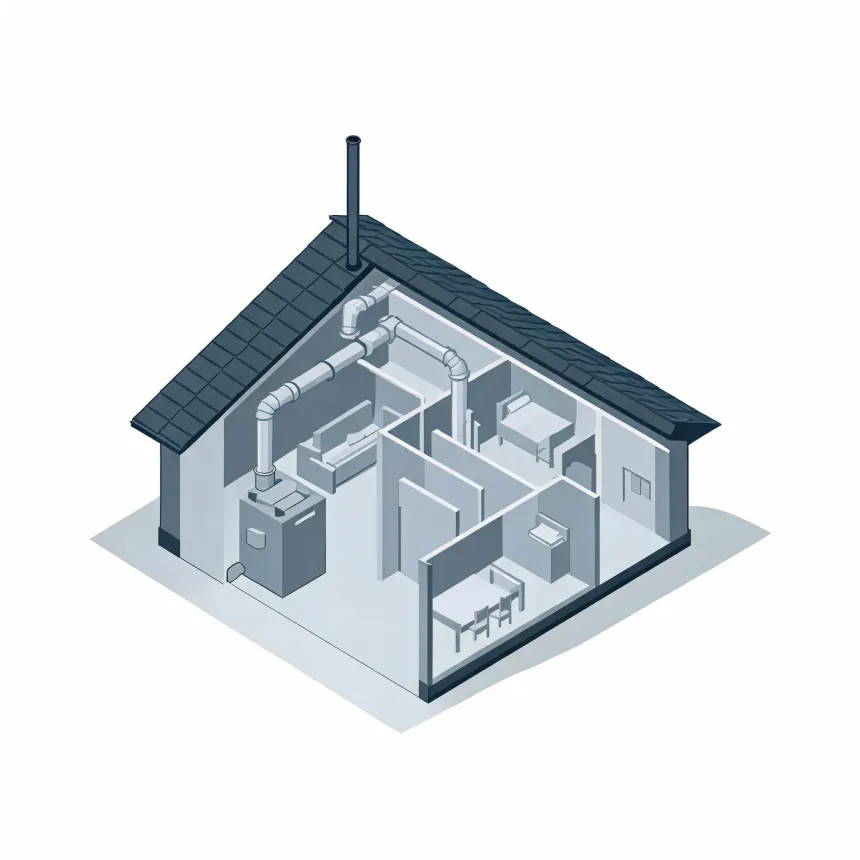
Isometric cutaway illustration of a small single-story house showing interior rooms with furniture, a furnace unit with attached ductwork running to a roof flue, and a dark shingled roof.
Your furnace works hardest from November through March.

NOAA nClimDiv, 1991–2020 normals

Furnaces in Hempstead start up in October.

A furnace that sat idle since May will show its weak part in the first cold snap, so a repair now catches it before the coldest stretch hits.

Half the homes in Nassau County date to 1955 or earlier, old enough for the original furnace to be long gone

Half the homes here were built by 1955
Climate zone 4A
Heat runs October through May
Hempstead's weather isn't the problem143 damaging wind events in Nassau County between 2015 and 2024, and furnaces here still fail the same way they do anywhere else

If the furnace in your house came with it, it didn't come with a house built in 1955 or earlier. Furnaces don't last that long, so somewhere along the way the original was pulled and a new one went in. That tells you nothing about the one running now. It could be fairly new or it could be close to done. Before paying for a repair, ask the contractor how much life is left in the unit. An igniter or a blower motor is a real expense to put into a furnace that's on its last winter anyway.

Get the usual fix

Nothing about this area is especially hard on it. It's most likely the usual problem with the usual fix.

Find a contractor
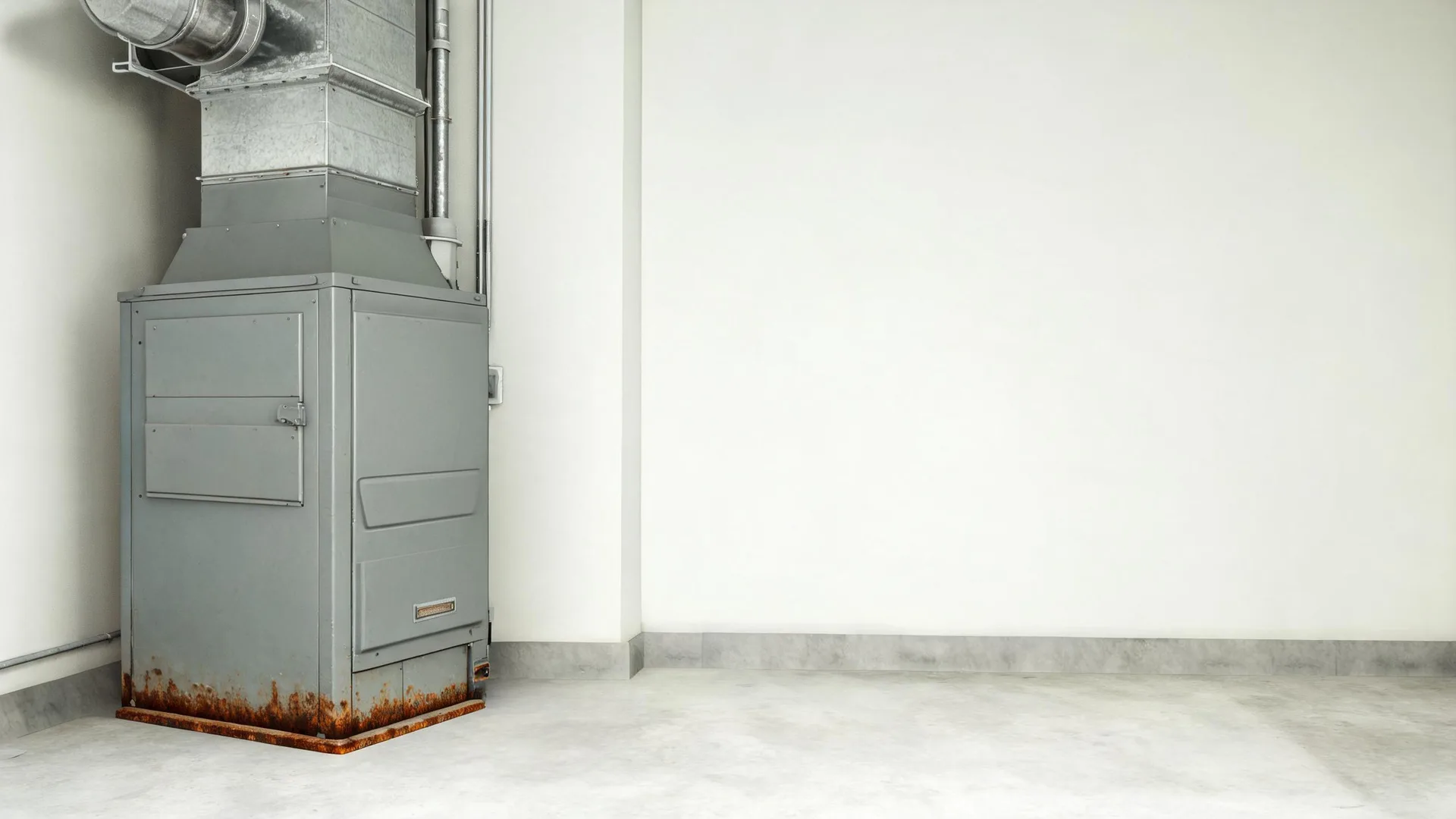
A gray high-efficiency gas furnace installed in an unfinished basement, surrounded by gas lines, a condensate drain, and sheet-metal ductwork.

What to check before you call

Before you call anyone, check the thermostat. Make sure it's set to heat and the temperature is set above room temperature, and check the batteries if it uses them. Go to the furnace and look at the filter. A filter clogged with dust chokes off airflow, and some furnaces will shut themselves down rather than run that way. Check the furnace switch, the one that looks like a light switch on or near the unit, and make sure it hasn't been bumped off. If the furnace has a standing pilot, look through the little window and see if the flame is lit. If it's gone out, the lighting instructions are usually printed right on the panel. Check the breaker it's wired to. A tripped breaker cuts power to the blower motor and the control board even when the gas side is fine. None of this fixes a cracked heat exchanger or a dead igniter, but it rules out the things that look like a broken furnace and aren't one.

Most no-heat calls come down to ignition

Gas furnaces light with either a hot surface igniter or a spark igniter, and both wear out from being heated and cooled every single cycle. A flame sensor sits right next to the burner and reads the flame once it's lit. Dust and corrosion build up on that sensor over a season of use, and once it can't sense the flame, the furnace shuts the gas off as a safety measure. That one part stops more furnaces than anything else inside the cabinet.

Moving parts fail from use, not age alone

The blower motor runs every time the furnace calls for heat, and the bearings inside it wear down with hours of runtime, not with how many winters have passed. A motor that's starting to go will often run loud or hesitate before it spins up. The inducer motor works the same way, pulling exhaust out before the burners are allowed to light, and when it sticks or weakens, the furnace may try to start and fail over and over rather than run with no draft at all.

An unfinished basement featuring a forced-air furnace, exposed wooden ceiling joists, bare concrete walls, and miscellaneous items including cardboard boxes and coiled cables on the floor.

A new furnace would cut about $120 a year off heating for a typical Nassau County home.

  • A new high-efficiency furnace$520 a year
  • An older furnace$640 a year

Estimates for a typical Nassau County home, compared with an older unit built to the previous federal minimum, from EIA household energy data, New York fuel prices and NOAA climate normals. Your home will differ.

Repair makes sense when one part has failed and the heat exchanger is sound.

Replacement makes sense when the heat exchanger is cracked or the furnace keeps needing parts.

A diagnostic visit starts before any panel comes off. A tech will ask what the furnace was doing right before it quit, whether it ran rough for a while or stopped cold, and whether anyone smelled gas or heard a bang. Then the cover comes off and they watch it try to run. If it won't light, they check for power at the control board, voltage to the igniter, and whether the inducer motor spins up and proves draft before gas is allowed to flow. If it lights and then shuts off on its own, the flame sensor is usually the first thing cleaned or tested, since a weak signal there reads as no flame at all to the control board. A meter does more of this work than eyes do. Once the bad part is found, the tech can tell you what's actually wrong and how that part tends to fail, rather than just swapping things and hoping.