Profile view of a bearded man wearing a dark green baseball cap and a dark gray T-shirt against a plain light background.

Heat pump vs gas heat in Hempstead, NY

New system or replacementFurnace or heatingNassau County, NY
Step 1 of 2

What ZIP code is the job in?

Gas heat wins on the coldest nights here, and that's the main reason most Hempstead homes still run a gas furnace. Nassau County winters bring plenty of nights below freezing, and a standard heat pump has to work harder as the outside air gets colder, losing efficiency right when you need heat most. A gas furnace burns fuel to make heat, so outdoor temperature doesn't change how well it works. Cold-climate heat pumps have closed that gap a lot and can carry a home through winter here, but they cost more upfront than a furnace. A heat pump does have one advantage a furnace can't touch: it cools your home in summer too, so it replaces your air conditioner as well as your furnace. If your gas furnace is old and you already have central air, replacing it with another furnace is usually the simpler path. If you're weighing a full system change, a heat pump is worth pricing against a furnace plus AC.

A gray-haired, bearded man in a dark coat dusted with snow stands smiling in a dimly lit room with a lamp, mirror, framed art, and a sofa in the background.
An older man with white hair and a beard, wearing a dark snow-dusted coat and scarf, stands in a warmly lit interior hallway with a framed landscape picture, a table lamp and a potted plant behind him, and a snowy view through a window at left.
An older man in a dark snow-flecked overcoat and scarf stands smiling in a warmly lit home entryway, with a glass-paned door showing darkness outside and a lamp-lit room visible through a doorway behind him.
An older man with gray hair and a beard, wearing a dark snow-dusted jacket and scarf, stands smiling in a warmly lit interior hallway with a lit table lamp, a vase of dried branches, and a framed picture in the background.

A furnace makes heat by burning gas. A heat pump doesn't make heat at all. It pulls warmth out of the outside air, even cold air, and pumps it inside through the same refrigerant cycle that runs an air conditioner in reverse. That works well down to a point. As the outside temperature drops, there's less heat in the air to pull from, so a standard heat pump's output drops with it. Once the house can't keep up on that alone, electric resistance coils kick in as backup, and those coils draw a lot more power than the compressor does. That's where a heat pump's bill can climb on the coldest nights. A gas furnace doesn't have this problem. It burns the same amount of fuel for the same output whether it's 40 degrees out or 20. A cold-climate heat pump narrows this gap, holding onto more of its capacity in cold air than a standard unit does. Some homes here run a dual fuel setup instead, a heat pump for most of the winter and a gas furnace that takes over once it gets too cold for the heat pump to carry the load efficiently.

How Each System Actually Heats

  • A gas furnace burns fuel to make heat, while a heat pump moves heat that already exists in the outside air into your house.
  • Below a certain outside temperature, a standard heat pump's output drops and it leans on backup electric resistance coils to keep up.
  • Those backup coils cost far more to run than the compressor itself, so a heat pump's bill climbs fast on the coldest nights.
  • A gas furnace's output doesn't change with the weather, so it heats a 20 degree night the same way it heats a 40 degree one.
  • A cold-climate heat pump holds more of its capacity as the temperature drops, which matters more here than the standard model does.
  • A dual fuel setup pairs a heat pump with a gas furnace, switching to gas once the outside air gets too cold for the heat pump to work efficiently.
A beige high-efficiency furnace stands on a concrete basement floor beside sheet-metal ductwork, with white PVC vent pipes and a gas line running along an insulated wood-framed wall.
This furnace is doing what it's built to do: burning gas to push warm air through the ductwork on a cold night.
An older metal furnace with a louvered front panel stands against a concrete basement wall, connected to sheet-metal ductwork and a flue pipe, with copper and steel pipes running alongside.
The gas line and shutoff feed it steadily, so the house stays warm no matter how far the temperature outside drops.
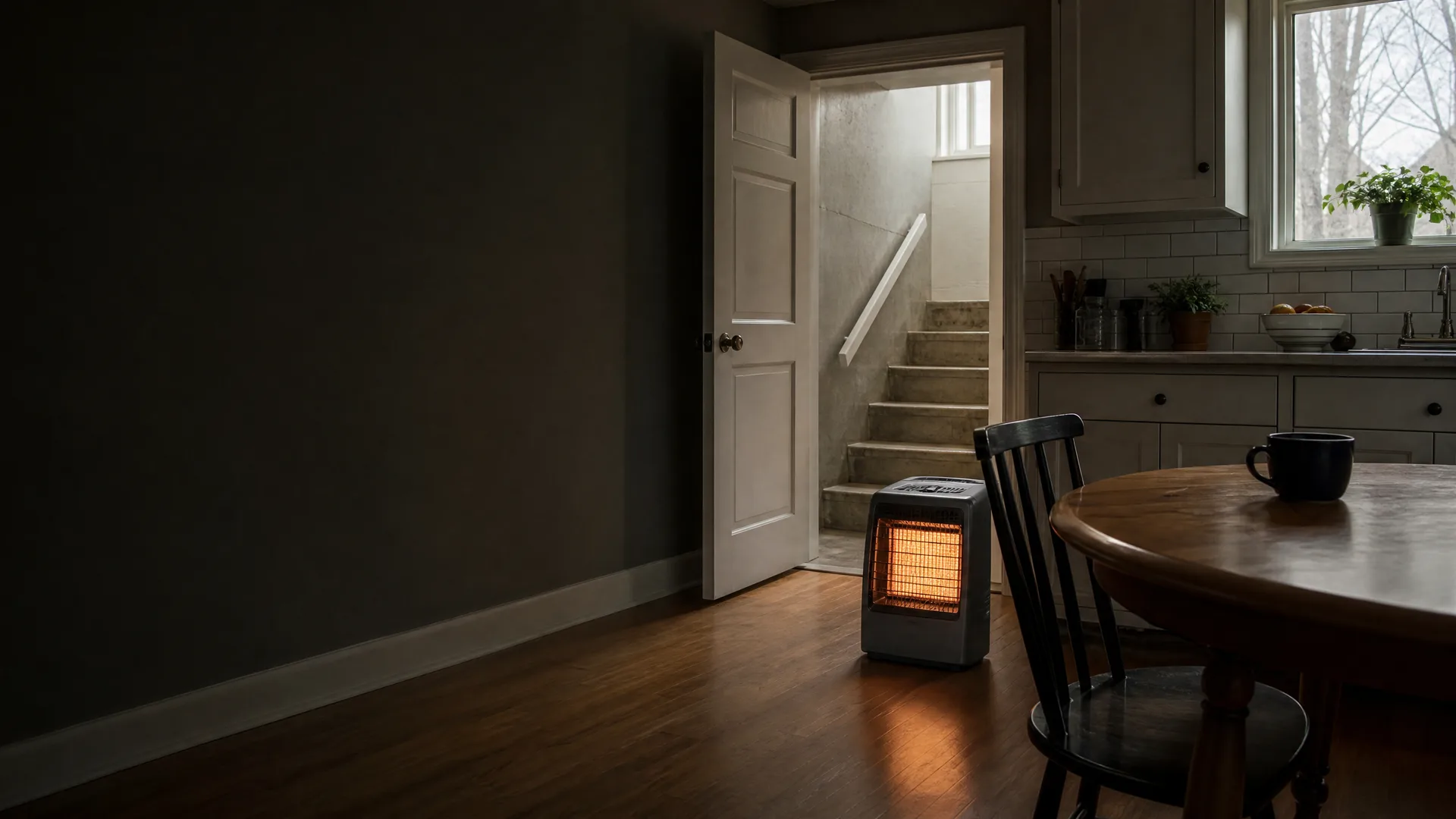
A portable space heater with a glowing orange element sits on a wood floor in a dim room beside a round table and black wooden chair, with an open door leading to a stairwell and a kitchen counter with a window at right.

Six in the morning and it's still dark. You're standing in the kitchen in your coat because the furnace hasn't caught up yet, feeding the space heater's cord behind the table where your kid eats breakfast. The basement door is open behind you, the way you left it last night after checking the pilot light again. Outside, Hempstead is somewhere in the twenties. The space heater ticks as it warms, glowing orange against the cabinets, and you're watching the thermostat for it to climb past 62. You already know you'll be down there again before the coffee's done, listening for the burner to kick on.


Is your heating bill telling you something's off

Your gas furnace cycles on and runs longer than it used to, or the burner makes a rougher sound before it catches. Some rooms stay cold while the one with the thermostat feels fine. The gas bill climbs every January and February no matter what you set the temperature to. If the furnace is old, the flame might look more yellow than blue, or you smell something faint near the unit that wasn't there before. None of that means you need to switch to a heat pump. It means the furnace is working harder than it should to keep the house even, and a furnace that strains through the winter is one that costs more to run and fails on the night you need it most.

  1. The thermostat calls for heat and signals the furnace control board.

  2. The igniter glows and the gas valve opens to feed the burners.

  3. Burners light and heat the heat exchanger inside the furnace.

  4. The blower pushes air across the heat exchanger and into the ducts.

Winter nights average 28°F

A 28°F overnight low is normal here from December through February, not a cold snap. That's the range your furnace was sized for, and it's why most houses in the area still lean on gas to get through those nights without strain.

NOAA nClimDiv 1991-2020

A gray high-efficiency furnace with white PVC vent pipes stands on a concrete pad in a basement, beside sheet-metal ductwork, copper piping and a poured concrete wall with wood framing at left.

A furnace running clean

Tight blue flame at the burners, steady draft out the flue, PVC condensate line draining like it should. A furnace in this shape holds its heat exchanger and igniter for years yet, and there's no reason to think past keeping it tuned.

A beige gas furnace in a basement with a metal flue pipe, galvanized sheet-metal ductwork to its left, and gas and water pipes along the concrete wall to its right.

A furnace on borrowed time

Older steel cabinet, same ductwork overhead, but the flue and the shutoff valves next to it have seen a lot of winters. Once a furnace this age starts short-cycling or the burners sound rough, a cracked heat exchanger is the thing worth ruling out before it fails on a cold night.

Why does gas heat still make sense for a Hempstead winter?

  • Winter nights average 28°F

    Overnight lows near 28°F push a standard heat pump into its weakest range, right when your house needs the most steady heat.

  • Heat runs October through May

    Eight months of heating means the furnace earns its keep most of the year here, not just on the worst nights.

  • 62.4% of homes heat with gas

    Most homes around you already run on gas, so parts, service and know-how for a furnace are easy to find locally.

NOAA nClimDiv 1991-2020 · ACS 2020-2024

A beige metal furnace with a louvered front panel stands on a concrete floor against a concrete wall, connected to galvanized sheet-metal ductwork and a metal pipe.
Before you get your furnace installation
A gray high-efficiency furnace stands on a concrete basement floor beside sheet-metal ductwork, with white PVC vent pipes and a black flexible line running up to exposed wood floor joists, next to a wood-framed post against a concrete wall.
After you get your furnace installation

A furnace pro near you

You've read the case for staying with gas, and for most of Nassau County that case holds. But if your furnace is on its way out and you're weighing a heat pump against another gas unit, the decision is really about your house, your ductwork, your gas line, how your current system has held up. A contractor who services furnaces and heat pumps all over Hempstead sees both sides of that choice every week, in houses built like yours, and knows which one makes sense for a specific setup rather than in general. That's a different conversation than what this page can have with you. Getting matched with one local, licensed contractor means someone looks at your actual house, not a hypothetical one, and you're not fielding calls from five companies while you sort it out. If the mornings in your kitchen are starting to feel like the ones described above, that's worth having someone look at soon.

How a dual fuel setup switches

  • A dual fuel system pairs a heat pump with your existing furnace and switches between them automatically.
  • The heat pump handles the milder stretches of fall and spring, when it can produce heat without much strain.
  • Below a set outside temperature, the system shifts to the gas furnace to carry the harder cold.
  • A control board tracks outdoor temperature and picks whichever source is cheaper or more effective at that moment.
  • The switch happens in a few seconds and the house never feels a gap in heat.
  • Your ductwork and gas line stay in place, since the furnace keeps doing the job it already does on the coldest nights.

A dual fuel system is two heat sources tied to one control board, and the board makes the call on which one runs. Outdoors, the heat pump works the way any heat pump does, pulling heat out of the outside air and moving it inside through the same ductwork your furnace already uses. That's efficient down to a point. Once the outside temperature drops past where the heat pump can keep up, the control board switches over to the gas furnace, and the furnace carries the house through the cold the way it does now. You don't set this switch yourself and you don't feel it happen. The board is reading outdoor temperature constantly and choosing whichever source makes sense at that moment, so on a 45°F morning the heat pump might run the whole time, and on a night near 28°F the furnace takes over before the house has a chance to lose ground. Nothing about your gas line or ductwork changes to make this work. The furnace stays connected the same way it is now, and the heat pump adds onto that system rather than replacing any part of it. For a house in Nassau County, that means the furnace still does the heavy lifting on the coldest nights of the year, while the heat pump picks up the stretches of fall and spring when running it costs less than firing up the burners. The two don't run at once. One hands off to the other, and the board decides when.

A woman wrapped in a cream textured blanket sits in an armchair beside a lit lamp and a dark window, with an open book in the foreground.
A smiling older woman with gray hair in a cream knit sweater stands in a dimly lit kitchen beside a window showing snow outside, with a round loaf of bread on the counter in the foreground.

Around 28°F

A standard heat pump keeps working at that temperature, but it leans on backup electric coils to do it, and Nassau County power rates make those coils expensive to run night after night.

Find a furnace pro

One gas line, one bill

Your furnace burns gas for heat no matter how cold it gets outside, and the fuel cost stays predictable through the coldest stretch of a Hempstead winter.

Find a furnace pro
A smiling man in a denim shirt and white t-shirt stands in an open dark doorway of a stucco house, facing a woman with long brown hair and a green jacket seen from behind in the foreground.

Gas heat still makes sense for your house

A gas furnace handles a 28°F night without strain, and that's most of what a Hempstead winter asks of a heating system. A standard heat pump would be leaning on backup coils through those same nights, and on Nassau County power rates that adds up fast. Staying with gas, or looking at dual fuel if your furnace is getting old, both hold up here. What doesn't hold up is guessing at the right call from a search page.

Someone who installs and services furnaces in this area knows what tends to fail first in a house like yours and what a system here actually needs to get through eight months of heating. When you ask for a quote, you're matched with one licensed local contractor, not a handful of companies competing for your call. They'll reach out to look at your furnace, your ductwork and your gas line, and help you figure out whether gas, dual fuel, or something else fits your house.

A living room corner with a beige sofa and cushion, a round wooden coffee table holding a pale ceramic vase of eucalyptus stems and a wooden bowl, and a curtained window with a potted plant above a latticed radiator cover in the background.
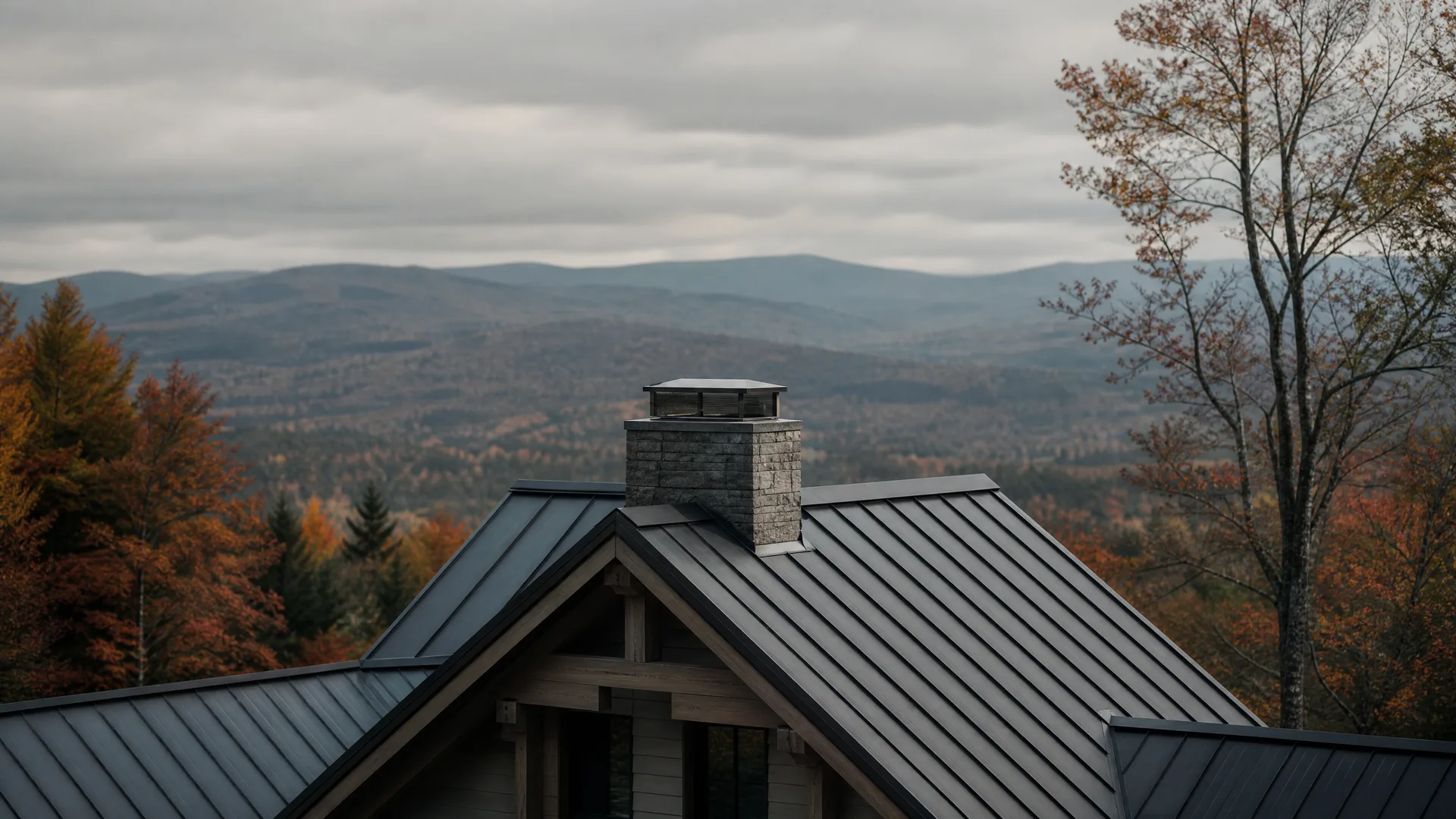
A dark standing-seam metal roof with a stone chimney and metal cap, seen against a backdrop of autumn-colored forest and layered hills under an overcast sky.

A local pro for your furnace installation

Get a local pro

Asking costs nothing, and the choice to hire stays yours.

A furnace that's cycling longer or sounding rougher at the burner is usually telling you before it fails outright. Getting a local contractor to look at it now, while you still have a working system to fall back on, beats making that call on a night when it's 28 degrees outside and the house won't warm up.