








Why your gas furnace won't light in Hempstead, NY

Get matched with a pro who fixes furnaces in Nassau County.

Connect with a pro

A gas furnace that won't light usually comes down to one of a few things: a dirty or failed flame sensor, a bad igniter, a clogged filter choking airflow, or the gas valve not getting a signal to open. Most newer furnaces use an electronic igniter instead of a standing pilot, and that igniter wears out over time or just gets dirty enough to stop glowing hot enough to catch the gas. The flame sensor is a smaller part with a bigger job: if it's coated in soot, it can't tell the control board a flame is present, so the system shuts the gas back off within seconds of trying to light. Cold snaps in Nassau County put more demand on a furnace right when a weak igniter or dirty sensor is most likely to fail. None of this means the whole unit is done. It usually means one part has to be cleaned, tested, or replaced before the furnace will fire again.

A woman in a cream cowl-neck sweater stands in a lamp-lit room looking out a window at a snow-covered yard with shrubs and bare trees at dusk.
A woman in a gray turtleneck sweater stands near a large window in a lamp-lit living room, looking out at falling snow and snow-covered conifers.
A woman in a chunky knit sweater stands by a large window looking out at snow-covered ground, with a dimly lit living room containing a gray sofa, framed artwork, shelves and table lamps behind her.
A woman in a gray turtleneck sweater stands in a dimly lit living room with a lamp and bookshelves, looking out a multi-pane window at falling snow.

Why does your furnace click but never catch?

You hear the furnace try. It clicks a few times, maybe the blower kicks on for a second, then it goes quiet and the house stays cold. Sometimes you'll catch a faint gas smell near the unit right before it shuts down, or you'll notice the pilot light area glowing orange instead of the steady blue it should be. Thermostat's set right, but no warm air comes through the vents. Left alone, a furnace that keeps trying and failing to light will usually lock itself out as a safety measure, and on a cold Nassau County night that means no heat until someone resets it or fixes what's actually wrong.

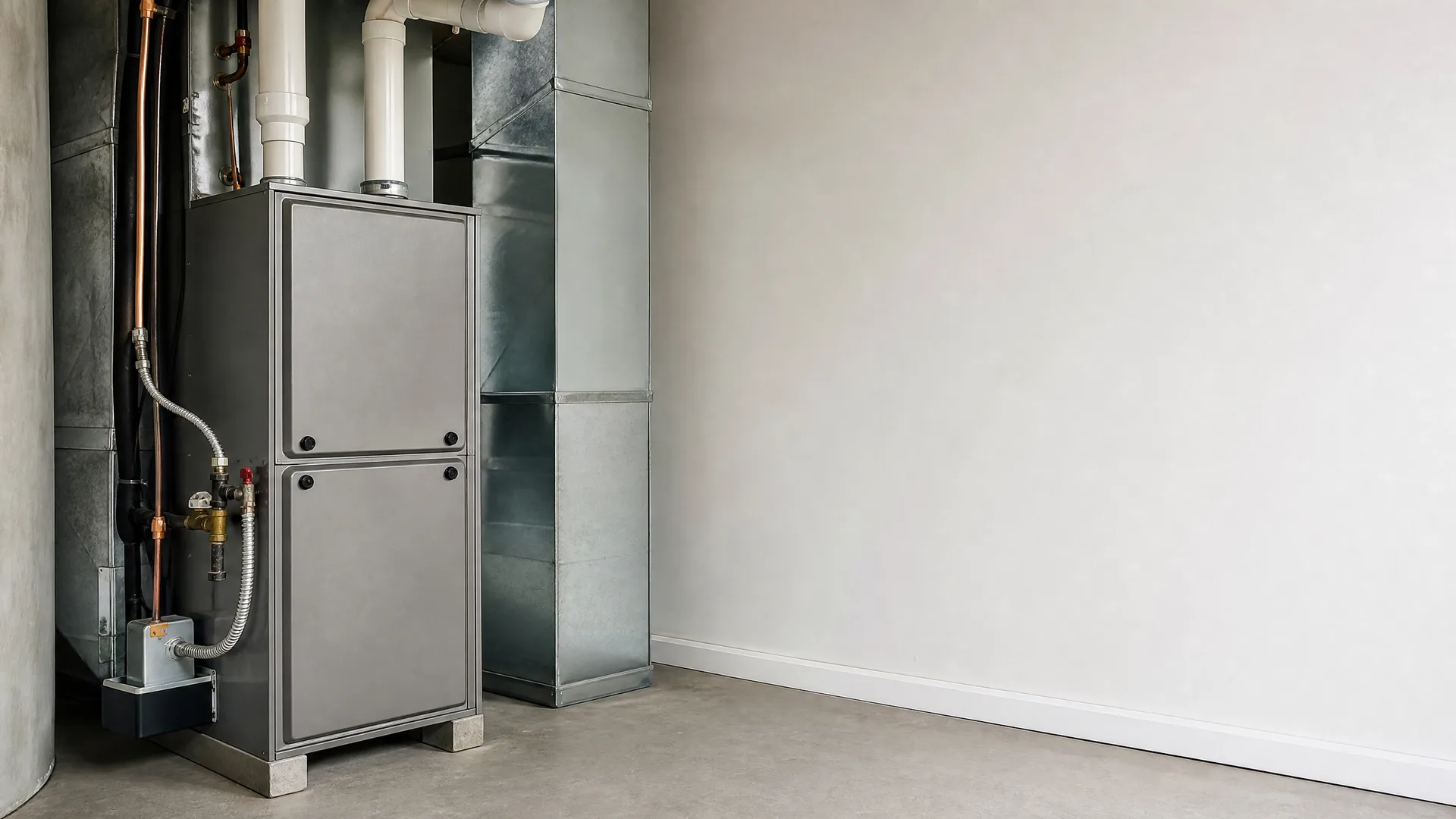
A gray high-efficiency furnace with white PVC vent pipes, copper and flexible piping, and galvanized sheet-metal ductwork stands against a wall in a room with a bare concrete floor and plain light-colored wall.

The flame sensor is doing its job

A flame sensor that won't let the furnace stay lit is usually working correctly. It senses no flame and cuts the gas valve to keep raw gas from filling the house. Over time the sensor picks up a film of carbon or oxidation and stops reading the flame even when one is there. A contractor can clean it with light sandpaper or a scouring pad in a few minutes, and most furnaces run fine again once it's done.

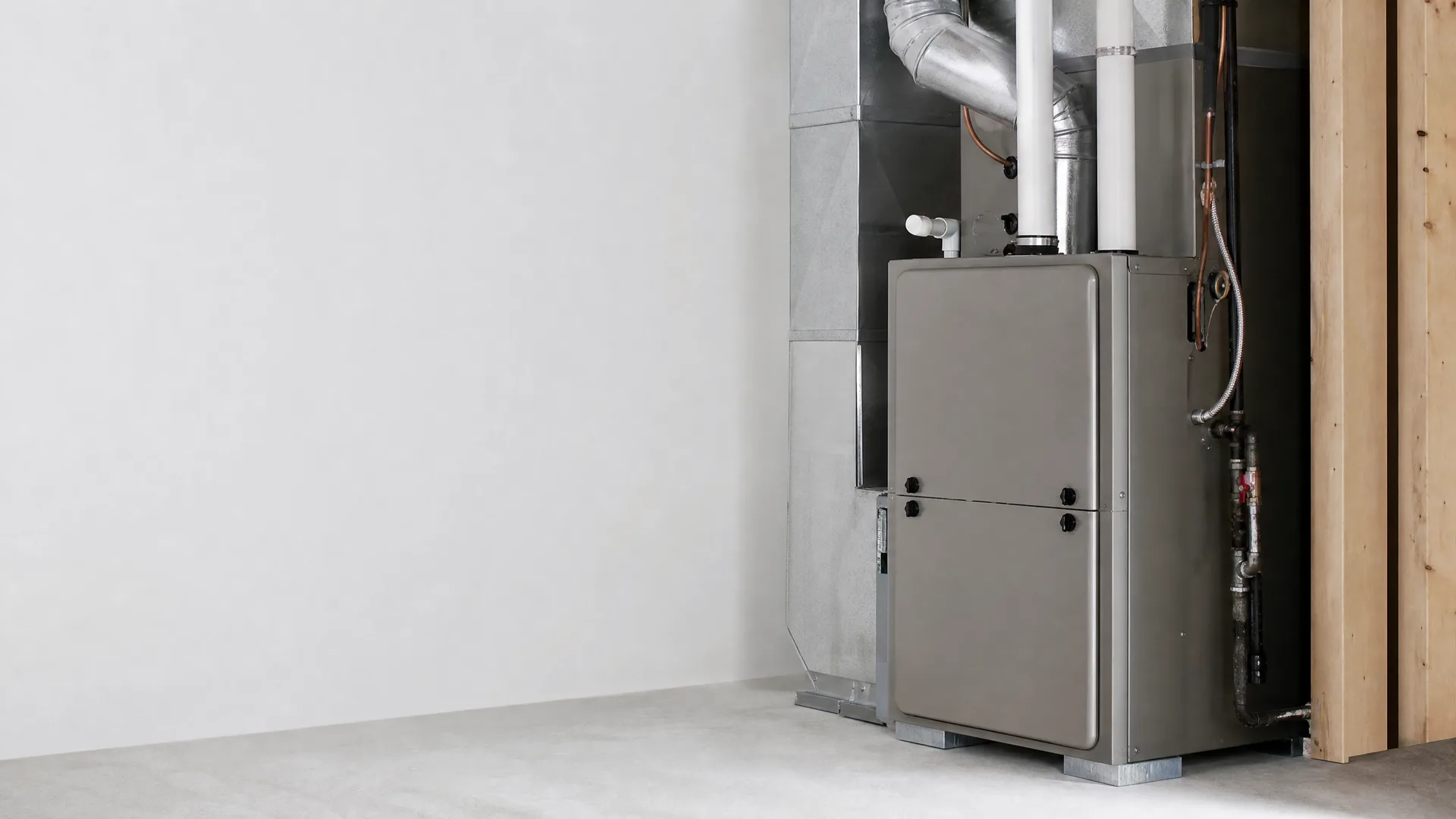
A gray residential furnace with attached sheet-metal ductwork, white PVC vent pipes and copper lines stands against a plain white wall on a concrete floor, beside exposed wooden framing.

Why the igniter fails for good

Electronic igniters replaced standing pilot lights in most furnaces built in the last few decades, and they draw more current at startup than they do once the furnace is running. That surge is what eventually cracks the hot surface element inside. A cracked igniter won't glow bright enough to light the gas, or won't glow at all. Unlike a pilot light, it can't be relit by hand. A new igniter is a direct swap for the old one.

Why does my furnace smell like gas when it won't light?

A faint gas smell near the furnace right before it shuts down worries most people, and it should get your attention. You're not imagining it. That smell usually shows up during the few seconds the gas valve opens to let the igniter catch it, and if it doesn't catch, some unburned gas lingers before the valve shuts again. Knowing why it happens tells you whether to open a window and wait for a contractor or leave the house.

The smell means gas opened but never ignited

Every gas furnace runs a short window where the valve opens and the igniter has to light that gas within a second or two. A sensor confirms the flame caught. If it didn't, the valve shuts and the furnace locks out, but that brief open valve is enough to let a small amount of gas escape into the air near the unit, which is what you're smelling. A failed igniter, a dirty flame sensor, or a weak spark are the usual reasons the gas never catches. A faint smell that clears on its own during a failed start is different from a strong, constant smell, which means leave the house and call the gas company, not a contractor.

  1. Thermostat calls for heat and signals the control board

  2. Inducer motor starts and pulls air through to clear the vent

  3. Pressure switch closes once it senses the inducer running

  4. Igniter heats up or the pilot flame is checked for

A beige sheet-metal furnace with a louvered upper panel stands on a concrete basement floor, connected to galvanized ductwork, white PVC vent pipes, and a metal gas line with an electrical box.
Before you get your furnace repair
A gray high-efficiency furnace with white PVC vent pipes stands in an unfinished basement beside sheet-metal ductwork, gas piping, and insulated stud walls on a concrete floor.
After you get your furnace repair

A local pro for your furnace repair

Send the request today and let a furnace pro reach out to you.

There's no charge for the request.

A gray high-efficiency furnace with white PVC vent pipes stands beside galvanized sheet-metal ductwork in a basement with a concrete floor, with a wooden staircase and railing at left.

Furnace lighting and running

The burners catch on the first or second try and stay lit. The inducer motor pulls air through to clear the vent, the igniter glows, and the blower pushes warm air through the ducts. No clicking, no smell, no short cycling. It just runs until the thermostat is satisfied.


An older gas furnace with louvered panels sits on a concrete pad in a basement, connected to sheet-metal ductwork and PVC and metal pipes, with a water heater and wooden stair framing in the background.

Furnace failing to light

You hear clicking, maybe a few tries, then quiet. The blower might kick on for a second and shut off. Sometimes there's a faint gas smell near the unit right before it stops trying. The gas valve, igniter or flame sensor isn't completing its part of the sequence.

Winter nights average 28°F

At 28°F overnight, your furnace is running most of the night, every night, from December through February. That means more cycles on the igniter and flame sensor, and more chances for a weak one to fail right when you need heat the most.

NOAA nClimDiv 1991-2020

Keep troubleshooting it yourself and you might get it lit again tonight, but a furnace that's already skipped once on the igniter or flame sensor usually skips again within days.

Get it looked at now and a contractor finds the actual part failing, replaces it, and the furnace lights the same way every time again, no guessing which attempt will be the one that fails.

How much does your furnace really run here?

  • Winter nights average 28°F

    Heat runs here from October through May, about eight months of the year. That's eight months of cycles on the igniter and flame sensor, not just a few cold snaps.

  • Heat runs October through May

    Most of Nassau County heats with gas, 62.4% of homes. Parts that fail, igniters, flame sensors, gas valves, are common because gas furnaces are what's running.

  • 62.4% of homes heat with gas

    Overnight lows average 28°F all winter. The furnace isn't cycling on and off a little, it's running long stretches most nights, December through February.

NOAA nClimDiv 1991-2020 · ACS 2020-2024

Where this leaves you

  • A furnace that clicks but won't catch is almost always a dirty flame sensor, a failed igniter, a clogged filter, or a gas valve not getting its signal.
  • Heat runs here from October through May, so the igniter and flame sensor cycle on and off for eight months straight.
  • A faint gas smell right before the unit shuts down is the normal few seconds of unburned gas clearing, not a sign of a leak.
  • Once a furnace skips on the igniter or flame sensor, it tends to skip again within days rather than fix itself.
  • A contractor can test the flame sensor, igniter, and gas valve directly instead of guessing which part failed.
  • Letting a contractor find the actual part failing means the furnace runs instead of taking its chances on the next cold night.

A furnace that won't light is a short list of likely causes, not a mystery. The flame sensor gets a film of carbon on it and stops reading a flame that's actually there. The igniter weakens and stops glowing hot enough to catch the gas. The filter chokes the airflow the burners need. Or the gas valve never gets the signal to open at all. Any one of these shows up the same way from where you're standing: a few clicks, maybe a second of blower noise, then silence and a cold house. The smell you catch right before it shuts down isn't a leak. It's the normal clearing of unburned gas in the few seconds before the safety switch cuts power to the valve.

None of this fixes itself. Heat runs here from October through May, which means the igniter and flame sensor are cycling on and off for eight months straight, and a part that's already skipped once tends to skip again within days. Testing a flame sensor, an igniter and a gas valve takes the right tools and knowing what a working one looks like against a failing one. A contractor can check all three directly and tell you which part actually failed, rather than you swapping pieces and hoping. That's the difference between a furnace that keeps skipping on the coldest nights and one that just lights.

A bearded man in a plaid flannel shirt sits indoors looking out a window at snow-covered trees, with a steaming mug on the sill and wooden kitchen shelves behind him.
A man in a blue T-shirt sits on a light gray sofa, laughing while looking at an open laptop in the foreground, with a framed picture, lamp and potted plant behind him.

Furnace Repair

Get the right pro for your furnace

Get the furnace repair search off your mind today.

A black-framed smartphone standing upright against a plain light gray background, its screen filled with solid green.
RepairFurnace or heatingNassau County, NY
Step 1 of 2

What ZIP code is the job in?

