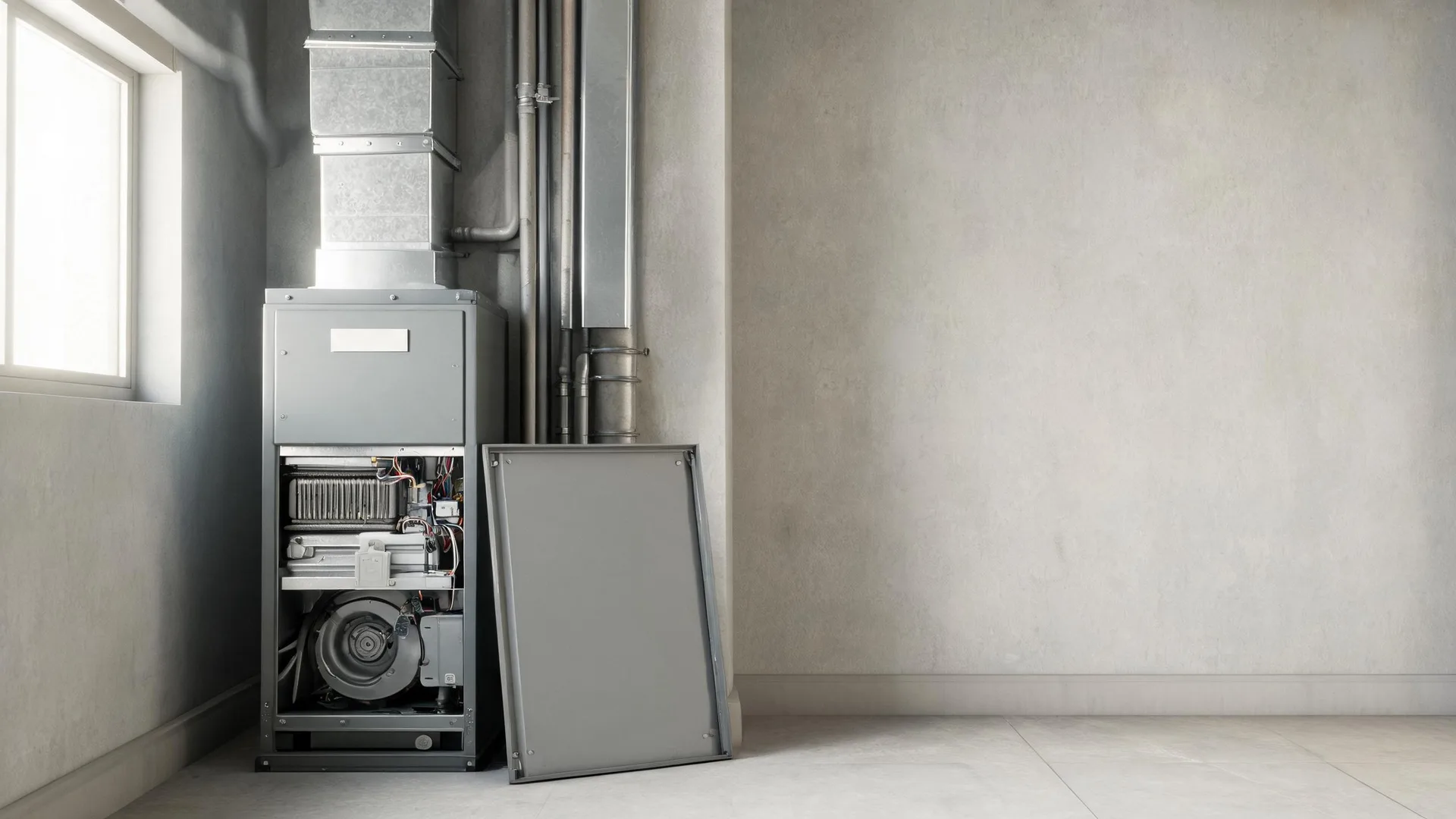
Eight months of heat a year
Furnaces in Elmira run from October through May. That's most of the year asking the igniter, the blower motor and the gas valve to cycle on and off, night after night.
Takes about a minute. No obligation.
Furnaces in Elmira run from October through May. That's most of the year asking the igniter, the blower motor and the gas valve to cycle on and off, night after night.
When the overnight low sits around 18°F through December, January and February, your furnace runs longer each cycle to keep up. That extra run time is often what brings a weak part to the point of failure.
NOAA nClimDiv, 1991–2020 normals
Half the homes in Elmira were built in 1955 or earlier.
A furnace that came with a house that old is worth asking about, not just fixing.



September is when furnaces in Elmira sit idle, right before they get switched back on for October. That first run after months off is when a weak igniter or a cracked heat exchanger tends to show itself. Heat here has to last through May, so a furnace struggling in October has most of the year still ahead of it, not just a few cold nights. Waiting it out usually means the same repair call later, after more nights of short-cycling or blowing cold air. If something seems off now, this is the better time to have it checked.
Your furnace already runs long nights to keep up with lows near 18 degrees, and it has to keep doing that through May. Whatever's making it struggle now won't get easier on it. Have it looked at so the repair holds for the rest of the season.
Find a contractorA furnace that is starting to fail usually tells you before it quits outright. It short-cycles, kicking off a few minutes into a run instead of finishing, because a flame sensor is dirty or a limit switch thinks it is overheating when it is not. Or it runs and runs without the house ever feeling warm, which points to a blower that has lost speed or a filter choking off airflow. Pay attention to sounds that weren't there before. A boom at startup means gas is building up before it lights, and that's a delayed ignition problem worth shutting down for. A burner flame that's yellow instead of blue means it isn't burning clean. Cold air out of the vents before the furnace shuts off, or a steady smell of gas near the unit, both mean stop running it and get it looked at rather than waiting to see if it clears up on its own.
The igniter has to heat up and light the gas every time the furnace calls for heat, and that repeated heating is what eventually cracks it or leaves it too weak to glow hot enough. The flame sensor sits in the burner flame and collects a film from normal combustion, so it stops sensing fire that is actually there and shuts the furnace down as a safety measure. Both are small, inexpensive parts, and both are the usual reason a furnace that ran fine last month suddenly won't stay lit.
A blower motor wears out from running season after season until the bearings go or it can't hold speed, and that shows up as weak airflow even though the burners are working fine. A heat exchanger fails from metal fatigue, expanding and contracting every time the burners fire until a crack opens. One is a wear part you expect to replace eventually. The other is a safety problem the moment it happens, because a cracked heat exchanger can let combustion gas mix into the air moving through the house.
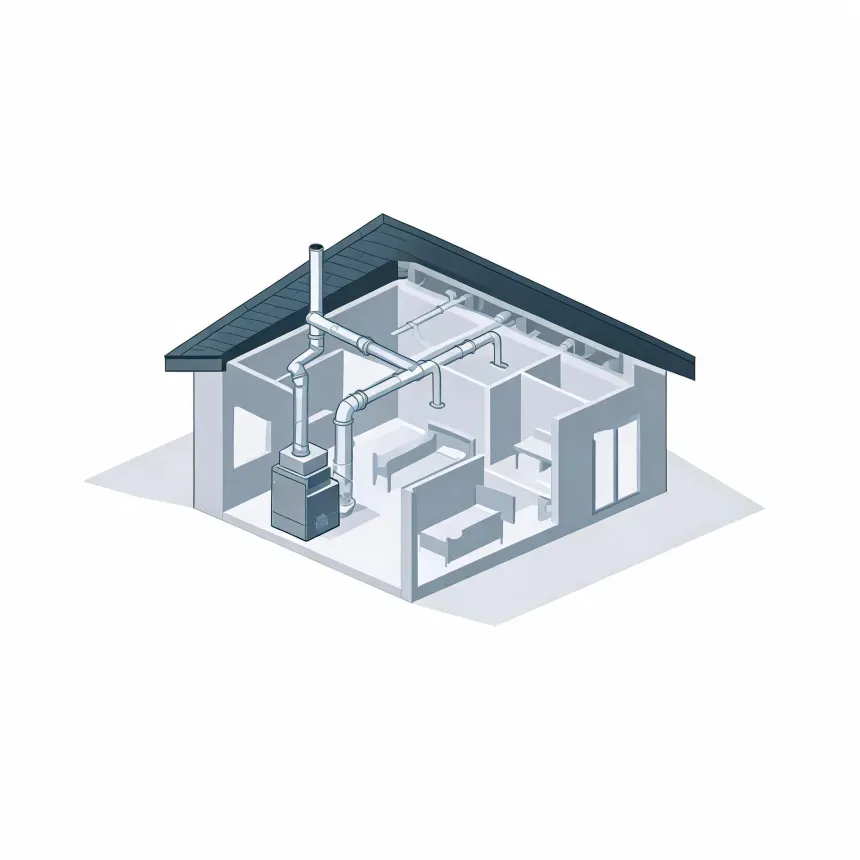
Estimates for a typical Chemung County home, compared with an older unit built to the previous federal minimum, from EIA household energy data, New York fuel prices and NOAA climate normals. Your home will differ.
Repair makes sense when one part has failed and the heat exchanger is sound.
Replacement makes sense when the heat exchanger is cracked or the furnace keeps needing parts.
A repair makes sense when one part failed and did its job badly, not everything around it. An igniter, a flame sensor, a capacitor on the blower motor. Swap the part and the furnace runs like it did before, because nothing else was damaged by the failure. Replacement starts to make sense when the cabinet is cracked, when the heat exchanger has gone, or when the same furnace keeps coming back for a different repair each season. That pattern means the part failing now probably isn't the last one. Age by itself doesn't decide it. A furnace that has run fine for years and develops one clear fault is still worth fixing. One that needed a new blower motor this year and a new control board last year is telling you something else.