


A new wooden picket fence runs along a grass lawn in front of a row of similar two-story houses with gabled roofs and light siding, under large leafy trees.

Furnace Repair in Buffalo, NY

Tell us about the job

Takes about a minute. No obligation.

RepairFurnace or heatingErie County, NY
Step 1 of 2

What ZIP code is the job in?

Erie County recorded 329 severe weather events between 2015 and 2024. That includes 241 cases of damaging wind, 31 hail events, 9 tornadoes, and 45 winter storms with heavy snow or ice. Wind and hail reach whatever sits outside, including a heat pump or an AC condenser tied into a dual fuel setup. Ice and heavy snow pile up around vents and intake pipes. Power matters too. Statewide, 11% of households went at least a day without power in 2024, and a furnace with electronic ignition or a blower motor needs that power to run no matter how much gas is coming in.

8 months
October through May, your furnace is on duty
19°F
the average winter night it heats against
87%
of homes here heat with gas, so most furnaces here burn gas
45 winter storms
in ten years, the nights a failure hurts most
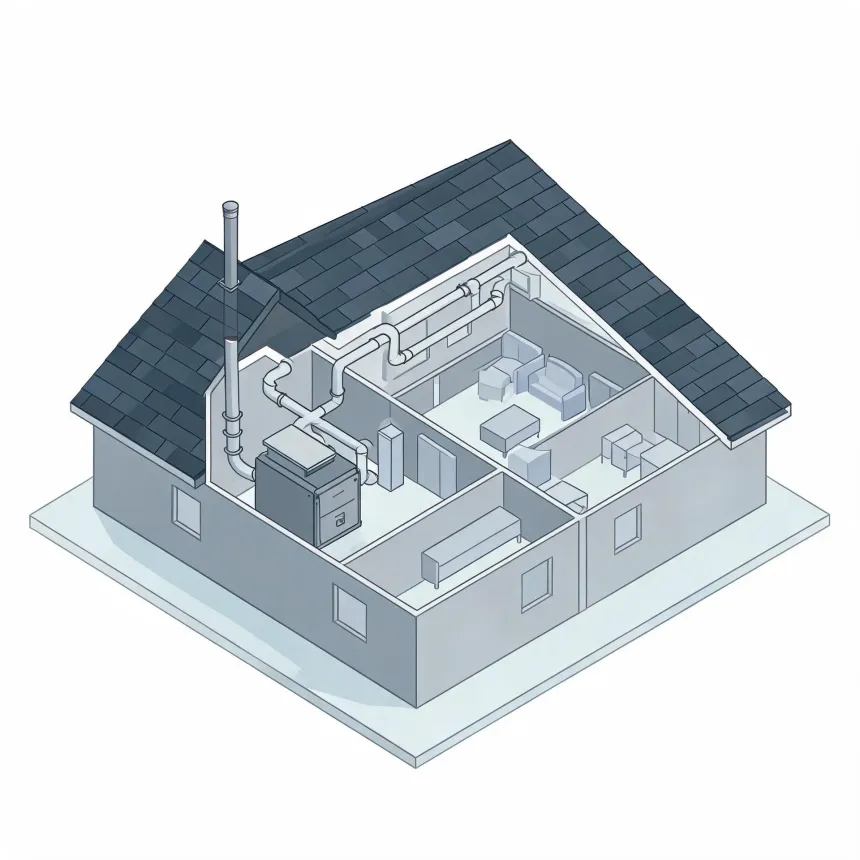
Isometric cutaway illustration of a single-story house with a dark shingled roof, showing interior rooms with furniture, ductwork, a flue pipe, and a furnace unit.
Your furnace works hardest from November through March.

NOAA nClimDiv, 1991–2020 normals

Half the furnaces in Erie County sit in homes built in 1957 or earlier.

A furnace that old has likely been replaced once already, so find out what's left in the one you have now before you pay to fix it.

Gas here isn't cheap, so a furnace running badly costs you all winter

Heat runs October through May
Winter nights average 19°F
45 winter storms from 2015 to 2024

Furnaces in Erie County run about eight months a year, October through May. That's most of the year spent heating, with the ignition system, the blower motor and the burners cycling on and off the whole time. A furnace built for occasional use somewhere warmer doesn't see that kind of load. Winter storms add to it. Erie County saw 45 of them between 2015 and 2024, heavy snow and ice piling up fast, and a furnace often has to run harder and longer to keep up while that's happening outside. All that work is usually why something finally gives out. Getting it diagnosed properly, instead of just patched, is what makes the fix hold.

If your furnace took a hit this winter, find out now, not when it quits

If a storm has come through recently, or the furnace sits near vents or intake pipes that caught snow or ice, get it looked at even if it still lights and runs. A blower motor or ignition system under strain doesn't always quit right away.

Find a contractor
A gas furnace with attached ductwork, gas piping, and condensate lines installed in a concrete-block basement.

The first cold snap finds what was already weak

Furnaces here start running in October. The weeks right after that first cold snap are when a weak part usually gives out, not because the furnace is new to the job, but because it sat idle since spring and the first real load finds whatever was already going bad. Igniters and blower motors that were marginal in May don't announce it until they're asked to carry eight months of work starting in fall. If yours is acting up now, in these early weeks, that timing matters. It's easier to get ahead of a problem in October than to be without heat in January.

A crack in the heat exchanger gets worse with every cycle

Metal that's already cracked flexes more as it heats and cools. Keep running the furnace and the crack opens further, which is also when carbon monoxide has a path into the air the blower is pushing through the house. A furnace doing this needs to be shut down and checked, not run until someone gets to it.

A failing blower motor can take the heat exchanger with it

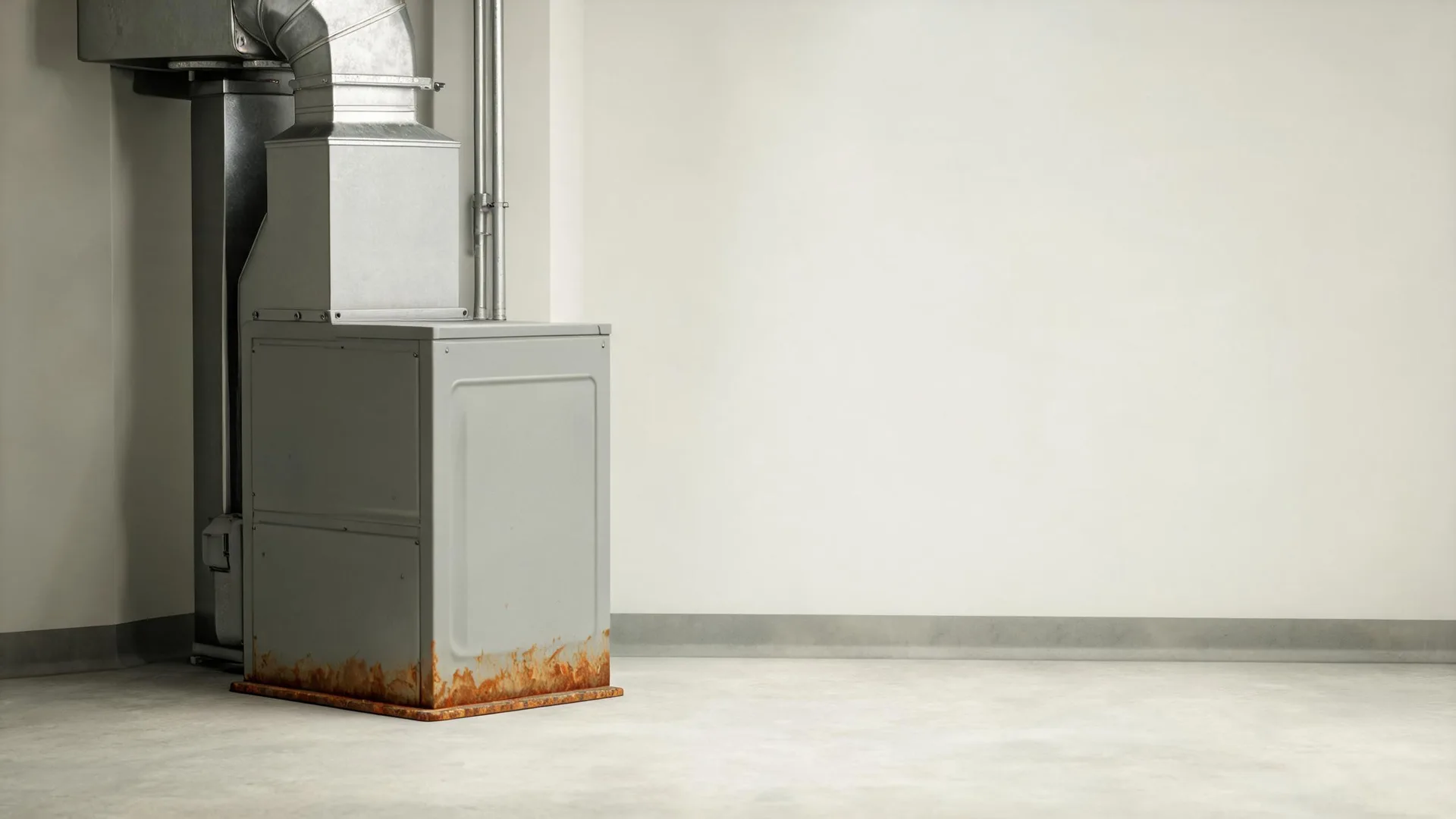
The blower moves air across the heat exchanger to keep it from overheating. If the motor is weak or the bearings are going, airflow drops and that metal runs hotter than it should on every cycle. A motor that would have been a simple swap can end up causing damage to a part that costs far more to replace.

A gray forced-air furnace with sheet-metal ductwork stands in an unfinished basement with exposed wooden joists, concrete walls, and a hanging incandescent bulb.

A new furnace would cut about $180 a year off heating for a typical Erie County home.

  • A new high-efficiency furnace$710 a year
  • An older furnace$890 a year

Estimates for a typical Erie County home, compared with an older unit built to the previous federal minimum, from EIA household energy data, New York fuel prices and NOAA climate normals. Your home will differ.

Repair makes sense when one part has failed and the heat exchanger is sound.

Replacement makes sense when the heat exchanger is cracked or the furnace keeps needing parts.

A diagnostic starts before any panel comes off. The tech asks what the furnace is doing, when it started, and whether it happens on startup, mid-cycle, or when it shuts off. That narrows things fast. Then it's a check of the obvious: thermostat calling correctly, power getting to the unit, gas valve open. Past that, the tech pulls the panel and watches a full cycle, looking at how the igniter glows, whether the flame is steady and the right color, and whether the blower kicks in when it should. Pressure switches, flame sensors, and limit switches get tested with a meter, not guessed at. The heat exchanger gets inspected too, since a crack there changes everything about whether the furnace should keep running at all. By the end, the problem should be named, not just noticed.