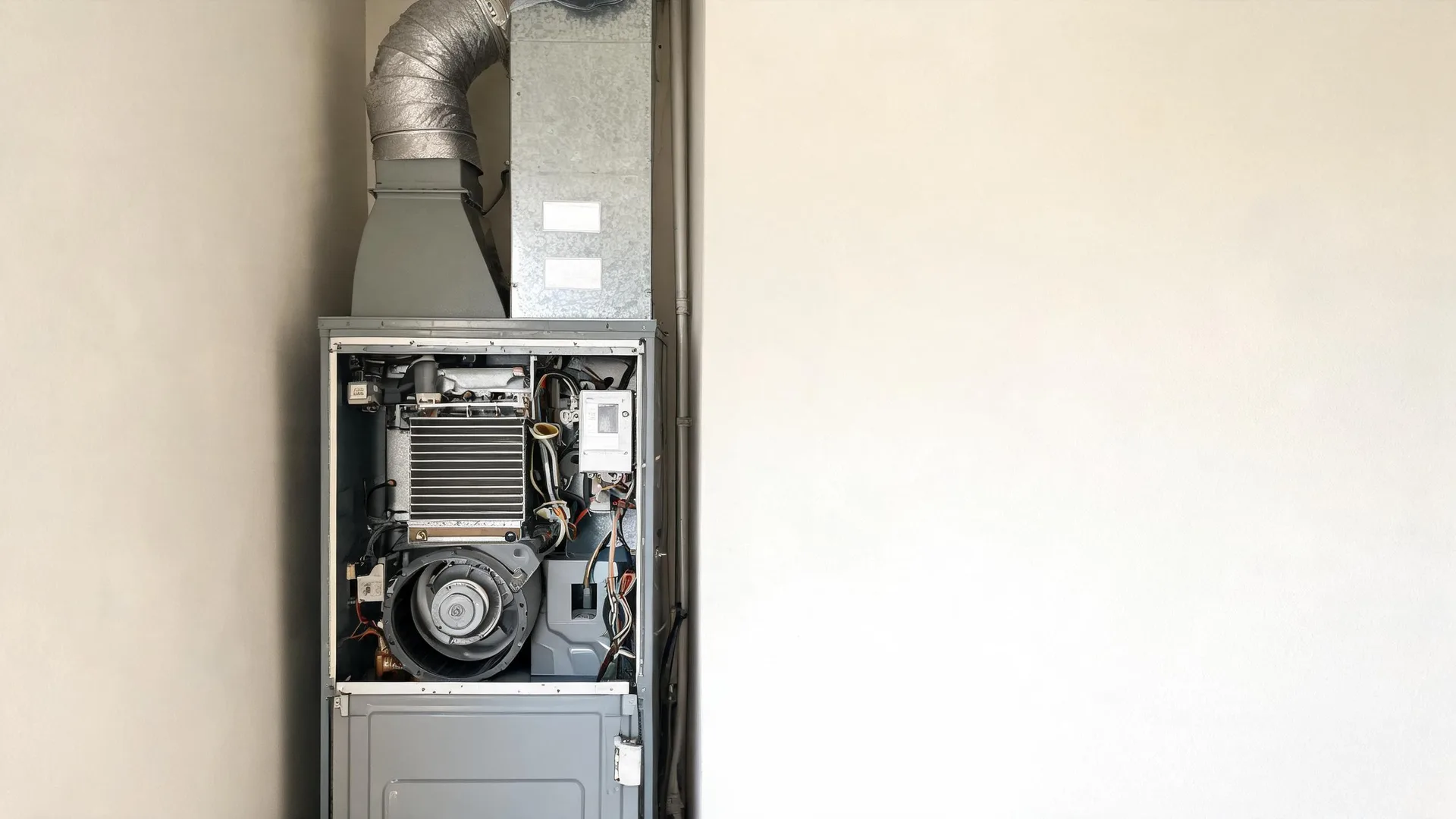
A gas furnace and sheet-metal air handler unit installed in an unfinished concrete basement.

Furnace Repair in Auburn, NY

Tell us about the job

Takes about a minute. No obligation.

RepairFurnace or heatingCayuga County, NY
Step 1 of 2

What ZIP code is the job in?

Check the simple things first

Make sure the thermostat is set to heat and the setting is above room temperature. Check that the furnace switch, the one that looks like a light switch near the unit, hasn't been bumped off. Look at the filter. A filter packed with dust can choke airflow and cause the furnace to shut itself down before it ever gets warm.

Know what you're telling the tech

Notice what the furnace is doing before anyone arrives. Does it try to start and stop, run but blow cold air, or not respond at all? Is there a smell, a clicking you can hear from another room, or a light blinking on the control board? Telling the tech what you saw and heard, and whether it happens every time or only sometimes, points them straight at the problem instead of starting from scratch.

8 months
October through May, your furnace is on duty
19°F
the average winter night it heats against
32 winter storms
in ten years, the nights a failure hurts most
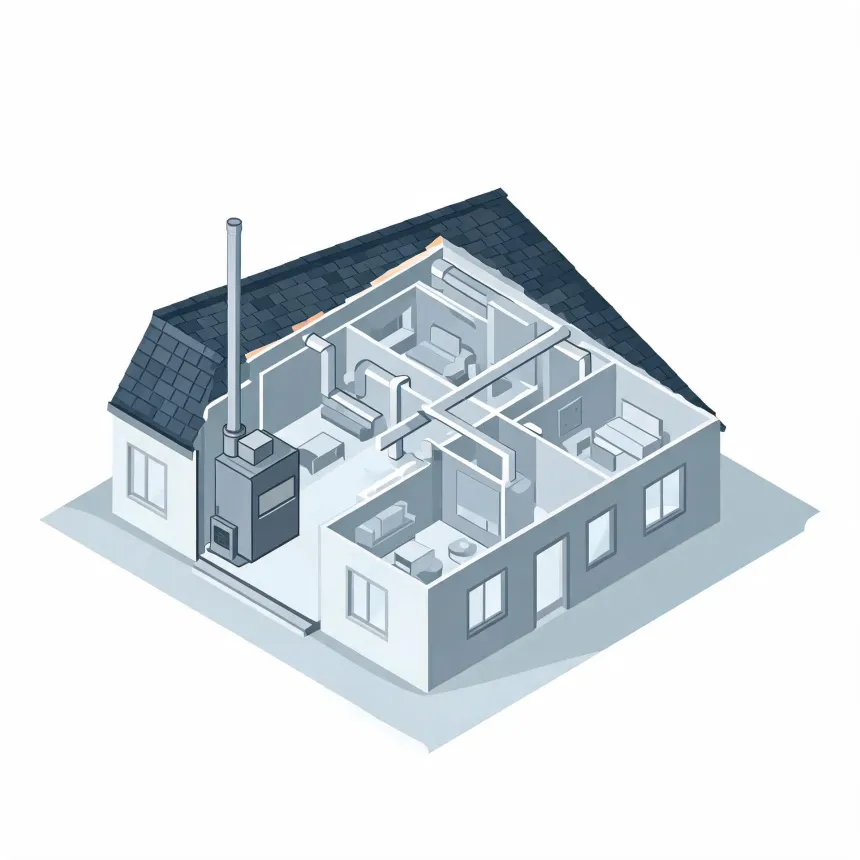
Isometric cutaway illustration of a single-story house showing interior rooms, ductwork, and a dark furnace unit with a tall flue pipe rising past the shingled roof.
Your furnace works hardest from November through March.

NOAA nClimDiv, 1991–2020 normals

Half the homes in Cayuga County were built in 1958 or earlier.

A furnace that came with a house that old is probably on its second or third unit already.

October asks it to start, after eight months off

Heat runs October through May
Climate zone 5A
Winter nights average 19°F
Gas prices make a bad furnace expensive to ignoreNew York gas ran $16.03 per million Btu in 2024.

A furnace that needs a part now and then is usually worth fixing. It's the pattern that tells you more than any single breakdown. A new igniter or flame sensor is a normal repair, the kind any furnace needs over the years it runs. But if the same furnace is calling for a tech every season, or the heat exchanger has cracked, that's a different situation. The heat exchanger is the part that actually warms the air, and it isn't swapped out on its own. Once a furnace needs that, or needs a second major part soon after the first, you're paying to keep an old machine limping rather than fixing it. A tech who's seen the unit can tell you which kind of repair you're looking at.

This furnace has been running since October. Find out what's actually wrong before winter gets worse.

Eight months of heat a year, with overnight lows averaging 19°F in the dead of winter, means this furnace doesn't get much of a break. That kind of run time wears parts down sooner than you'd expect, and a breakdown now, in the middle of winter, is the furnace telling you something. Get a tech to look at it before the next cold snap decides for you.

Find a contractor
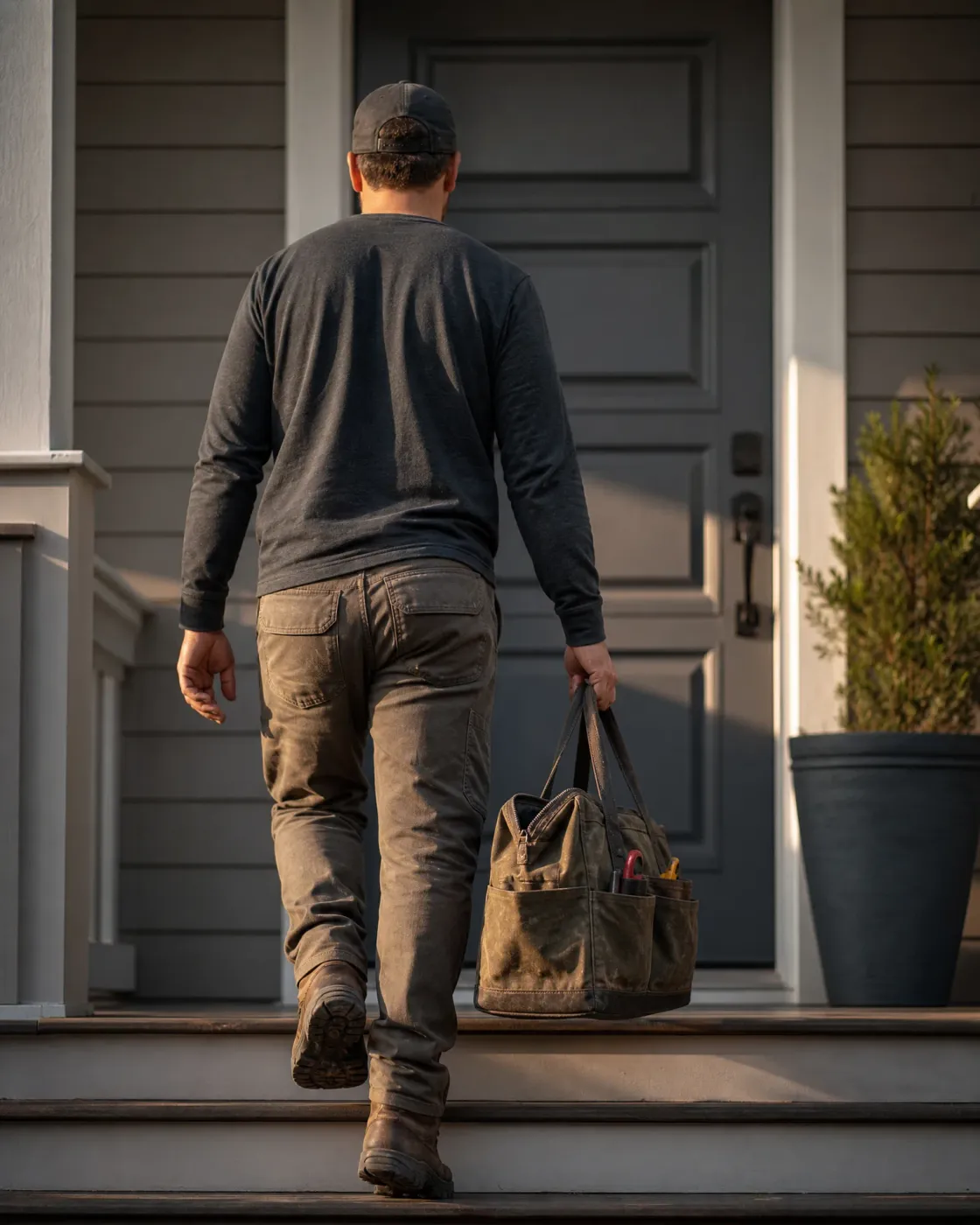
A man in a cap, long-sleeved shirt and work pants walks up porch steps toward a dark gray paneled front door, carrying a canvas tool bag, with a potted shrub to the right.
A gray gas furnace with attached ductwork and piping installed in an unfinished concrete basement.

How much life is left in this one

If a furnace is on its second or third unit already, repairing this one is a short-term fix at best. Ask the tech straight out how much life is left in it before you pay for a major repair. If the answer is not much, that money is better put toward a new unit.

Most failures start with ignition

The igniter is the part that fails most, since it heats and cools every single cycle until it finally cracks. The flame sensor sits right in the burner flame and coats over with residue over time, so the furnace shuts off a few seconds after starting because it reads no flame. Both are normal wear parts and neither one means anything is wrong with the furnace as a whole.

Moving parts wear, airflow problems compound

A blower motor can wear out on its own, but most of the time it burns out early because something else forced it to work harder than it should, usually a filter nobody changed. A pressure switch or inducer motor failing often points the same way, back to a venting or airflow issue rather than a part that just gave out. Fixing the part without fixing what stressed it means the replacement fails too.

An unfinished basement containing a forced-air furnace with metal ductwork, exposed wooden ceiling joists, a hanging Edison bulb, and bare concrete floors.

A new furnace would cut about $180 a year off heating for a typical Cayuga County home.

  • A new high-efficiency furnace$730 a year
  • An older furnace$910 a year

Estimates for a typical Cayuga County home, compared with an older unit built to the previous federal minimum, from EIA household energy data, New York fuel prices and NOAA climate normals. Your home will differ.

Repair makes sense when one part has failed and the heat exchanger is sound.

Replacement makes sense when the heat exchanger is cracked or the furnace keeps needing parts.

A diagnostic call starts with the tech asking what you've already noticed, then checking it against what the furnace actually does when it's running. They'll pull the cover and watch a full cycle if they can, since a furnace that fails intermittently often shows the problem the moment someone's looking. Expect them to check for a flame and watch its color, test the igniter or flame sensor with a meter rather than guess by eye, and check the pressure switch and venting if the unit is shutting off early. They'll check the filter and airflow too, since a blower working against a clogged filter can mimic other problems that have nothing to do with the blower itself. Most of this doesn't require taking the furnace apart. By the end they should be able to tell you which part failed, why, and whether something else caused it to fail in the first place.