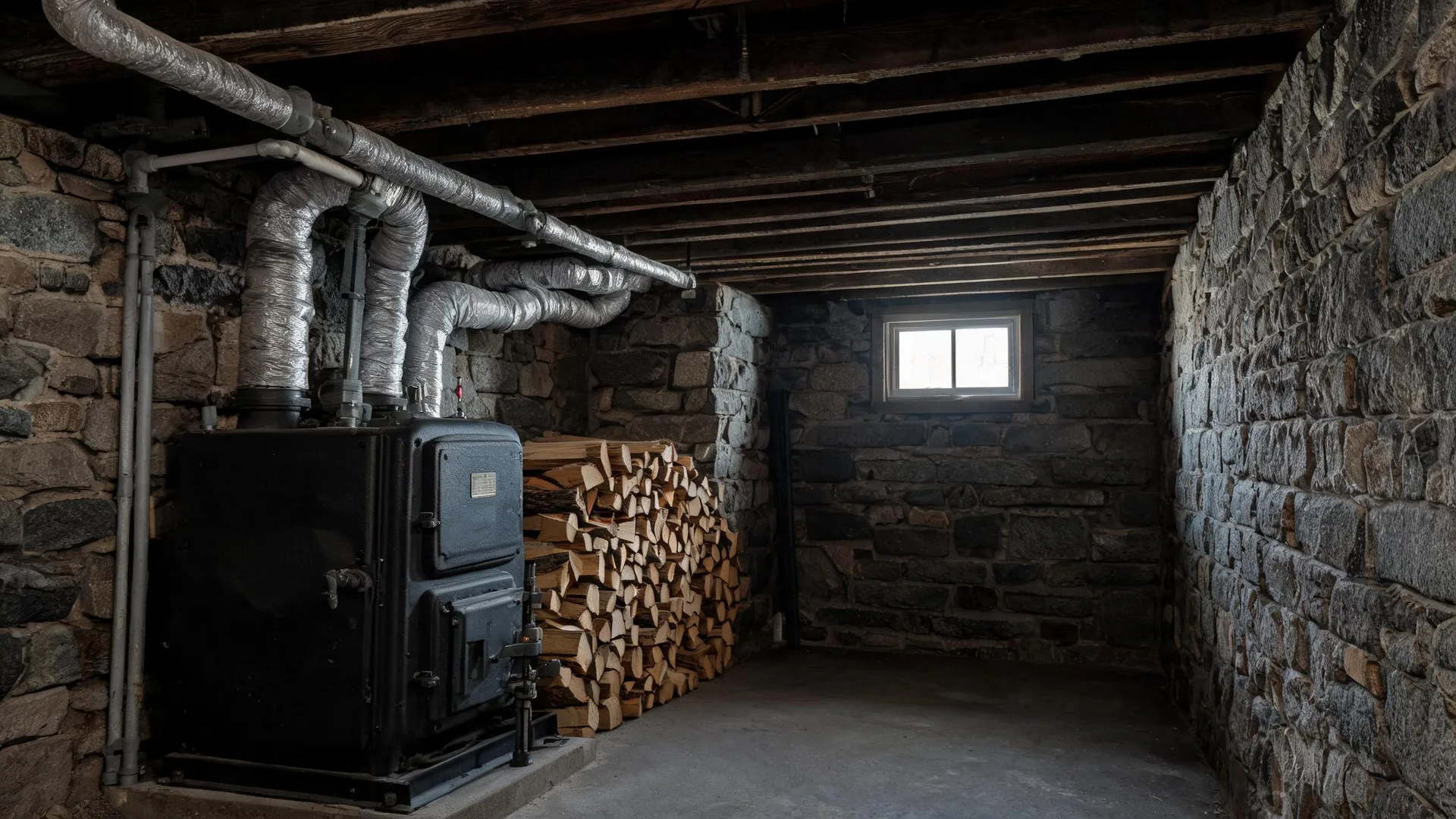
Gas is the default here
Utility gas heats 85.1% of homes in Richmond County. If your old furnace burned gas, the house already has the gas line and the vent it needs.
Takes about a minute. No obligation.
Utility gas heats 85.1% of homes in Richmond County. If your old furnace burned gas, the house already has the gas line and the vent it needs.
A gas furnace going in where a gas furnace came out does not need new fuel lines run or new venting figured out. The contractor sizes the unit to your house and connects it to what is already there.
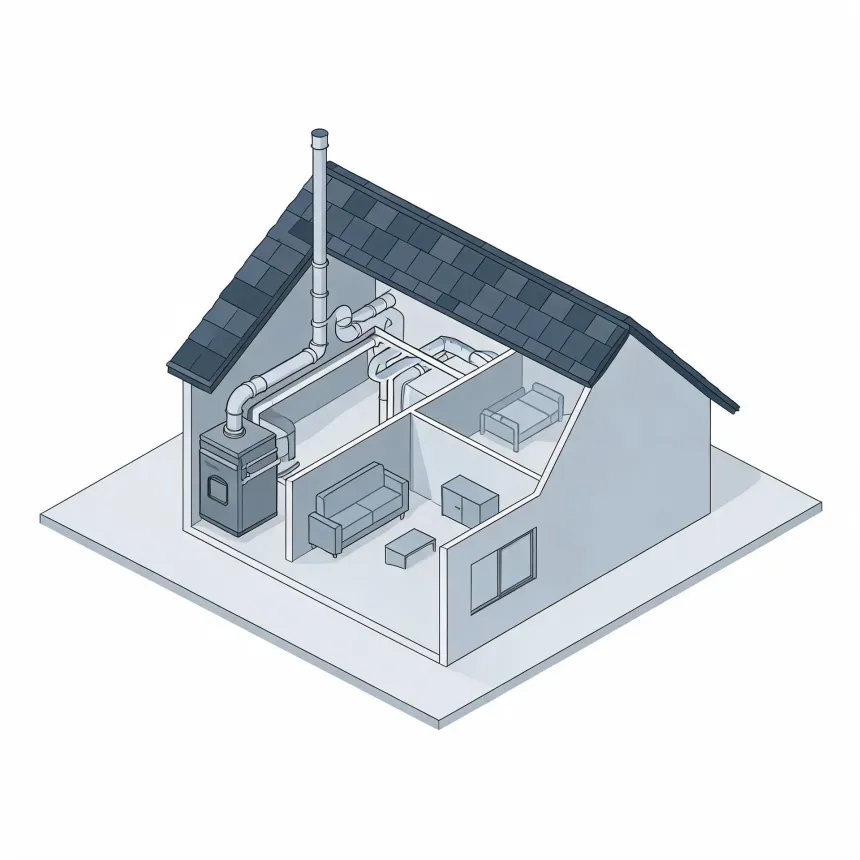
NOAA nClimDiv, 1991–2020 normals
Furnaces in Richmond County start running in October and go through April.
September is the month to put in a new one, before the cold makes it urgent.




Richmond County falls in climate zone 4A, which asks real work of both your furnace and your air conditioner. Any gas furnace installed here now has to clear 80.0 percent AFUE, the federal floor for non-weatherized furnaces. That floor is set to rise. Furnaces built from December 2028 on will have to reach 95.0 percent AFUE instead. A furnace bought today only has to meet the current number, so check the AFUE rating on anything you're quoted rather than assume it meets the one coming later.
A standard furnace, sized to your house, holds up fine against a Richmond County winter. Seven months of heat, overnight lows near 28°F, a storm or two some winters. None of that calls for oversizing the unit or paying up for a higher tier than the house needs.
Find a contractor
Size is the first thing that drives the price. A contractor works it out with a load calculation. They do not just match whatever furnace was there before. Go bigger than the house needs and you pay more for the unit itself, and you end up with a furnace that short cycles instead of running clean. The AFUE rating moves price too. A higher-efficiency furnace costs more because it needs a secondary heat exchanger and a condensate drain to handle the moisture that design pulls out of the exhaust. Venting is its own piece. A high-efficiency furnace vents through PVC pipe out a sidewall rather than up a chimney. If the house has never had that kind of venting, it has to be run new. Ductwork counts too. Undersized or leaky ducts don't get fixed by a new furnace. Sealing or resizing them is a separate job with its own cost. Ask what the quote actually includes. The thermostat, the startup and testing, the permit. A quote missing any of those isn't cheaper. It's just incomplete.
Once the new furnace is set and running, the contractor disconnects the old one from the gas line, the vent and the ducts and takes it off site. A furnace is heavy and comes apart in pieces to get it out the door. It doesn't get left behind for the homeowner to deal with.
Before the old furnace comes out, the contractor checks whether the gas line and venting it used are good to reconnect to the new unit. A shared vent that served both the furnace and the water heater sometimes needs rework once the furnace comes off it, since the draft through that vent changes.
Estimates for a typical Richmond County home, from EIA household energy data, New York fuel prices and NOAA climate normals. Your home will differ.
Installation day starts with the old furnace coming out and the new one going through a combustion air and clearance check before it ever gets bolted down. Gas gets connected and the line is checked for leaks. The vent gets connected and the contractor confirms it drafts properly once the furnace is firing, since a vent that isn't pulling right can put exhaust back into the house. Ductwork gets tied in, the thermostat gets wired and set, and then the furnace runs through a full cycle while the contractor checks the temperature rise against what the manufacturer specifies for that model. Gas pressure gets checked at the manifold too. A furnace that isn't tested properly on day one is the one that gets a callback on the first cold night.