



White colonial-style houses with lit windows photographed at dusk along a tree-lined street.

Furnace Installation in Saratoga Springs, NY

Tell us about the job

Takes about a minute. No obligation.

New system or replacementFurnace or heatingSaratoga County, NY
Step 1 of 2

What ZIP code is the job in?

Gas cost New York homes $16.03 per million Btu in 2024. That price applies to whatever furnace is burning it, old or new. An efficient furnace pulls more heat out of that same unit of gas, so less of what you paid for goes up the flue instead of into the house. A furnace that wastes gas does it on every bill all winter, not once. The one you install here matters more than it would somewhere with a cheaper gas rate.

9 months
September through May, your furnace is on duty
15°F
the average winter night it heats against
58%
of homes here heat with gas, so most furnaces here burn gas
80% AFUE
the federal minimum any new unit must meet
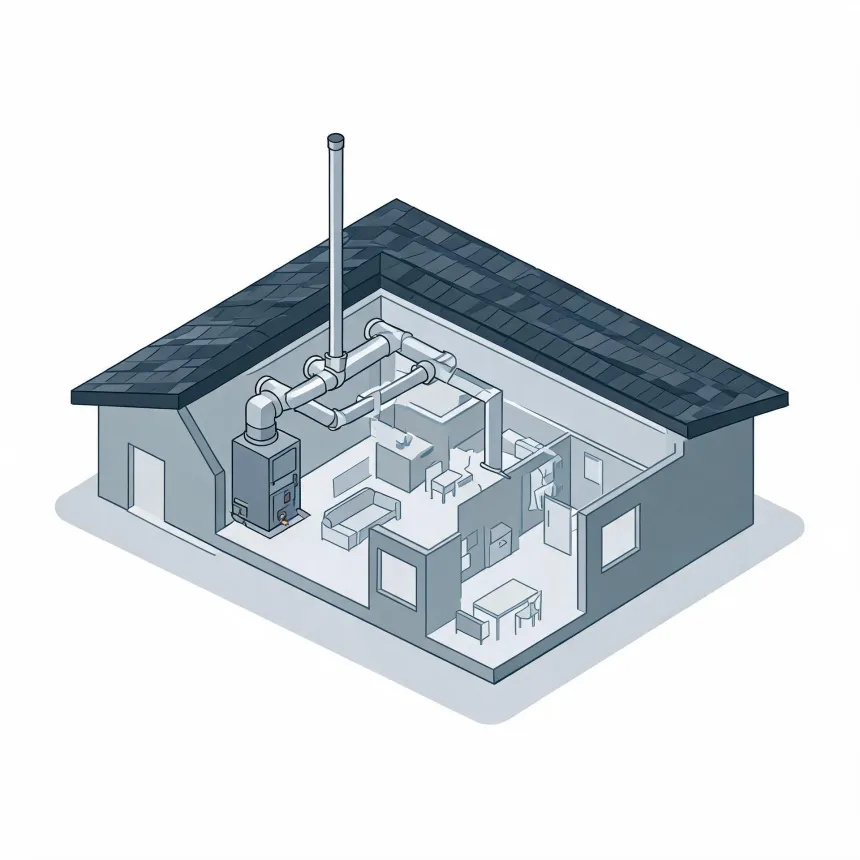
Isometric cutaway illustration of a single-story house showing interior rooms with furniture, a furnace unit with connected ductwork and a tall vertical flue pipe extending above the dark shingled roof.
Your furnace works hardest from November through March.

NOAA nClimDiv, 1991–2020 normals

Gas furnaces heat 57.8% of homes in Saratoga County.

A straight gas-to-gas swap is the job most contractors here quote first.

Nine months of heat a year gives this furnace no slow season

Heat runs September through May
Winter nights average 15°F
48 winter storms from 2015 to 2024

Saratoga County saw 512 severe weather events between 2015 and 2024, and 399 of those were damaging wind. Wind like that brings down the branches and lines that cut power, and a furnace with no power doesn't run no matter how new it is. Statewide, 11% of households went at least a day without power in 2024. A gas furnace still needs electricity to run the blower and the control board, so an outage shuts it down the same as it would an electric heat system. Some homeowners wire in a transfer switch or a backup generator for exactly this reason, sized to carry the furnace along with whatever else needs to stay on.

The furnace you choose decides what you pay for gas

Gas isn't getting cheaper here, and whatever furnace you put in will burn it all winter, for as long as it's installed. Ask what AFUE rating is being quoted, and compare it against what's already in the house. That number is what decides how much of your gas bill turns into heat.

Find a contractor
A gray residential gas furnace installed in an unfinished basement, surrounded by ductwork, a metal flue pipe, and a gas supply line.

Nine months a year leaves no room for a weak install

September through May, that's nine months this furnace has to work. Most of the country gets a break somewhere in there. This one doesn't. Parts that cycle on and off for nine months a year wear faster than parts that cycle for six, and the igniter, the blower motor and the heat exchanger all take that wear whether the furnace is a good one or not. Add the weather on top of the hours. Saratoga County saw winter storms, heavy snow, ice, blizzards, 48 times between 2015 and 2024. Every one of those is a stretch where the furnace can't take a day off, because the cold outside isn't letting up either. A furnace sized and installed right carries that load for years without drama. One that's undersized, or installed to cut a corner, shows its weak points sooner here than it would somewhere with a shorter winter.

Size decides most of it

A furnace is priced by its heat output, and that output has to match the house. A contractor works this out with a load calculation, room by room, not by guessing from the old unit's size. Go bigger than the house needs and the furnace short cycles, turning on and off instead of running a steady stretch, and that costs more up front for no benefit. Go smaller and it runs constantly trying to keep up. The right size costs what it costs, but it's the number everything else gets measured against.

The vent and the ductwork decide the rest

A higher efficiency furnace doesn't vent the same way an older one did. Some exhaust through a wall with plastic pipe, others need a chimney liner, and switching from one venting style to another is its own job on top of the furnace itself. The ductwork matters just as much. If it's sized for the old furnace's airflow, a new one may need adjustments to the plenum or the duct runs to move air the way it's designed to. A straight swap, same vent, same ducts, is a different job than one that has to change either.

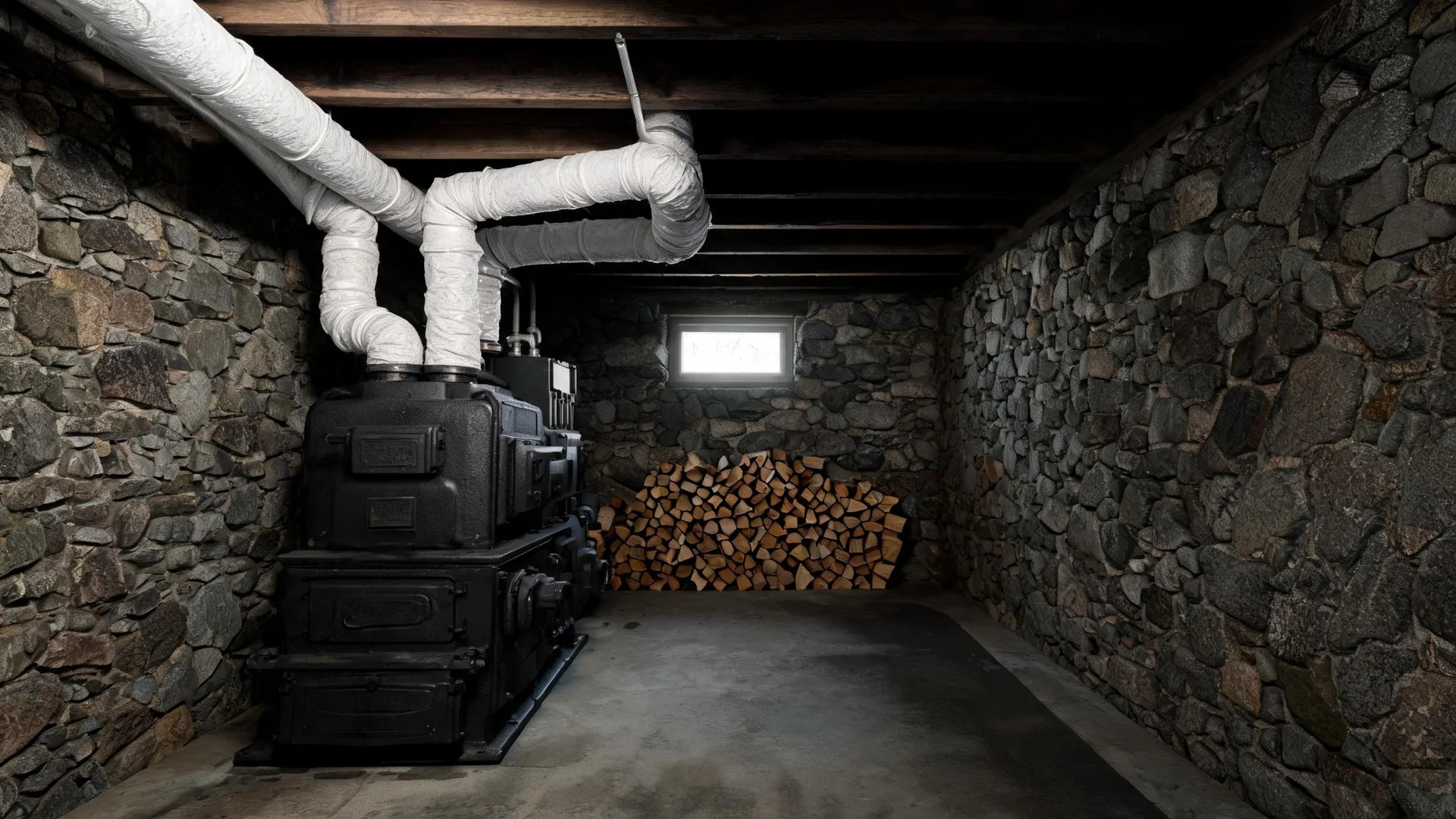
An unfinished basement interior showing a gray furnace unit beneath a bare incandescent bulb, surrounded by exposed joists, concrete walls, cardboard boxes, and utility pipes.

A high-efficiency gas furnace would save about $160 a year to run in Saratoga County compared with a gas furnace.

  • A high-efficiency gas furnace$760 a year
  • A gas furnace$920 a year

Estimates for a typical Saratoga County home, from EIA household energy data, New York fuel prices and NOAA climate normals. Your home will differ.

Installation day starts before anyone touches the old furnace, with a check of the gas line, the vent, and the electrical to see what the new unit needs. The old furnace comes out, and if the venting changes, that gets run next, whether that means new pipe through a wall or a liner down the chimney. The furnace sets into place and gets connected to the ductwork, the gas line, and the power. From there it's the controls: the thermostat wire, the condensate line if the furnace makes one, and the switches that let it shut itself off if something's wrong. Once it's buttoned up, a tech runs it through a full cycle, checking the flame, the airflow out of the vents, and the exhaust, before calling it done. A straight swap moves faster than a job that changes the venting or reworks the ducts, since those add steps the swap doesn't need.