



An unfinished basement featuring concrete block walls, exposed floor joists, and a metal forced-air furnace with ductwork near a central pillar.

Furnace Installation in Jamestown, NY

Tell us about the job

Takes about a minute. No obligation.

New system or replacementFurnace or heatingChautauqua County, NY
Step 1 of 2

What ZIP code is the job in?

Half the homes in Chautauqua County were built in 1953 or earlier. A furnace going into a house that old wasn't sized for whatever insulation or windows that house has now, and nobody on site can tell you what's behind the walls without looking. The ductwork may have been fitted to a different furnace entirely, maybe one bigger or smaller than what makes sense today. None of that is a reason to guess. It's a reason to have someone size the new system to the house as it actually stands, not to the house as it was when it was built.

8 months
October through May, your furnace is on duty
19°F
the average winter night it heats against
67%
of homes here heat with gas, so most furnaces here burn gas
80% AFUE
the federal minimum any new unit must meet
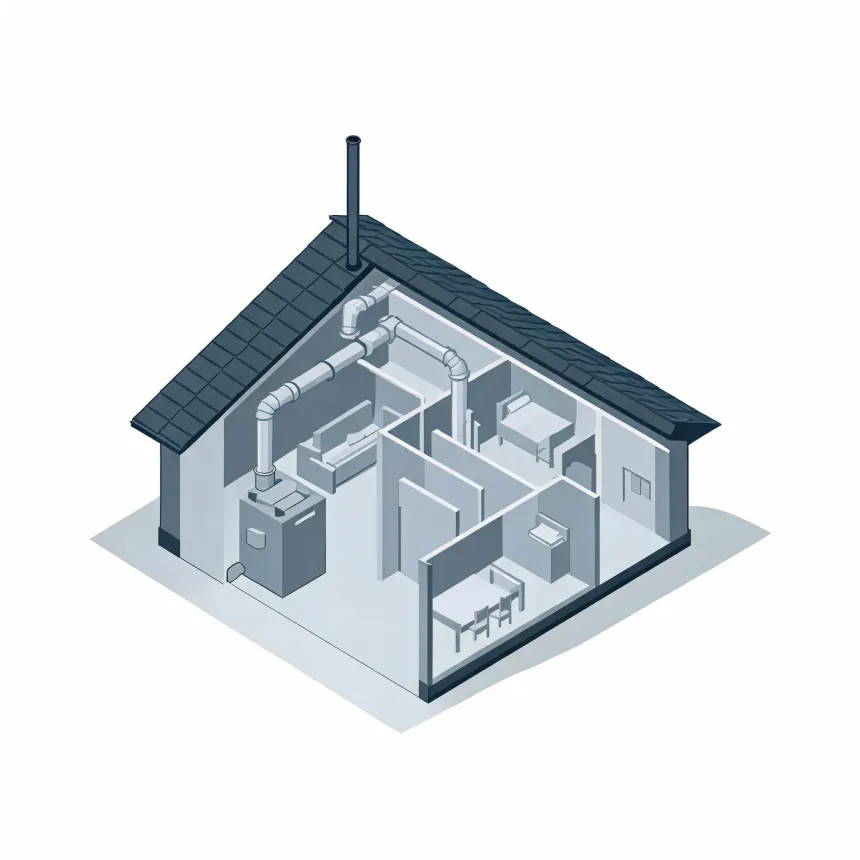
Isometric cutaway illustration of a small single-story house showing interior rooms with furniture, a furnace unit with attached ductwork running to a roof flue, and a dark shingled roof.
Your furnace works hardest from November through March.

NOAA nClimDiv, 1991–2020 normals

Furnaces in Chautauqua County run about eight months a year, October through May.

A new furnace here earns its keep fast, so sizing it to this house matters more than finding the lowest bid.

Storms knock out power here more than most places, and a furnace needs power to run

300 severe weather events from 2015 to 2024
11% of homes statewide lost power a day or more in 2024
253 damaging wind events from 2015 to 2024

Natural gas in New York ran $16.03 per million Btu in 2024. That price doesn't change depending on what furnace you own, only how much gas it takes to heat the house. A furnace that's lost efficiency, or was never sized right for the place, burns more gas to do the same job, and that difference shows up on every bill all winter. A new furnace sized to the house burns closer to what the house actually needs, so less of that per-Btu cost goes to waste. Given how long furnaces here stay busy each year, that gap matters more than it would somewhere mild.

Size the new furnace to your house, not the old guess

Get the new furnace sized to your house before it goes in, not to whatever came before it. That's the step that matters most if your house dates back to 1953 or earlier.

Find a contractor
A gas furnace with attached ductwork, gas piping, and condensate lines installed in a concrete-block basement.

Eight months of work a year, starting in October

October through May, the furnace is the thing standing between the house and a 19 degree night. That's eight months of the year it has to work, start to finish, before summer gives it a break. Getting a new one in during September means it goes in on a day you pick, with time to fix anything that comes up before the first cold night asks it to prove itself.

A furnace too big wears out faster, not slower

An oversized furnace heats the house quickly, shuts off, then starts again a few minutes later. That's called short cycling, and it never lets the system settle into a steady run. The heat exchanger goes through more stress cycles, the blower motor starts more often, and the parts most likely to fail are the ones working through all those extra starts. A furnace that's too small just runs long and steady trying to keep up, which is easier on the parts but never catches up on the coldest days.

Sizing comes from the house, not a chart

The right size comes from a heat loss calculation that looks at the square footage, the ceiling height, how many windows face outside, how much insulation is in the attic and walls, and how the house is oriented. Two houses the same size can need different furnaces if one has more glass or less insulation. A contractor doing this right measures the house in front of them. Going by the nameplate on the old furnace just repeats whatever guess was made last time, good or bad.

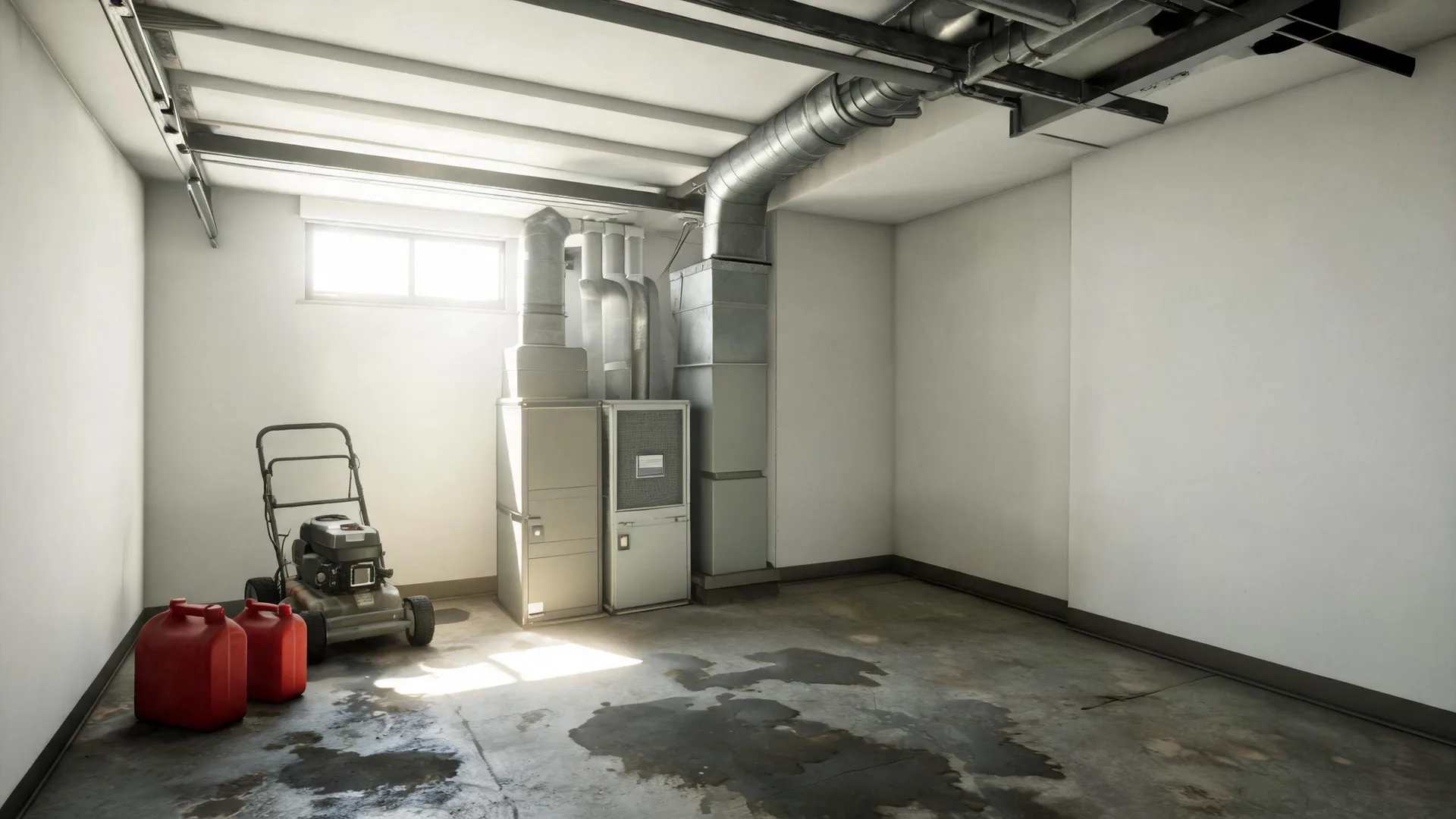
A gray forced-air furnace with ductwork stands in an unfinished concrete basement surrounded by storage items and clutter.

A high-efficiency gas furnace would save about $150 a year to run in Chautauqua County compared with a gas furnace.

  • A high-efficiency gas furnace$730 a year
  • A gas furnace$880 a year

Estimates for a typical Chautauqua County home, from EIA household energy data, New York fuel prices and NOAA climate normals. Your home will differ.

Installation day starts with the old furnace coming out, along with the flue pipe and any ductwork connections that won't fit the new unit. The installer sets the new furnace on its pad or stand, levels it, and connects it to the supply and return plenums, the gas line, and the venting. Every joint gets sealed and checked, because a leak in the ductwork or the flue defeats the purpose of putting in a new system at all. The gas line gets pressure tested before any flame is lit. Once it's hooked up, the installer runs the furnace through a full cycle, checking the flame sensor, the ignition, and the temperature rise against what the manufacturer specifies for that model. Before anyone leaves, the thermostat gets programmed and the airflow gets checked at the vents, because a furnace that's wired right but starved for airflow won't heat the house the way it should.