





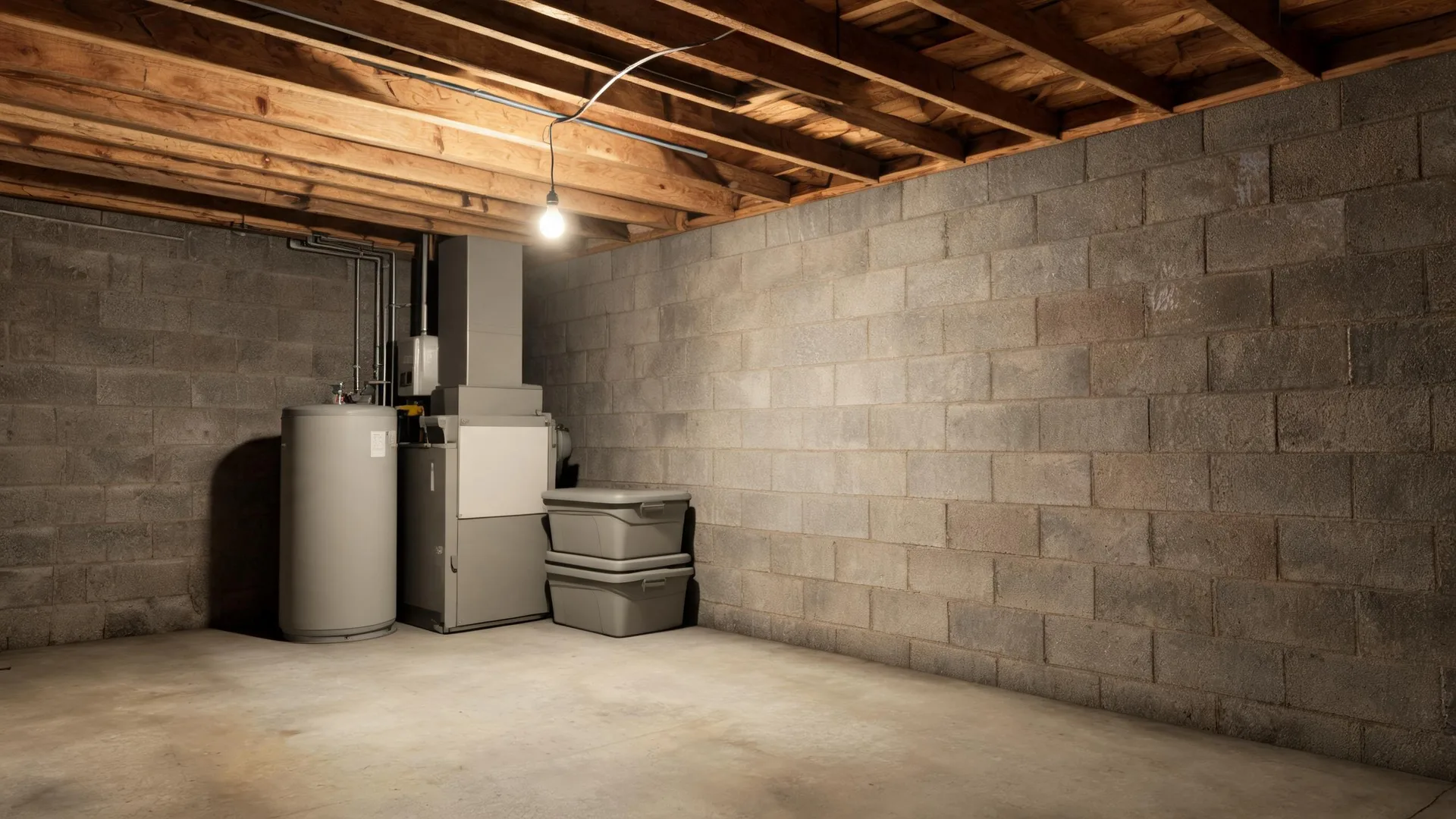
An empty unfinished basement containing a forced-air furnace with overhead ductwork, exposed ceiling joists, and a single hanging light bulb.

Furnace Installation in Geneva, NY

Tell us about the job

Takes about a minute. No obligation.

New system or replacementFurnace or heatingOntario County, NY
Step 1 of 2

What ZIP code is the job in?

Natural gas in New York ran $16.03 per million Btu in 2024. That is the fuel cost before the furnace does anything with it. A unit that turns more of that gas into heat in your house, instead of losing it out the flue, keeps more of what you paid for. Over a winter here, that difference runs through every bill, not just one of them.

8 months
October through May, your furnace is on duty
19°F
the average winter night it heats against
59%
of homes here heat with gas, so most furnaces here burn gas
80% AFUE
the federal minimum any new unit must meet
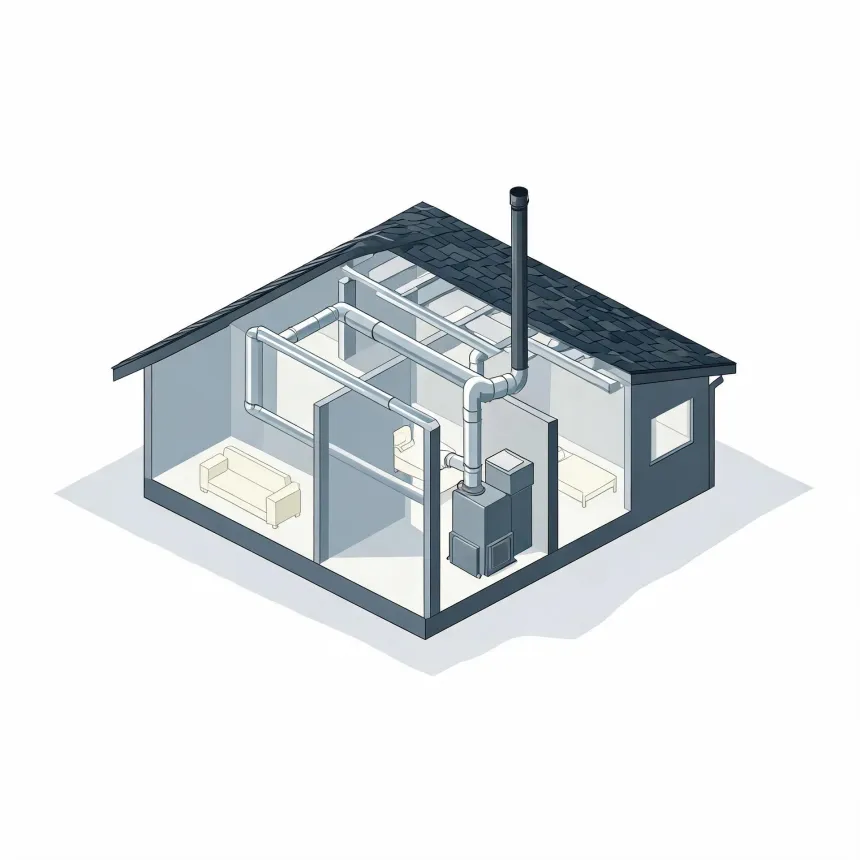
Isometric cutaway illustration of a small single-story house showing a furnace with a flue pipe through the roof and ducting running to rooms containing a sofa, chair and bed.
Your furnace works hardest from November through March.

NOAA nClimDiv, 1991–2020 normals

Gas heats 58.6% of the homes in Ontario County, more than any other fuel.

A gas furnace is the system most contractors here install, size for size and vent for vent.

Eight months of heat is a long time to be caught without one

Heat runs October through May
Climate zone 5A
Winter nights average 19°F
Eight months a year, this furnace worksFurnaces here run October through May, longer than in most of the country.

Ontario County falls under zone 5A in the 2021 energy code, a cool zone where the heating load matters more than cooling. That classification is why the furnace going into your house can't be whatever runs cheapest to build. Any gas furnace made since November 2015 has to turn at least 80 percent of the gas it burns into heat over the winter. That floor holds until December 2028, when new units have to hit 95 percent. A furnace bought today still only has to clear that 80 percent mark, so two units sitting side by side in a showroom can meet the same rule and burn gas at very different rates once they're in your house.

The furnace you install is the rate you'll pay all winter

The efficiency rating on the furnace you pick decides how much of that $16.03 per million Btu turns into heat in your house. That's worth settling before installation, not after.

Find a contractor
A gray high-efficiency gas furnace installed in an unfinished basement, surrounded by gas lines, a condensate drain, and sheet-metal ductwork.

This furnace won't get a light schedule

Eight months of runtime a year puts more hours on the igniter, the blower motor, the heat exchanger, all of it. The unit going in this time will cycle on and off more over a winter than the same model would in most other states. That's the case for sizing it to the house rather than matching the old equipment or taking whatever's cheapest on the lot. An oversized furnace short cycles and wears its parts sooner. An undersized one runs close to nonstop trying to keep up and still falls behind. Both problems show up faster on a system that runs this many months a year.

The old furnace doesn't get reused

A furnace that's being replaced gets disconnected from the gas line, the vent and the ductwork, then removed from the house. The heat exchanger inside it has been heating and cooling every cycle for years, and metal fatigued that way doesn't get reconditioned or resold into another home. It gets scrapped.

The new one has to tie into what the old one left behind

Ductwork, gas piping and venting sized for the old furnace don't automatically fit the new one. A properly sized replacement may call for a different vent material or a duct transition piece at the plenum. That connection work is part of swapping the unit, not an extra job tacked onto it.

An unfinished basement containing a metal furnace with ductwork, exposed wooden joists on the ceiling, cardboard boxes, a coiled cable, and a single hanging incandescent bulb.

A high-efficiency gas furnace would save about $150 a year to run in Ontario County compared with a gas furnace.

  • A high-efficiency gas furnace$710 a year
  • A gas furnace$860 a year

Estimates for a typical Ontario County home, from EIA household energy data, New York fuel prices and NOAA climate normals. Your home will differ.

Installation starts with sizing the job, not unboxing equipment. A contractor runs a load calculation on the house, checks the gas line can deliver enough fuel, and confirms the vent and ductwork can work with the new unit before anything gets disconnected. Once the old furnace is out, the work is mostly connections: gas line, vent pipe, return and supply ducts, condensate line if the furnace is high efficiency, and the electrical for the blower and controls. Each one gets tested on its own, not just at the end. The furnace gets fired up and run through a full cycle, and that's when the technician checks gas pressure, airflow across the heat exchanger, and temperature rise to make sure the unit is running the way it's rated to. A furnace that fires but was never checked against its own specs can run for years quietly burning more gas than it should.