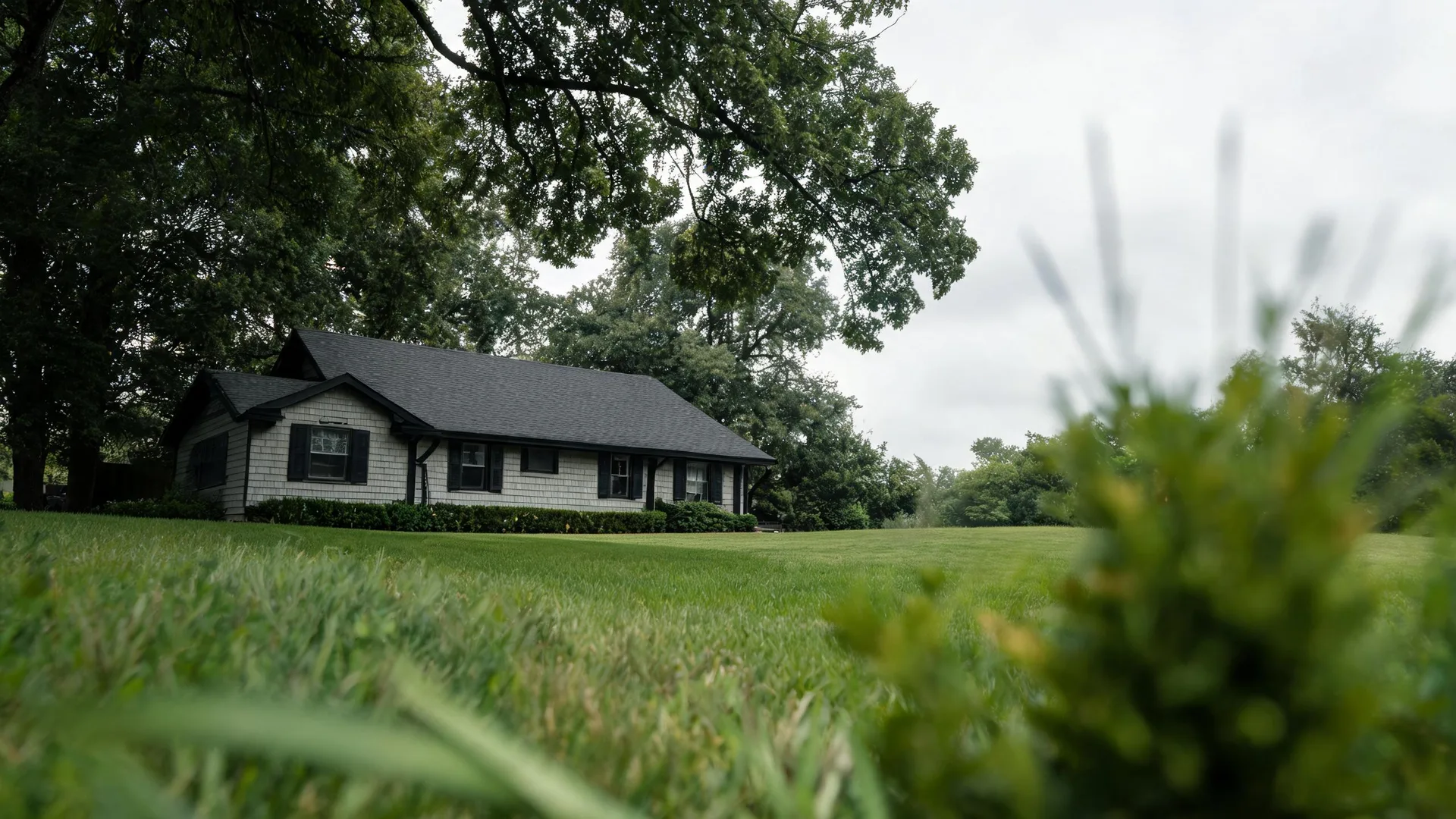
A low-angle view across a mowed lawn toward a single-story light-colored house with a dark shingled roof and dark shutters, framed by large deciduous trees and a blurred shrub in the foreground under an overcast sky.

Furnace Installation in Binghamton, NY

Tell us about the job

Takes about a minute. No obligation.

New system or replacementFurnace or heatingBroome County, NY
Step 1 of 2

What ZIP code is the job in?

Half these homes were built in 1958 or earlier

Broome County splits right down the middle: half the houses here went up in 1958 or earlier, half after. A furnace going into a house that old is going into a structure nobody designed around today's equipment.

The house was built around older equipment

Furnaces sold now run differently than what these houses were built for. Whoever installs the new one has to make it work with the house as it stands, not the house as it would be built today.

9 months
September through May, your furnace is on duty
18°F
the average winter night it heats against
59%
of homes here heat with gas, so most furnaces here burn gas
80% AFUE
the federal minimum any new unit must meet
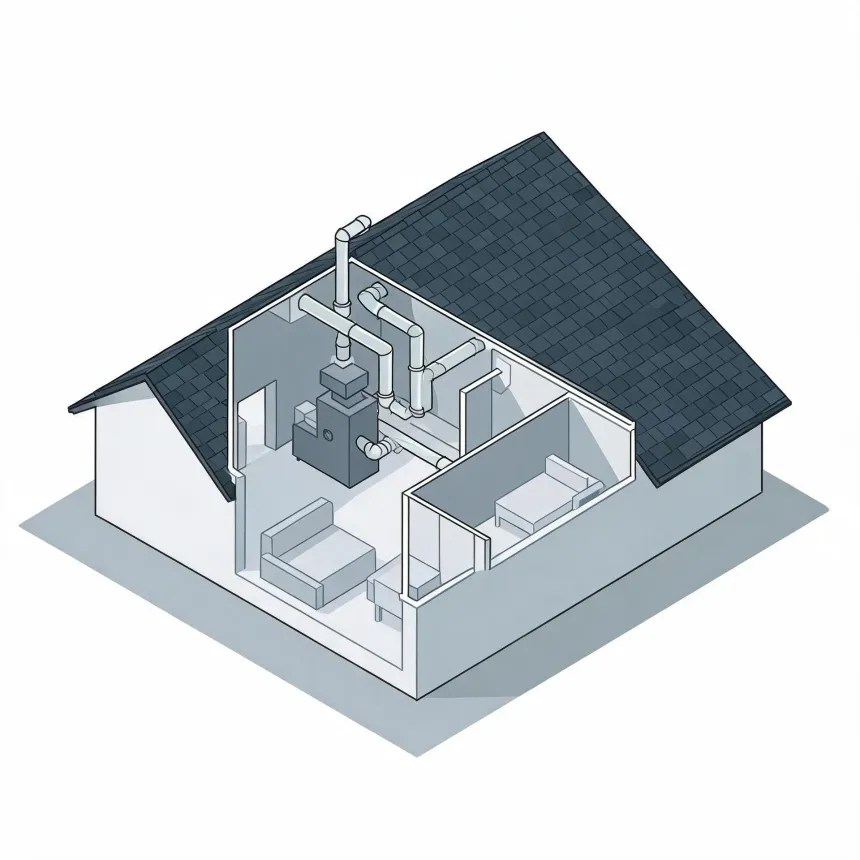
Isometric cutaway illustration of a single-story house with a dark shingled roof, showing interior rooms with furniture and a furnace connected to ductwork.
Your furnace works hardest from November through March.

NOAA nClimDiv, 1991–2020 normals

A furnace in Broome County runs from September through May.

Nine months of work a year means a new system here earns its keep fast, so it needs to be sized and installed right from the start.

Nine months of heat means this is worth doing before September, not during it

Heat runs September through May
Winter nights average 18°F
Climate zone 5A
Storms here knock out power. Heat shouldn't go with it.Broome County saw 314 severe weather events between 2015 and 2024.

Gas here runs $16.03 per million Btu, among the higher rates in the country. A furnace losing efficiency burns more gas to hit the same temperature, and that difference shows up on every bill all winter. An old furnace and a new one can heat the same house using very different amounts of gas to do it. Putting in a properly sized, efficient unit now means paying for the heat used, not heat lost through a worn heat exchanger or a furnace working harder than it needs to.

Install it to fit the house you have

A furnace installed to fit this house, not a generic one, is the job worth getting right the first time. Whoever installs it needs to account for the house you have before the new system goes in.

Find a contractor
A gas furnace with attached ductwork, gas piping, and condensate lines installed in a concrete-block basement.

Nine months a year, every year

A load calculation is what tells an installer the right size for this house, not the size of the furnace that's coming out. Houses here lose heat differently depending on when they were built, and a furnace sized by guesswork either runs short on the coldest days or cycles on and off more than it should. Over nine months, that extra cycling adds up in a way it wouldn't in a place with a shorter winter. Ask whoever installs it to run the calculation rather than matching the old unit's number. That's what nine months a year asks of the new system, and it's worth getting right before the first cold week, not after it.

The AFUE number is a ratio, not a grade

AFUE tells you how much of the fuel a furnace burns actually turns into heat in the house, versus what goes out the flue. A furnace with a higher AFUE pulls more heat out of the same amount of gas. It isn't a measure of how big the furnace is or how fast it heats the house, just how little it wastes doing it.

The rating only holds if the install matches it

A furnace hits its rated efficiency when the ductwork, venting, and airflow around it are sized to match it. Choke it with undersized ducts or a return that can't keep up, and it won't deliver the number on the label no matter how good the unit is. The rating describes the furnace tested on its own. Getting that performance in a real house depends on everything the installer does around it.

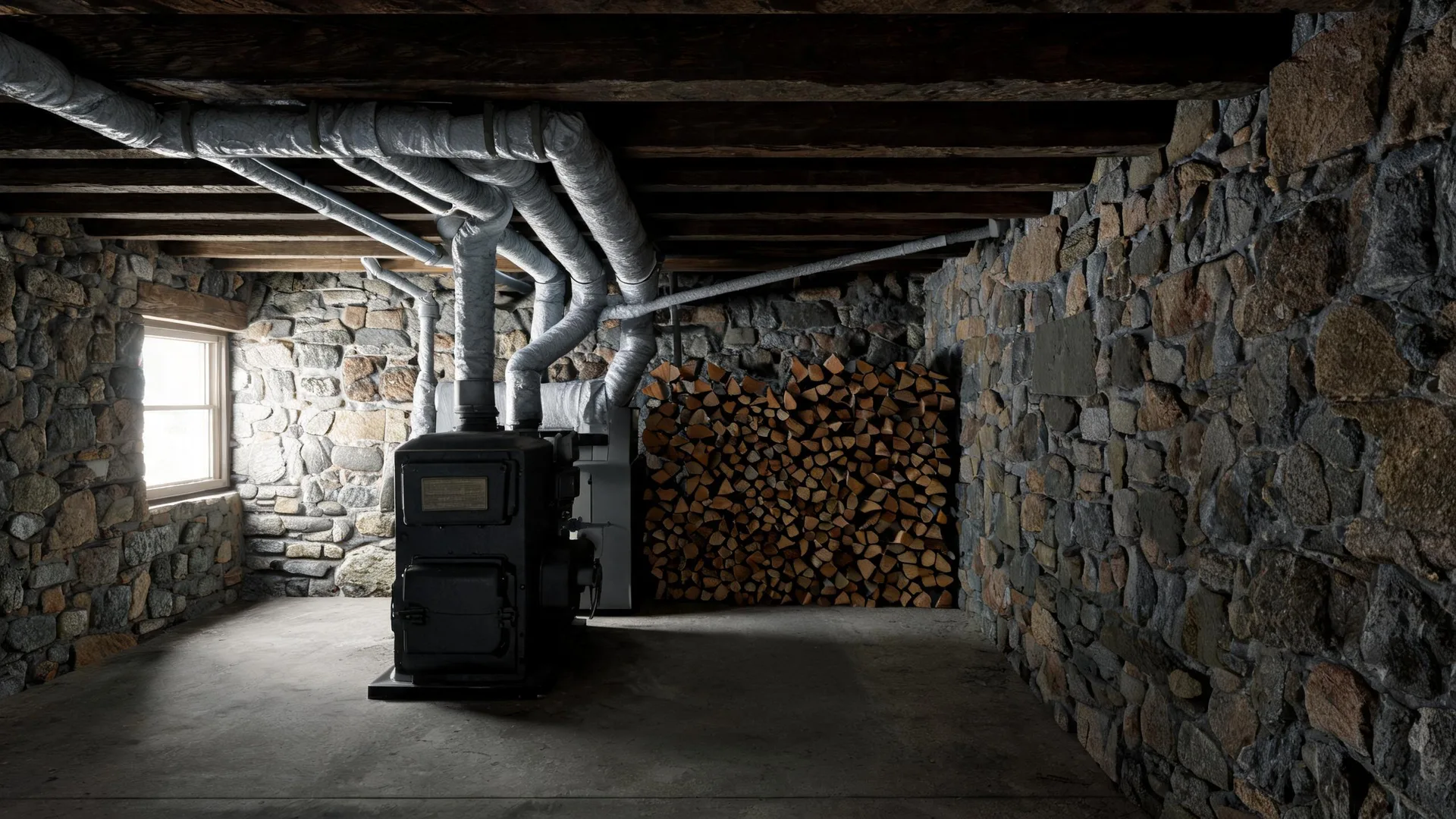
An unfinished basement featuring a grey forced-air furnace with metal ductwork, concrete block walls, exposed wooden joists, and a single hanging bare bulb.

A high-efficiency gas furnace would save about $150 a year to run in Broome County compared with a gas furnace.

  • A high-efficiency gas furnace$740 a year
  • A gas furnace$890 a year

Estimates for a typical Broome County home, from EIA household energy data, New York fuel prices and NOAA climate normals. Your home will differ.

Installation day starts with the old furnace coming out, along with the vent pipe and gas line connections that fed it. The installer checks the space it's leaving before setting the new one, because duct connections, the gas line, and the flue all have to line up with a different cabinet size and layout. Setting the furnace means leveling it, connecting gas, venting, and ductwork, then wiring it to the thermostat and the electrical supply. Once it's in, the real work is testing: checking gas pressure, confirming the flue draws properly, measuring airflow across the heat exchanger, and watching the ignition cycle a few times to make sure it lights and ramps up the way it should. A furnace that looks installed isn't finished until someone has confirmed it's drawing air and venting exhaust the way the manufacturer specifies. Skipping that step is how a furnace ends up running but running wrong, quietly, for years.