Repair or replace a gas furnace in Brooklyn, NY

Get a furnace pro

A furnace that's short-cycling, making noise, or just not keeping up with a Brooklyn winter puts you in a tough spot fast. Gas furnaces run hard here from the first cold snap through April, and a system on its way out tends to show it right when you need it most. Figuring out whether a repair still makes sense or whether it's time to replace the unit isn't something to guess at, and it's not something you should have to sort out alone while the house is cold. Answer a few questions about your furnace and your home, and you'll be matched with a contractor who works on gas furnaces in Kings County and knows what Brooklyn homes need. They'll reach out to you directly. From there, the decision gets easier, because someone who's looked at hundreds of furnaces like yours is weighing in, not just you staring at an old unit wondering if it's worth fixing again.

Should I repair my furnace or just replace it?

Your furnace is giving you trouble and you're trying to figure out if it's worth fixing or if you should just put the money toward a new one. The answer depends mostly on two things: how old the furnace is and what's actually wrong with it. A quick way to size that up before you call anyone.

Repair it if it's under 10 years old, replace it if it's past 15

A furnace under 10 years old is usually worth fixing. Most problems at that age, a bad igniter, a failed flame sensor, a blower motor going out, are single-part repairs and the furnace still has years left in it. Past 15 years, the math flips. You're closer to the point where the heat exchanger or other major parts start failing, and a furnace that age has already been running hard through plenty of Brooklyn winters. If you're replacing a part that costs a lot relative to a new unit, or the same furnace has needed repairs more than once this winter, that's usually the sign it's done. Between 10 and 15 years, it comes down to the specific repair and how the furnace has been running the rest of the season.

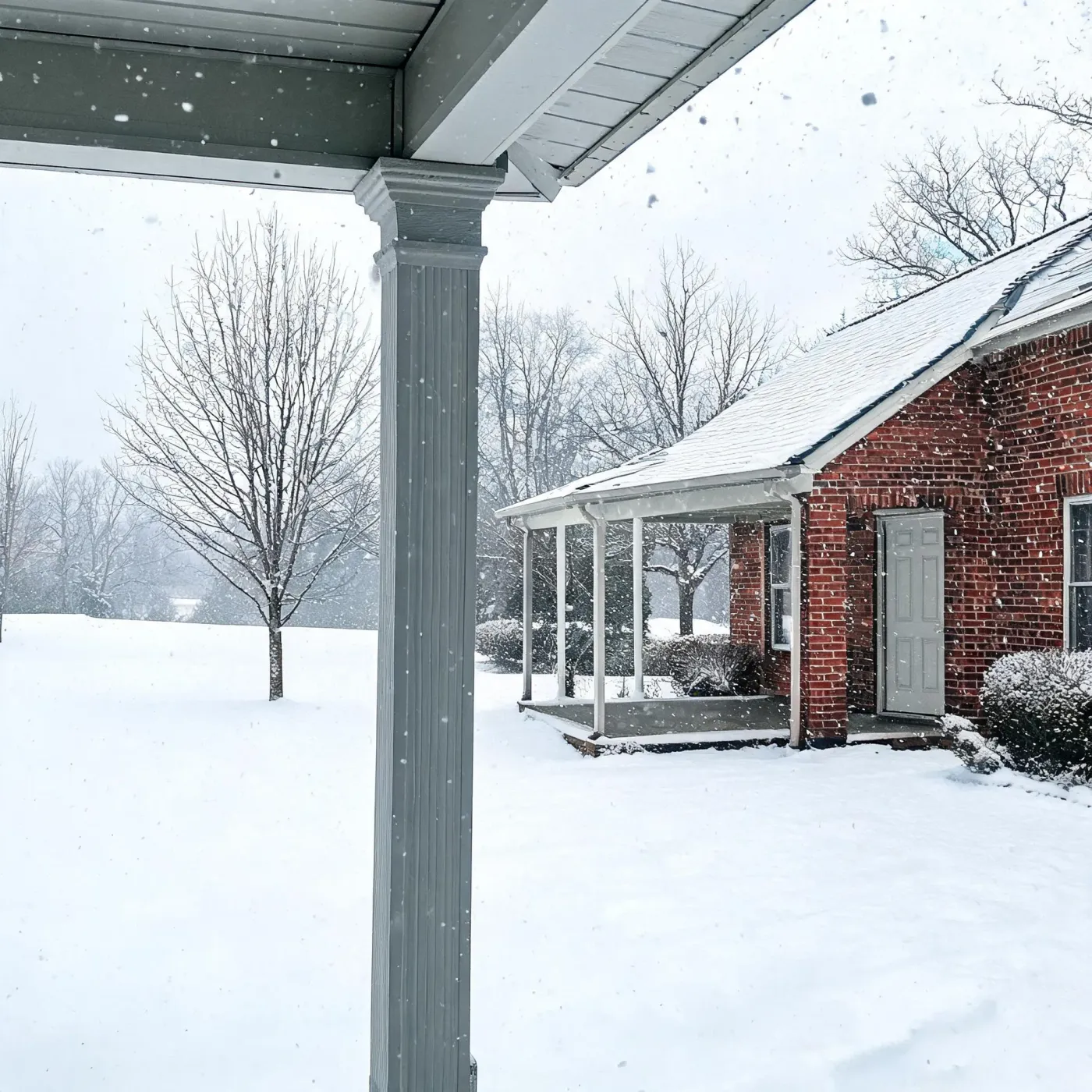
View from under a covered porch with a gray square column toward a red brick house with a white-columned porch and gray door, with falling snow covering the yard, roof, and bare trees.

Kings County winter nights average 29°F, according to NOAA climate data. That means your furnace is firing up overnight for months straight, not just on the coldest days. It runs longest between midnight and sunrise, when the house is losing heat and nobody's awake to notice if it's struggling. A furnace with a cracked heat exchanger or a weak igniter often holds up fine in the afternoon sun but can't keep pace once it's 29°F outside and dropping. If your bedroom's colder than the rest of the house by morning, or the furnace seems to run nonstop without the house warming up, that's the overnight cold finding the weak point in the system.

NOAA nClimDiv 1991-2020

Is your furnace struggling to keep the house warm?

You notice it in the rooms farthest from the furnace first. The bedroom upstairs never quite gets warm, or the thermostat says 70 but it feels like 65. You hear the burner kick on, run longer than it used to, then shut off and start again a few minutes later. Some nights it's loud, a rattle or a bang when it starts, or a smell like something's burning off the first time it runs each season. Your gas bill has crept up even though you haven't changed the thermostat. If the furnace can't keep up on a cold night and shuts off on its own, the house loses heat fast, and pipes against outside walls are the first thing at risk.

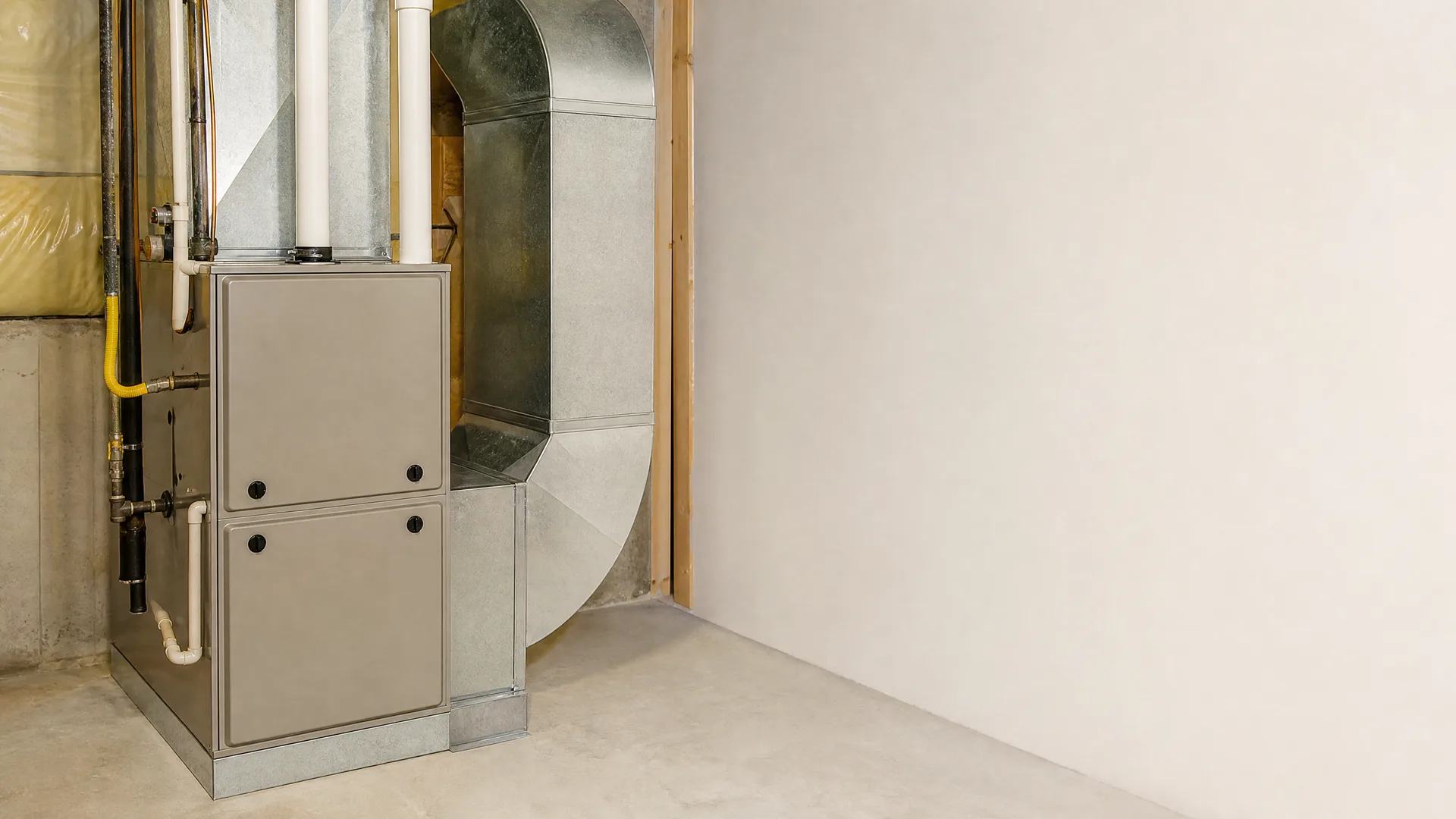
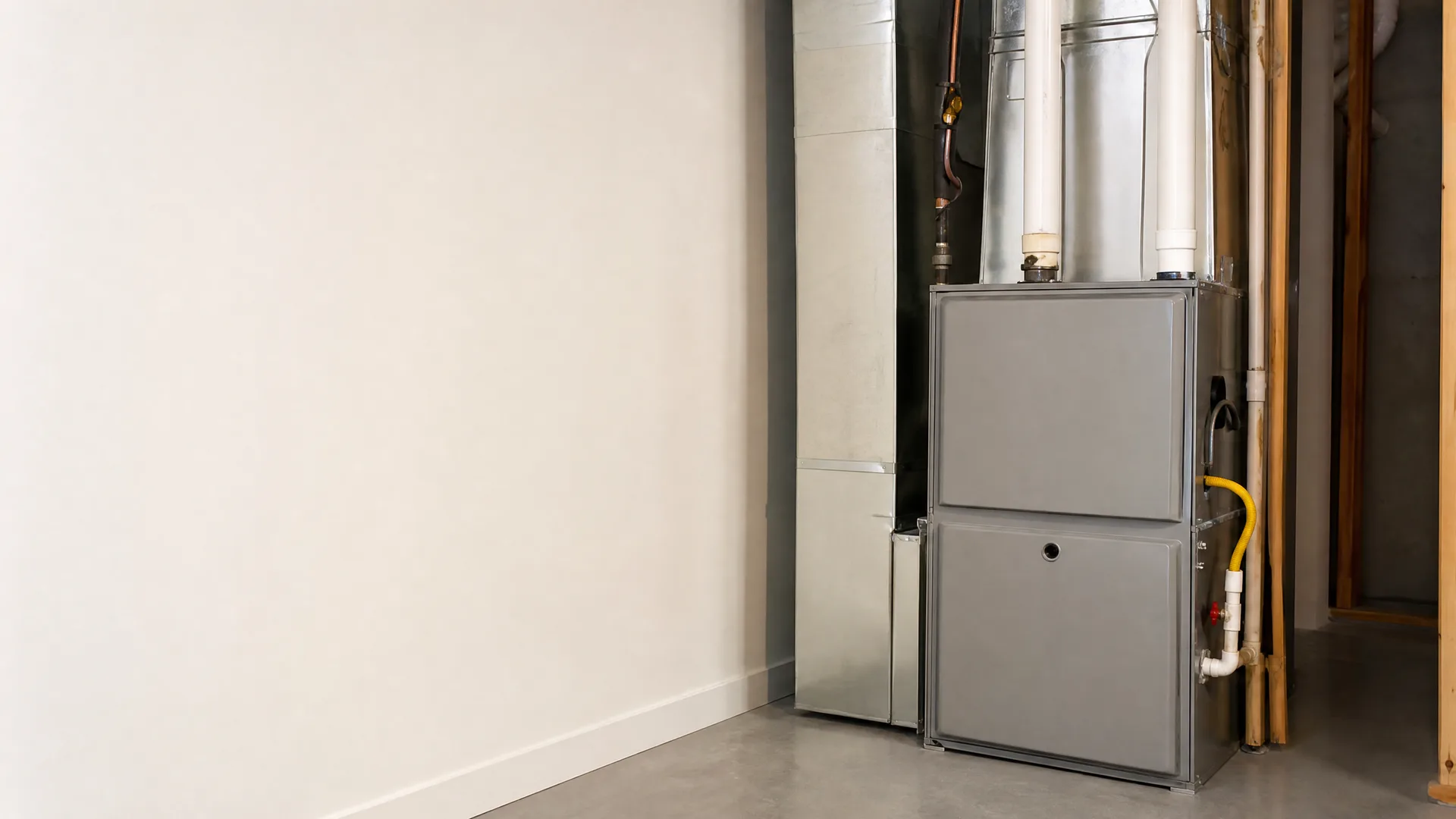
A gas furnace with sheet-metal ductwork, PVC vent pipes and copper and black piping stands against a wall in a basement with a bare light-colored wall and concrete floor.

When repair still makes sense

A furnace under ten years old that's throwing one problem, a bad igniter, a dirty flame sensor, a blown capacitor, is usually worth fixing. Those parts fail on their own and don't mean the rest of the furnace is going. If it's been heating the house fine otherwise and this is the first real issue you've had, a repair gets you through this winter and most of the next several without a big outlay.

A gray furnace with attached sheet-metal ductwork, white PVC vent pipes, copper and yellow gas lines stands against a wall in a room with a plain white wall and concrete floor.

When replacement is the better call

A furnace past 15 years that needs a repair is a different situation. The heat exchanger and blower motor are wearing down even if they haven't failed yet, and a cracked heat exchanger can leak carbon monoxide into the house. If you've had more than one repair in the last year or two, you're paying to keep an old furnace alive instead of paying for one that will last. At that point replacing it costs less over time than repairing it again.

Winter nights average 29°F

At 29°F, your furnace isn't cycling on and off so much as staying on. A unit that can't hold a steady flame or keeps shutting down mid-cycle is working against a cold it won't get a break from until spring.

NOAA nClimDiv 1991-2020

When the repair bill decides it

A furnace that needs a new heat exchanger, a new blower motor, or a new control board at twelve or fifteen years old is close enough to the end that the repair is a stall, not a fix. You pay for the part, then you're back here next winter with something else gone. If the quote is getting close to what a new furnace would run, that's the furnace telling you it's done. Kings County winters don't let up until April, and a stalled fix just means doing this again in February.


When it's worth one more winter

A furnace that's heated the house fine for years and just hit one bad part is a different case. An igniter, a flame sensor, a capacitor, these fail on their own and don't say anything about the rest of the unit. If the furnace is under ten years old and this is the first real problem it's had, fixing it and getting the rest of the season out of it makes sense. You're not guessing here. You're paying for one part, not betting on the whole machine.

An older gas furnace with louvered panels sits on a concrete pad in a basement, connected to sheet-metal ductwork and PVC and metal pipes, with a water heater and wooden stair framing in the background.
Before you get your furnace installation
A gray high-efficiency furnace with white PVC vent pipes stands beside galvanized sheet-metal ductwork in a basement with a concrete floor, with a wooden staircase and railing at left.
After you get your furnace installation
  1. The contractor shuts off gas, power, and the old venting.

  2. The old furnace and its connections come out.

  3. The new furnace is set, leveled, and secured in place.

  4. Gas, venting, ductwork, and wiring are connected and sealed.

A smiling man in a dark navy sweater sits on a light sofa in a living room, with a glass bowl of popcorn on a wooden coffee table and bookshelves behind him.
A smiling man in a dark green sweater sits on a tan leather sofa in a dimly lit living room, with a bowl of popcorn in the foreground and a kitchen area blurred behind him.
A smiling middle-aged man in a dark shirt sits on a gray sofa in a living room, with a bowl of popcorn on a side table and shelves, a window and kitchen area behind him.
A smiling bearded man in a dark gray t-shirt sits on a gray couch in a living room, with a large glass bowl of popcorn on a wooden table in the foreground.

The right pro for this job

A furnace decision like this is hard to sit with when the nights are already in the 20s and your house depends on this thing not quitting. You've got the signs in front of you, the age, the repair history, maybe a quote from someone who came out and looked. What's harder to get is someone who can look at your actual furnace and tell you straight whether it's worth saving. That takes a contractor standing in your basement or your closet looking at the unit itself, not a general rule. Once you send the request, that part is off your plate. You're not calling around Brooklyn trying to find someone who'll pick up in the middle of a cold snap. Someone who works on furnaces like yours gets your information and reaches out to you. Whether this turns into a repair or a new furnace, you'll have someone who actually looked at it telling you which, instead of guessing on your own with the heat barely holding.

A gray furnace with sheet-metal ductwork, PVC vent pipes and a yellow gas line stands on a concrete basement floor beside wooden stair framing.

Running the way it should

This is what a furnace looks like doing its job, tied into the ductwork, the gas line, and the flue, holding a steady flame through a cold night. No short cycling, no delay before the burner catches.

An older gas furnace with a louvered front panel stands on a concrete basement floor beside galvanized sheet-metal ductwork, a metal flue pipe, gas piping and a flexible conduit along a concrete wall.

Running into trouble

Same setup, same gas line and ductwork overhead, but a furnace at this point is earning a second look. If it's old enough or has failed enough times already, this is where you weigh a repair against starting over.

Fix the Part or Replace the Furnace

Repair

  • A single failed part on a furnace under ten years old usually costs far less than a new unit, even with Brooklyn labor rates.
  • The furnace keeps its current gas line and venting setup, so there's no work needed there beyond the repair itself.
  • If the furnace has had no other failures, fixing this one part doesn't tell you anything bad about the rest of it.
  • A repair can often happen same week, which matters when it's January and the house is losing heat overnight.
  • You keep whatever efficiency rating the furnace already has, for better or worse.
  • Warranty coverage on a part can make the repair cost next to nothing if the furnace is still within its window.

Replace

  • A new furnace carries its own warranty on every part, not just the one that just failed.
  • You stop paying for repairs on a furnace that's already shown you two or three things can go wrong with it.
  • A new furnace is sized and set up for how your house actually holds heat, not however it was sized years ago.
  • Newer furnaces run more efficiently, which matters given how many hours this thing runs through a Brooklyn winter.
  • The upfront cost is higher than any single repair, sometimes by a wide margin.
  • Installation takes longer than a repair call, since the old unit has to come out before the new one goes in.
A gray high-efficiency furnace in a basement with PVC venting pipes, a yellow gas line, metal ductwork, concrete walls and floor, and a wood-framed stairway at left.
A furnace like this is doing what it's supposed to, holding a steady flame through the PVC venting and feeding the plenum without a fight.
A beige furnace with a louvered front panel and metal ductwork stands on a concrete basement floor beside pipes and a white cylindrical water heater.
Louvered vents and an older cabinet like this one are more likely to be past the point where one repair settles things for good.
A woman in a dark gray sweater reclines on a light sofa with eyes closed and a slight smile, under a textured gray blanket with an open book resting on her lap, with a lit table lamp and plant in the background.
A smiling bearded man in a navy crewneck sweater sits at a dinner table with a glass of red wine, plates and glasses in the foreground, in a dimly lit room with a lamp and framed picture behind him.

The age of the furnace and the size of the repair bill point you in one direction more often than not. A single part under ten years old is worth fixing. A heat exchanger or control board on a twelve or fifteen year old unit is usually the end of the road. Either way, the nights here don't wait for you to sort it out, and a furnace that's struggling at 29°F isn't going to fix itself before the next cold snap. Once you send the form, you're done hunting for someone to call. A contractor who handles this work in Kings County gets your information and reaches out to you. You can stop checking the forecast against how your furnace sounds at 2 in the morning and let someone who does this for a living tell you straight whether it's a repair or a replacement.

A single-story stucco house at dusk with a lit paver walkway lined by low path lights, desert plants and boulders in front, and distant mountains under an orange and blue sky.

Furnace Installation

Matched to your furnace job

New system or replacementFurnace or heatingKings County, NY
Step 1 of 2

What ZIP code is the job in?

  • A dimly lit living room corner with a beige upholstered sofa holding a dark green cushion and a chunky knit throw, beside a wooden sideboard with a lit ceramic table lamp, a small potted plant, and a wooden bowl, with a framed artwork on the wall and a mug on a book in the foreground.
    • A local installer who puts in furnaces gets your project.
    • Say what's going on with your furnace, and a pro who works on them reaches out.
  • A round wooden coffee table holding a round stone vase of green foliage, a lit candle in a glass container, and a small dark bowl, with a beige sofa, cushions and knit throw behind and a window at left.
    • Send the form and the search for an installer is over.
    • Send the request and finding a pro stops being your problem.
  • Sunlit living room with a wooden coffee table holding a ceramic vase of leafy branches and a carved wooden tray with two stacked books, in front of a beige sofa with tan and green cushions and a potted plant near a window.
    • Skip searching for a furnace pro and answer a few questions instead.
    • One form replaces the calls you'd make to find a furnace pro.
  • Interior corner with a lit ceramic table lamp and wooden bowl on a wood sideboard, a framed picture and branch-filled vase behind, a knit throw over an upholstered chair, and a lit candle in a glass holder, stoneware mug and round planter of green foliage on a wooden table in the foreground.
    • Your request goes to one pro, not a list of companies.
    • The pro who gets in touch is licensed in New York and works in Kings County.