




An unfinished basement featuring a grey forced-air furnace with metal ductwork, concrete block walls, exposed wooden joists, and a single hanging bare bulb.

Furnace Repair in Queens, NY

Tell us about the job

Takes about a minute. No obligation.

RepairFurnace or heatingQueens County, NY
Step 1 of 2

What ZIP code is the job in?

Furnaces here sit unused most of the summer, then get asked to run every day once October comes. That first stretch is when a weak igniter or a tired blower motor tends to give out, because the part was already failing and the daily load finds it. If your furnace is making noise or not keeping up now, September is the time to get it looked at, before it has to run seven months straight. A small problem caught before October is a repair. The same problem ignored through a full winter of daily use is usually a bigger one.

7 months
October through April, your furnace is on duty
28°F
the average winter night it heats against
74%
of homes here heat with gas, so most furnaces here burn gas
33 winter storms
in ten years, the nights a failure hurts most
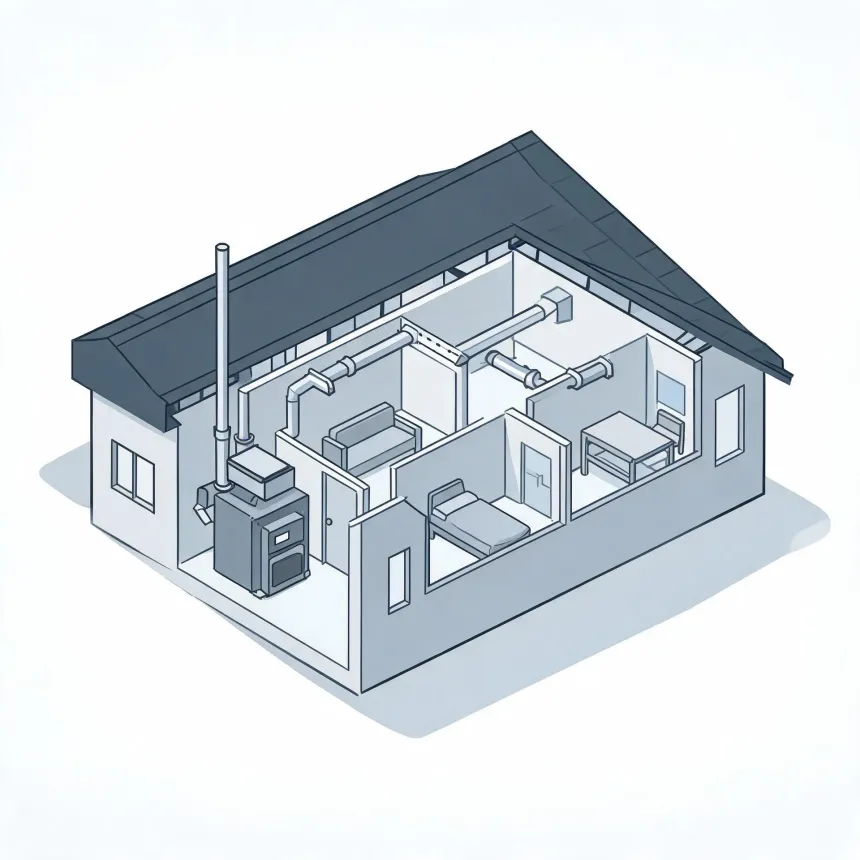
Isometric cutaway illustration of a single-story house showing interior rooms with furniture, overhead ducting, a flue pipe, and a furnace unit against an interior wall.
Your furnace works hardest from November through March.

NOAA nClimDiv, 1991–2020 normals

Furnace trouble in Queens doesn't come from anything unusual about the cold here. Overnight lows average 28°F in January, which is normal for a furnace to handle.

A furnace acting up is most likely the usual wear, something like an igniter or a blower motor giving out after years of use, not a sign the winter here is too much for it.

Half the homes in Queens County are old enough for the furnace to be original equipment

Half the homes here were built by 1953
Heat runs October through April
Winter nights average 28°F

If the furnace in your house came with it, ask the contractor straight out how much life is left in it before paying for a repair. The nameplate inside the access panel will show the age, so check it yourself or have the tech find it while they're out. Once you know how old the unit is, the repair means something different. A part failing early on is normal wear and worth fixing. The same part failing on a furnace that's been running since the house was built is a sign the whole unit is near the end, and the next repair might not be worth making either.

Get it looked at early

Problems tend to show up in the first weeks of the season, when the load hits a part that was already weak.

Find a contractor
A man in a cap, gray T-shirt and brown work pants carries a worn leather tool bag up wooden porch steps toward a dark paneled front door, with a potted shrub to the left.
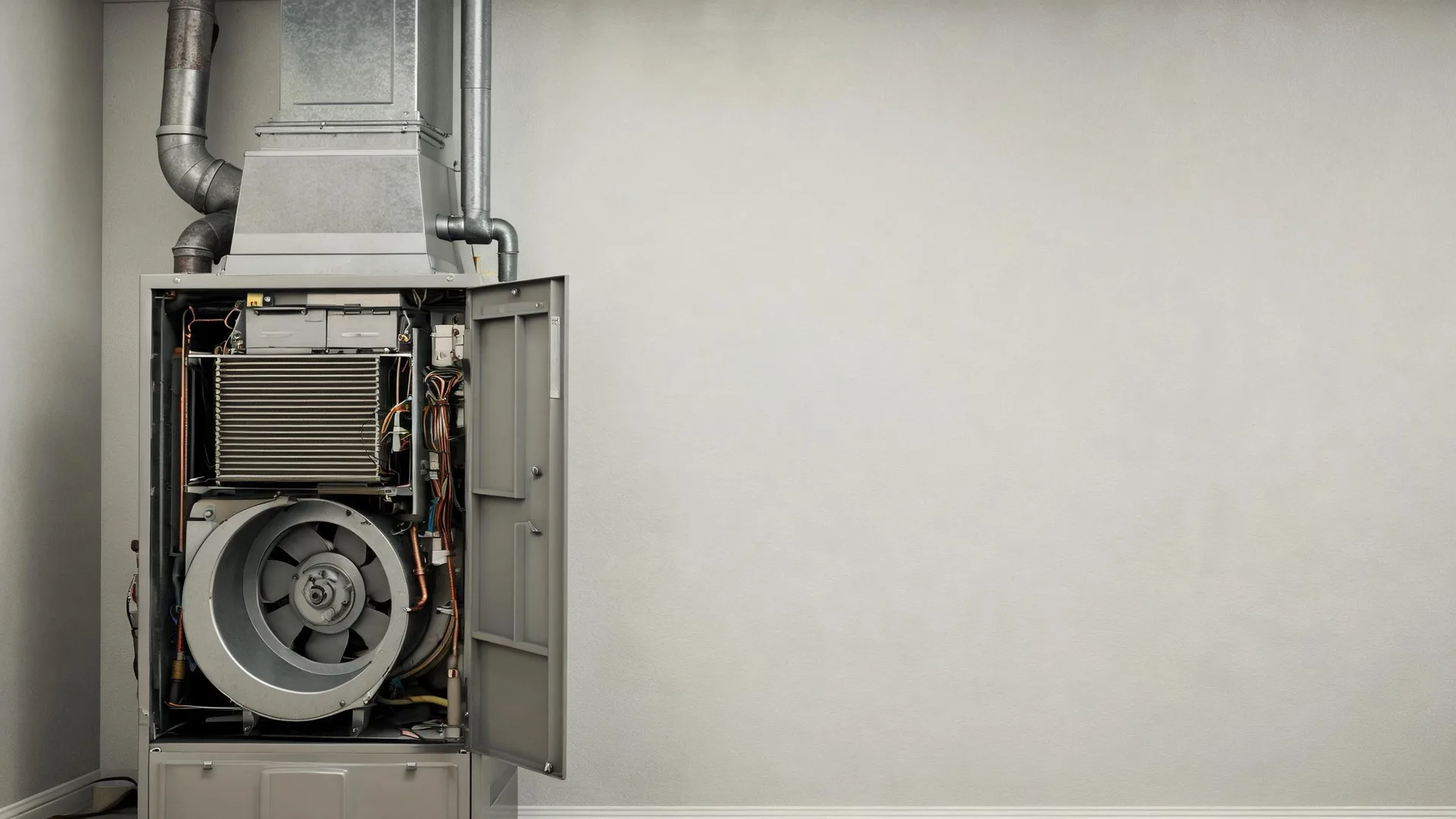
A gray residential gas furnace installed in an unfinished basement, connected to sheet-metal ductwork and PVC pipes.

What the furnace is telling you before it fails

A furnace usually tells you something is wrong before it quits for good. A burner that used to light right away and now clicks several times before it catches is wearing out its igniter or losing the flame sensor's ability to read the flame. Short cycles, where it fires up and shuts off again before the house warms, often point to a clogged filter or a cracked heat exchanger tripping a safety switch. A blower that runs constantly on low or kicks on with a bang usually has a failing motor or a bad capacitor behind it. Warm air that smells faintly like something burning for the first few minutes is normal dust burning off, but if that smell doesn't go away, or turns sharp, shut the unit off and get it checked. Rattling, squealing, or a knock that wasn't there last season is a part working loose or wearing down, not something that fixes itself by waiting.

A cracked heat exchanger gets worse by running at all

A heat exchanger with a crack in it is already leaking exhaust into the air stream. Every cycle flexes that metal with heat and pushes more combustion gas through the crack. It doesn't patch itself. The safety switch that shuts the burner down on a short cycle is doing its job, and forcing the furnace past it only opens the crack further.

A struggling blower motor pulls more than it should

A capacitor that's weakening makes the blower motor work harder to spin up and keep going. That extra draw heats the motor windings past what they're built for, and heat is what finally kills a motor. Left alone, a bad capacitor doesn't stay a small part swap. It takes the motor down with it.

An unfinished basement containing a metal furnace with ductwork, exposed wooden joists on the ceiling, cardboard boxes, a coiled cable, and a single hanging incandescent bulb.

A new furnace would cut about $120 a year off heating for a typical Queens County home.

  • A new high-efficiency furnace$500 a year
  • An older furnace$620 a year

Estimates for a typical Queens County home, compared with an older unit built to the previous federal minimum, from EIA household energy data, New York fuel prices and NOAA climate normals. Your home will differ.

Repair makes sense when one part has failed and the heat exchanger is sound.

Replacement makes sense when the heat exchanger is cracked or the furnace keeps needing parts.

A repair makes sense when the part failing is the kind that fails on its own, on any furnace, at any age. Igniters, flame sensors, capacitors, blower motors. These wear out from years of heating and cooling cycles and get swapped without touching anything else. Replacement is the right call when the part in question is the heat exchanger or the only question left is which part fails next. A furnace near the end of its life tends to need something different every season, because the parts were all put in around the same time and are wearing out together. If a tech tells you the repair is possible but the unit is old and tired, that's not a sales pitch, that's what a furnace looks like right before it starts costing you every month instead of once.