
Heat pump vs furnace in Queens County, New York

Get a Replacement Quote

For homes in Queens County

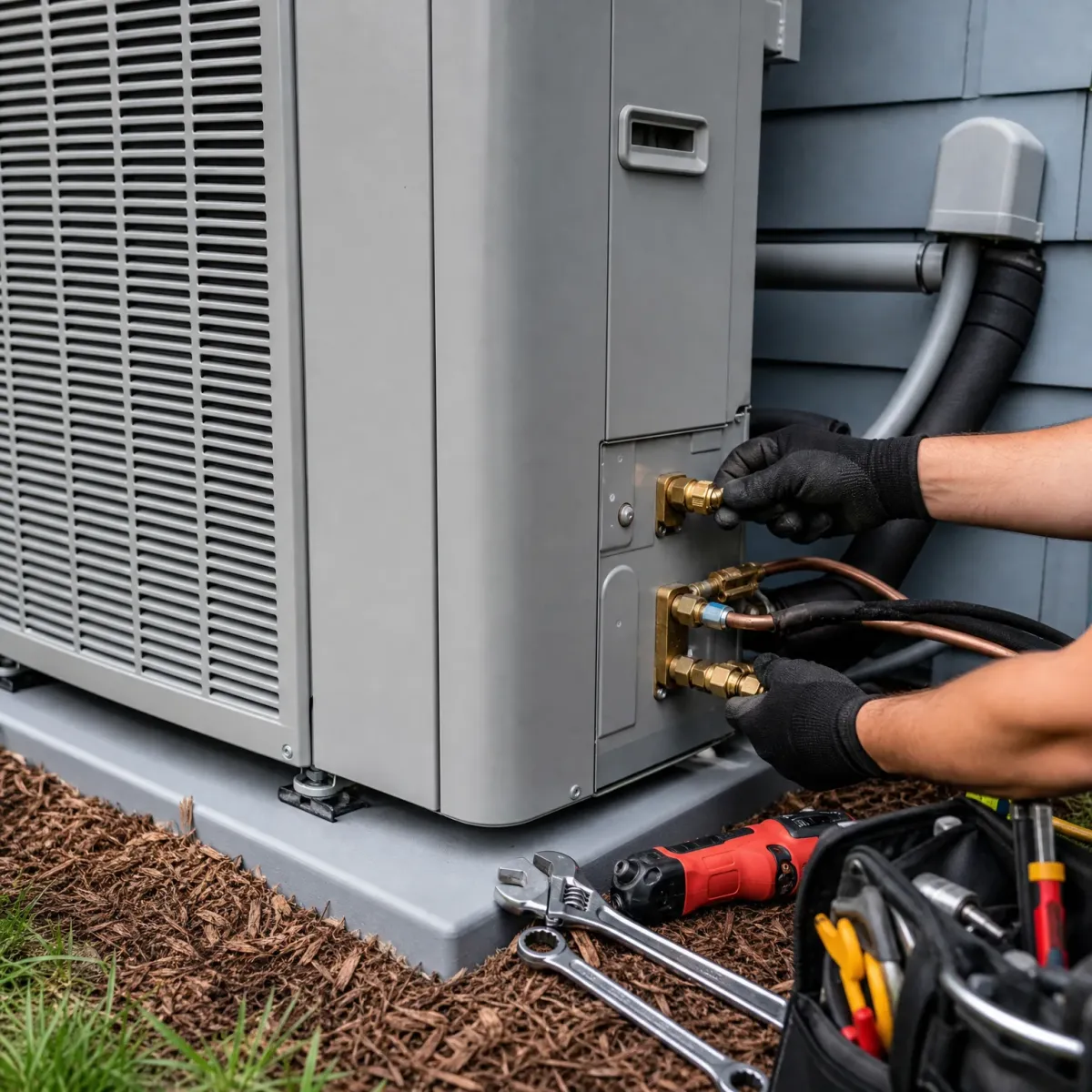
A person wearing black gloves connects copper refrigerant lines to brass service valves on the side of a gray outdoor condenser unit, with a wrench, a power tool and a tool bag on the mulch bed in the foreground.

Tell us about the job

Takes about a minute. No obligation.

New system or replacementQueens County, NY
Step 1 of 3

What kind of equipment?

Which costs less to run in Queens County?

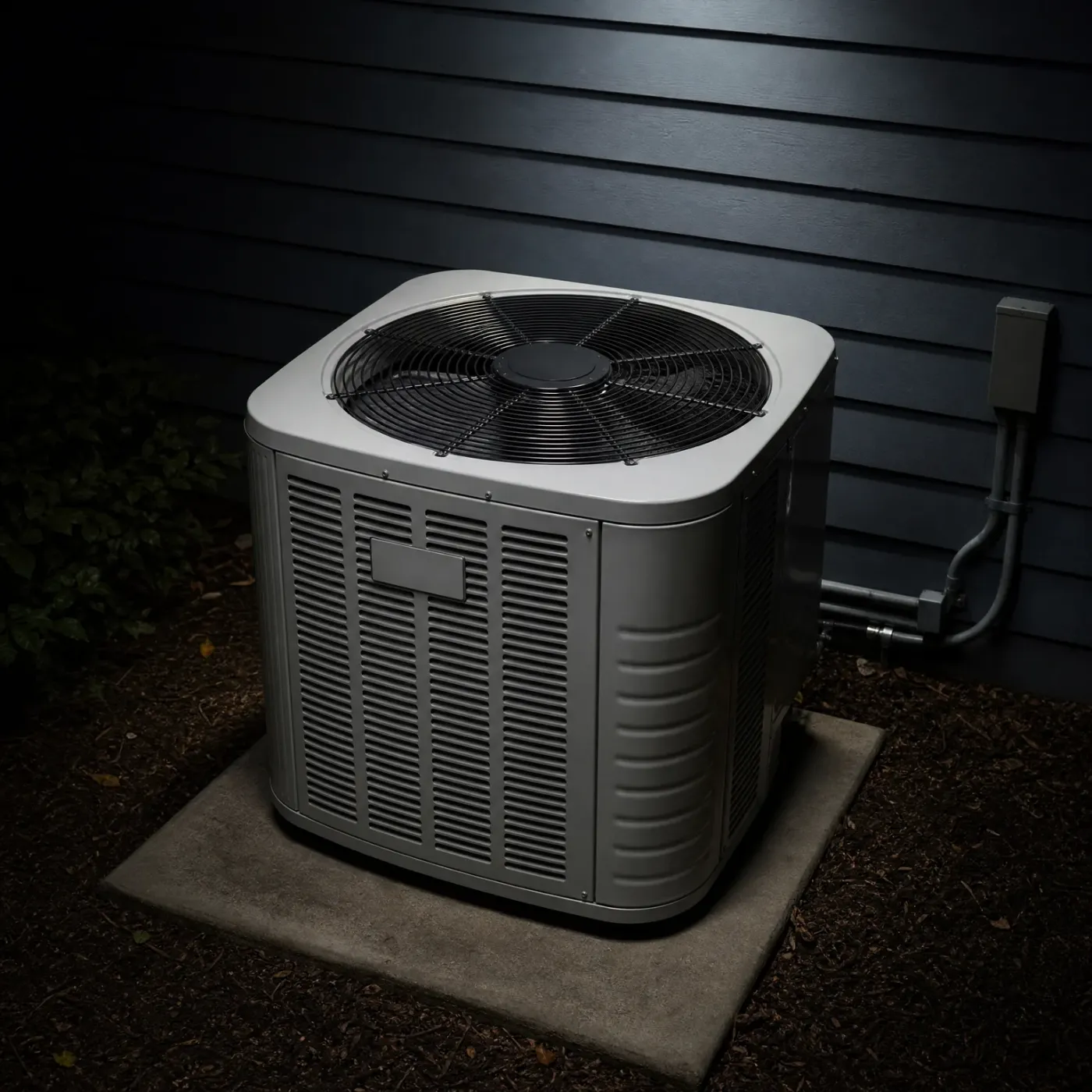
A gray outdoor condensing unit with a top-mounted fan grille sits on a concrete pad beside a dark horizontal-lap sided wall, with conduit, a disconnect box, and refrigerant lines running to the wall at night.

Heat pump

To heat your home here$3.26per 100,000 Btu

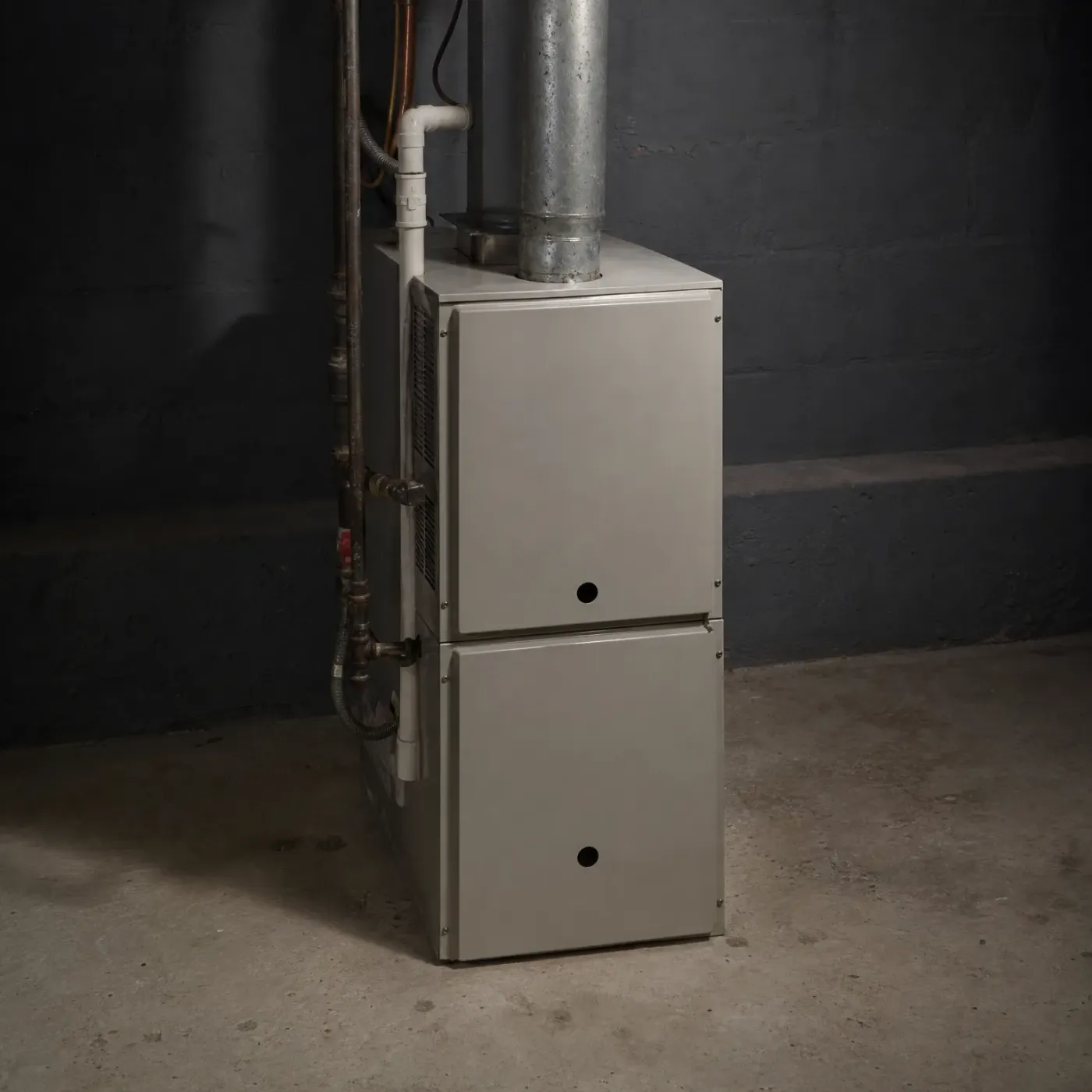
A beige two-panel gas furnace stands on a concrete floor against a dark painted block wall, with a metal flue pipe rising from its top and copper and PVC pipes running alongside.

Furnace

To heat your home here$2.00per 100,000 Btu

At New York's gas and electricity prices, a gas furnace makes the same heat as a heat pump for at least 38% less.

Btu stands for British thermal unit, the standard measure of heat energy.

Where does a heat pump shine?

  • Heats and cools in one system

    Winter and summer are covered by the same outdoor unit. That's one machine to service instead of two.

    A living room with dark blue-grey walls, a large three-pane window overlooking a green garden, a light grey sofa with a blue throw and cushions, a wooden coffee table with a bowl and mug, a wooden armchair, and a wall-mounted swing-arm lamp.
  • No gas line, nothing burning in the house

    There's no gas line to the unit and no flame anywhere in it. Carbon monoxide isn't part of the picture.

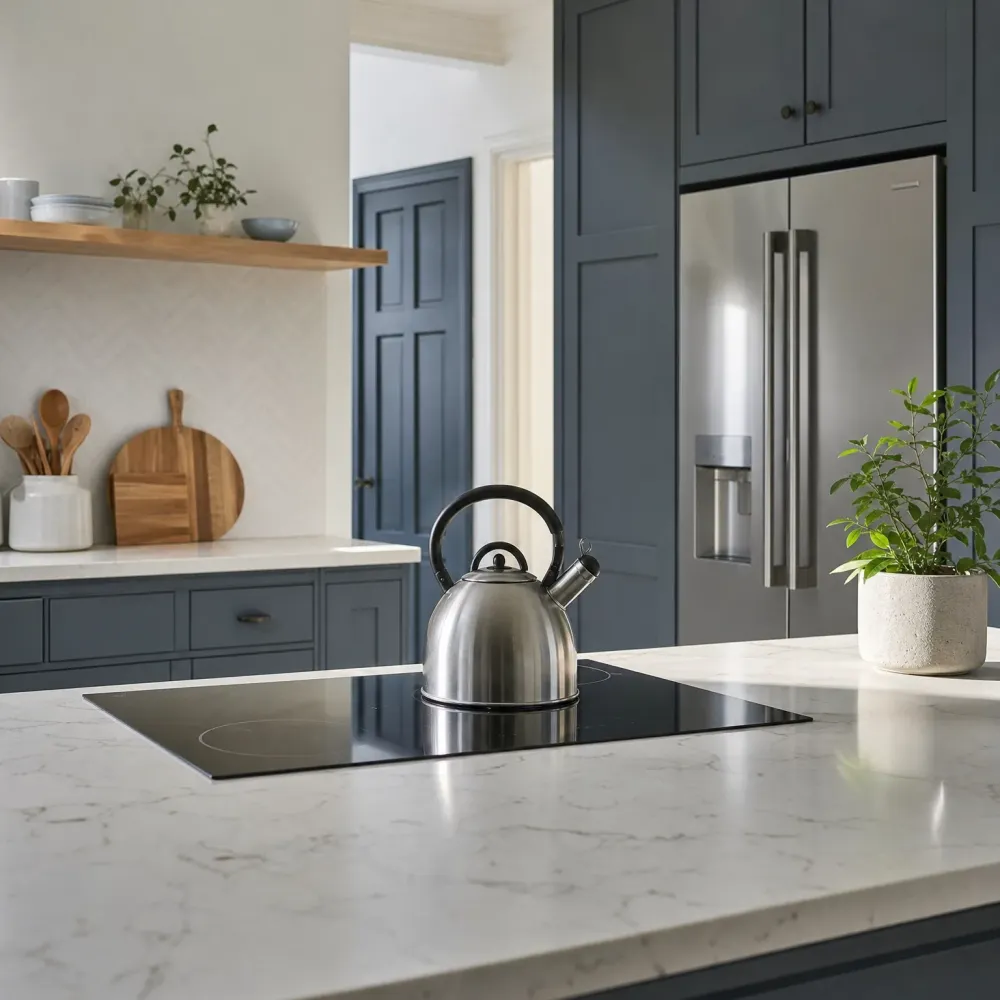
    A kitchen island with a white marbled countertop holding a black induction cooktop and a stainless steel whistling kettle, with dark blue-gray cabinetry, a stainless steel refrigerator, a potted green plant, and a wooden shelf with utensils and cutting boards in the background.
  • Steady, even comfort

    Instead of short bursts of heat, it keeps a gentle, steady output going. The house stays at one comfortable temperature.

    A dimly lit living room with a dark gray armchair, knit blanket and open book, a wooden coffee table with a candle and plant, a stone fireplace with a lit fire, a frosted window, and a golden-colored dog sleeping on a light rug.

Where does a furnace shine?

  • Runs on the gas most homes here already use

    Most homes in Queens County already have a gas line, since utility gas heats 73.8% of them. If yours is one, a furnace just ties into what's already there.

    A row of brick houses with covered porches along a sidewalk, with patchy snow on the front lawns and bare trees at left under a pale sky.
  • Proven, simple, easy to get serviced

    The design is simple and well understood. That keeps service calls short.

    A gloved hand holds a white pleated air filter in front of a basement utility area with a furnace, ducting, pipes, and shelves holding storage bins, baskets, and folded textiles.
  • Fast, strong heat on demand

    The air coming from the vents feels genuinely hot. That's welcome on a freezing morning.

    Entryway with a dark blue paneled door with glass panes showing snow and conifers outside, a sheer white curtain by a window, a wooden bench with pillows and a steaming mug, a floor vent, a jute rug on slate tile, and boots lined up along the wall.

What winter here asks of a heat pump

The heat runs seven months here, October through April, and the overnight low averages 28°F in December, January and February. That number is below both marks that matter for a heat pump. Below 40°F a standard heat pump's output falls short of its rating. Below about 35°F it often needs backup heat to make up the difference. Twenty-eight is under both, and so is every one of the roughly 70 nights a year here that hit freezing or below.

Those cold nights are common but rarely extreme. About 70 nights a year reach 32°F or below, but of those, only about one in ten years sees a night at 0°F. A standard heat pump keeps making heat through the twenties and thirties, just less of it, with backup heat filling the gap. In a two-winter field test of cold-climate heat pumps in occupied homes, backup heat covered only a small share of the load between 0°F and 35°F, and running on backup alone was rare even near 0°F. A heat pump with the ENERGY STAR Cold Climate rating is built and tested to hold most of its capacity down to 5°F, which covers what this county's winter actually does most nights.

So a heat pump will heat this house through the winter here, cold nights included, provided it has backup heat sized for the job or a cold-climate rating built for nights like these. A furnace doesn't carry that condition. It makes full heat at 28°F the same way it does at any other temperature.
Front entrance of a blue clapboard house with a dark paneled door, autumn wreath, two wall lanterns, orange and yellow potted mums, and stone steps covered in fallen leaves.

What's already run to the house

On running cost, the order doesn't change at New York's prices: a gas furnace makes 100,000 Btu of heat for $2.00, an oil furnace for $2.78, a heat pump for $3.26. A furnace built to the federal minimum costs at least 38% less to run than a heat pump built to the same standard, with nothing added for the heat pump's backup heat on the coldest nights.

What's already installed matters as much as what it costs to run. Utility gas heats 73.8% of homes in Queens County, about three in four. Electricity heats 10.3%, and fuel oil another 10%. A house on gas already has the line, the venting, and a contractor base built around servicing furnaces. A house on electric heat has none of a gas line to bring in, and a heat pump there would also cover the four months of cooling that run here, June through September, something a furnace cannot do by itself.

Where gas already runs to the house, a furnace is the cheaper machine to run and the more straightforward one to replace. Where it doesn't, or where one system handling both heating and cooling is worth more than the running-cost gap, a heat pump with backup heat sized for nights in the twenties is built for what winter here actually requires.

Sources: NOAA nClimDiv · NOAA 1991–2020 seasonal normals · PNNL Building America guide · PNNL-37127 field study · ENERGY STAR product criteria · EIA SEDS 2024 · 10 CFR 430.32 · Census ACS 2020–2024

A dark blue six-panel front door with sidelights on a gray clapboard house, flanked by orange and yellow potted mums atop granite steps with fallen leaves and a brick walkway.

Common questions about heat pumps and furnaces

  • Can a heat pump heat a house through a New York winter?

    It can, but not at full strength on the coldest nights. A standard heat pump puts out less than its rated capacity once it's below 40°F outside, and Queens County's winter nights average 28°F, so that shortfall shows up most of the season. A heat pump built to the ENERGY STAR Cold Climate spec is tested to hold onto most of its capacity down to 5°F, which matters here since nights at or below freezing are common, even if nights at 0°F are not.

  • Do I need backup heat with a heat pump here?

    Most likely, yes. A standard heat pump often needs backup heat once it drops below about 35°F outside, and Queens County sees that on about 70 nights a year. Field testing on cold climate models found backup heat covered only a small share of the load between 0°F and 35°F, so the answer depends partly on which heat pump is installed.

  • Can I keep my furnace and add a heat pump?

    Yes, and in this climate it often makes sense. A furnace paired with a heat pump can handle the coldest nights while the heat pump covers the rest, since a standard heat pump's output falls short of its rating below 40°F and it often needs backup once it drops below about 35°F. Queens County averages 28°F on winter nights, so the furnace would have real work to do, not just sit as a backup for rare cold snaps.

  • Is a heat pump cheaper to run than a furnace in Queens County?

    No, a furnace costs less to run here. At New York's prices a gas furnace makes 100,000 Btu of heat for $2.00, and a heat pump makes the same heat for $3.26. An oil furnace lands in between at $2.78, so of the three a heat pump is the most expensive to run.