


An unfinished basement containing a forced-air furnace with metal ductwork, exposed wooden ceiling joists, a hanging Edison bulb, and bare concrete floors.

Furnace Repair in Poughkeepsie, NY

Tell us about the job

Takes about a minute. No obligation.

RepairFurnace or heatingDutchess County, NY
Step 1 of 2

What ZIP code is the job in?

Dutchess County saw 341 damaging wind events between 2015 and 2024, along with 19 hail events and 5 tornadoes. That kind of weather doesn't ask your furnace first, but it can still end up part of the damage, especially if branches or debris came down near the house or the power cut out for a stretch during the storm. A furnace that still lights and runs can have a cracked heat exchanger, a damaged flue connection, or wiring that took a surge, and none of those show themselves right away. Across New York, 11% of households went at least a full day without power in 2024, and a hard outage can leave a furnace cycling wrong even after the lights come back on. If your area took a hit this year, it's worth having the furnace looked at, not just relit.

8 months
October through May, your furnace is on duty
20°F
the average winter night it heats against
28 winter storms
in ten years, the nights a failure hurts most
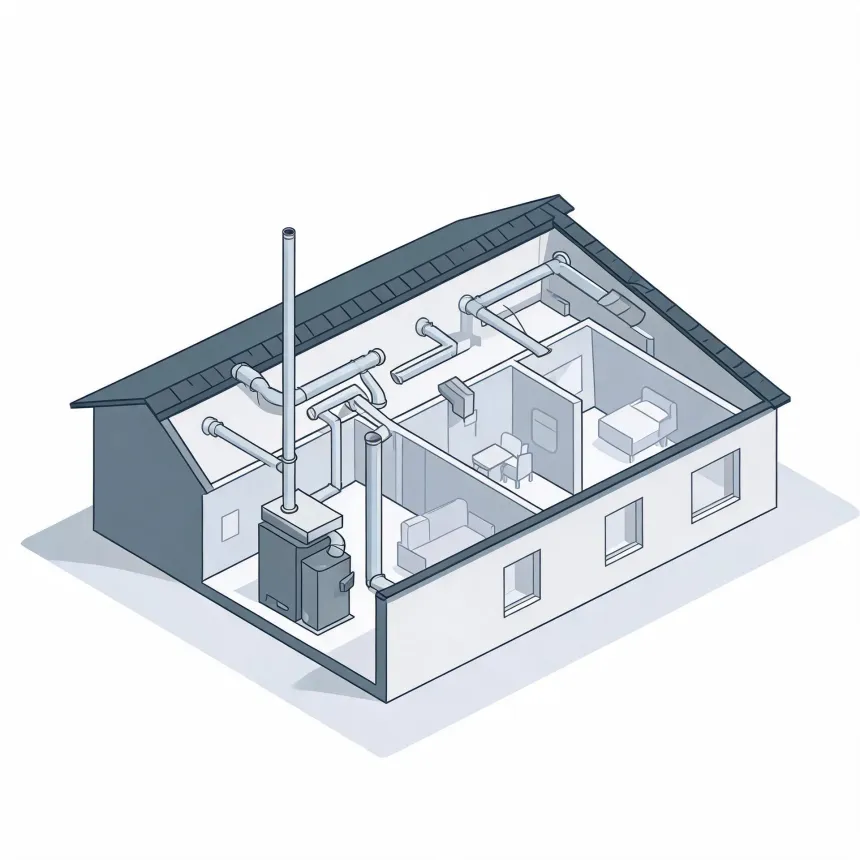
Isometric line illustration of a single-story house cutaway showing interior rooms with furniture, ductwork or piping running along the ceiling, and a boxy furnace unit with a tall vertical flue pipe.
Your furnace works hardest from November through March.

NOAA nClimDiv, 1991–2020 normals

Furnaces here start working in October, after sitting idle since spring.

A weak igniter or a cracked exchanger often waits until that first cold week to fail.

Eight months of heat a year wears a furnace faster than most

Heat runs October through May
Winter nights average 20°F
28 winter storms from 2015 to 2024
A furnace that runs rough here costs you every month it stays that wayFuel oil ran $23.11 per million Btu in New York in 2024

Half the homes in Dutchess County were built in 1971 or earlier. A furnace that's original to a house that age is well past the point where parts are easy to find or worth paying for. Even a furnace that was replaced once since then is likely old enough to be on its second or third igniter, if not closer to the end. Age alone doesn't tell you whether tonight's repair is the last one or just the next one. Before you pay for a major part, it's worth asking the technician how many years they'd actually expect to get out of it.

After the storm passes, have the furnace looked at anyway

If a storm came through and the furnace still lit afterward, that doesn't mean it came through clean. Have it checked before you trust it for the winter.

Find a contractor
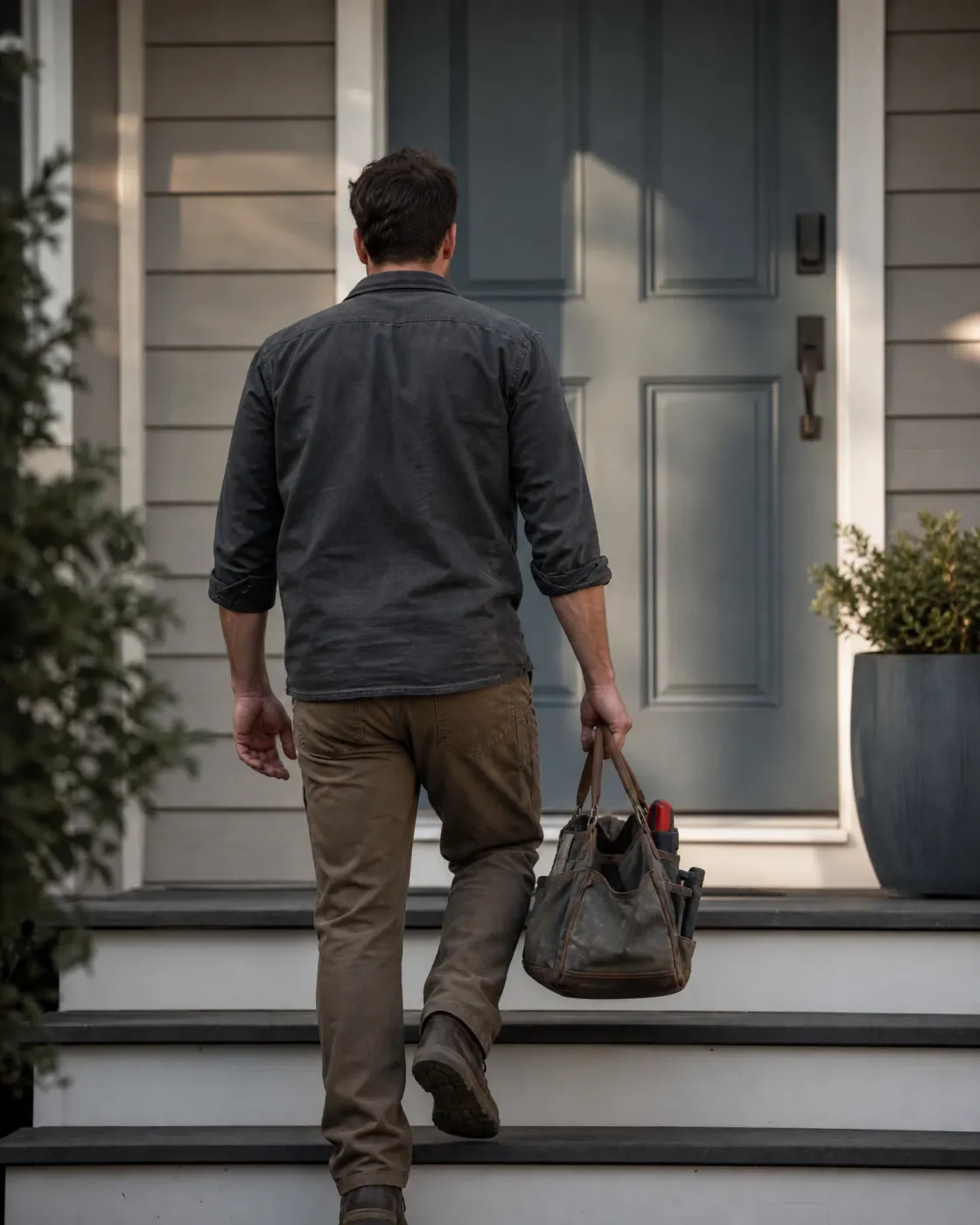
A man in a dark shirt and brown pants carries a worn canvas tool bag up concrete steps toward a gray-blue front door of a house with horizontal siding and a potted shrub.
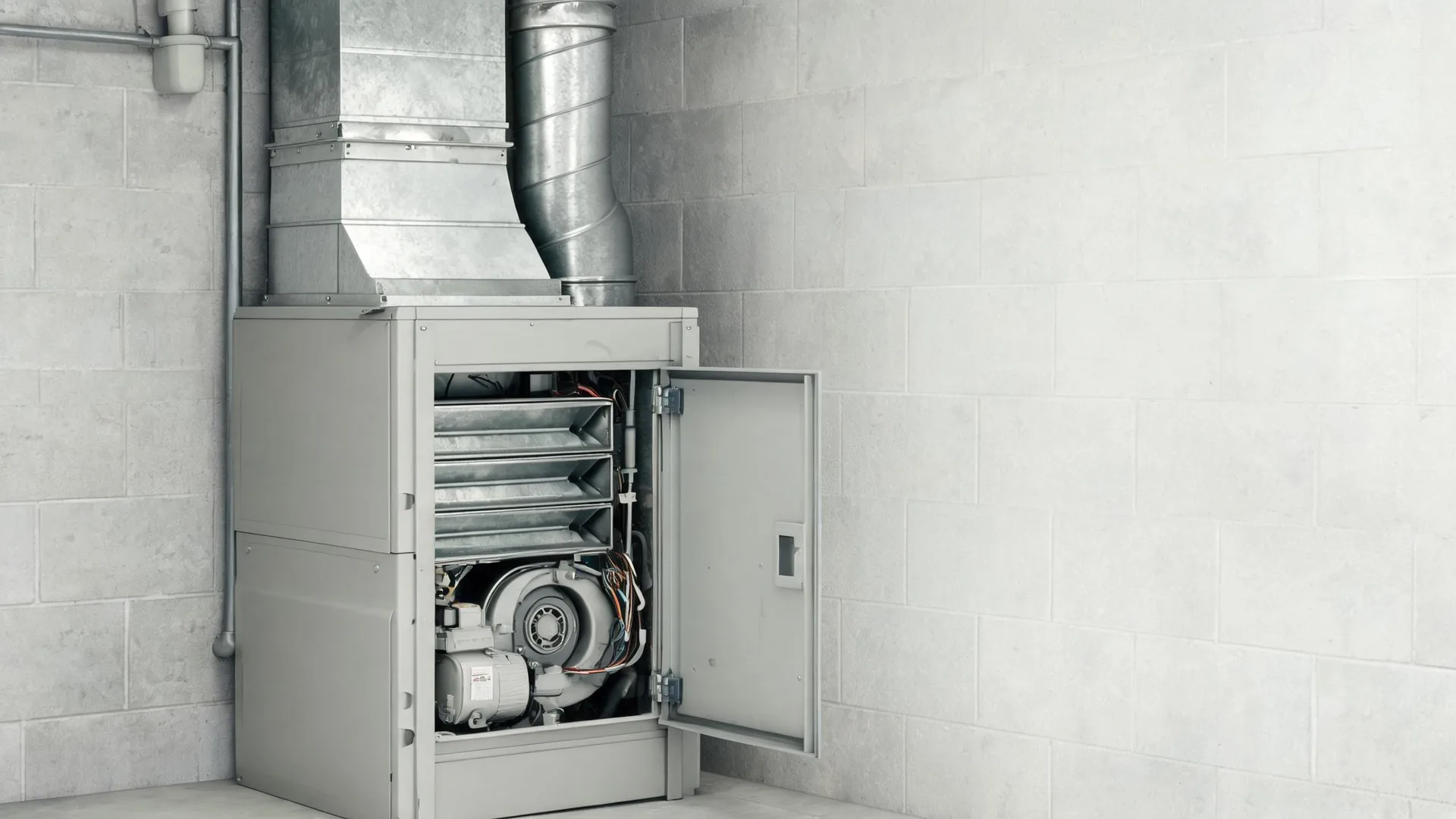
A gray residential gas furnace installed in an unfinished basement, surrounded by ductwork, a metal flue pipe, and a gas supply line.

Watch it long enough and the wear shows itself

A furnace nearing the end of its life doesn't usually fail all at once. It runs a little rougher each month, short cycles more, takes longer to catch. Watching it run from morning into night is one way to see that wear add up, because it's the same cycle repeating for months without a break. If the furnace came with a house built decades back, that wear has had a long time to pile on. Tonight's repair might be the one that tells you whether it's worth another.

What actually wears out first

The igniter takes the most abuse because it heats up and cools down every single cycle, and that stress eventually cracks it. The flame sensor coats itself with a thin film over time and stops sensing the flame even though the flame is there. Blower motor bearings wear from running hours, not age on the calendar. These are the parts that fail from normal use, not from anything going wrong.
What that means for a repair call

A furnace that won't stay lit is usually the flame sensor or the igniter, and either one is a straightforward swap. A furnace that's noisy or blows weak air points toward the blower motor or a clogged filter choking it. The failures that matter more are the ones you can't see: a cracked heat exchanger or a flue problem won't always announce itself with a symptom you'd notice, which is why a technician checks it directly instead of waiting for it to act up.

There are a few things worth checking before you pick up the phone. Start with the thermostat: make sure it's set to heat, not just fan, and that the temperature is actually set above room temperature. Check the furnace switch, the one that looks like a light switch near the unit itself, since it's easy to bump off without noticing. Look at the filter next. A filter clogged with dust chokes the airflow and can make the furnace run rough or shut itself off partway through a cycle. If the furnace won't start at all, check the breaker it's on, because a tripped breaker will stop it cold with no warning sign first. None of this tells you whether something deeper is wrong, but it rules out the easy explanations before you pay someone to find out it was the filter.

Twenty eight winter storms hit Dutchess County between 2015 and 2024, and every one of them is a stretch where the furnace runs longer and harder than usual to keep up. That kind of running, on top of eight months of heat every year, is what wears an igniter down or fouls a flame sensor before its time. When a furnace finally acts up, the cause is rarely a mystery. It is wear that had plenty of chances to build. A technician who checks the furnace properly, instead of just relighting it or swapping the obvious part, is the one who finds what that wear actually did. That is what makes a repair hold instead of calling someone back out next month.