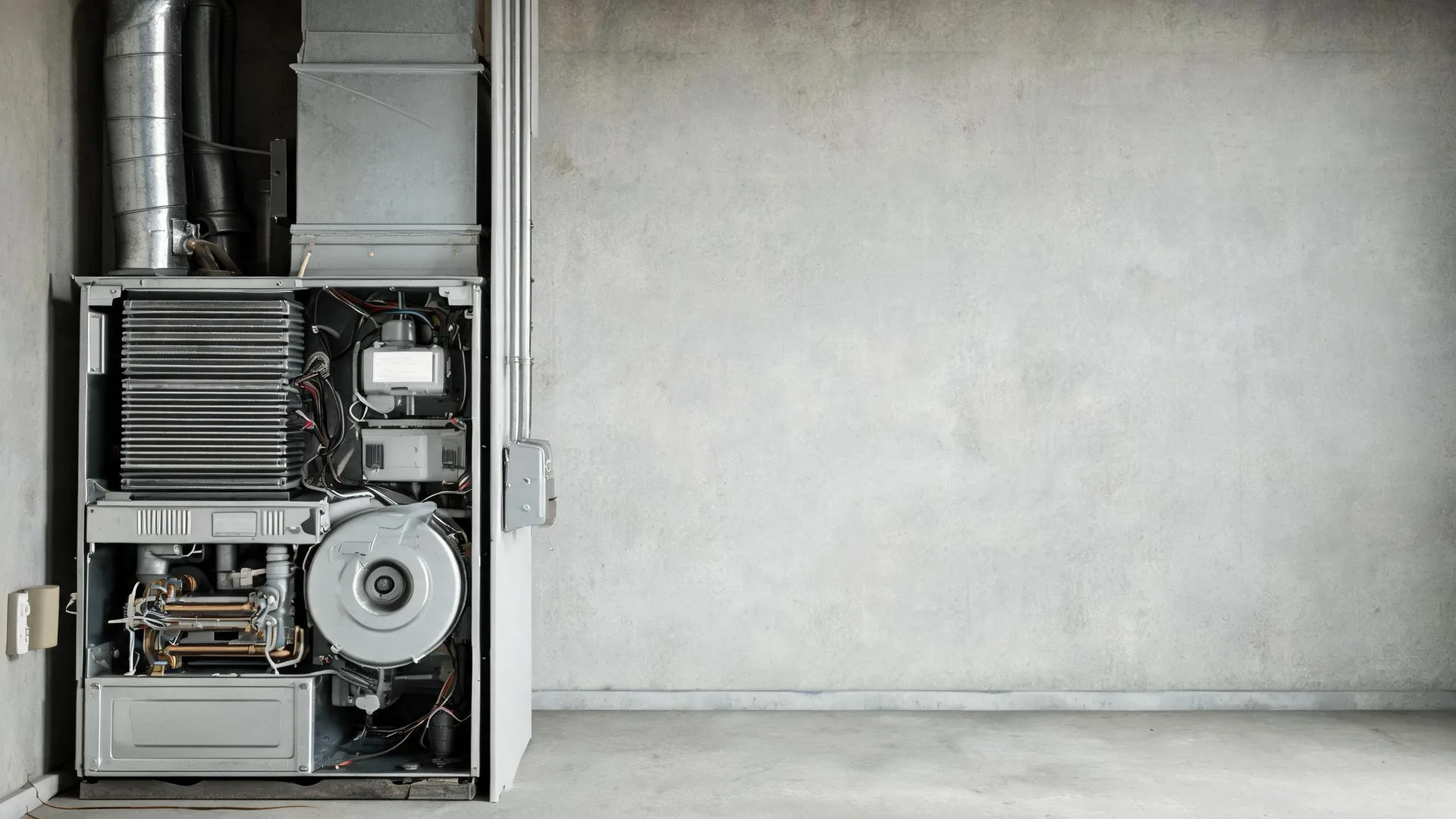
Eight months of heat a year
Furnaces in Niagara Falls run from October through May. Overnight lows average 21°F in January, so the burner, igniter and blower are cycling for most of the year, not just a handful of cold snaps.
Takes about a minute. No obligation.
Furnaces in Niagara Falls run from October through May. Overnight lows average 21°F in January, so the burner, igniter and blower are cycling for most of the year, not just a handful of cold snaps.
A furnace running eight months a year wears in more than one spot at once. Have the whole system checked, not just the part that quit, so the fix holds.
NOAA nClimDiv, 1991–2020 normals
Half the homes in Niagara County were built in 1958 or earlier.
A furnace that came with a house that old is probably on its second or third unit already, and getting close to the end on its own.




A furnace usually tells you something is wrong before it quits outright. Short cycling is one of the first signs, where it fires up, runs for a short stretch, and shuts off before the house warms. That points to a dirty flame sensor or a clogged filter choking airflow. A burner that won't stay lit, or lights with a bang instead of a soft whoosh, needs a look at the igniter or the gas valve. Cold air blowing from the vents before the burner kicks in is normal, but cold air the whole cycle means the burner isn't lighting at all. Listen for a grinding or squealing blower motor too. None of these fix themselves, and most get worse the longer they run.
Your furnace has been cycling since October and won't let up until spring. A fix that only addresses what quit today leaves the rest of it to wear out on its own schedule. Have it checked properly now, so whatever's done holds for the rest of the season.
Find a contractorA cracked heat exchanger stays small as long as the furnace keeps firing on it. The metal flexes with every cycle, heat on, heat off, and a hairline crack opens a little more each time. A blower wheel caked with dust runs out of balance, and an out-of-balance wheel wears its bearing faster than a clean one would. A dirty flame sensor doesn't clean itself between cycles, it builds up more each time the burner fires, until the furnace stops holding a flame at all. Even a clogged filter does its damage slowly, starving the blower of air until the motor works harder than it was built to and runs hot. None of this shows up as a sudden failure. It shows up as a furnace that runs a little worse each week until the part that was failing finally gives out, usually on the coldest night it's asked to work hardest.
Most furnace failures trace back to one of a few spots. The igniter weakens with every cycle until it stops glowing hot enough to catch the gas. The flame sensor coats with a film that builds up over time, so it reads no flame even when one is lit. Bearings in the blower motor dry out and start pulling harder current than the motor was built for. None of these fail on the first bad cycle. They fail on the hundredth, or the thousandth.
A new igniter won't hold if a draft problem keeps pulling the flame sideways. A cleaned flame sensor fouls again fast if the burner is sooting from bad combustion air. Swapping the part that broke fixes the symptom. Finding why it broke is what keeps the next part from going the same way a month later.
Estimates for a typical Niagara County home, compared with an older unit built to the previous federal minimum, from EIA household energy data, New York fuel prices and NOAA climate normals. Your home will differ.
Repair makes sense when one part has failed and the heat exchanger is sound.
Replacement makes sense when the heat exchanger is cracked or the furnace keeps needing parts.
Age matters more than the part that failed. A cracked heat exchanger or a failed control board usually means the furnace is done, because those repairs cost close to a new unit and the rest of the furnace is the same age as the part that just gave out. A bad igniter or a dirty flame sensor is a different story. Those are wear items, the kind any furnace needs replaced over its life, and fixing one doesn't say anything bad about the unit as a whole. The real question is whether this failure is the first of its kind or the latest in a string. A furnace that keeps coming back for repairs is telling you something a single repair bill won't show.