Weather here takes a toll on equipment
Albany County saw 435 severe weather events between 2015 and 2024, including 350 bouts of damaging wind and 35 hail events. An outdoor condenser unit sits outside through all of it.
Takes about a minute. No obligation.
Albany County saw 435 severe weather events between 2015 and 2024, including 350 bouts of damaging wind and 35 hail events. An outdoor condenser unit sits outside through all of it.
11% of New York households went at least a day without power in 2024. A furnace needs electricity to run even when the house heats with gas, so an outage can leave you without heat on a cold night.

NOAA nClimDiv, 1991–2020 normals
Your furnace runs about eight months a year here, October through May.
That's most of the year asking parts to hold up, so wear shows up sooner than you'd expect.



Natural gas here cost $16.03 per million Btu in 2024, among the higher rates in the country. A furnace that's short-cycling, running longer than it should, or struggling to hold a set temperature burns more gas doing it. That shows up on the bill before it shows up as a breakdown. Left alone, the same problem keeps costing you every month it runs, and this furnace runs most of the year. Getting it looked at now costs less than paying for the inefficiency all winter.
A furnace still needs power to run, storm or no storm. If a power cut knocked yours out or a surge during a storm left it acting up, that's worth a look before the next cold night, not after.
Find a contractorHalf the homes in Albany County were built in 1964 or earlier. A furnace doesn't last that long, so if yours is original to the house, it's already been replaced at least once, or it's due. If your system came with the house, that's worth finding out before you spend money on a repair. A technician can tell you how much life is actually left in it, and whether a repair now is worth it or just a delay.
A heat exchanger that's cracked flexes a little more each time the burners fire and the metal heats up. Running the furnace keeps opening that crack wider. Shut down, it stays whatever size it is.
The high limit switch is what shuts the burners off if the furnace overheats. If it's going bad and you keep running the furnace, you lose the safety that catches a blocked vent or a dirty filter before it cracks the exchanger or scorches the blower motor.
Estimates for a typical Albany County home, compared with an older unit built to the previous federal minimum, from EIA household energy data, New York fuel prices and NOAA climate normals. Your home will differ.
Repair makes sense when one part has failed and the heat exchanger is sound.
Replacement makes sense when the heat exchanger is cracked or the furnace keeps needing parts.
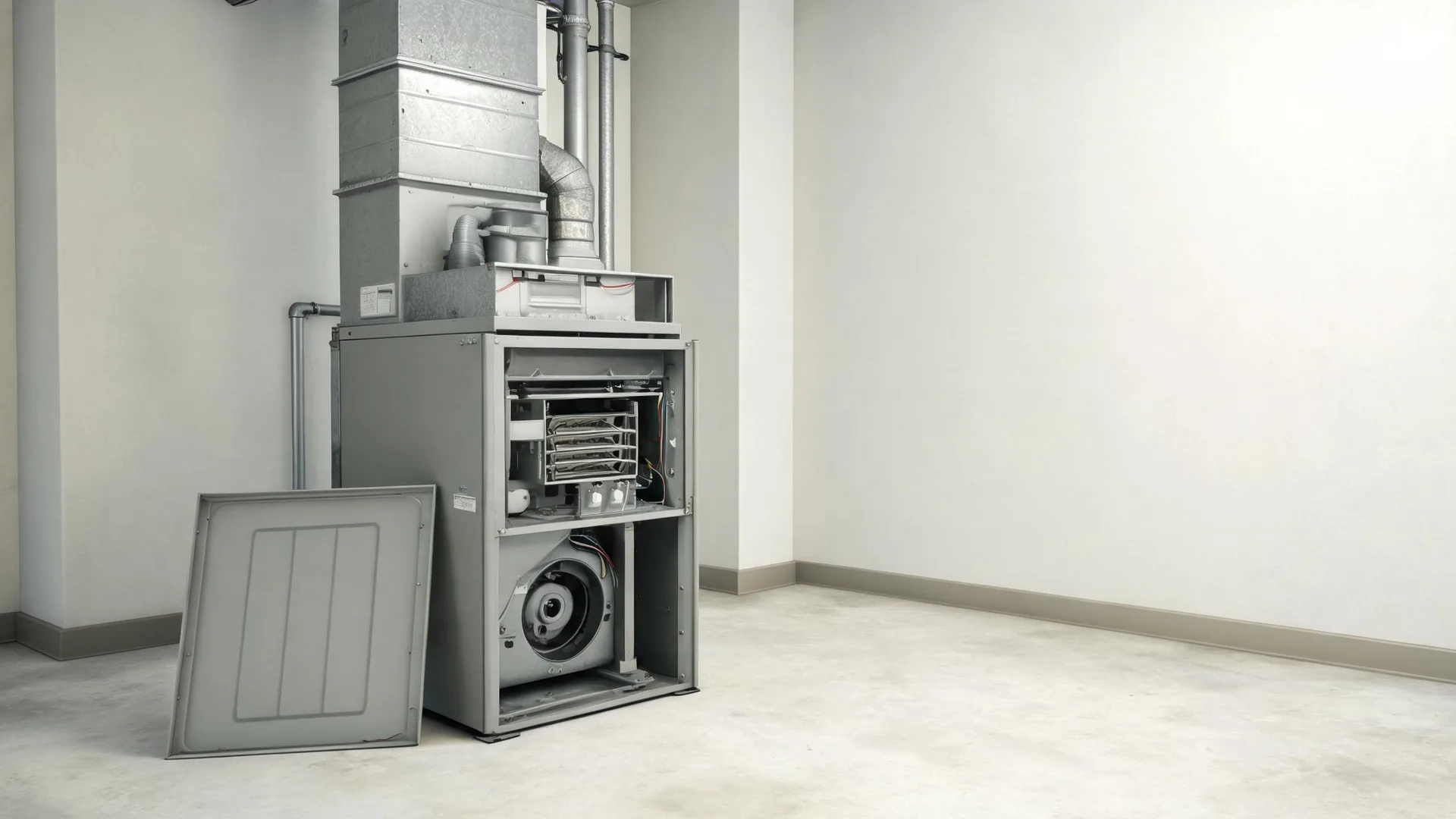
A diagnostic visit starts before any panel comes off. A technician asks what the furnace is doing, when it started, and what it sounds or smells like when it runs. Then the panels come off and the burners get watched through a full cycle, ignition through shutdown. They'll check the flame sensor, test the limit switch, look at the heat exchanger for cracks or rust, and check the inducer motor and blower for wear. A combustion analyzer reads the exhaust to make sure the gas is burning clean and the furnace isn't putting off carbon monoxide. Once the bad part is found, you get a plain answer: what's failing, why, and whether it makes sense to fix it or not.