





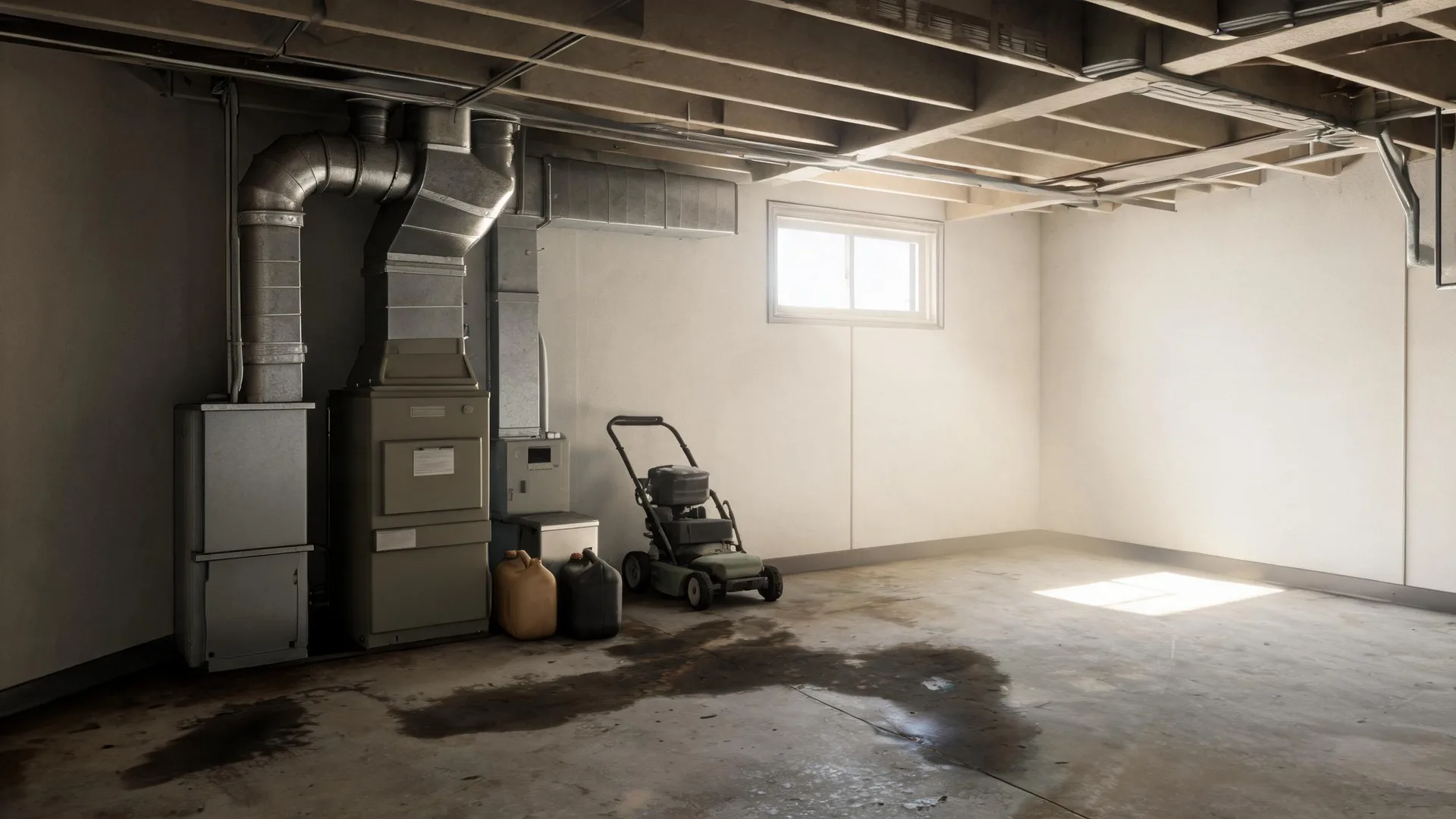
An unfinished basement featuring concrete block walls, exposed floor joists, a bare concrete floor, and a forced-air furnace with a large metal exhaust duct in the corner.

Furnace Installation in Olean, NY

Tell us about the job

Takes about a minute. No obligation.

New system or replacementFurnace or heatingCattaraugus County, NY
Step 1 of 2

What ZIP code is the job in?

Cattaraugus County saw 247 severe weather events between 2015 and 2024. Most of that was wind: 219 damaging wind events, plus 22 winter storms bringing heavy snow, ice and blizzards, and 6 hail events. Wind and ice take down power lines, and when that happens here it tends to last. Statewide, 11% of households went at least a day without power in 2024. A furnace needs electricity to run even when the house heats with gas, so a long outage in the middle of winter means no heat unless something else is in place.

9 months
September through May, your furnace is on duty
17°F
the average winter night it heats against
53%
of homes here heat with gas, so most furnaces here burn gas
80% AFUE
the federal minimum any new unit must meet
Isometric cutaway illustration of a small house showing a furnace unit connected to ductwork and a vertical flue pipe extending through the dark shingled roof, with sparse furniture in the rooms.
Your furnace works hardest from November through March.

NOAA nClimDiv, 1991–2020 normals

Gas heats more homes in Cattaraugus County than any other fuel, 52.9% of them.

A new furnace here is usually replacing a gas furnace, not switching a house over to one.

Nine months of heat start in September, with winter not far behind

Heat runs September through May
Winter nights average 17°F
Climate zone 5A

Half the homes in Cattaraugus County were built in 1960 or earlier. A furnace going into a house that age is going into a layout and duct system that were planned around whatever heated the place decades ago, not around today's equipment. That doesn't mean the new furnace can't work there. It means whoever installs it has to size it and set it up for the house as it actually is now, not for a generic floor plan. A furnace that's a poor match for an older home's layout runs longer and less evenly than one that was sized for it. Worth asking how the installer plans to account for your house's age before they quote you a unit.

Ask how the new furnace keeps your house warm if the power goes out

Wind and ice take down power lines here, and when that happens it tends to last. A furnace won't run without electricity, gas or not. When you're pricing installation, ask what it would take to add a backup power connection, like a transfer switch, so the furnace can run on a generator if a storm knocks the lines out mid-winter.

Find a contractor
A gray gas furnace with attached ductwork and piping installed in an unfinished concrete basement.

Nine months a year, this furnace is the only thing standing between the house and winter

Nine months of heat a year is most of the calendar. Furnaces elsewhere get a break in spring and fall. One installed here barely gets one. That kind of run time wears on an igniter and a blower motor sooner than the same furnace would wear in a milder place, and it means problems tend to show up earlier than the warranty paperwork suggests they should. A furnace sized right for the house keeps up with that schedule without running longer than it has to. One sized wrong, too big or too small for the place it's heating, works harder still. Worth paying attention to sizing and build quality here, not just the price on the quote.

Size drives most of the cost

A furnace is sized to the heat loss of the house, not the square footage alone. That means a contractor has to account for insulation, window area, ceiling height and duct layout before they can tell you what size unit you need. A bigger unit costs more up front, and an undersized one costs you comfort. The sizing work itself, done right, shapes the price before you ever pick a model.

The duct system has to match the furnace

A furnace pushes air through whatever ductwork is already in the house. If the trunk lines and returns are too small or poorly laid out for the new furnace, they need modification, and that work adds to the job. A furnace that's a perfect match for the house but feeding undersized ducts will run louder, less evenly, and harder than it should.

An unfinished concrete basement containing a gas furnace with sheet-metal ductwork, utility shelving, and exposed overhead joists.

A high-efficiency gas furnace would save about $160 a year to run in Cattaraugus County compared with a gas furnace.

  • A high-efficiency gas furnace$770 a year
  • A gas furnace$930 a year

Estimates for a typical Cattaraugus County home, from EIA household energy data, New York fuel prices and NOAA climate normals. Your home will differ.

Installation day starts with the old furnace coming out, and that alone takes longer than people expect once the ductwork, gas line and venting around it have to be disconnected without damaging anything they're reused with. The new unit gets set on its pad or stand and leveled, because a furnace sitting even slightly off can affect how the burner flame sits and how condensate drains on a high-efficiency model. Gas line, vent pipe and ductwork get connected next, and each one gets checked on its own: the gas line for leaks, the vent for correct slope and clearance, the ducts for a tight seal where they meet the plenum. Electrical comes after that, tying the furnace into its own circuit and wiring up the thermostat. Once it's buttoned up, the installer runs it through a full cycle, checking flame color, airflow at the registers and temperature rise across the furnace, not just that it kicks on. A furnace that passes those checks on day one is far less likely to call for a service visit in its first winter.