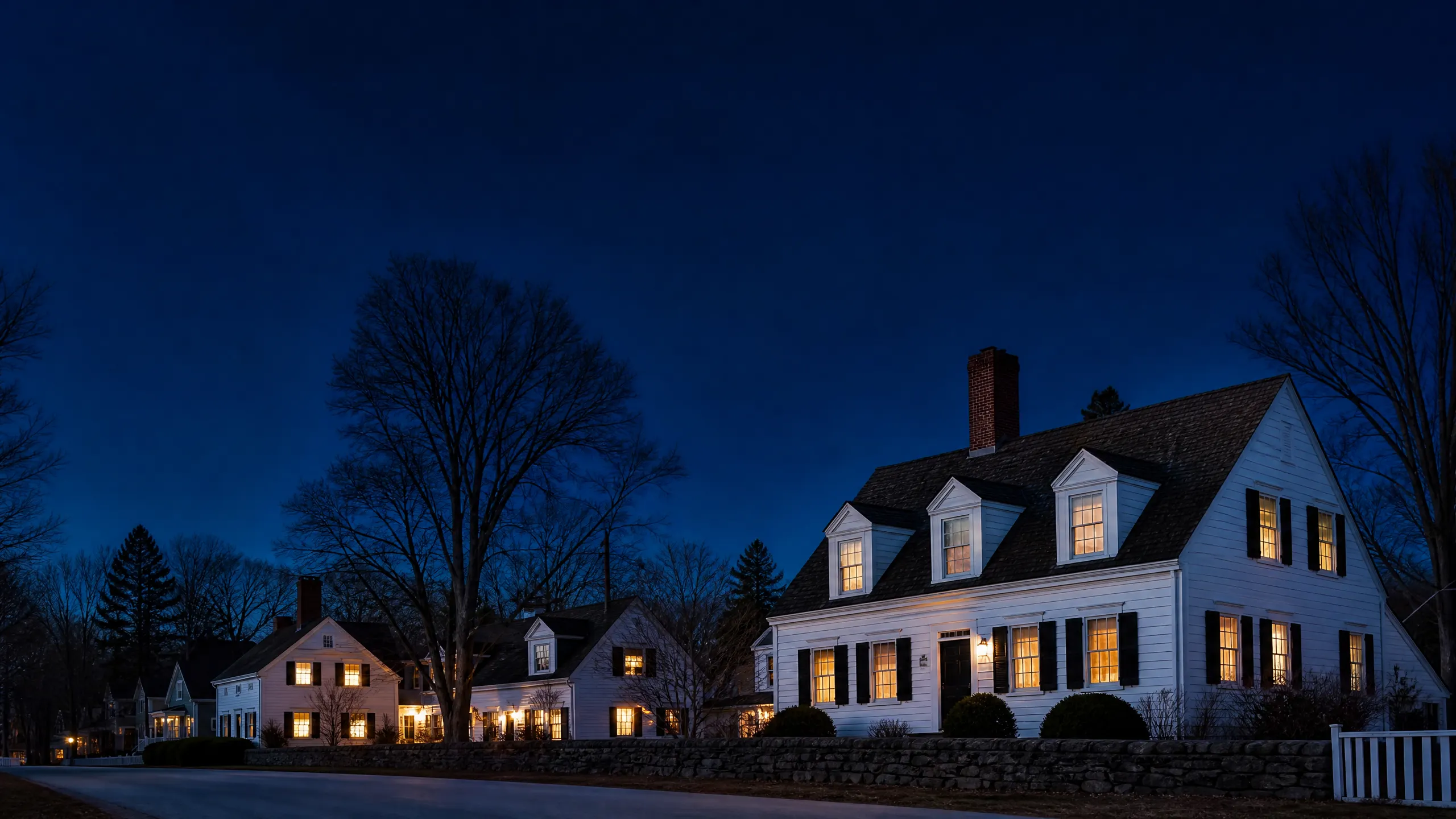
A row of illuminated white colonial houses photographed at twilight along a tree-lined road with a stone wall in the foreground.

Furnace Installation in Kingston, NY

Tell us about the job

Takes about a minute. No obligation.

New system or replacementFurnace or heatingUlster County, NY
Step 1 of 2

What ZIP code is the job in?

Ulster County gets hit often

Ulster County recorded 440 severe weather events between 2015 and 2024, including 372 cases of damaging wind, 33 winter storms, 28 hail events and 3 tornadoes. That's a steady run of weather that can knock out power or damage equipment sitting outside.
Power doesn't always hold

Statewide, 11% of New York households lost power for 24 hours or more in 2024. A furnace needs electricity to run even when the fuel is oil, so an outage can mean no heat and no hot water until the power comes back.

8 months
October through May, your furnace is on duty
18°F
the average winter night it heats against
80% AFUE
the federal minimum any new unit must meet
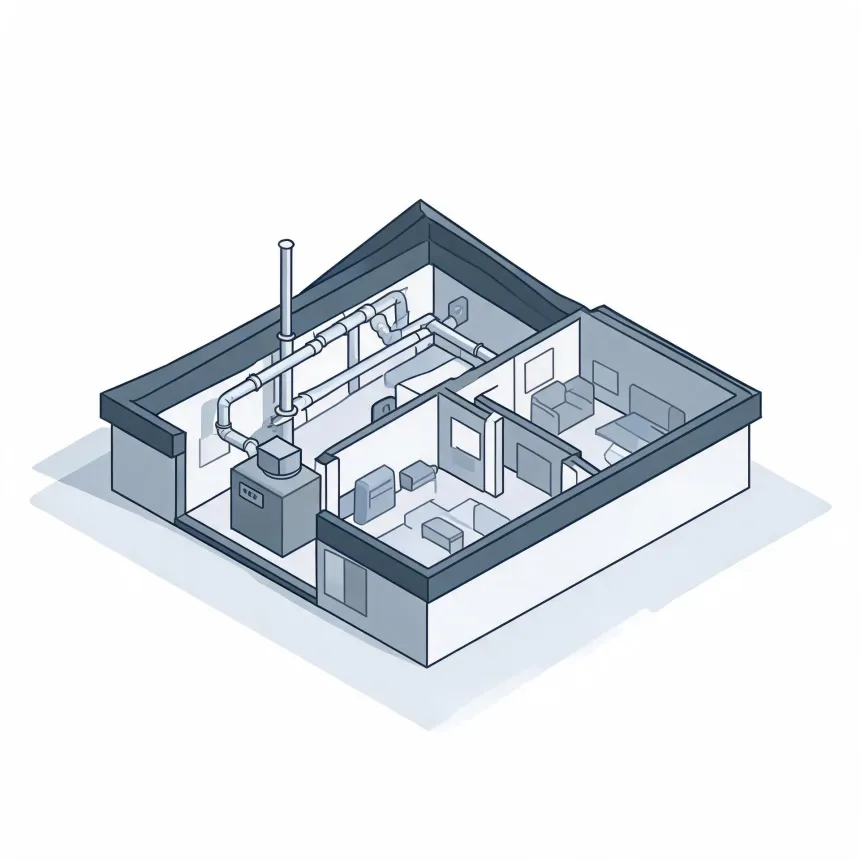
Isometric line illustration of a cutaway building interior showing a furnace unit with a flue pipe and ductwork running along the ceiling, plus adjacent rooms with simplified furniture.
Your furnace works hardest from November through March.

NOAA nClimDiv, 1991–2020 normals

Oil runs the furnace, but New York prices that oil at $23.11 per million Btu.

A furnace that wastes less of that oil costs less to run all winter.

Most homes near Kingston already heat with oil, and that's the simplest system to replace

42.9% of homes heat with fuel oil
Heat runs October through May
Winter nights average 18°F
Built for an Older HouseHalf the homes in Ulster County went up in 1966 or earlier, and a new furnace has to work with the house that's already there.

Furnaces here start working in October and keep going through May. That's the stretch when a breakdown costs you the most, because it happens on the coldest nights with the fewest options. Installing before October means the job happens when you pick the date, not when the old one quits in January with a storm coming. Overnight lows around Kingston average 18°F through December, January and February, and that's not a week to be without heat while you wait for a crew to find time. September is the month to call, while the old furnace is still running and nobody's rushing.

Plan this furnace around the outages, not just the cold

When the power goes out, a furnace stops running no matter what fuel heats it. Ulster County sees enough storms and downed lines that this is worth planning for before the install, not after. Ask about where the new unit goes, what protects it, and whether a backup power option makes sense for your house.

Find a contractor
A man in a dark t-shirt and tan work pants, seen from behind, carries a worn canvas and leather tool bag up concrete steps toward a dark gray front door, with a potted flowering plant to the right.
A gray residential gas furnace installed in an unfinished basement, connected to sheet-metal ductwork and PVC pipes.

Eight Months a Year, Plus the Storms in Between

Eight months a year, this furnace runs. October through May, it cycles on and off most days and most nights, not just the cold snaps. That's a long season for any machine, and it means more starts for the igniter, more hours for the blower motor, more cycles for the heat exchanger before the weather eases up. On top of that stretch, Ulster County saw 33 winter storms between 2015 and 2024. Heavy snow and ice put more demand on a furnace right when it can least afford to struggle, and a unit sized and installed right is what holds up through both the long season and the storms inside it.

Ask what happens if the power cuts out

A furnace needs electricity for the control board, the igniter and the blower, even when oil is what actually burns. Some installers can wire in a transfer switch or talk through a generator connection as part of the job. If backup power matters to you, that's a question for the install, not something to bolt on after the fact.

Ask how the new furnace is sized for your house

A furnace that's too big cycles on and off fast and never settles into a steady, efficient run. One that's too small can't keep up on the coldest nights and runs flat out trying. Sizing comes from a load calculation on the house itself, not just a swap for whatever was there before. Ask whether that calculation gets done before the quote, not after the unit's already picked.

A load calculation looks at the walls, the windows, the ceiling height and how much air leaks out, then works out how much heat the house actually loses on a cold night. That number tells you the size furnace to install, not the size of the one that's already there. A bigger furnace isn't a safer bet. Oversized, it blasts the house up to temperature and shuts off before it's pulled the damp chill out of the rooms, so the air feels warm but not even, and the furnace is cycling on and off all day instead of running a long, steady stretch. Undersized, it never shuts off on the coldest nights and still can't hold the temperature you set. Either way the heat exchanger and the blower motor are working harder than they should, for a worse result. The right size comes from the math on the house, not from matching the old unit.

Ulster County falls under zone 6A, the cold end of the state's energy code, and any furnace going in has to be rated for that. Furnaces built from November 2015 on already have to turn at least 80 percent of their fuel into heat over a winter. That's the federal floor, not a feature to ask for. Starting in December 2028, new units have to hit 95 percent, so what's sitting on a dealer's floor will shift in the next few years. A furnace installed today still has to meet whatever rule was in place when it was built, not the one coming later.