Oil costs more here than other fuels
Fuel oil ran $23.11 per million Btu in New York in 2024. A furnace that wastes heat up the flue burns through more oil to make up for it, and that difference shows up on every delivery.
Takes about a minute. No obligation.
Fuel oil ran $23.11 per million Btu in New York in 2024. A furnace that wastes heat up the flue burns through more oil to make up for it, and that difference shows up on every delivery.
When you're comparing furnaces for Hudson, the efficiency rating matters more here than in a place with cheaper fuel. A higher-efficiency model costs more going in, but with oil priced the way it is, how well the furnace converts fuel to heat affects every bill after that.
NOAA nClimDiv, 1991–2020 normals
Fuel oil or kerosene heats 45.2% of homes in Columbia County, more than any other fuel.
If your old furnace burned oil, an oil furnace is the straightforward replacement.




Ask about the AFUE rating before you settle on a model. It tells you how much of the oil you buy actually turns into heat in your house, and how much goes up the flue. At New York's oil prices, a few points of efficiency make a real difference over a winter of deliveries. A contractor sizing a furnace for your house can tell you what rating makes sense against what you're paying to install it. Worth asking them to walk through the numbers for a couple of models before you decide.
Power costs more here, so an efficient system pays you back on every bill.
Find a contractor
Half the homes in Columbia County were built in 1966 or earlier. A furnace going into one of those houses has to match ductwork and venting that were laid out for whatever system came before it, which may or may not look like what's being installed now. That's not something to guess at from the house's age alone. It's a reason to have the new furnace sized to the house it's actually going into, not just to the one being replaced.
A furnace sized too large heats the house fast, shuts off, then starts again soon after. That cycling wears on the ignition system and leaves rooms farther from the furnace never quite catching up to the thermostat setting. A furnace sized too small runs long stretches without shutting off and still struggles on the coldest days. The right size runs long steady cycles that bring the whole house up evenly.
Sizing a furnace means working out how fast the house loses heat, called a heat loss calculation. It accounts for square footage, ceiling height, window area, insulation and how much outside wall the house has. Houses the same size can need different furnaces if one has more windows or less insulation than the other. A contractor doing this right measures the house rather than matching the nameplate on the furnace coming out.
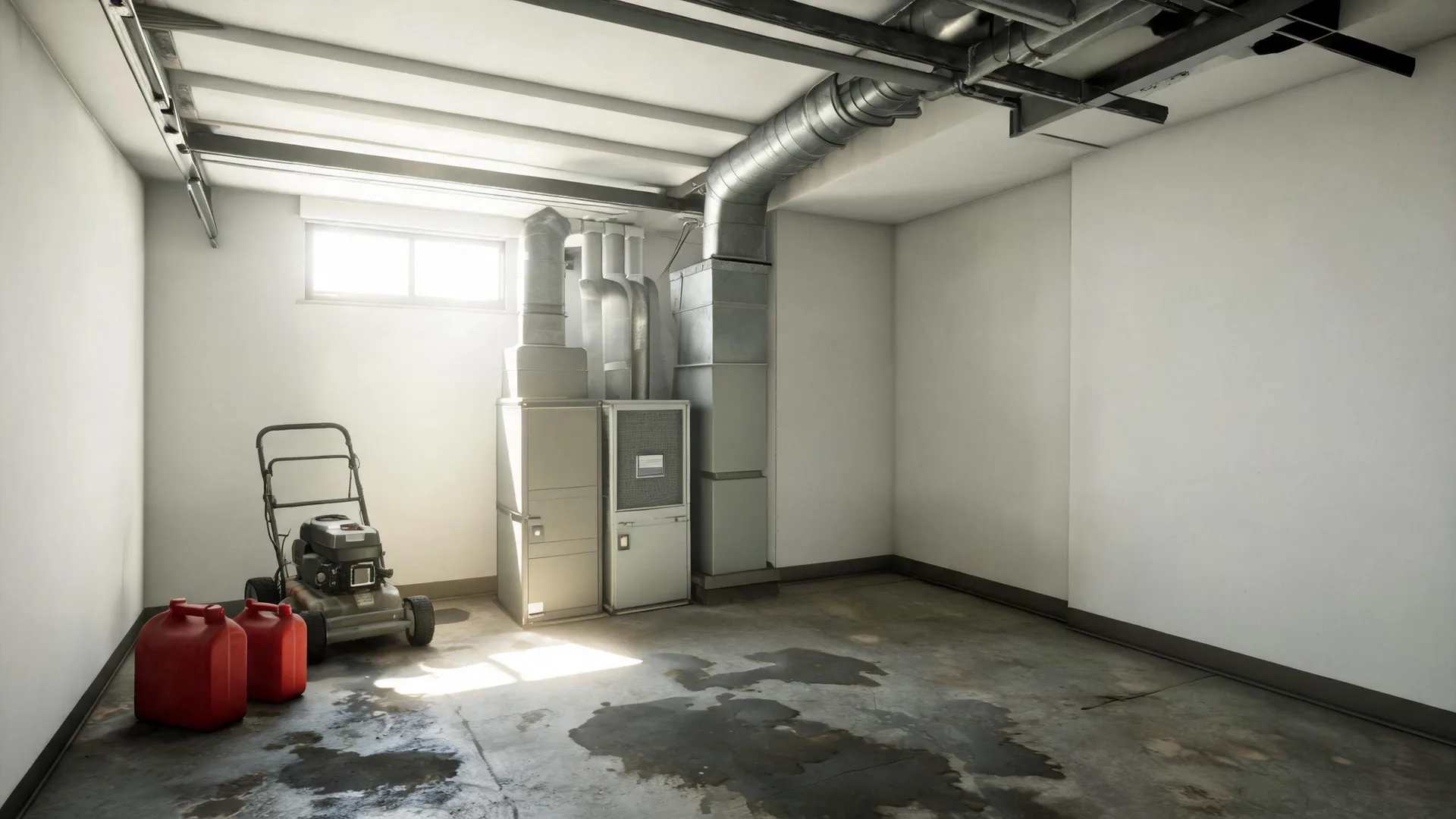
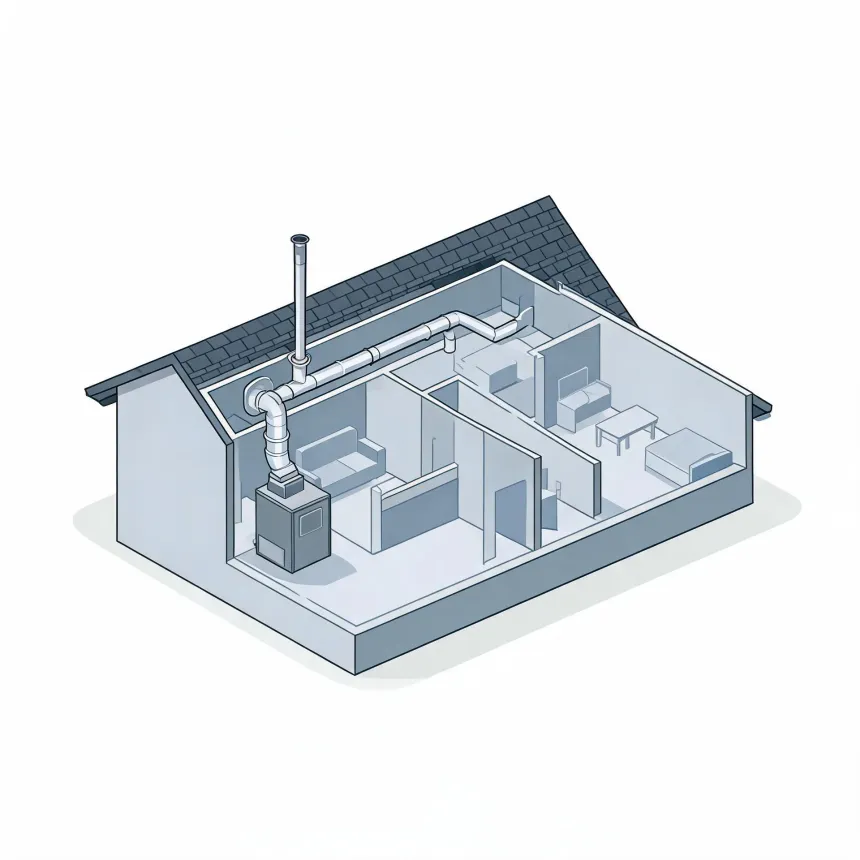
The old furnace doesn't just get hauled away and forgotten. A contractor disconnects it from the gas or oil line, the power, and the vent or chimney connection, and that last part matters. If the old furnace was venting into a chimney shared with a water heater, pulling it out can change the draft for whatever's left running on that chimney, so that gets checked rather than left alone. The heat exchanger and cabinet get broken down and hauled off as scrap metal, which is most of what a furnace is made of. If the old unit burned oil, there may be a tank to deal with too, whether it stays, gets cleaned out, or gets removed depends on whether the new furnace still burns oil or not. None of this is the hard part of the job, but skipping it is how you end up with a venting problem nobody notices until the weather turns cold.
Installation day starts before anyone touches the old furnace. A contractor cuts power and fuel to the unit, then clears the area around it so there's room to work. The old furnace comes out first, in pieces if it has to, through whatever door or window it'll fit through. Setting the new one in place is the easy part. Most of the day goes to connecting it right. Fuel line, venting, ductwork, thermostat wiring, each checked as it's hooked up rather than left for the end. A gas furnace gets checked for leaks at every joint. An oil furnace gets its burner adjusted and the draft tested once it's hooked to the chimney or vent. Either way, nobody should leave until the furnace has run long enough to prove it heats evenly and shuts off the way it's supposed to.