





A weathered wooden picket fence runs diagonally across a mown grass lawn, with a row of two-story light-sided houses and large leafy trees behind it.

Furnace Installation in Glens Falls, NY

Tell us about the job

Takes about a minute. No obligation.

New system or replacementFurnace or heatingWarren County, NY
Step 1 of 2

What ZIP code is the job in?

Gas cost New York homes $16.03 per million Btu in 2024, among the higher rates in the country. A furnace that runs all winter on that gas adds up fast, and the difference between one that burns efficiently and one that doesn't shows up on every bill. The AFUE rating on a new furnace tells you how much of that gas turns into heat in your house instead of going out the flue. In a place where gas already costs more than it does for most of the country, that rating matters more here than it would somewhere mild.

9 months
September through May, your furnace is on duty
12°F
the average winter night it heats against
80% AFUE
the federal minimum any new unit must meet
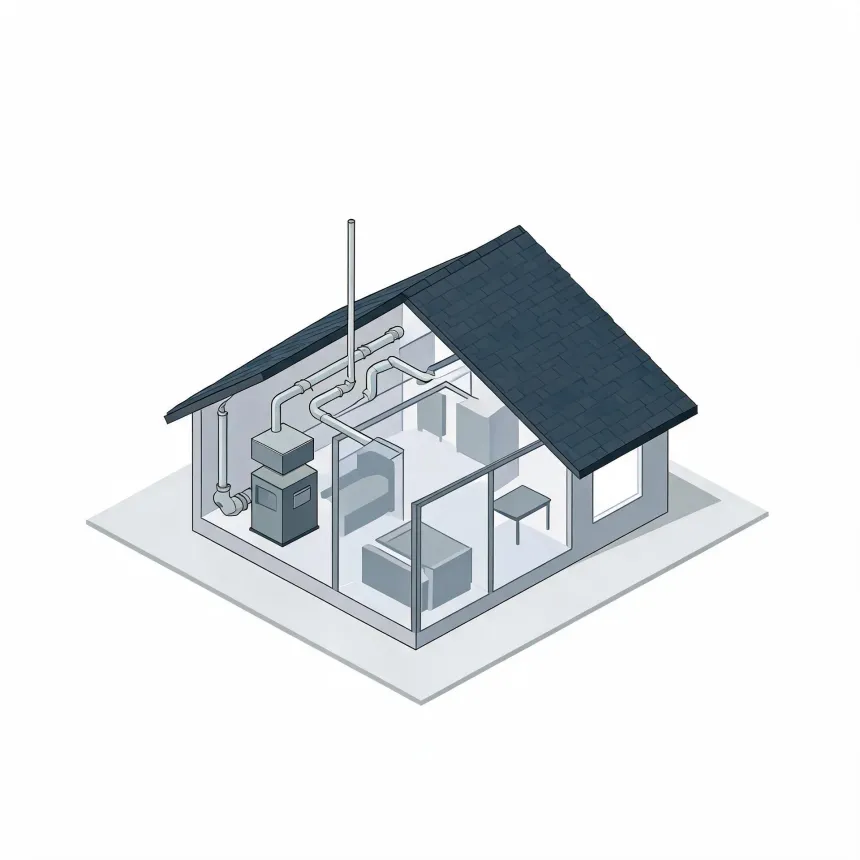
Isometric cutaway illustration of a small house with a dark shingled roof, showing an interior furnace unit, ductwork, and a flue pipe extending through the roof.
Your furnace works hardest from November through March.

NOAA nClimDiv, 1991–2020 normals

Gas heats more homes in Warren County than any other fuel, close to half of them.

A gas furnace is the straightforward swap for most homes in Glens Falls, since the gas line and venting are usually already there.

Warren County sees its share of storms, and furnaces need power to run

265 severe weather events from 2015 to 2024
11% of homes statewide lost power a day or more in 2024
192 damaging wind events from 2015 to 2024
Half These Homes Are Older HousesHalf the homes in Warren County were built in 1973 or earlier.

Warren County falls under zone 6A, a cold climate with a long heating season, and that puts a floor under what can go into a new install. Any furnace built from November 2015 on has to turn at least 80 percent of its gas into heat over a season, and that's the baseline here same as anywhere else. What changes in 2028 is the floor itself: furnaces built from December 18 of that year on have to hit 95 percent. If your installation falls near that date, ask which standard the unit you're looking at was built under. A federal tax credit is available for qualifying high-efficiency furnaces, worth checking against whatever model you're considering.

The AFUE Rating Is Worth Asking About Before You Buy

Ask what AFUE rating the furnace you're looking at carries, and compare it against what you're paying for gas now. The higher that number, the less of your gas goes out the flue instead of into the house.

Find a contractor
A man in a dark shirt and khaki pants, seen from behind, carries a worn leather bag as he climbs wooden porch steps toward a dark front door, with a potted shrub beside the entry.
A gray residential gas furnace installed in an unfinished basement, surrounded by ductwork, a metal flue pipe, and a gas supply line.

Nine Months of Work Starts in September

Furnaces in Warren County start running in September and keep going through May. That's nine months of the year this machine is on. Get it installed in August, before the first cold night hits, and you pick the date. Wait until the house is cold and you're taking whatever appointment is open, with a dead furnace in the meantime.

What AFUE Actually Measures

AFUE tells you how much of the gas a furnace burns turns into heat in the house over a full season, not just at full blast. A furnace doesn't hit its rated number every minute it runs. The rating accounts for gas lost warming the flue, lost to cycling on and off, and lost to the burner lighting up from cold each time. It's a season average, and it's tested the same way for every furnace, so you can set two models side by side and compare them directly.

Why the Rating Outlasts the Sticker Price

Two furnaces can cost about the same to install and still run very differently once they're in. The cheaper unit up front is often the lower rated one, burning more gas for the same heat in the house. That difference shows up on every bill for as long as the furnace sits in the basement, not just the first one. A furnace isn't something most homeowners replace often, so the rating on the label is something you're living with for a long time after the installer leaves.

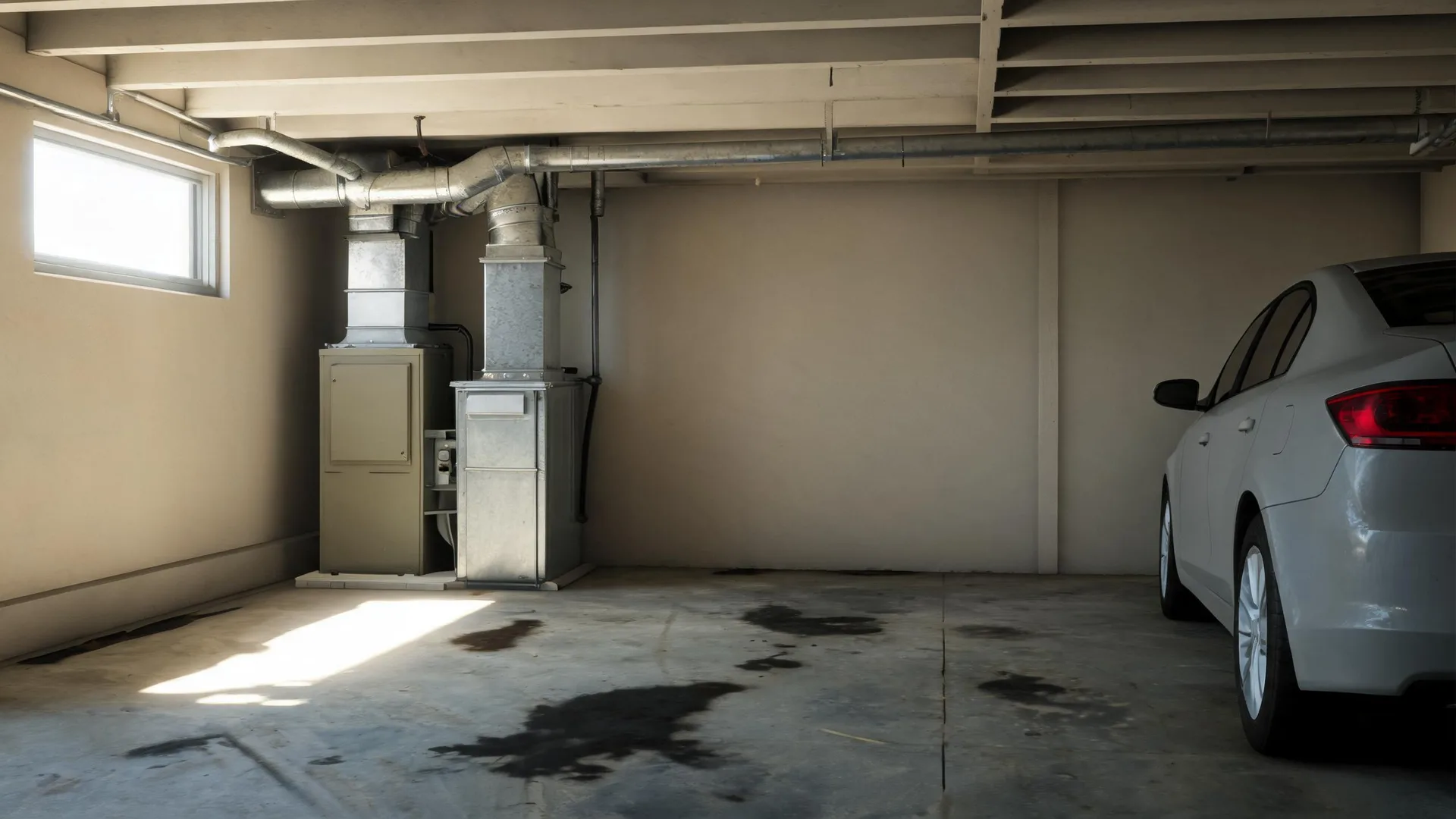
An unfinished basement featuring exposed ceiling joists, a metal HVAC unit with round ductwork, a hanging light bulb, and scattered boxes and debris along the left wall.

A high-efficiency gas furnace would save about $170 a year to run in Warren County compared with a gas furnace.

  • A high-efficiency gas furnace$840 a year
  • A gas furnace$1,010 a year

Estimates for a typical Warren County home, from EIA household energy data, New York fuel prices and NOAA climate normals. Your home will differ.

The installer starts by pulling the old furnace, disconnecting the gas line, the venting and the ductwork before anything new goes in. With that out, they check the plenum, the duct connections and the vent pipe to see what can be reused and what has to change for the new unit. Sizing comes next, matching the furnace output to the house rather than just swapping in the same number the old one had. Once the new furnace is set in place, the gas line gets connected and pressure tested before anything is lit. The vent gets tied in to match how that model exhausts, since a high-efficiency furnace vents differently than an older one and that pipe has to go in accordingly. Last comes startup: checking the gas pressure, the flame, the airflow across the heat exchanger, and the thermostat response before the installer walks away from it.