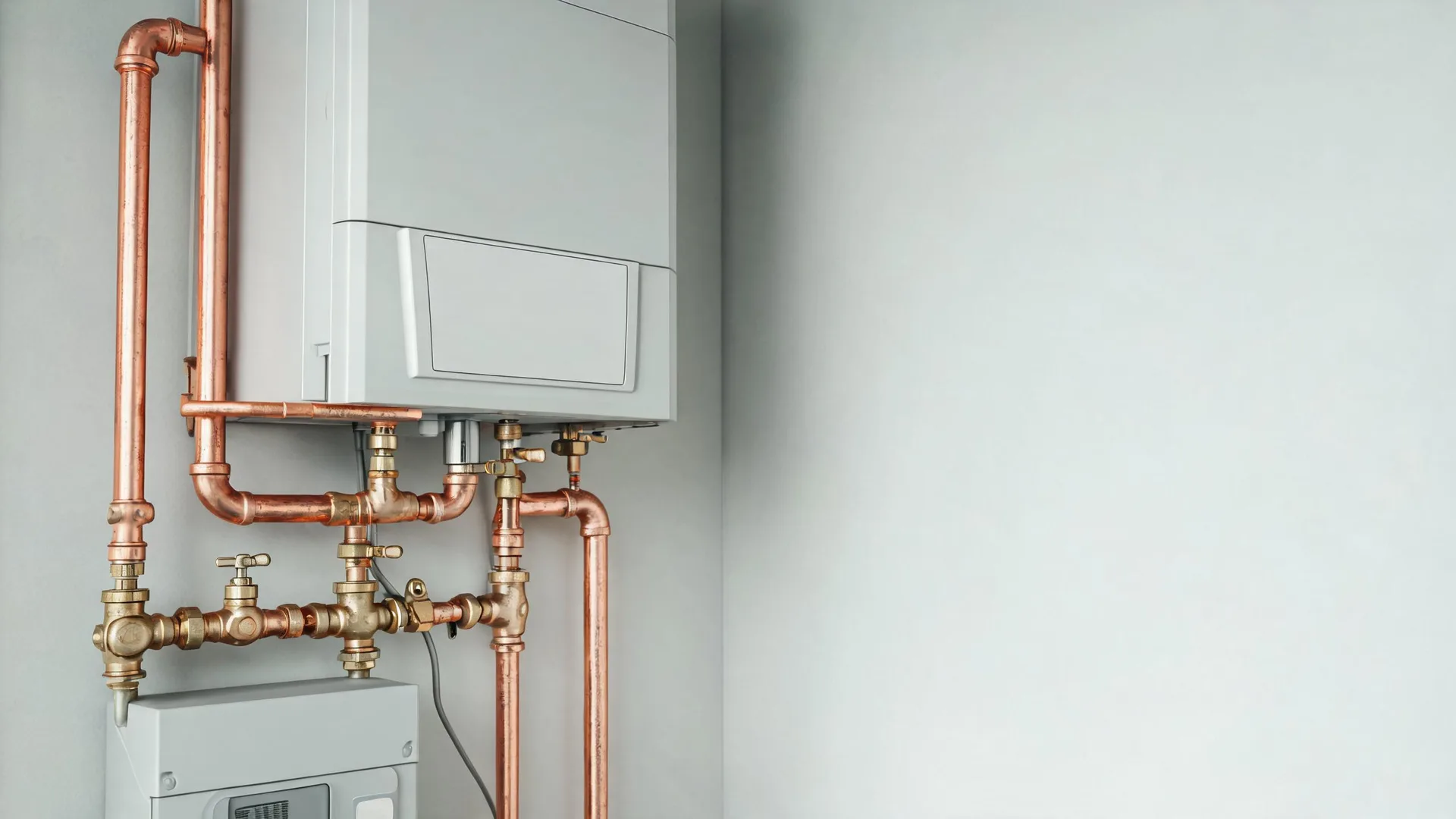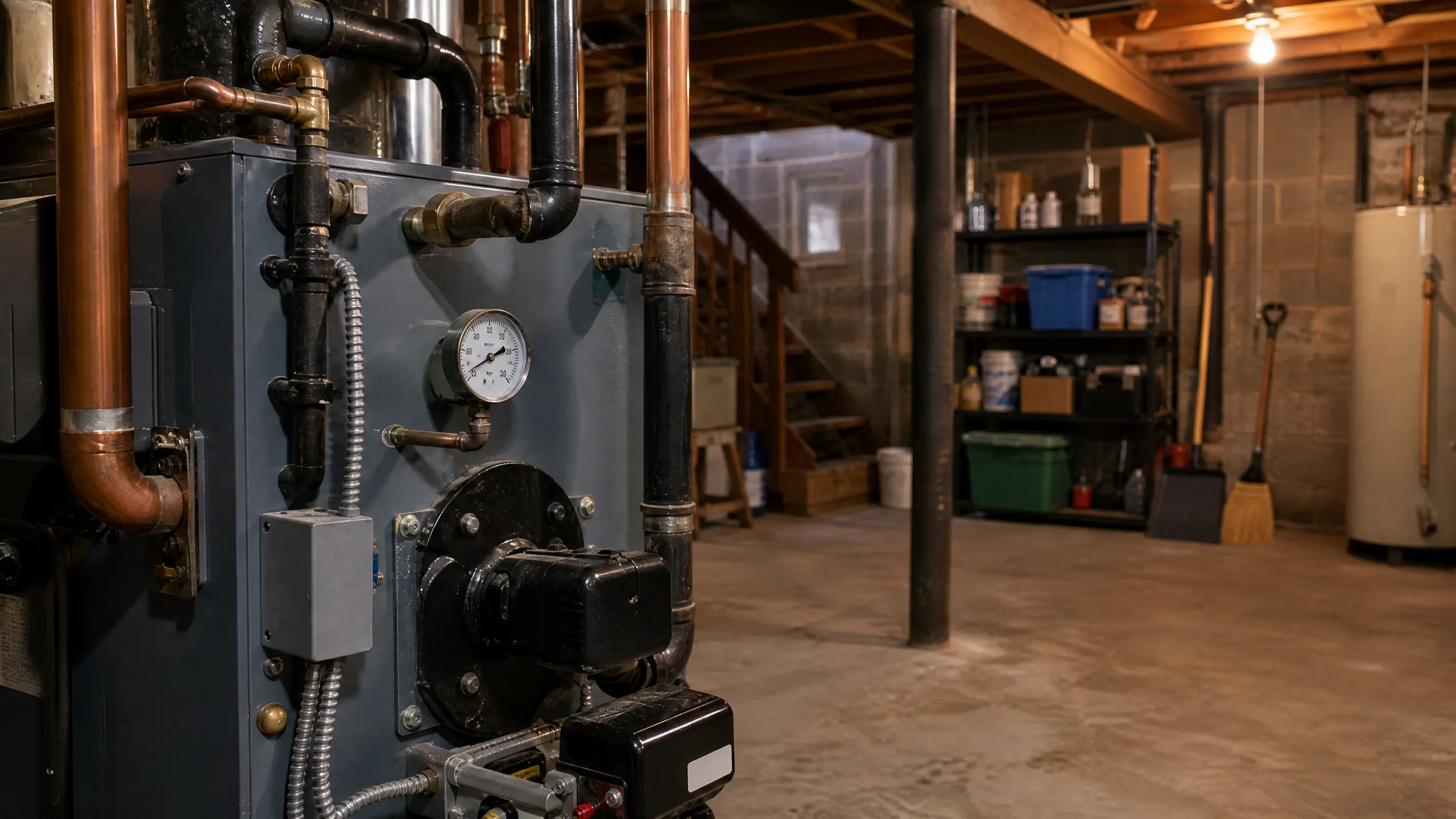
A basement mechanical room with a gray boiler connected to copper and iron pipes, a pressure gauge, and a water heater visible in the background.

Boiler Repair in Yonkers, NY

Tell us about the job

Takes about a minute. No obligation.

RepairBoilerWestchester County, NY
Step 1 of 2

What ZIP code is the job in?

September is the month to catch a weak boiler

Boilers in Yonkers start running in October and go through May. Whatever was marginal last spring, a worn igniter, a failing circulator, a pressure problem, sat quiet all summer. The first cold snap is what finds it.


A breakdown in October is a part that was already going

When a boiler quits in the first weeks of the season, it usually was not the cold that broke it. The load just hit a part that could not take it anymore. Fixing it right means finding that part, not just getting heat back on for the night.

Yonkers boilers run from October through May, close to eight months of the year.

A boiler with a worn part will show it early, long before the coldest nights in January and February.

A long winter here, nothing more

Heat runs October through May
Winter nights average 24°F
42 winter storms from 2015 to 2024

Half the homes in Yonkers were built in 1959 or earlier. A boiler in one of those houses may be the original, or it may be a replacement installed years ago, there's no way to know without checking. Either way, an older unit has had more years of cycling on and off to wear down an igniter or a circulator pump. That doesn't mean an old boiler is a bad boiler. It means that when something does go wrong, it's worth asking the contractor how much life is left in it before paying for a repair that only holds it together another year.

Westchester weather isn't why your boiler quit

Between 2015 and 2024, Westchester County saw 229 severe weather events, mostly wind and winter storms. None of that singles out a boiler. Wind and snow stress a roof and power lines before they touch a sealed heating system in the basement. If yours has stopped working, look at the part, not the weather. A contractor can tell you what failed and what it will take to fix it.

Find a contractor
A man in a cap, dark jacket and tan work pants carries a canvas tote bag as he steps up concrete stairs toward a blue front door, with a potted shrub beside him.

Most boiler failures are one of a handful of parts

An igniter or electrode wears out and stops lighting the burner. A circulator pump seizes and stops moving water through the system, so you get heat near the boiler and cold radiators everywhere else. A pressure or temperature relief valve fails and either drips constantly or trips the system off. A thermocouple or flame sensor goes bad and shuts the gas valve as a safety measure. Each of these fails on its own schedule, not because of anything happening outside.

Low pressure and bad water chemistry do slow damage

A boiler that keeps losing pressure has a leak somewhere in the system, even a small one, and it will keep tripping out until that leak is found. Sludge and mineral buildup inside the heat exchanger or near the circulator insulate the metal from the water, so the boiler works harder and runs hotter than it should to do the same job. Neither of these announces itself with a bang. They show up as a boiler that short cycles, runs longer than it used to, or needs its pressure topped off more often than it should.

A boiler that is losing pressure or struggling to light will keep trying anyway, because nothing in the control sequence knows to stop and protect itself. Each failed ignition attempt stresses the electrode a little more. Each cycle on low water volume runs the heat exchanger hotter than it was built for, and metal that overheats and cools over and over develops cracks sooner than metal that runs the way it should. A circulator pump that is starting to seize draws more current trying to turn, and that heat has nowhere to go but into the motor windings. None of this fixes itself by waiting. The part that is struggling is doing the same job over and over under worse conditions each time, and at some point it stops being a repair and starts being a replacement.

A contractor looking at a failed boiler is really asking one question. Is this part isolated, or is it a sign the rest of the unit is tired in the same way. A circulator pump or an igniter can usually be swapped on its own, and the boiler goes back to doing exactly what it did before. A cracked heat exchanger is different. That's the core of the machine, and once it's compromised the rest of the boiler, however sound, is attached to a part that can't be trusted. Age matters less than what's actually failed. An old boiler with a bad thermocouple is a cheap fix. A newer one with a cracked exchanger is not a repair at all, it's a boiler that needs replacing early. The honest version of this conversation is the contractor telling you which one you're looking at before any work starts, not after.