




Boiler losing pressure in Manhattan, NY

RepairBoilerNew York County, NY
Step 1 of 2

What ZIP code is the job in?

A boiler that keeps losing pressure usually has a leak somewhere in the system, even a small one. It can be a loose fitting, a failing valve, or a pinhole in a pipe, and sometimes the leak is small enough that you never see water on the floor. It can also be a sign the expansion tank has failed, which lets pressure drop without any water escaping at all. In a lot of Manhattan buildings the boiler sits in a basement mechanical room feeding risers that run up several floors, so a leak along any of those lines can show up as a slow pressure drop at the boiler itself. If you're refilling it more than once every few weeks, something needs to be found and fixed, because low pressure on a cold January day can mean no heat at all. A contractor who works on these systems can trace where the water is going and whether the tank is still doing its job.

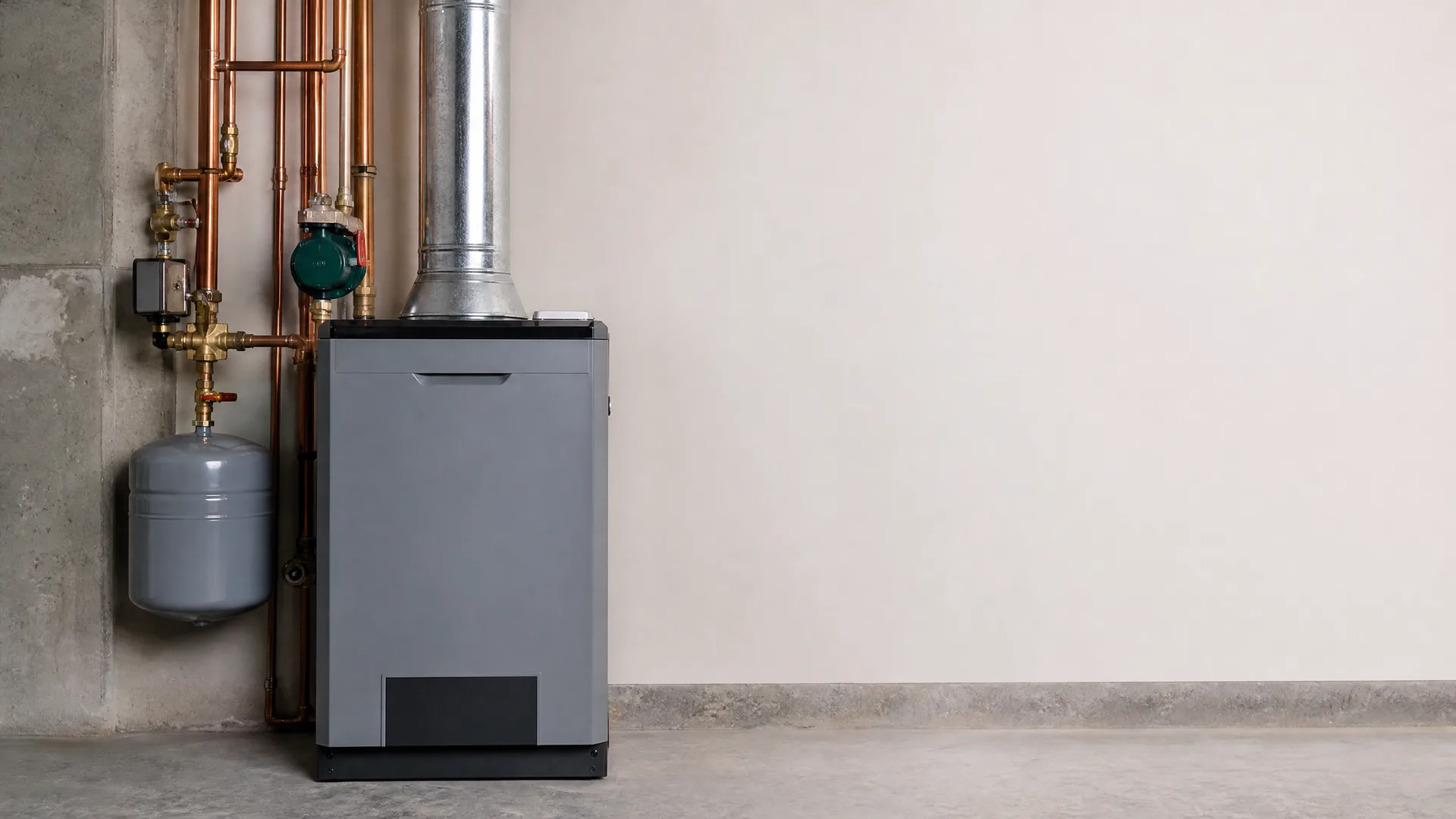
A gray floor-standing boiler with a metal flue pipe, copper piping, a circulator pump and a gray expansion tank, installed against a concrete wall.

Where the water actually goes

A boiler losing pressure has to be losing water somewhere, even if nothing is pooling on your floor. It can escape through a pinhole in a pipe behind a wall, weep slowly from a valve, or leave through the pressure relief valve a little at a time when the system overfills. That valve is built to open under too much pressure, and once it opens, it doesn't always seal perfectly again.

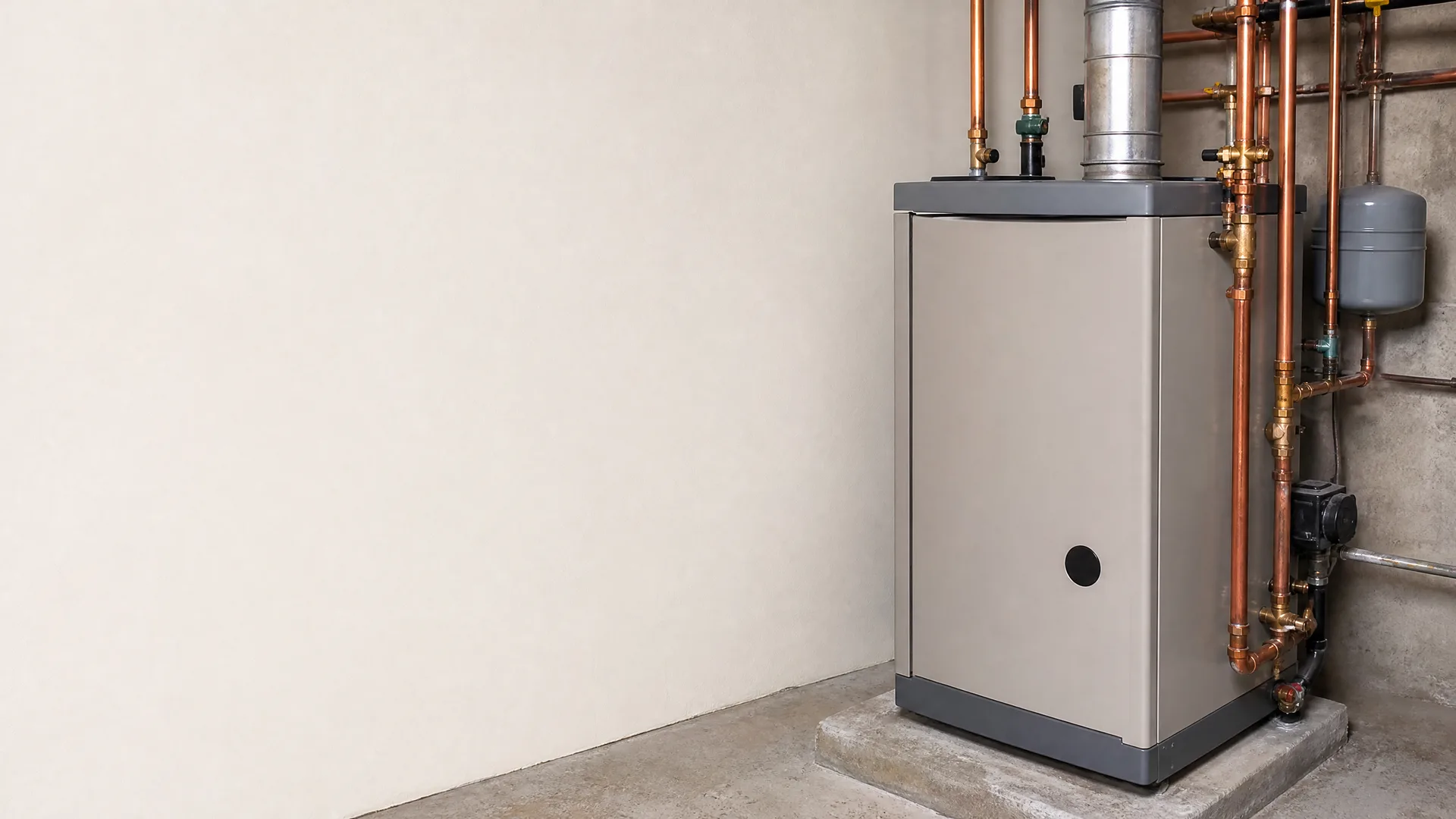
A tall grey floor-standing boiler on a concrete plinth in a corner of a room, with copper pipework, a flue, a circulator pump and an expansion vessel to its right, beside a plain cream wall.

Why the gauge matters here

Most residential boilers want to sit between 12 and 15 psi when cold. Below that, water can't reach the top floors of a building the way steam or hot water needs to, and in a city full of multi-story walk-ups and brownstones, a system running low on pressure is one that struggles to heat the upper rooms first. Catching the drop before a winter cold snap matters more here than the exact number ever will.

Why does my boiler keep dropping below one bar?

You top it off, it holds for a few days, then the gauge drifts back down again. You might hear a gurgle in the pipes or notice a radiator that stays cool at the bottom while the top heats up fine. Sometimes there's a damp patch near a valve or a fitting, or a faint mineral smell where water has dried on metal. None of that fixes itself. Run the system long enough below pressure and the boiler will start locking out or shutting down mid-cycle, which on a cold night in Manhattan means no heat until someone resets it or finds the leak.

A woman in a cream turtleneck sweater stands beside a multi-pane window looking out at falling snow, with a dimly lit living room containing a lamp, sofa and shelves behind her.
A woman in a beige turtleneck sweater stands by a large window with snow-covered trees outside, in a living room with a lit lamp, sofa with cushions, and a wood stove with visible flames.
A woman with long dark hair in a beige knit turtleneck sweater stands beside a window with snow outside, looking off to the side, with a warmly lit living room containing a sofa, lamps and a coffee table behind her.
A woman with shoulder-length brown hair in a beige knit sweater stands near a window looking outside at falling snow and snow-covered evergreens, with a dimly lit living room, sofa, lamp, bookshelf and framed landscape painting behind her.

Get your boiler to the right pro

A boiler that won't hold pressure doesn't fix itself, and in a Manhattan building, a pipe run behind a wall or under a floor isn't something to chase on your own. Finding a slow leak means pressure testing the system, checking the expansion tank, and looking at every joint and valve until the water's path turns up. That takes someone who does this work in buildings like yours all winter and knows where these systems tend to fail first. The contractor who takes your request is licensed to work in New York County and local to Manhattan, and your information goes to that one contractor, not a handful of companies competing for the job. Losing pressure now, with cold months ahead, is worth getting in front of before a radiator stops heating or the boiler locks out altogether.

Topping it off yourself

Adding water through the filling loop brings the gauge back to where it should sit, and for a slow leak that only loses a little over a week or two, this can hold you for a while. You still need to know where that loop is and how far to open it, since too much too fast brings the pressure up past the safe range. It also does nothing about the leak itself. Each time you top it off you're adding fresh water with fresh oxygen in it, and over months that can work on the inside of the pipes and the radiators in ways you won't see until something fails.


Having the leak found

A contractor can pressure test the system, check the expansion tank, and trace the loss to the actual fitting, valve, or pipe run that's letting water out, including the ones hidden behind a wall or under a floor in a Manhattan apartment. That stops the pattern of refilling instead of just managing it. It takes a visit and the work of tracking down the source, which is more upfront effort than turning a valve. For a leak that's gotten slowly worse, or one near wiring or a neighbor's ceiling below, finding it before it grows is the difference between a repair and a bigger problem.

Winter nights average 28°F

With nights averaging 28°F here from December through February, your boiler is running long hours to keep up. A system already losing pressure has less margin on a cold night like that, and can drop below the minimum before you notice.

NOAA nClimDiv 1991-2020

Why your boiler loses pressure

  • Pressure that keeps dropping points to water leaving the system somewhere, not to the gauge itself being wrong.
  • Topping off the loop buys time on a slow leak, but the leak keeps going until someone finds and seals it.
  • A pressure test and a look at the expansion tank will usually show whether the loss is a leak, a valve, or something else.
  • A contractor who services boilers around Manhattan buildings all winter has seen where these leaks usually turn up, from a pipe behind a wall to a worn valve.
  • You get matched with one licensed local contractor for this, so you're dealing with a single call back, not a string of them.
  • Catching a slow leak now keeps a cold night in the 20s from being the night your boiler can't hold pressure at all.

A boiler that won't hold pressure is telling you water is leaving the system somewhere. The gauge itself is rarely the problem. Topping off the loop gets you through another week, but a slow leak doesn't stop on its own, and it tends to show up again at the worst time, like a cold night when the boiler needs every bit of pressure it has to keep running. A pressure test paired with a check of the expansion tank usually narrows it down. Sometimes it's a leak in a pipe run behind a wall. Sometimes it's a valve that's worn past holding. Either way, finding it takes someone who knows where to look, not more guessing and refilling.

This is where a contractor who works on boilers in Manhattan buildings through the winter has an edge. They've already seen where these leaks tend to start, which fittings give out first, which valves wear down, which pipe runs are prone to pinholes in buildings like yours. That's not a guess. It's what repeat work on the same kind of systems teaches someone over a season of cold nights.

When you request service here, you're matched with one licensed local contractor, not several. That means one call back about your boiler, from someone set up to handle what you've described, instead of fielding offers from companies that don't know your address. Catching the leak now is what keeps a 28°F night in January from being the night the pressure drops too far and the boiler won't fire at all.

A sunlit room corner with cream walls, white baseboard and window sill molding, a wood floor, and a dark wooden cabinet on the right holding a pale vase with leafy branches below a framed picture.
A round woven basket with a cream fringed throw draped over its rim sits in a corner on a wood floor, beside a dark wooden cabinet holding a stone vessel, with sunlight from a nearby window on the beige walls.
Interior corner of a room with a white-trimmed window and sill, beige walls, white baseboard molding, and a wood floor with sunlight falling across it; green foliage is blurred outside the window.
Interior corner of a room with cream walls, white baseboard molding, a window with a white sill showing blurred green foliage outside, and a wood plank floor lit by sunlight.
Sunlit interior corner showing a beige wall with a small crack above white baseboard molding, wood plank flooring, a patterned rug edge at lower left, and a window with sill at upper left.

Find a boiler repair pro in New York County

The pro who reaches out is licensed in New York.

Find a licensed pro

Sending the form costs nothing.