
Running quiet
This is what a boiler sounds like when the water drains back the way it's supposed to. Pipes pitched correctly, valves seated right, no low spots for water to pool in. Steam moves through clean and the system cycles without a sound.

That banging is usually steam or water hitting something it shouldn't. In a steam boiler, water collects in a low spot in the pipes instead of draining back, and when steam rushes through it slams into that trapped water. That's the bang. It often points to a pipe that's lost its pitch, or a boiler that's low on water, or sediment built up in the bottom of the tank. In a hot water boiler, the same kind of noise can come from a kettling effect, where scale on the heat exchanger traps steam bubbles that collapse with a knock. None of this is something to live with through a Manhattan winter. A boiler that's banging is working harder than it should, and the parts taking that hit, the pipes, the joints, the heat exchanger, wear faster for it. Left alone, a knock can turn into a leak or a no-heat call on the coldest night of the year.




A pipe pitched the wrong way, or one that's sagged over time, holds water in a low spot. Steam moving at full pressure has nowhere to go but through it.
That's the hit you hear. A boiler cycling on and off all winter puts that pipe through the same collision hundreds of times before spring.


This is what a boiler sounds like when the water drains back the way it's supposed to. Pipes pitched correctly, valves seated right, no low spots for water to pool in. Steam moves through clean and the system cycles without a sound.

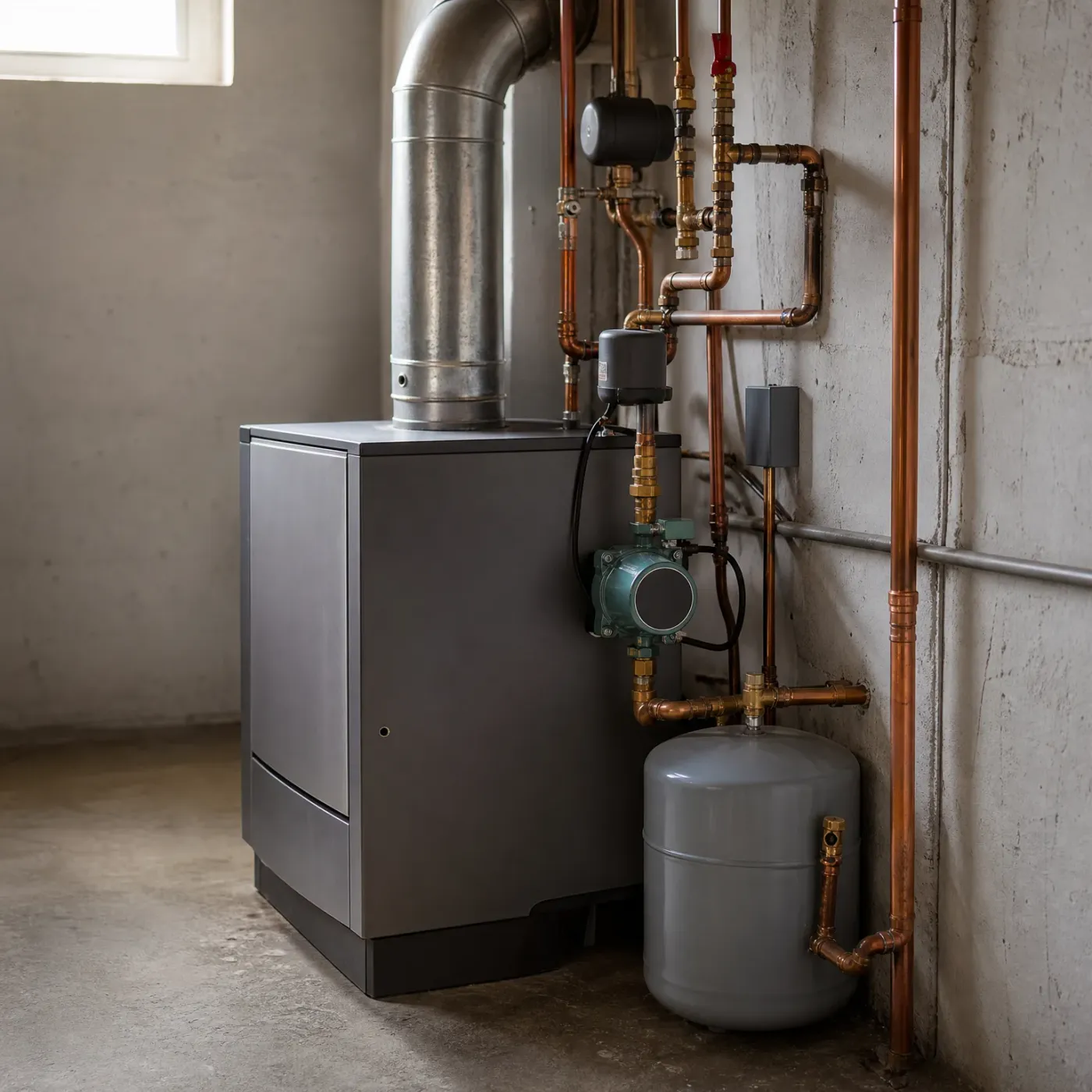
This is the setup behind most of the noise calls. Copper lines rising straight to the ceiling with no slope to speak of, an aging burner working harder than it should. A pipe like this holds water in a low spot, and steam hits it every time the boiler fires.
You've noticed it's not every night. Some nights the boiler just ticks over quietly, and other nights it sounds like someone's hitting the pipes with a hammer. That difference feels random, but it isn't. It usually comes down to how much water is sitting where it shouldn't be, and how hard the boiler is working to push steam past it.
On a colder night, the boiler fires longer and more often to keep up, so steam moves through the pipes at higher pressure and more frequently. If there's water sitting in a low spot, that steam hits it harder and more often, so the banging gets louder and more frequent too. A mild night asks less of the boiler, so steam moves slower and the same trapped water barely gets disturbed. The amount of water pooled there can also change night to night, depending on how the system cycled before it. Winters in Manhattan swing cold enough, often enough, that this kind of noise tends to show up well before the season's over.
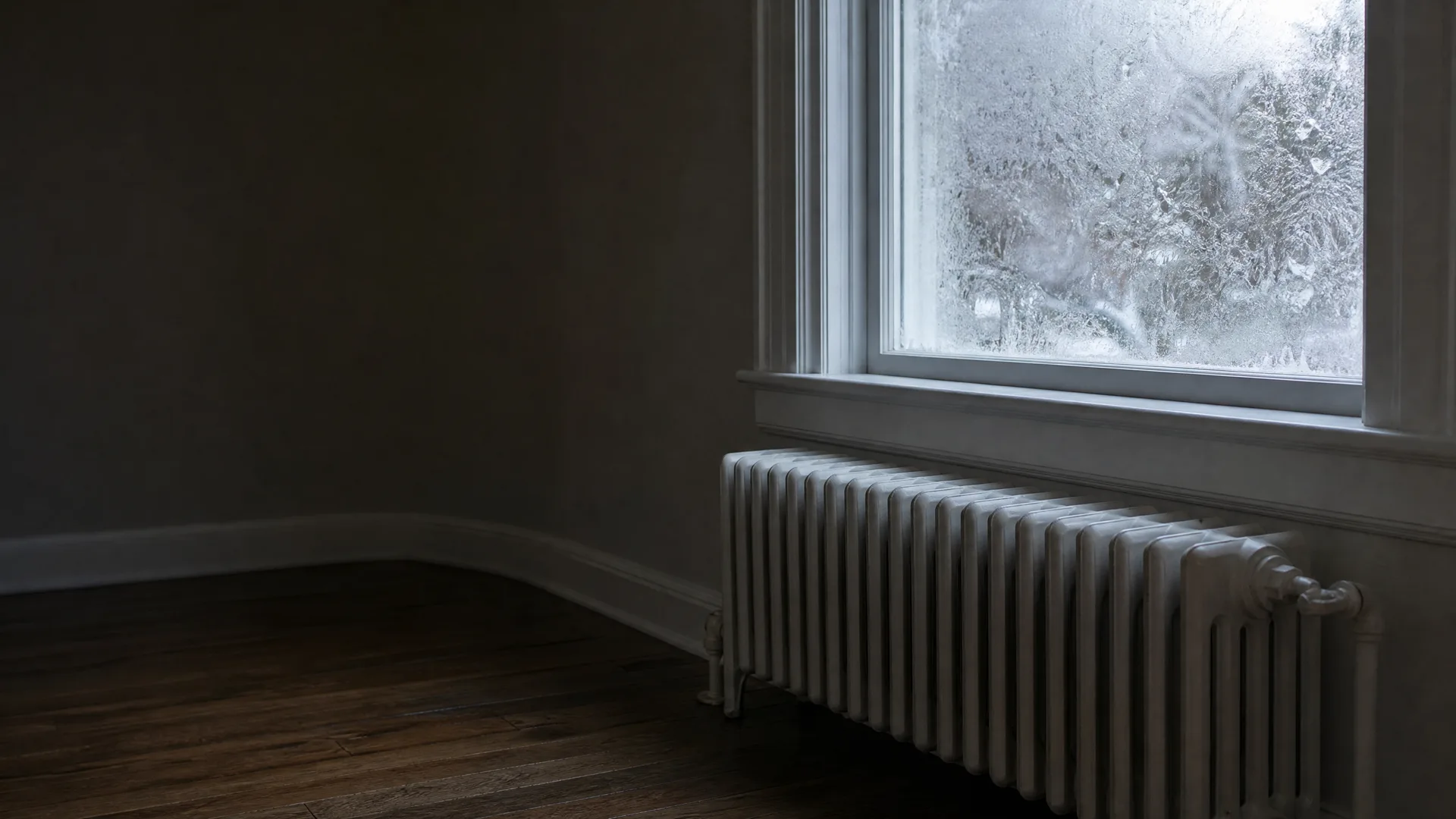
You wake up around six because the radiator under the window just slammed, hard enough that you felt it more than heard it. The glass has ice crusted on the inside, the kind that only forms when it's been well below freezing outside for hours. The room is cold except right at the radiator, where the cast iron is ticking and knocking every minute or so as more steam pushes through. You sit on the edge of the bed and listen to it happen again, waiting to see if it's going to keep you up or quiet down once the place heats through. It doesn't quiet down.
At 28°F overnight, your boiler is cycling on most of the night just to hold the room temperature. That's a lot of steam pushing through the pipes, hour after hour, and every cycle is another chance for it to hit that trapped water and bang.
NOAA nClimDiv 1991-2020


A banging boiler in a Manhattan apartment or brownstone is also a banging boiler for everyone it shares walls with. In a building that heats with gas, that noise usually means a pipe is holding water it should be draining, and the longer it runs that way, the more it wears on the fittings and joints. Waiting it out through a cold snap just means more cycles, more bangs, more chances for something to actually fail. A local contractor who works on steam systems in buildings like yours all winter has heard this exact problem plenty of times, and knows where to check first: the pitch of the pipe, the low spots, the valves. Getting one contractor who knows this equipment looking at it now, before the next deep freeze, is a lot better than waiting until a pipe gives out and you're without heat.
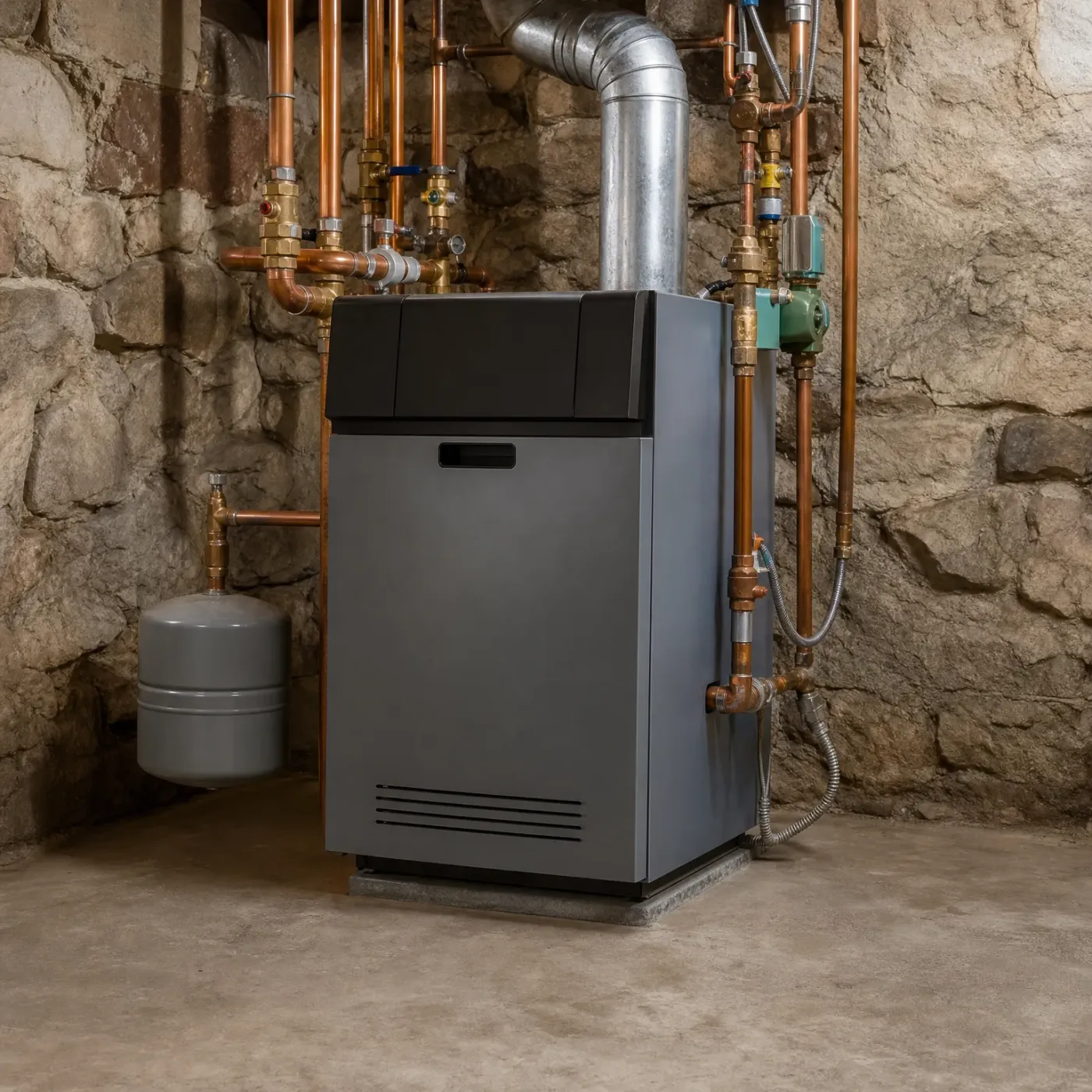
Water drains back the way it's supposed to, with no low spot for it to sit in. Steam moves through clean, the circulation pump keeps pressure even, and the expansion tank holds what it needs to hold. Nothing for the boiler to hit.
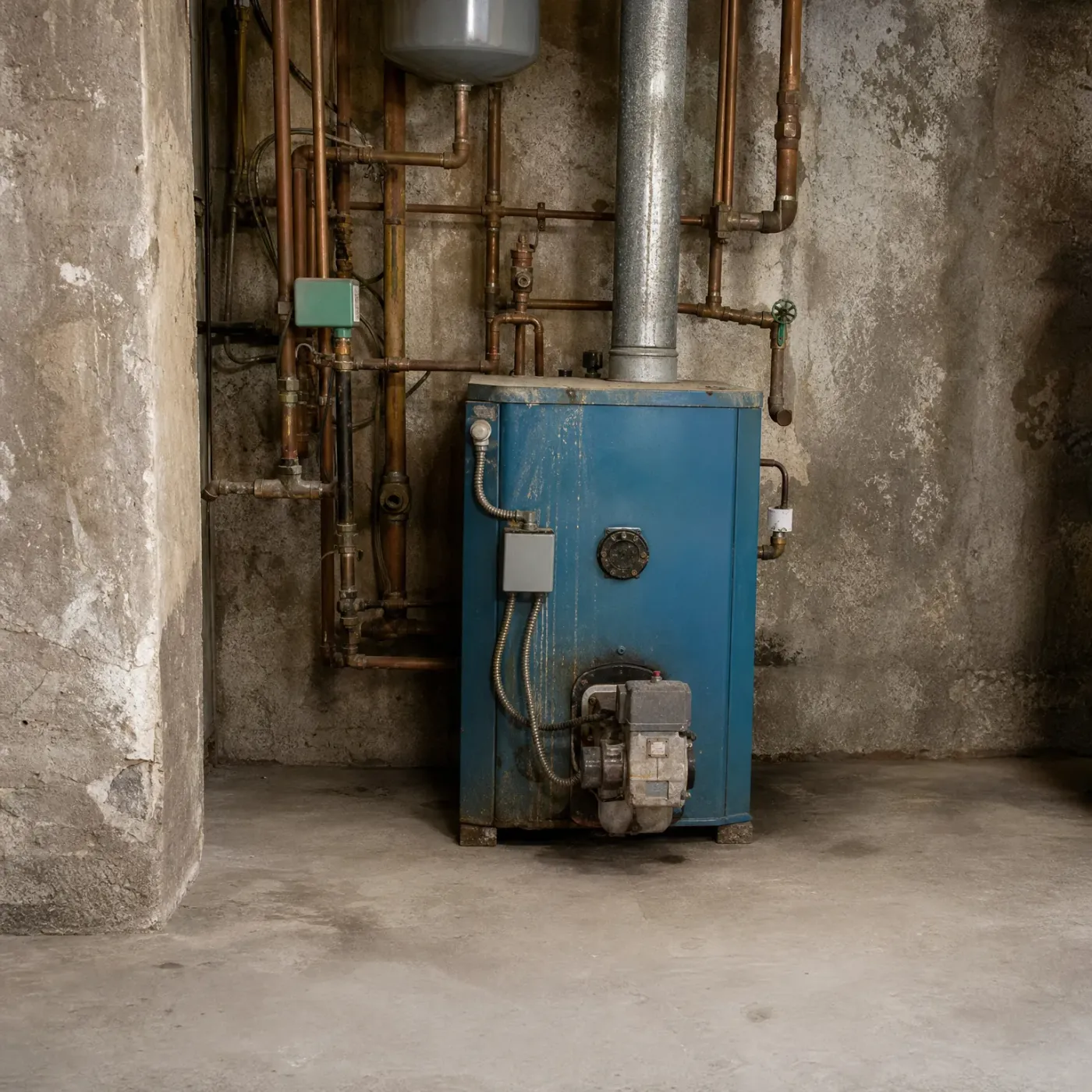
The flue rises straight up off this old unit, same as yours. Somewhere in that network of pipes behind it, water is sitting where it should be draining, and steam is hitting it every time the burner fires.
Winter nights average 28°F
Overnight lows average 28°F here through December, January and February, so the trapped water in a low pipe gets hit hard, night after night.
Heat runs October through April
Heat runs here from October through April, about seven months. That's seven months of cycling for a bang that won't fix itself.
48.5% of homes heat with gas
48.5% of homes in New York County heat with gas, same as a steam boiler driving the noise you're hearing tonight.
NOAA nClimDiv 1991-2020 · ACS 2020-2024
The noise has one cause worth chasing: steam moving at full pressure, hitting water that got left behind in a pipe. That's it. Not the boiler wearing out, not something you need to live with until spring. A pipe pitched wrong, or sagged after years of heating cycles, holds that water in place, and every time the system fires up it takes the same hit again. Nights below freezing make it worse, since the boiler is cycling more to keep the apartment warm, and more cycles means more chances for steam to find that trapped water.
Left alone through a winter of that, the joint where the pipe connects can work itself loose from the repeated hammering. That's a bigger job than correcting a pitch or securing a pipe that's come unsupported, which is what usually stops the noise for good.
Finding the pipe causing it takes someone who's worked on steam systems in buildings like yours before, not a general plumber guessing at it. A contractor who services Manhattan boilers all winter has seen which runs tend to sag and which pitches tend to fail, and checks those first. You'll hear back from one licensed contractor, not a handful of companies competing for the job before anyone's even looked at your pipes. That's who shows up to trace the noise to its source and fix the pipe causing it, not just quiet it for a night.
A licensed pro who works in New York County gets your request.
You're not committing to anything by asking.