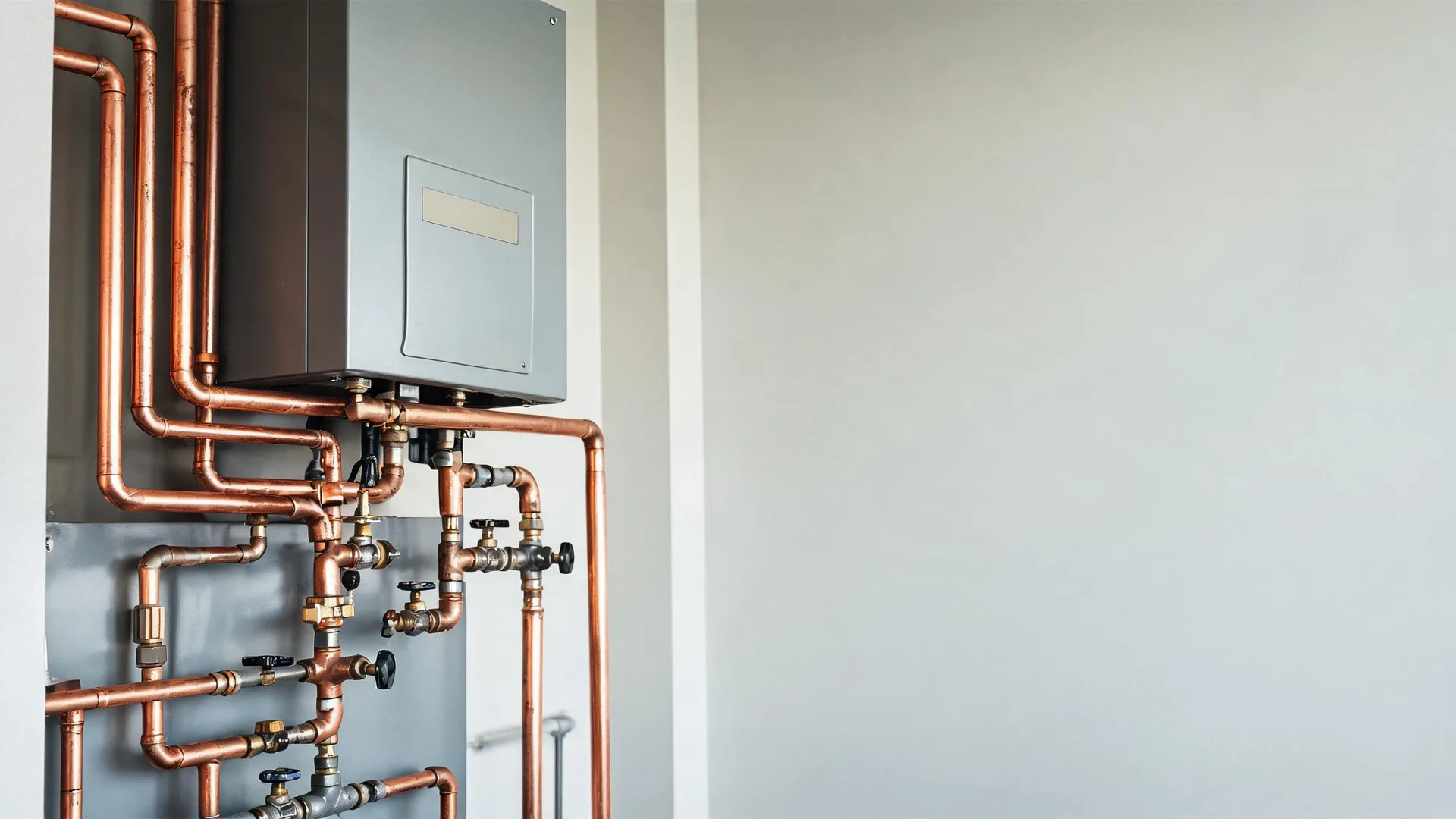
Storms hit this county hard
Rensselaer County recorded 358 severe weather events between 2015 and 2024, including 301 cases of damaging wind, 14 hail events and a tornado. That is a lot of chances for something outside to get hit.
Takes about a minute. No obligation.
Rensselaer County recorded 358 severe weather events between 2015 and 2024, including 301 cases of damaging wind, 14 hail events and a tornado. That is a lot of chances for something outside to get hit.
Statewide, 11% of households went at least 24 hours without power in 2024. A boiler that runs on electricity for its ignition and controls needs that power to start, so an outage that long can mean no heat and no hot water until it's back.
Gas here runs $16.03 per million Btu.
A boiler burning more gas than it should is a cost you'll see on the next bill, not just a repair you can put off.




Half the homes in Rensselaer County were built in 1962 or earlier. A boiler that old, or even one installed partway through a home's life, has likely been through a lot of winters already. Parts wear with age no matter how well a system was kept up, and a boiler nearing the end of its life tends to break down more often and cost more each time. If yours came with the house, it's worth finding out how many years it has left before you put real money into a repair. That's a different question from whether it's worth fixing right now.
A boiler that still runs after a storm can still have damage you can't see. If hail or debris hit the unit, or the power was out long enough to need a reset, have it checked before the next cold stretch finds the problem for you.
Find a contractorLook at the water pressure gauge on the front of the boiler. A needle sitting low or near zero usually means the system needs water, not a repair call. Check that the thermostat has fresh batteries and is set to call for heat. Make sure the switch on the wall near the boiler, the one that looks like a light switch, hasn't been bumped off. The emergency switch at the top of the basement stairs gets flipped by accident more than people think, so check that too.
A boiler that hums but doesn't fire, or trips its reset button more than once, has a problem a homeowner shouldn't keep resetting around. Water pooling at the base, a pilot light that won't stay lit, or a burner flame that looks yellow instead of blue all point to something a tech needs to open the unit to fix. If you smell gas, don't keep checking things. Shut off the gas valve and get out, then call it in from outside.
A boiler usually tells on itself before it quits outright. Banging or knocking from inside the unit often means a kettling, mineral buildup on the heat exchanger making pockets of steam. A low rumble or gurgle can mean air trapped in the lines, or sediment settling where it shouldn't. Short cycling, where the burner fires and shuts off again within a few minutes, points to a bad thermostat signal, a clogged filter, or a limit switch tripping early. If the radiators or baseboards heat unevenly, some warm and some cold, that's often trapped air or a circulator pump that's failing. None of these mean the boiler is done, but none of them fix themselves either.
Ask the technician straight out how many years the boiler has left, the same way you'd ask about a car with high miles. That number should come before you agree to anything bigger than a basic repair. A unit that came with a house built in 1962 or earlier has had decades to wear its parts down, even with good care. If the answer is a year or two, a smaller fix now might make more sense than a bigger one later. If it's got a decade left, fixing what's broken today is the clear call.