





A row of illuminated white colonial houses photographed at twilight along a tree-lined road with a stone wall in the foreground.

Boiler Repair in Syracuse, NY

Tell us about the job

Takes about a minute. No obligation.

RepairBoilerOnondaga County, NY
Step 1 of 2

What ZIP code is the job in?

Half the homes in Onondaga County were built in 1964 or earlier. If yours is one of them, the boiler may not be original, but it's worth finding out what you have. An old boiler can often be kept running with the right repair, patched and fixed again for a few more years. At some point a repair just buys time instead of fixing the problem. Before you commit to a major repair, ask whoever comes out how much life is likely left in it.

A boiler making noise or leaking is still telling you something you can act on.

Let it run like that and the next call is for a replacement, not a repair.

Gas here runs $16.03 per million Btu, and a boiler with a bad gas valve or a dirty burner burns more of it every night the temperature drops to 18 degrees

Climate zone 5A
Heat runs October through May
Winter nights average 18°F
Ask what's left in it before you pay to fix itHalf the homes in Onondaga County were built in 1964 or earlier.

Boilers here start running in October, so September is the month to get one looked at. A part that's been weak all summer, a failing igniter or a pump on its way out, usually doesn't show it until the system has to run for hours instead of minutes. That first cold stretch is when it gets found out. Catching it in September means a repair on your schedule, not an emergency call once the house is already cold. Wait until October and you're fixing it under pressure instead of ahead of it.

Get it diagnosed properly

Your boiler works hard here, and that's usually what's behind the problem. Have it diagnosed properly so the fix lasts.

Find a contractor
A man in a cap, dark shirt and tan work pants walks up porch steps toward a gray front door, carrying a canvas tool bag, with a potted plant on the porch to the right.

Kettling or banging means scale or sludge

A boiler that knocks, bangs or makes a kettle-like rumble has mineral buildup on the heat exchanger or sludge sitting in the bottom of it. Water boils against that buildup unevenly, and that's the noise you hear. It won't fix itself, and it makes the exchanger work harder to heat the same water.
A pressure that won't hold points to a leak

If the pressure gauge keeps dropping and you keep topping it off, water is getting out somewhere, through a valve, a pump seal, or a fitting. A boiler that loses pressure on its own isn't a one-time thing to shrug off. Finding the leak early is a smaller job than finding it after it's damaged something around it.

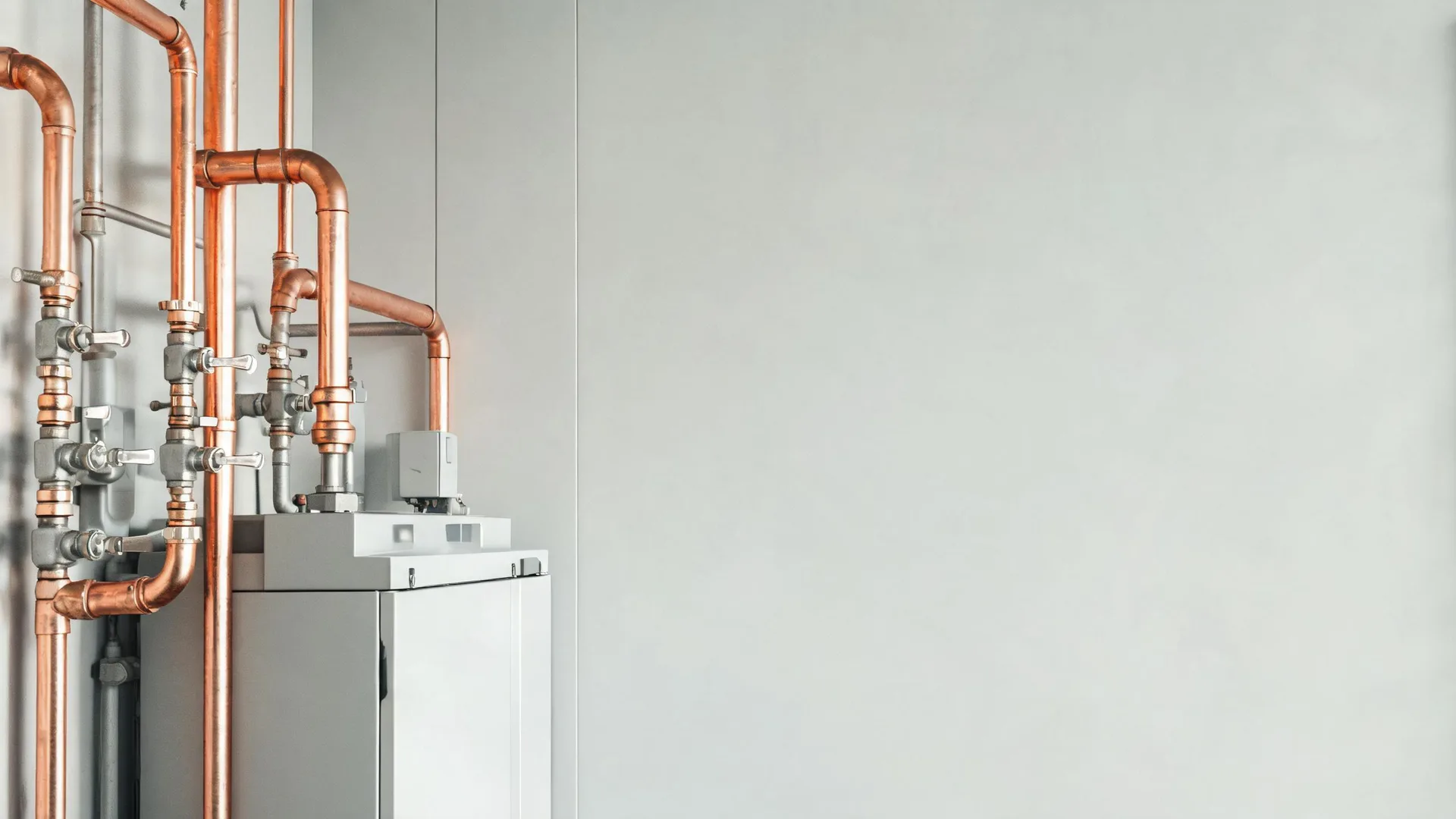
Most boiler failures come down to a handful of parts. An igniter or electrode wears out and the burner won't light at all. A circulator pump seizes or its bearings go, and water stops moving through the system even though the burner still fires. A thermocouple or flame sensor drifts out of spec and starts shutting the boiler down as a safety response. That looks like a random failure, but it isn't. Scale on the heat exchanger and sludge in the bottom build up slowly and don't break anything outright. They just make the burner and pump work harder than they should, and that extra strain is often what takes the pump or the exchanger down later. A boiler that's never been checked tends to fail at the worst time, because the part that was already weak finally gets asked to run flat out.

A diagnostic visit starts with questions. When does it happen, what does it sound or smell like, has anyone touched the pressure or the thermostat lately. Then the tech watches it run through a cycle, because some faults only show up once the burner fires or the pump kicks on. Gauges get checked next, pressure first, then temperature, then the flame itself if it's gas. A multimeter comes out for the igniter, the pump and the control board, to see which part is actually failing versus which one is just downstream of the real problem. By the end you should know what's wrong, why it's doing what it's doing, and whether it's a part swap or something bigger. A good diagnosis explains the symptom instead of just naming a part.