




Two white multi-story colonial houses with lit windows and black shutters photographed at night, fronted by a stone wall.

Boiler Repair in Oneida, NY

Tell us about the job

Takes about a minute. No obligation.

RepairBoilerMadison County, NY
Step 1 of 2

What ZIP code is the job in?

Boilers in Oneida run from September through May. That's nine months of the year the burner is cycling on and off, heating water, pushing it through the system. Overnight lows average 16°F in January, so the boiler isn't just running often, it's covering a big gap between outside and inside. That kind of steady demand wears on parts you don't see, like the igniter, the circulator pump, the pressure relief valve. A boiler that short-cycles or won't hold pressure here is usually just showing its mileage early. Worth having someone trace the actual cause before you decide what it needs.

A boiler that keeps needing the same repair is telling you something.

Once the heat exchanger or the block is the problem, you're not repairing the boiler anymore, you're replacing it piece by piece.

Half the boilers in Madison County are older than the homes built after them

Half the homes here were built by 1964
Heat runs September through May
Winter nights average 16°F
Gas costs more hereNatural gas in New York ran $16.03 per million Btu in 2024, and a boiler running bad burns it anyway.

August is worth paying attention to. Heat starts up in September here, and that first firing after months of sitting idle is when a weak part usually gives out. A circulator pump that was getting loud in May doesn't get quieter over the summer. An igniter that struggled last winter isn't going to fire cleaner this time. Get a boiler looked at before that first cold week instead of during it, and you're dealing with a known problem instead of a no-heat call.

Find out what's left in it before you fix it again

Half the homes in Madison County were built in 1964 or earlier. If yours is one of them, the boiler in it now isn't necessarily the one it came with. Before paying for another repair, find out how much is actually left in the one you have.

Find a contractor

Most calls come down to ignition or water, not the boiler itself

A pilot or igniter that won't hold, a circulator pump that's seized or going bad, a pressure relief valve weeping, low water cutoff acting up. These are the parts that fail first because they move, spark, or seal against pressure every cycle. None of them mean the boiler is done. They're the normal wear parts, and swapping one is routine work.
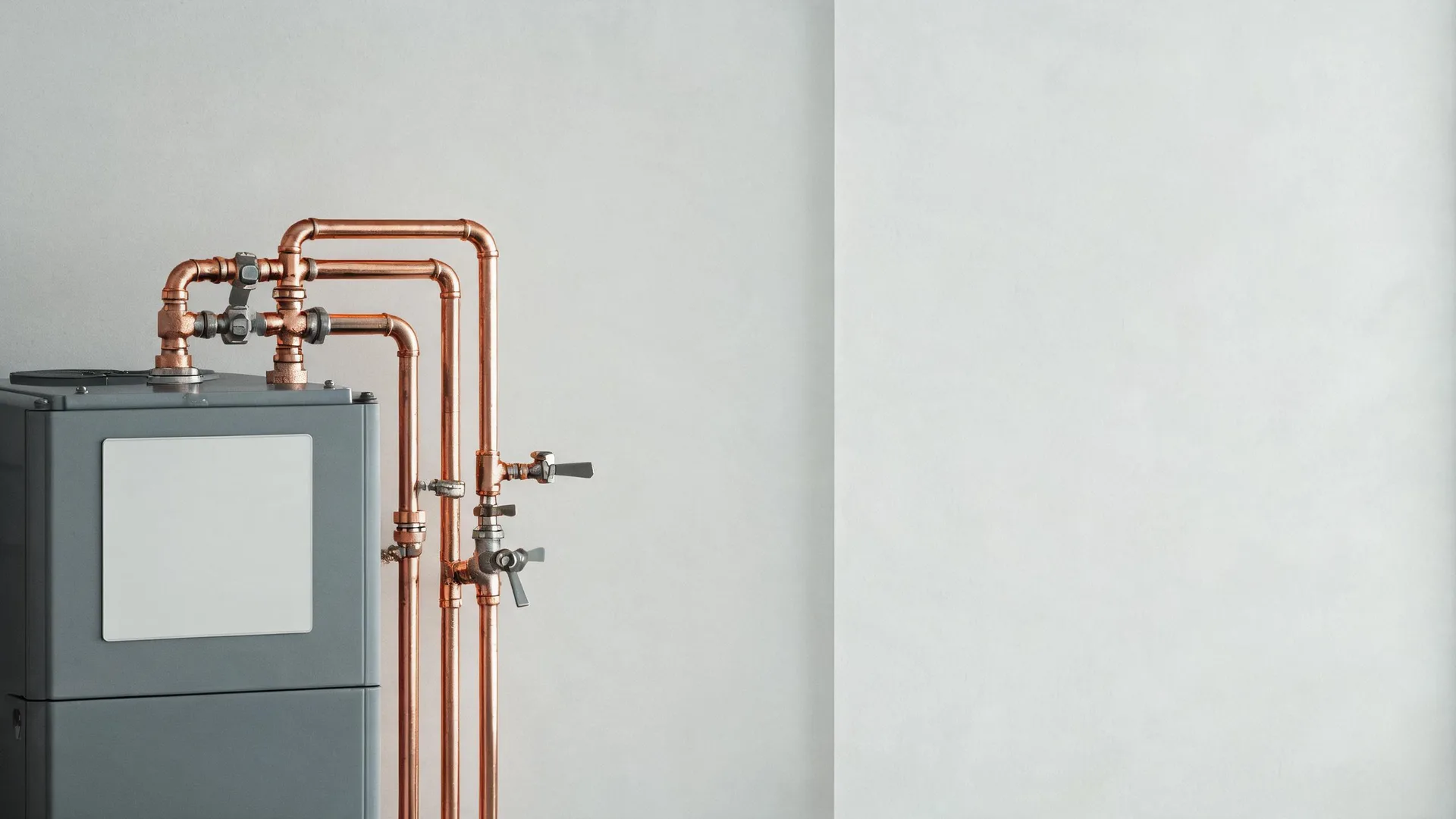
A cracked heat exchanger or block is a different conversation

Cast iron or steel fatigued from years of heating and cooling doesn't get patched. If a tech traces a leak or soot pattern back to the exchanger itself, the repair stops being a repair. That's the point where the boiler's future is the actual decision, not what's in front of you that day.

A boiler usually tells you something is wrong before it quits outright. Kettling, that rumbling or knocking from inside the heat exchanger, means scale or sediment is building up and the water is flashing to steam inside it. Cold radiators or cold spots on them while the burner is running usually means trapped air or a circulator pump that isn't moving water the way it should. A pilot or igniter that won't hold, or takes several tries to catch, is wearing out. Puddling near the base points to a leak somewhere in the system, and that's worth a look before it reaches anything electrical. If the burner is cycling on and off every few minutes instead of running a full heating cycle, something is shutting it down early, and that's rarely the boiler itself.

A diagnostic call starts with the boiler running, not sitting cold. A tech wants to see a full cycle, the burner firing, the pressure holding, water moving through. Soot or scorch marks near the burner tell a story before a single tool comes out. From there it's a process of ruling things out. They'll check the igniter or pilot assembly, test the circulator pump, watch how long the burner stays lit before it shuts off. If something points toward the heat exchanger, they'll pull the cover and look at it directly rather than guess. A good tech explains what they're checking and why as they go, so by the end you know what's actually wrong, not just that something is.