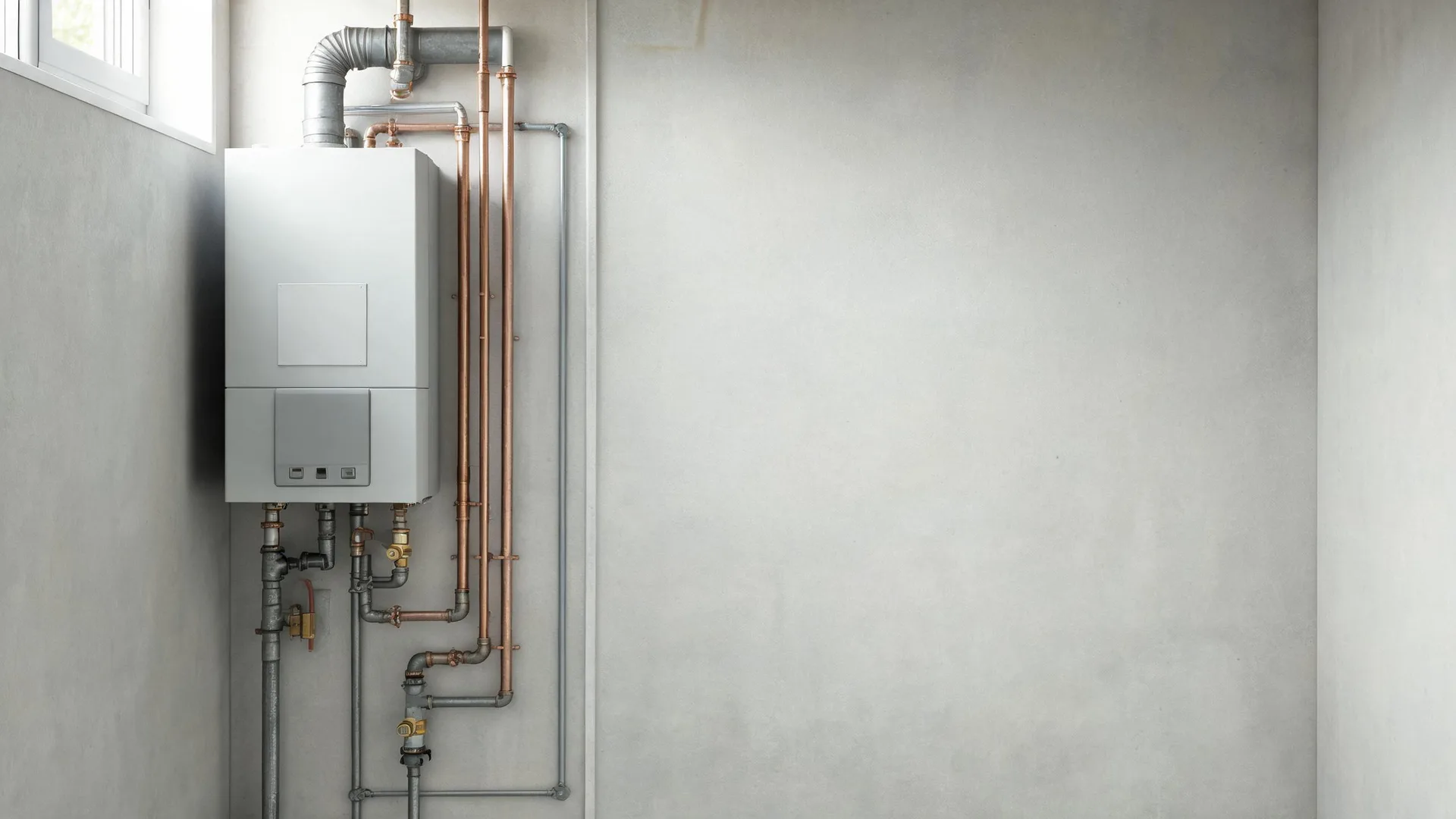
Eight months of heat a year
Boilers here run from October through May. That's most of the year asking the same burner and pump to cycle on and off, and the wear adds up faster than it does somewhere with a short winter.
Takes about a minute. No obligation.
Boilers here run from October through May. That's most of the year asking the same burner and pump to cycle on and off, and the wear adds up faster than it does somewhere with a short winter.
Winter overnight lows average 21°F in Niagara County. A boiler has to work longer and hit higher temperatures to keep up on nights like that, and that's when a weak part is most likely to quit.
Half the homes in Niagara County were built in 1958 or earlier.
A boiler that old in a house that old is a strong candidate for replacement, not another repair.



Natural gas in New York runs $16.03 per million Btu, among the highest in the country. A boiler that's short-cycling or running longer than it should to hit temperature is burning more gas every time it fires. That cost shows up on the bill whether or not the repair ever gets made. A cracked heat exchanger, a stuck valve, or a failing aquastat all make the burner work harder for the same heat, and here that extra work costs more than it would almost anywhere else.
A boiler running eight months a year against 21°F nights doesn't leave much room for a weak part to hide. If yours is short-cycling, slow to heat, or making noise it didn't used to, get it looked at before the next cold stretch finds the problem for you.
Find a contractor
A boiler is a closed loop, and that water should stay the same water for years. Low pressure, a slow leak at a valve or fitting, or sludge built up in the bottom of the tank all make the burner work harder to do the same job. Mineral scale on the heat exchanger slows down how well heat moves into the water, so the burner runs longer to reach the same temperature.
An igniter or pilot assembly that won't light reliably, a circulator pump with a seized bearing, or an aquastat that reads the water temperature wrong are common points of failure. None of them are the boiler itself giving out. A pressure relief valve that weeps or a zone valve that sticks open or shut will also cause symptoms that look like bigger trouble than they are.
Before anyone comes out, look at the pressure gauge on the front of the boiler. It should sit somewhere around the middle of the dial, and if it's dropped near zero, that alone explains a boiler that won't heat right. Check that the thermostat has power and is actually calling for heat, and if it runs on batteries, swap them. Look at the area around the boiler for any water on the floor, since a fresh puddle points toward a leak rather than a control problem. If you hear the burner trying to light and failing, or it lights and then shuts off quick, don't keep resetting it. That's worth a call, not another try.
Age and a track record of repairs matter more than any single symptom. A boiler that's needed a new circulator, then an aquastat, then a igniter over a few years is telling you the failures are spreading, not clustering in one part. That pattern is different from a boiler that's run clean for years and just tripped on one bad component. A cracked heat exchanger is the one repair that usually ends the conversation, since it means the vessel itself is failing rather than something bolted to it. Short of that, most parts on a boiler can be replaced on their own without touching the rest of the system. The harder question is whether it's worth putting a new part into an old boiler, and that usually comes down to whether the boiler has been reliable apart from this.