




A single-story red brick house with a dark shingled roof and black shutters, set behind a lawn and a long dry-stone retaining wall, framed by large leafy trees under an overcast sky.

Boiler Repair in Massena, NY

Tell us about the job

Takes about a minute. No obligation.

RepairBoilerSt. Lawrence County, NY
Step 1 of 2

What ZIP code is the job in?

Your boiler runs September through May here, close to nine months a year. Overnight lows average 11°F through December, January and February, and that's when it's working hardest, keeping up through the coldest stretch of the night. Winter storms hit this county again and again, and a boiler doesn't get a break when the weather turns. That kind of load adds up over the years. If yours is making noise, short-cycling, or not holding pressure, have someone qualified look at it rather than guessing at the fix. A proper diagnosis now is what makes the repair actually hold.

Half the homes in St. Lawrence County were built in 1964 or earlier.

A boiler that old has likely been repaired more than once, and this call may be about whether another repair is worth it.

Gas here runs $16.03 per million Btu, and a boiler that's struggling burns more of it every month

Climate zone 6A
Heat runs September through May
Winter nights average 11°F

August is worth paying attention to. Heat comes on in September here, and that first cold snap is when a boiler finds whatever was already wrong with it. A part that was marginal in May won't get better sitting idle all summer. If the burner's been short-cycling or the pressure's been creeping down, it tends to show up hard in the first few weeks, not gradually. Getting it looked at before September means a tech is diagnosing a quiet boiler instead of one that just quit on the coldest night of the month.

Get it diagnosed properly

Your boiler works hard here, and that's usually what's behind the problem. Have it diagnosed properly so the fix lasts.

Find a contractor
A man in a cap, long-sleeved shirt and work pants walks up porch steps toward a dark gray paneled front door, carrying a canvas tool bag, with a potted shrub to the right.

Kettling or banging means scale or air, not a dying boiler

A rumbling or knocking sound usually comes from mineral buildup on the heat exchanger or air trapped in the system. Both make the boiler work harder to heat the same water, but neither means the whole unit is done. A tech can flush the system or bleed the lines and the noise is often gone.
Pressure that keeps dropping is a leak somewhere, found or not

A boiler that needs repressurizing every week is losing water somewhere, whether you can see it or not. It might be a valve, a pipe joint, or the expansion tank. Topping off the pressure gauge without finding the leak just means you're back at this again in a few weeks.

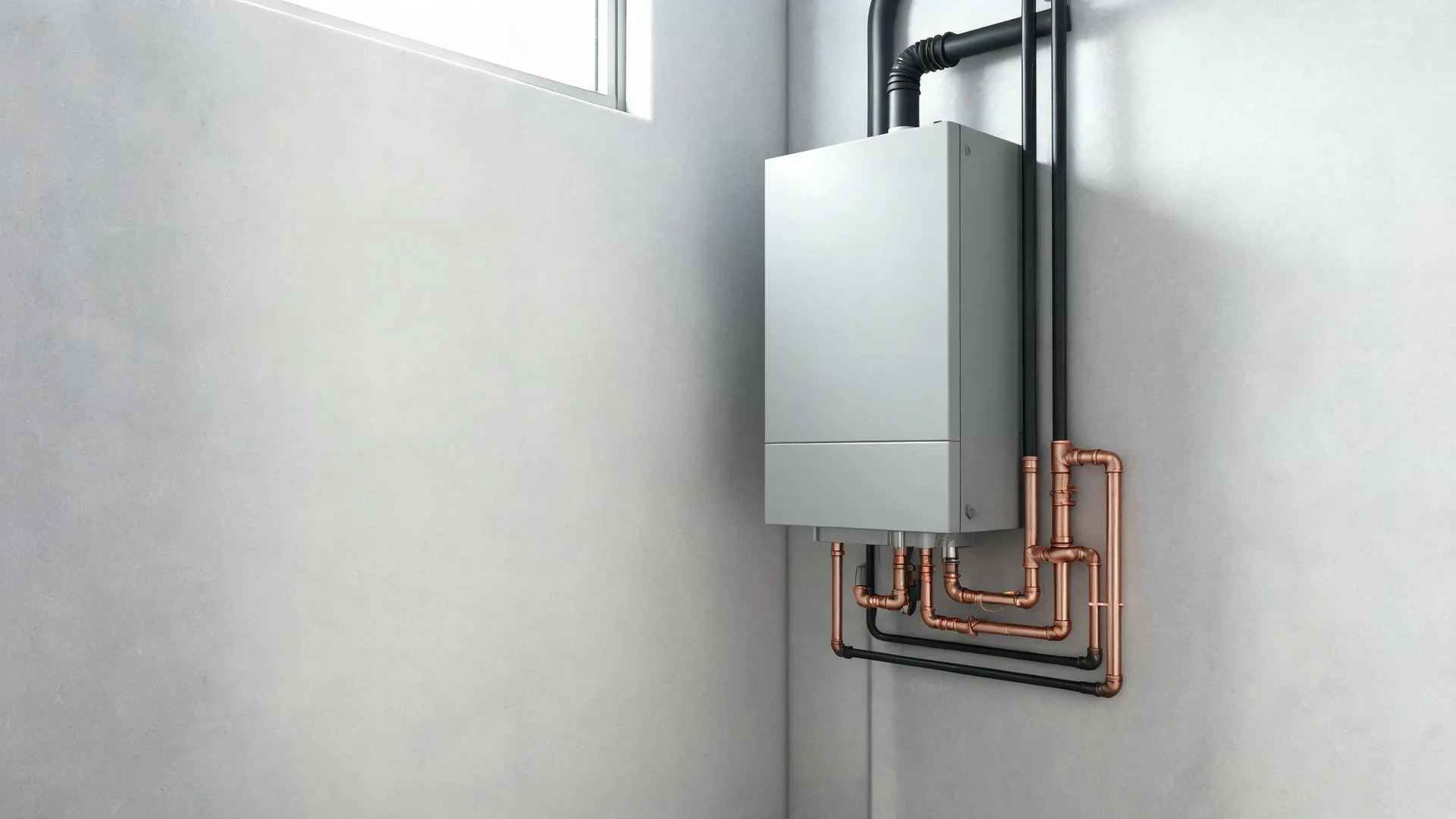
Most boiler failures trace back to the same handful of parts. The ignition system usually goes first, the pilot assembly or the electronic igniter, since it fires every cycle and wears a little each time. Pumps and circulators follow. The bearings dry out or the windings weaken, and you'll often hear it humming or running hot before it quits for good. Thermostats, pressure switches and valves fail too, but those are usually quick swaps once found. The heat exchanger is the one worth watching, since scale and rust build up inside it over years and that kind of wear doesn't reverse. A boiler that's had its ignition and pump parts replaced over the years but still has a sound heat exchanger underneath is usually still worth fixing.

A diagnostic visit starts before any panel comes off. A tech will ask what the boiler has been doing. Banging, short-cycling, losing pressure, not getting the house warm. Then they check the pressure gauge, look at the flame through the sight glass, and listen to the pump run. Most problems show themselves this way, before any single part gets tested on its own. From there it is narrowing things down. A multimeter on the igniter or pressure switch, a look inside at the heat exchanger for scale, a check of the expansion tank if pressure has been creeping. The point of the visit is to find the part that is actually failing, not to start swapping parts and hope the boiler behaves.