





A row of white Colonial-style houses with glowing windows photographed at dusk along a road bordered by a stone wall.

Boiler Repair in Lindenhurst, NY

Tell us about the job

Takes about a minute. No obligation.

RepairBoilerSuffolk County, NY
Step 1 of 2

What ZIP code is the job in?

A boiler in Lindenhurst runs from October through May, about eight months of the year. Overnight lows average 26°F in December, January and February, so a boiler that's struggling doesn't get much of a break once the cold sets in. None of that is unusual. It's the same load most boilers on Long Island carry every winter. When one acts up here, it's almost always the same handful of causes. A failed igniter, a bad zone valve, low pressure, or sediment built up in the bottom of the tank. Finding which one it is matters more than how old the unit is.

A boiler that's losing pressure will keep losing it as long as it keeps firing.

Call before the pressure drops low enough to shut the whole system down.

Lindenhurst sees its share of storms, but nothing here wears out a boiler faster than normal

566 severe weather events from 2015 to 2024
11% of homes statewide lost power a day or more in 2024
434 damaging wind events from 2015 to 2024
Boiler repair calls start the same month the heat goes onLindenhurst runs its boilers October through May. September is the month to catch a weak one first.

Half the homes in Suffolk County were built in 1970 or earlier. A boiler doesn't have to be that old itself to matter here, since plenty get swapped out over the years, but if yours came with a house that age and never got replaced, it's worth finding out. An old boiler can still be repaired, and often should be. The point isn't to assume it's done. It's to ask, once the real cause is fixed, how much life is actually left in it before the next repair.

Find out how much life is left before you pay for the repair

An older boiler can still be worth fixing. The way to know is to have someone look at the whole unit, not just the part that failed, before you spend money on it.

Find a contractor
A man in a cap, dark T-shirt and tan work pants carries a canvas tool bag up wooden porch steps toward a gray front door, with a potted shrub beside the entry.

The sounds come before the breakdown

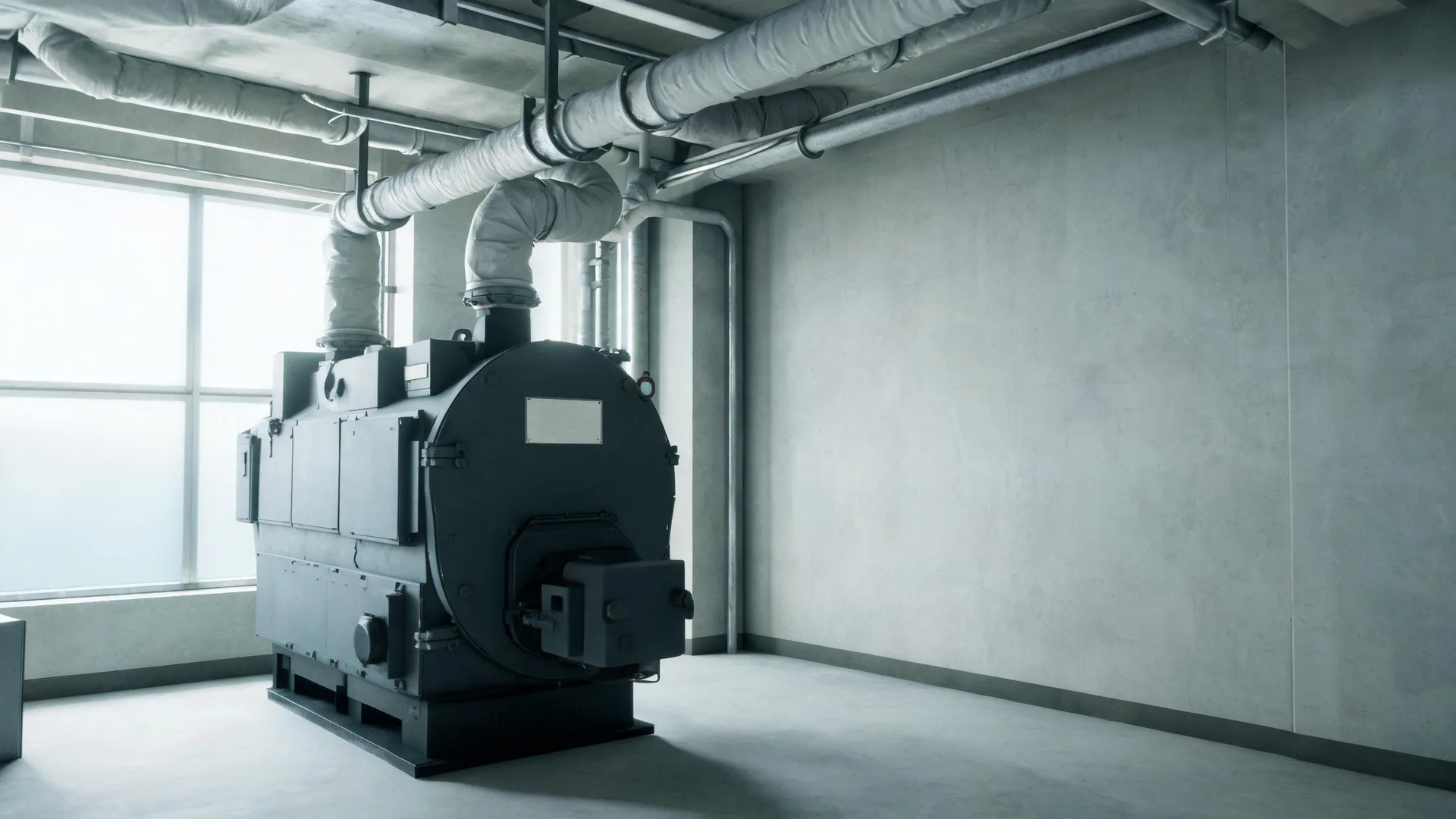
A boiler about to fail usually tells you first. Banging or kettling from the heat exchanger means sediment is baking onto the bottom of the tank. A low hum or buzz from a zone valve means it's trying to open or close and sticking. Loud clicking at startup with no flame catching is the igniter struggling. None of these fix themselves, and all of them get worse the longer the boiler keeps firing.
What you feel matters as much as what you hear

Radiators or baseboards that stay lukewarm while the boiler runs often point to trapped air or a stuck zone valve, not a dying unit. Rooms that heat unevenly, one warm and one cold, usually trace back to the same thing. A pilot or igniter that won't hold, or a boiler that short cycles on and off every few minutes, points somewhere else entirely. Knowing which pattern you've got tells the tech where to start before they even open the panel.

Most boiler failures start small and get ignored because the heat still comes on. An igniter that sparks weakly will keep lighting the burner for a while before it finally stops catching altogether. A zone valve that's starting to stick will still open most of the time, right up until the day it doesn't. Sediment at the bottom of the tank doesn't stop a boiler from running, it just makes the heat exchanger work harder to push heat through, and that's what cracks it eventually. Low pressure is the same story. A system can run for weeks on pressure that's slowly dropping before it finally trips the low water cutoff. The parts that fail are almost never the ones that fail suddenly.

A repair is worth it when the failure is isolated to one part and the rest of the boiler is sound. A new igniter, a new zone valve, a new low water cutoff, these are straightforward jobs on a unit that's otherwise holding pressure and heating evenly. Replacement starts to make more sense when the heat exchanger itself is cracked or leaking, because that's the part that can't be swapped out on its own, it takes the whole boiler with it. The tank matters too. Once sediment has been baking onto the bottom of it for years, scaling the metal from the inside, no repair reaches that. A tech can tell you which situation you're in by pressure testing the system and looking at the exchanger directly, not by guessing from how the boiler sounds.