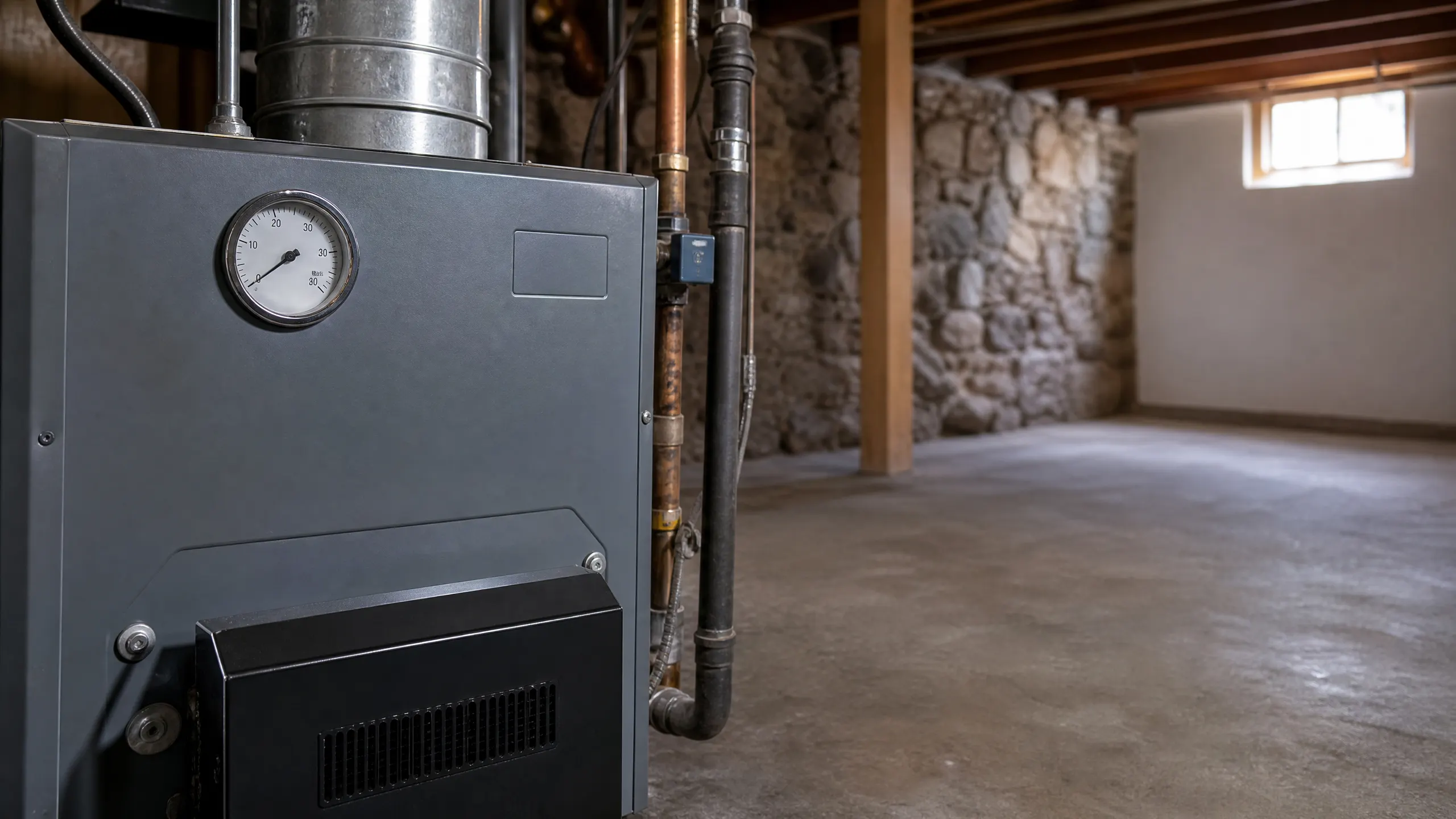




A gray metal boiler with a pressure gauge and piping installed in an unfinished stone-walled basement.

Boiler Repair in Jamestown, NY

Tell us about the job

Takes about a minute. No obligation.

RepairBoilerChautauqua County, NY
Step 1 of 2

What ZIP code is the job in?

Your boiler runs about eight months a year here, October through May. That's most of the year spent heating water and pushing it through the system, and a boiler that runs that long works through a lot of cycles on its burner, its pump, its controls. Chautauqua County saw 24 separate winter storms between 2015 and 2024, heavy snow and ice that keep a boiler running flat out for days when the cold really sets in. A system working that hard wears sooner than one in a milder climate. Small problems, a failing igniter, a pump losing strength, show up earlier because of it. Whatever's going on with yours, it's worth having someone diagnose it properly rather than guess, so the repair actually holds.

Half the homes in Chautauqua County were built in 1953 or earlier.

A boiler that old is closer to the end than the start, and a repair bill should be weighed against that.

This county sees weather that knocks the power out, and a boiler without it won't run

300 severe weather events from 2015 to 2024
11% of homes statewide lost power a day or more in 2024
253 damaging wind events from 2015 to 2024
Gas Here Costs More to WasteNew York gas ran $16.03 per thousand cubic feet in 2024, and a boiler running poorly burns it for nothing.

September is worth paying attention to. Heat comes on in October here, and whatever didn't get caught over the summer announces itself in the first cold week. A pump that's been losing strength, an igniter that's been slow to catch, holds on fine while the system sits idle and fails the first time it has to run for hours straight. That's not bad luck, it's the first real load of the season hitting a part that was already going. Getting a boiler looked at before October, rather than after it quits on a 19 degree night, is the difference between a scheduled repair and an emergency one.

Have It Diagnosed Before It Fails

Get the problem diagnosed now, while it's a scheduled repair and not a breakdown in the middle of a cold snap. Whatever's wearing on your boiler has had eight months a year to do it, and a proper diagnosis is what makes sure the fix holds through the next one.

Find a contractor

What a failing boiler sounds and feels like

A boiler in trouble rarely just stops. It bangs or kettles as the heat exchanger scales up inside. It short cycles, firing and shutting off before the house warms. Radiators or baseboards run lukewarm instead of hot, or one room heats while another stays cold, which points to air in the system or a pump that's lost strength. Water pooling near the base often means a failed seal or a cracked fitting, not something to wait on. Any of these is the boiler telling you a part is already struggling, before it fails outright.
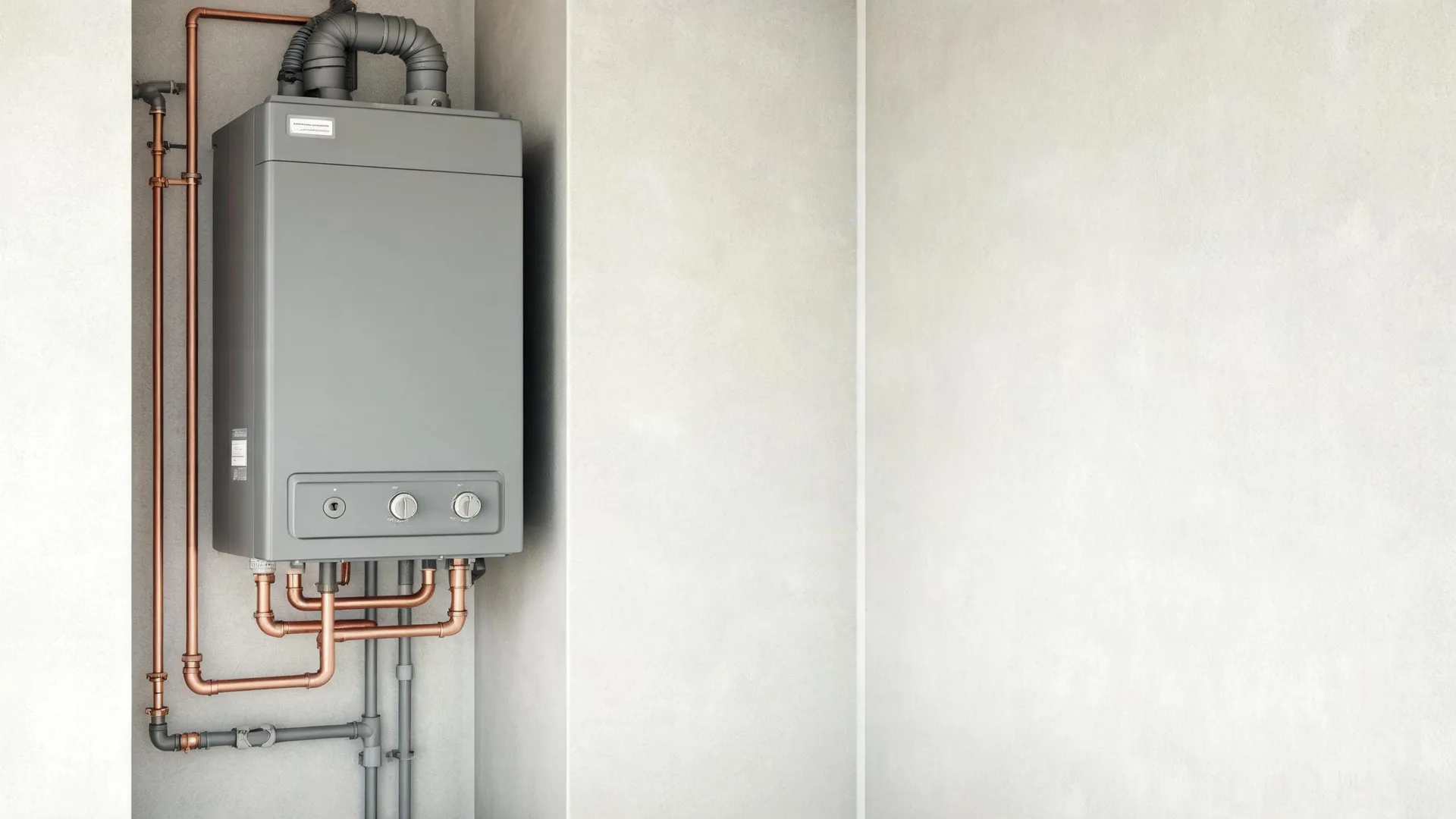
Why catching it early matters

A boiler that's struggling still burns fuel the whole time it runs poorly, so the cost of waiting shows up on the gas bill before it shows up as a breakdown. Soot or a yellow flame instead of blue means combustion isn't clean, which strains the heat exchanger further. Letting a small fault run only pushes wear onto the next part down the line, the pump, the expansion tank, the controls. A repair done when the symptom first shows is almost always smaller than the one that follows it.

Most boiler failures start small and sit unnoticed for a while. Mineral scale builds up inside the heat exchanger a little at a time, and once it's thick enough the metal has to work harder to pass heat into the water, which is what causes that banging or kettling sound. The circulator pump wears the same way, losing strength bit by bit until it can't push water through the whole loop anymore, so some radiators run hot and others stay cold. Ignition parts fail more suddenly: an igniter or electrode degrades with every cycle and eventually just stops lighting the burner reliably. Seals and gaskets dry out and crack over years of heating and cooling, which is usually what's behind water at the base of the unit. None of these happen because a boiler had a bad week. They happen because a part wore down a little more each time the burner fired, until it couldn't keep up anymore.

Gas here runs $16.03 per thousand cubic feet, and that number applies the whole time your boiler is misfiring, not just when it's working right. A cracked heat exchanger, a stuck valve, a bad thermocouple, any of these can make the burner run longer than it needs to, and every extra minute it runs gets billed at that rate. If the repair estimate feels like a lot, weigh it against months of paying that rate for heat that isn't reaching the radiators. Waiting doesn't lower the bill. It just moves the same gas bill forward while the fault gets worse.