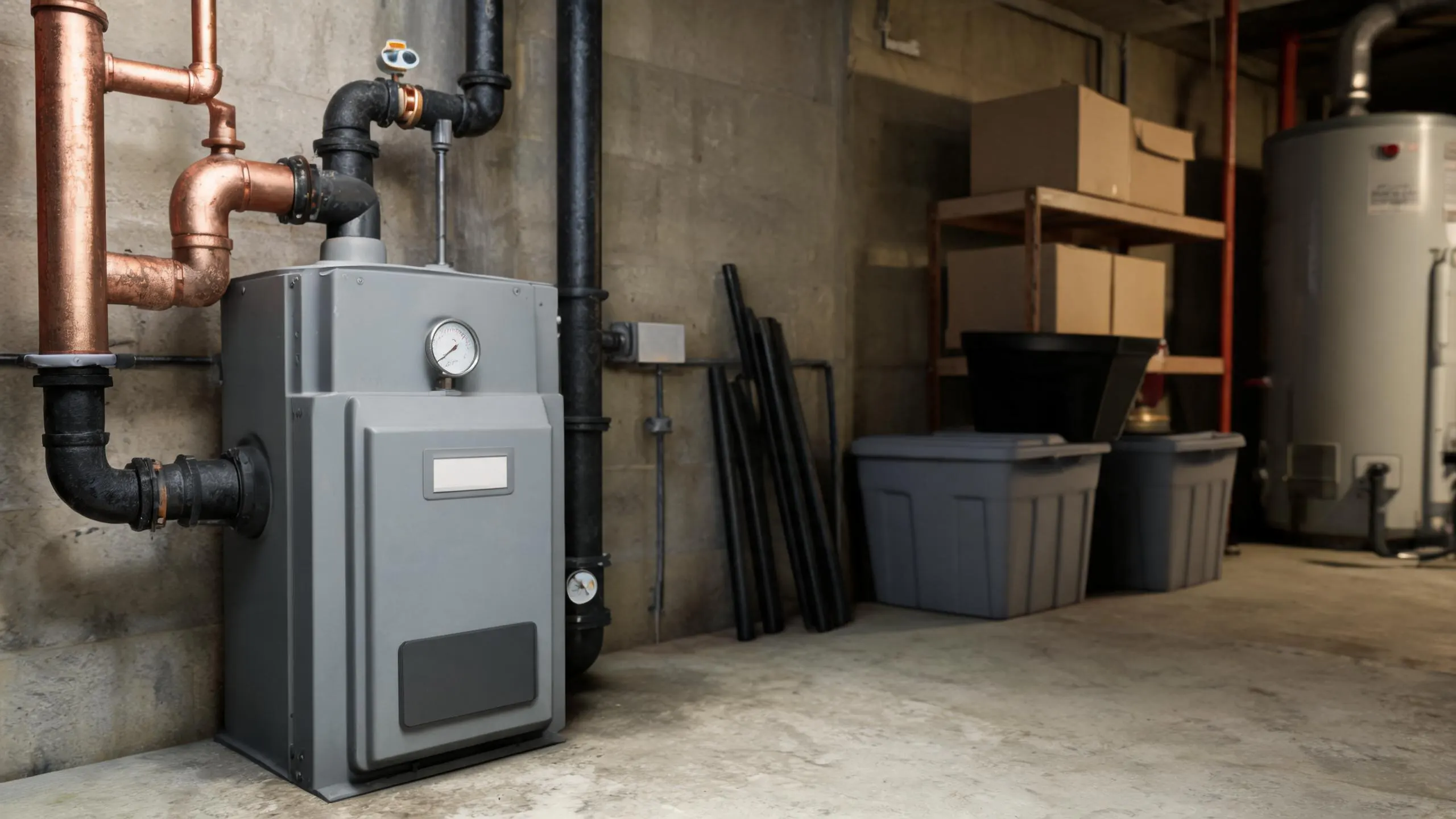




A gray boiler with copper and black iron pipe connections stands against a concrete basement wall, with a water heater and storage shelving visible in the background.

Boiler Repair in Hempstead, NY

Tell us about the job

Takes about a minute. No obligation.

RepairBoilerNassau County, NY
Step 1 of 2

What ZIP code is the job in?

Heat goes on in October here and runs until May. A boiler that is going to give you trouble will usually show it in those first few cold weeks, not in the middle of winter. That is when a weak igniter or a failing circulator pump finally gets asked to do real work after sitting idle since spring. If yours is making noise, short cycling, or not keeping up, September is a good time to have it looked at, before you actually need it every day.

Nassau winters hold around 28°F overnight through December, January and February.

A boiler here works hard for months straight, so a weak part usually fails from that steady demand, not from anything unusual about the house.

Half the boilers in Hempstead are heating a house built in 1955 or earlier

Half the homes here were built by 1955
Heat runs October through May
Winter nights average 28°F

Get it looked at early

Problems tend to show up in the first weeks of the season, when the load hits a part that was already weak.

Find a contractor
A man in a dark long-sleeved shirt, cap, and worn tan work pants climbs porch steps toward a dark blue front door, carrying a canvas tool bag.

Check the pressure and the pilot first

Look at the pressure gauge on the boiler. It should sit in the normal range marked on the dial, usually near the low end when the system is cold. If the needle has dropped near zero, the boiler can't build heat and will often lock out. If you have a standing pilot, check it's lit. If it's out and won't stay lit after you relight it, that points to a thermocouple problem, not something to keep retrying.
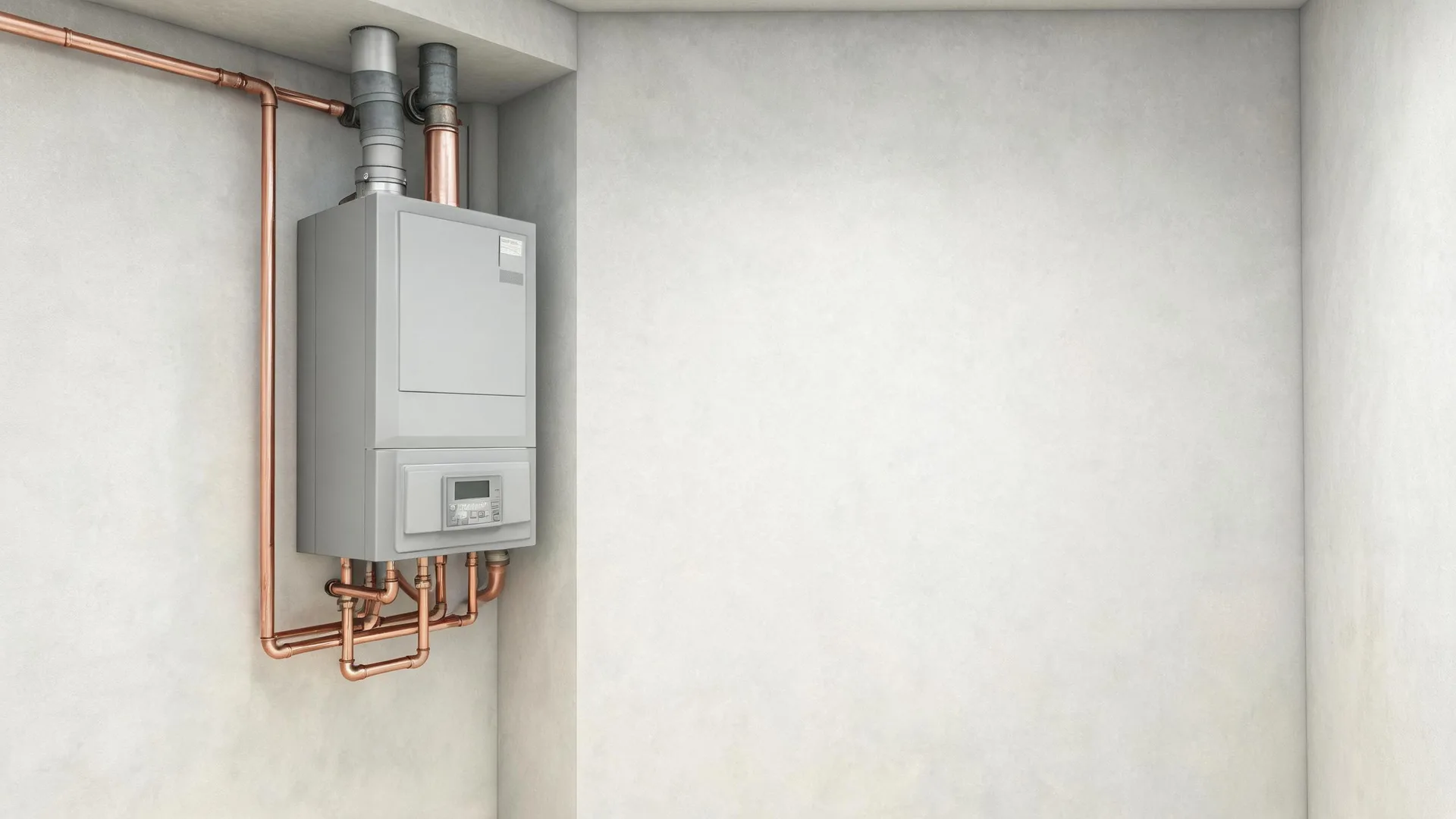
Know what you're listening and looking for

Banging or kettling sounds from the heat exchanger, water pooling under the unit, or a radiator that stays cold while others heat up are all worth noting before you call. Tell the contractor exactly what you saw and heard. A boiler that's leaking or making loud banging noises should be shut off until it's looked at, not left running to see if it settles down.

A boiler that needs attention usually tells you before it quits outright. The most common complaint is heat that doesn't match room to room, one radiator hot and another barely warm, which often points to trapped air or a blocked valve rather than the boiler itself. A pilot or igniter that won't hold, a burner that cycles on and off in short bursts, or a low steady hum from the pump are all worth paying attention to. Kettling, a knocking or rumbling sound from inside the heat exchanger, usually means scale or sediment is building up on the metal and making it work harder than it should. Any sign of water around the base, even a small amount, means a fitting or valve is failing somewhere and it won't fix itself. None of these mean the boiler is done for, but all of them get worse the longer they run unchecked.

Age by itself doesn't mean a boiler needs replacing. What matters more is which part has failed and whether it's the kind that can be swapped on its own or one that means opening up the heat exchanger. A circulator pump, a thermocouple, an igniter, these get replaced on boilers all the time and the unit goes on working the way it always did. A cracked heat exchanger is different. That's the core of the boiler, and when it goes, you're not repairing the boiler anymore, you're buying a new one and setting it where the old one stood. The other thing worth asking is how the boiler has behaved up to now. One failure after years of running fine is just a part wearing out. A unit that's had several different problems over a couple of seasons is telling you the whole system is getting tired, even if each fix was small and cheap on its own.