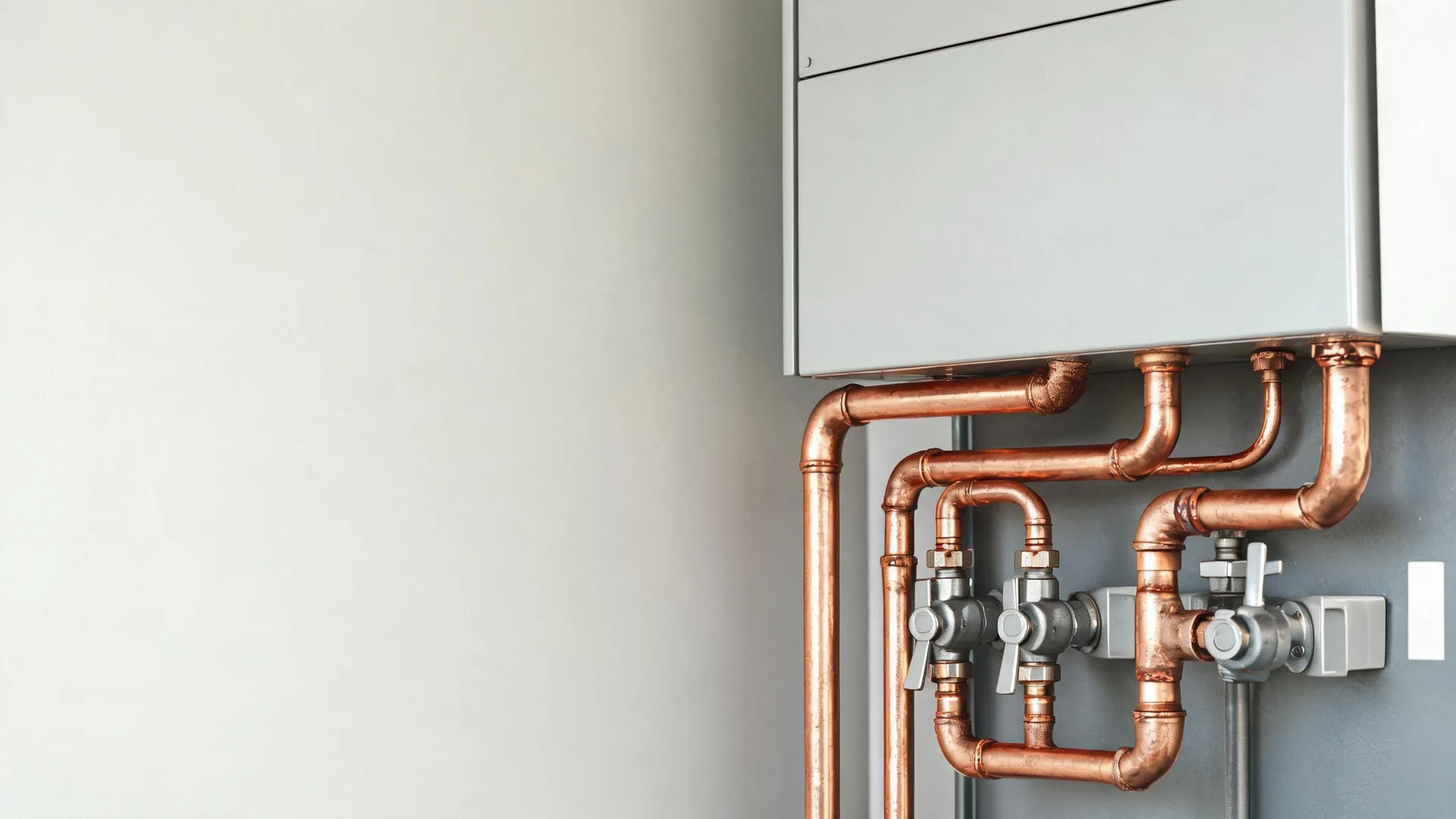
Eight months of heat a year
Boilers in Elmira start running in October and don't shut down until May. With overnight lows averaging 18°F through December, January and February, a boiler here spends most of the year working, not sitting idle.
Takes about a minute. No obligation.
Boilers in Elmira start running in October and don't shut down until May. With overnight lows averaging 18°F through December, January and February, a boiler here spends most of the year working, not sitting idle.
A boiler that runs eight months a year puts more hours on its igniter, pump and valves than one that only runs a few months. When something acts up, get the actual cause diagnosed rather than patching the symptom, so the fix holds up through the next stretch of cold.
Half the homes in Elmira were built in 1955 or earlier.
A boiler that old has likely been replaced once already, or is due.




A boiler that's been running since October doesn't give you much warning before it quits. Short cycling, a pilot that won't stay lit, a pump that's gotten loud, these are worth a call now rather than after the next cold snap. A repair that only addresses what's in front of you tends to send someone back out in a few weeks. One that traces the problem to its source, a failing valve or a control board that's past its best years, holds up through the rest of the season.
If your boiler came with the house, there's a good chance it's already been replaced once, or it's close. Before the repair goes any further, ask the technician how many years it has left.
Find a contractorThe boiler should have a gauge near the front showing water pressure. If the needle has dropped low, the system has lost water somewhere, and that alone can keep it from firing or heating the house right.
Most boilers have a small viewing glass where you can see the flame. A steady blue flame means the burner is fine. A flame that's yellow, weak, or won't stay lit points to an ignition or gas supply problem worth describing to whoever comes out.
Most boiler failures trace back to water, not fire. Low water pressure keeps the system from firing at all, and a leak that drips slowly enough can empty the loop over weeks without anyone noticing. Mineral buildup inside the heat exchanger forces the burner to run longer to do the same job, and that extra runtime wears out ignition parts years before they should quit. Pumps fail from bearings wearing down after years of constant cycling, not from any one bad day. Control boards and sensors tend to go when the boiler is old enough that the rest of it is tired too, so a board swapped into a worn-out system is rarely the end of the visits.
A boiler is worth repairing when the problem is contained to one part. A valve, a pump, an igniter, an ignition board. Swap it out and the rest of the system, the heat exchanger and the piping, goes on doing what it's done for years. It stops being worth it when the heat exchanger itself is cracked or so scaled up that the burner can't get ahead of it. That part isn't sold on its own and isn't meant to be opened up and replaced. The other sign is pattern. One repair is a repair. A second or third call in the same season, even for different parts, usually means the boiler as a whole is wearing out rather than one piece having bad luck. A tech who looks at the whole system, not just the symptom in front of them, can tell you honestly which situation you're in.